The New Children's Museum: Where Art and Play Collide in Downtown San Diego
The New Children's Museum in downtown San Diego is not your average hands-on play space. Built around contemporary art and creative exploration, it gives children and their families a place to think, make, and discover — just steps from the Convention Center trolley stop.
Quick Facts
- Location
- 200 West Island Avenue, San Diego, CA 92101 (Downtown, near the Convention Center)
- Getting There
- Convention Center Station, San Diego Trolley (Blue/Orange Line) — short walk
- Time Needed
- 2 to 3 hours for most families; toddlers may want the full day
- Cost
- Adults $25, Children (1+) $20, Seniors/Military/Educators $20, Under 1 free, EBT/SNAP/WIC $5
- Best for
- Families with children ages 1–10, art-curious parents, rainy-day visits
- Official website
- thinkplaycreate.org
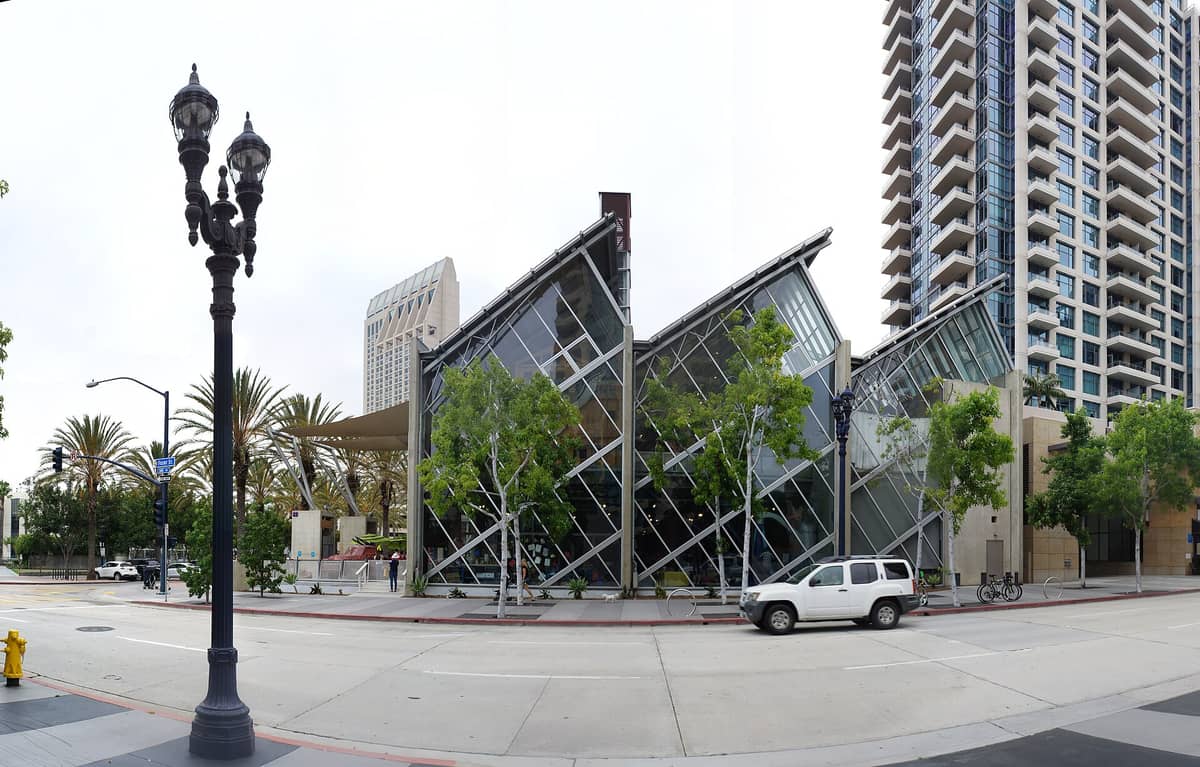
What Is The New Children's Museum?
The New Children's Museum opened in 2008 in downtown San Diego, replacing an earlier children's museum in another part of the city. What makes it distinct from most family attractions is its core premise: every exhibit is conceived by a practicing contemporary artist, not a standard exhibit design firm. The result is a museum that looks and feels genuinely unexpected, with large-scale installations that double as playgrounds and studios where the line between art and activity deliberately blurs.
The building itself is worth noting. The structure was designed with sustainability in mind and earned LEED certification, a relatively rare credential for a museum of this scale. Corrugated metal panels, exposed concrete, and oversized windows give the interior an industrial loftiness that contrasts pleasantly with the colorful, tactile chaos of children at play inside. Natural light filters through at different angles throughout the day, changing the mood of the space in ways that most indoor attractions simply don't.
The Exhibits: Art You're Allowed to Touch
Most art museums ask you not to touch anything. Here, touching is the point. The exhibits rotate regularly, which means repeat visits genuinely yield a different experience, and the museum's commitment to commissioning original work from real artists keeps the content from feeling like recycled educational content in a new wrapper. Past installations have included large-scale foam climbing structures, sound-reactive environments, and collaborative building zones where children construct and dismantle freely.
The studio spaces scattered throughout the museum deserve particular attention. These are areas where children can work with physical materials — paint, clay, paper, and other media — with enough structure to guide them but enough freedom to follow their own logic. Parents who expect a quick loop of the museum often find themselves sitting down in one of these studios for thirty minutes while their child is absorbed. That's not an accident. The design intention is to slow the pace and encourage depth over breadth.
💡 Local tip
Check the museum's website before you visit to see which rotating exhibitions are currently on display. Programming changes seasonally, and some special installations have specific age-range recommendations.
The outdoor terrace is often underused by first-time visitors. Depending on the current programming, it can offer additional play and art-making space with views toward the downtown skyline. In San Diego's Mediterranean climate, the terrace is usable on most days of the year, and on clear mornings before the midday sun intensifies, it's a genuinely pleasant spot.
How the Experience Changes by Time of Day
The museum opens at 9:00 am, and the first hour is significantly calmer than what follows. Families who arrive at opening get the exhibits largely to themselves, which matters a great deal with young children who find crowded, noisy rooms overwhelming. By 11:00 am on weekends and during school holiday periods, the volume rises considerably. The open floor plan carries sound efficiently, and a museum full of energized children can get loud in the way that only a room made of concrete and glass can.
Midday tends to be the busiest window, roughly 11:00 am to 1:30 pm, particularly on Saturdays and during summer. If your child is flexible, arriving at opening or after 2:00 pm gives a more relaxed experience. The museum closes at 4:00 pm, so a late afternoon arrival shortchanges the experience; two hours is a reasonable minimum for most families to feel they've properly explored.
ℹ️ Good to know
The museum is closed every Tuesday. Hours are Monday and Wednesday through Sunday, 9:00 am to 4:00 pm. Always confirm holiday hours on the official site before visiting: thinkplaycreate.org
Getting There: Transit, Parking, and Practical Logistics
The museum's downtown location at 200 West Island Avenue makes it genuinely accessible by the San Diego Trolley. The Convention Center Station on the Green Line is a short, flat walk away, making this one of the more transit-friendly family attractions in San Diego. Families staying in downtown hotels can reasonably walk to the museum.
If you're driving, the museum has a parking garage accessible via Union Street, with additional public lots in the immediate area. Parking costs in downtown San Diego vary by lot and time of day, so budget accordingly. For families combining the museum with other downtown stops, this location works logically alongside a waterfront walk along the Embarcadero or a visit to the USS Midway Museum, which is about a 15-minute walk north along the waterfront.
For families arriving from further afield, the San Diego MTS trip planner at sdmts.com is the most reliable resource for current routes and fares. Ride-share services (Uber and Lyft both operate throughout downtown) are a practical alternative if you're traveling with a stroller and prefer a door-to-door option.
Tickets, Membership, and the Museums for All Program
General admission is $25 for adults and $20 for children aged one and older. Children under one year old enter free. Discounted rates of $20 apply for seniors (65+), active military with ID, and educators. The museum participates in the Museums for All program, which offers admission for $5 per person to visitors presenting an EBT, SNAP, or WIC card at the door. This is a meaningful option for families who want access to quality cultural programming without the full ticket cost.
If your family is likely to visit more than twice in a year, a membership is worth calculating. Members receive free general admission, which breaks even quickly at these ticket prices. The museum is also worth considering as part of a broader San Diego family itinerary — see the San Diego with kids guide for how it fits alongside other family-friendly attractions across the city.
Accessibility and Practical Details for Families
The museum is stroller-friendly throughout, with elevator access between floors and wide pathways in the exhibit areas. The layout is designed with young children and caregivers in mind, which translates to practical details like nearby restrooms with changing tables and seating areas scattered through the exhibits rather than concentrated in one lobby.
There is a café on-site for snacks and drinks, which matters for families with toddlers who operate on irregular schedules. Check current food policy on the website, as rules around outside food can change.
⚠️ What to skip
The museum closes at 4:00 pm sharp. Arriving after 2:00 pm on busy days means competing with early-arriving crowds who are wrapping up, and you'll have less time in the studios. Plan your arrival accordingly.
The Bottom Line: Who Should Visit and Who Might Not
The New Children's Museum works best for children roughly between ages one and ten. Toddlers and preschoolers are in their element — sensory-rich environments, freely touchable art, and open studio time match how they naturally want to engage with the world. Children in the seven-to-ten range, depending on temperament, may find the experience rich if they engage with the artistic framing, or may exhaust the exhibits faster if they're looking for more structured activities.
Adults without children can visit but will likely find the experience limited without a child in tow to unlock the full logic of the space. Older children and teenagers seeking interactive experiences will probably get more from the Fleet Science Center in Balboa Park, which has a broader age range in its interactive exhibits and an IMAX theater.
Families expecting a conventional children's museum with themed rooms (grocery store play, fire station, doctor's office) may need to recalibrate expectations. The art-first approach is a genuine differentiator, but it's also a specific vision that not every child will immediately latch onto. Most kids do warm up, particularly in the studio spaces, but the first fifteen minutes can occasionally be an adjustment if a child came in expecting something more literal.
For families building a multi-day itinerary, the museum pairs naturally with a morning walk through the downtown waterfront and an afternoon at Waterfront Park. Both are accessible from the same trolley corridor, making it a logical full-day combination without requiring a car.
Insider Tips
- Arrive at opening (9:00 am) on weekdays for the calmest experience. Weekend mornings fill up by 10:30 am, and the acoustic environment shifts noticeably with crowd size.
- The studio spaces are often the highlight for children over four. Don't rush through them — budget at least 30 to 40 minutes specifically for one studio session rather than trying to see everything at a surface level.
- Ask at the front desk about any special programming happening on your visit day. The museum regularly hosts artist-led workshops and special events that don't always get prominent placement on the website.
- If you have an EBT, SNAP, or WIC card, bring it to the door. The Museums for All discount brings admission down to $5 per person, which is one of the best value cultural experiences available in downtown San Diego.
- The outdoor terrace is worth seeking out, particularly on clear mornings before midday. It's quieter than the main floor and gives children a different kind of space to interact with whatever installation is currently out there.
Who Is The New Children's Museum For?
- Families with toddlers and young children ages 1 to 8
- Parents who want cultural programming rather than pure play equipment
- Rainy or unusually warm days when outdoor attractions are less appealing
- Visitors combining a downtown waterfront itinerary with an indoor anchor
- Families on a tight budget using Museums for All / EBT admission
Nearby Attractions
Combine your visit with:
- Anza-Borrego Desert State Park
Anza-Borrego Desert State Park stretches across more than 600,000 acres of Colorado Desert in eastern San Diego County, making it one of the largest state parks in the United States. From spring wildflower carpets to ancient slot canyons and some of the darkest skies in Southern California, it rewards visitors who plan carefully and respect the terrain.
- Border Field State Park
Border Field State Park occupies the southwestern corner of the continental United States, where Pacific surf meets the U.S.–Mexico border fence. It offers coastal wetlands, a historic marble boundary monument, and views toward Friendship Park — the U.S.-side gathering space has been closed since 2020, so confirm current access before you go.
- Cedar Creek Falls
Cedar Creek Falls is a backcountry waterfall deep inside Cleveland National Forest, reached by a strenuous 6-mile round-trip hike from Ramona. A mandatory day-use permit keeps crowds manageable, but you'll earn every step of the descent into this rugged gorge. This guide covers the permit process, trail conditions, safety warnings, and what to realistically expect.
- Chicano Park
Chicano Park is a National Historic Landmark tucked beneath the San Diego–Coronado Bridge in Barrio Logan, where more than 80 monumental murals cover the concrete pillars of a freeway overpass. Free to enter and open daily, it is one of the most culturally layered outdoor spaces in the American Southwest.