National Atomic Testing Museum: Las Vegas's Most Serious and Surprising Museum
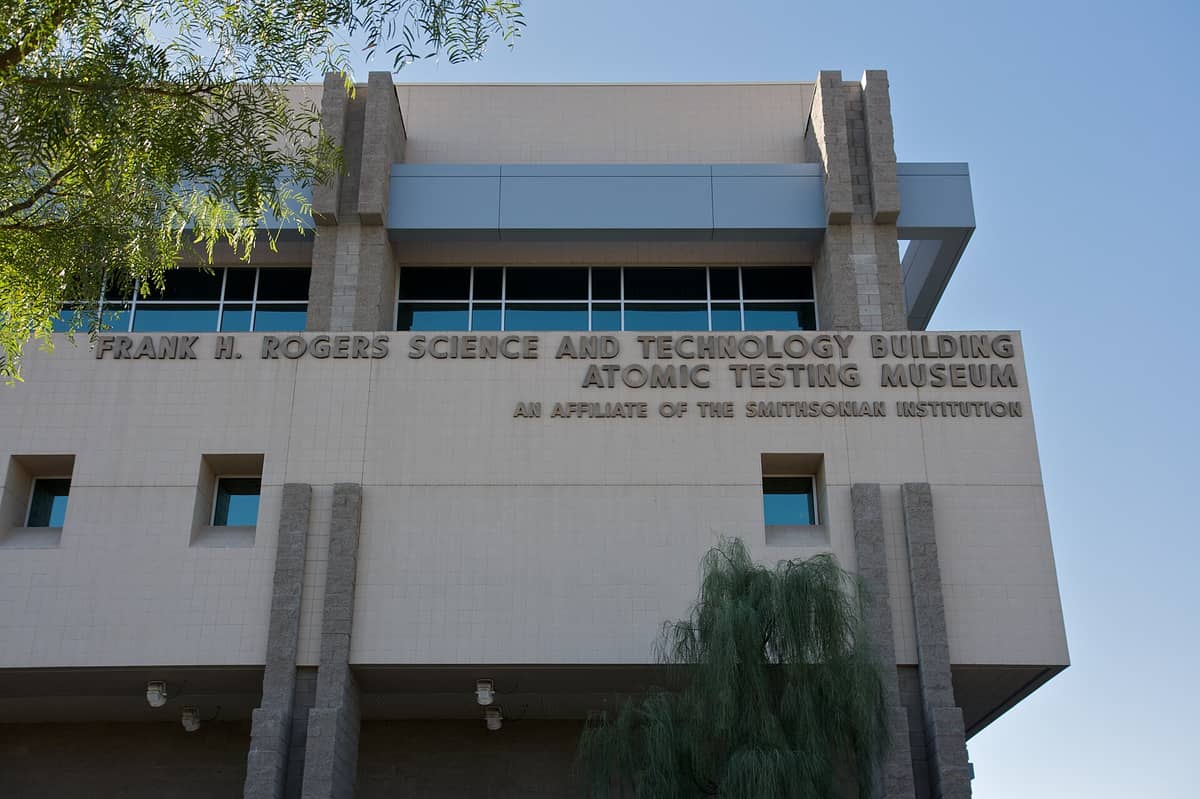
The National Atomic Testing Museum, also known as the Atomic Museum, tells the story of America's nuclear testing program at the Nevada Test Site with striking artifacts, immersive exhibits, and Cold War-era context that few attractions in Las Vegas can match. It is a Smithsonian affiliate located minutes east of the Strip on Flamingo Road.
Quick Facts
- Location
- 755 E. Flamingo Rd., Las Vegas, NV 89119 (near UNLV, east of the Strip)
- Getting There
- Short rideshare or taxi ride from Strip hotels via Flamingo Rd. RTC bus routes also serve the area.
- Time Needed
- 2 to 3 hours for a thorough visit
- Cost
- Adults $29 | Seniors 65+ $24 | Military/First Responders $25 | Nevada Residents $24 | Youth 7–17 $15 | Under 6 Free
- Best for
- History buffs, Cold War enthusiasts, science-minded travelers, and anyone curious about the atomic age
- Official website
- www.atomicmuseum.vegas
What the National Atomic Testing Museum Actually Is
The National Atomic Testing Museum, now publicly branded as the Atomic Museum, is one of the more intellectually serious institutions you will find anywhere in Nevada. It sits at 755 E. Flamingo Road, a short drive east of the Las Vegas Strip near the University of Nevada, Las Vegas (UNLV) campus, and it covers a chapter of American history that is both deeply local and globally significant: the nuclear weapons testing program, with particular focus on the Nevada Test Site between 1951 and 1992.
The museum opened in March 2005 and became an official Smithsonian Institution affiliate in 2012, a designation that reflects the depth and scholarly care of its collections. It is operated by the Nevada Test Site Historical Foundation, and its mission is to preserve the history, science, and human stories behind more than 900 nuclear tests conducted in the Nevada desert, many of them at a site roughly 65 miles northwest of Las Vegas.
This is not a casual pop-in. The exhibits require attention and reward it. If you are accustomed to Las Vegas attractions that run on spectacle and quick stimulation, this will feel different, and that difference is the point.
ℹ️ Good to know
Hours are typically Monday–Saturday 9:00 a.m.–6:00 p.m. (box office until 5:15 p.m.) and Sunday 9:00 a.m.–5:00 p.m. (box office until 4:15 p.m.). Plan to arrive at least two hours before closing. The museum is closed on Thanksgiving, Christmas Day, and New Year's Day, with adjusted early closing hours on December 24 and December 31.
Walking Through the Exhibits: What You Will See
The museum's permanent collection spans the full arc of America's nuclear program, from the Manhattan Project through the Cold War arms race to the era of treaty-mandated test bans. The layout moves logically through time, and the signage is written for engaged general visitors rather than specialists, which means you do not need a physics background to follow the narrative.
The Ground Zero Theater is the exhibit most people remember. You step into a simulated concrete bunker, the kind that test observers used during actual detonations, and experience a multi-sensory recreation of a nuclear test. The bench vibrates. The sound is visceral. The light flashes in a way that briefly overwhelms. It is not frightening in a theme-park sense, but it leaves a physical impression that no amount of reading could replicate. The effect is sobering rather than thrilling.
Beyond that centerpiece, the galleries include actual artifacts from the Nevada Test Site: test equipment, instrumentation used to measure blast yields, Cold War-era civil defense materials, and items that connect the abstract numbers of nuclear history to the physical reality of how those tests were planned, executed, and measured. There are photographs that feel almost impossible, mushroom clouds rising over the Nevada desert with Las Vegas visible on the horizon.
A dedicated section explores the human dimension of the testing program, including the workers and scientists who staffed the site, the communities downwind of the tests, and the long political and legal history of radiation exposure claims. This is the part of the museum that tends to linger with visitors. It does not offer easy conclusions.
Tickets & tours
Hand-picked options from our booking partner. Prices are indicative; availability and final rates are confirmed when you complete your booking.
Tickets to Atomic Saloon Show in Las Vegas
From 112 €Instant confirmationGo City | Las Vegas All-Inclusive Pass
From 140 €Instant confirmationFree cancellationGolden Eagle West Rim helicopter tour with Hoover Dam and Lake Mead
From 401 €Instant confirmationFree cancellationGrand Canyon 6-in-1 tour
From 417 €Instant confirmationFree cancellation
The Cold War and the Story of Las Vegas
What makes this museum unusual within Las Vegas is that it tells a story that is inseparable from the city's own mid-century identity. When atmospheric nuclear tests were being conducted at the Nevada Test Site in the 1950s, Las Vegas residents and tourists could sometimes see the flashes from hotel rooftops and casino floors. The city leaned into it. Casinos held "Dawn Bomb Parties" and marketed the spectacle as a tourist draw. The museum documents this strange chapter with period advertisements and photographs that are, depending on your perspective, either darkly funny or genuinely unsettling.
The connection between the atomic testing program and Las Vegas's post-war growth is not incidental. The federal government's investment in the Nevada desert brought workers, infrastructure, and economic activity that shaped the region. Understanding this history adds a layer of context to the city that most Strip attractions never touch. For a broader look at Las Vegas history with context, the Mob Museum in downtown Las Vegas covers a parallel thread of the city's mid-century story.
Timing Your Visit: Morning, Afternoon, and Crowds
The museum opens at 9:00 AM Monday through Sunday, and the first hour or two is reliably quiet. You will have the Ground Zero Theater largely to yourself during morning sessions, which makes the experience more personal. By midday, school groups and tour buses can fill the lobby, particularly on weekdays during the school year, which changes the atmosphere in the galleries considerably.
Afternoons tend to attract independent travelers rather than organized groups, and the pace slows again after 3:00 p.m. A late afternoon arrival only works if you accept a shorter visit — the box office typically closes 45 minutes before the museum. For most travelers, a weekday morning arrival between 9:00 and 10:00 a.m. gives the best balance of access, quiet, and sufficient time.
The museum is entirely indoors and climate-controlled, which makes it a genuinely good option during Las Vegas summers when outdoor activity becomes uncomfortable by late morning. If you are planning outdoor exploration at places like Red Rock Canyon or Valley of Fire State Park, pairing an early outdoor trip with an afternoon museum visit is a logical combination.
Getting There and Practical Logistics
The museum is located at 755 E. Flamingo Road, east of the Strip along one of Las Vegas's main cross-streets. From most Strip hotels, the ride takes under 10 minutes by rideshare or taxi and costs roughly $10 to $15 depending on your starting point and surge pricing. Parking is available on site for visitors arriving by car.
RTC bus routes serve Flamingo Road, though schedules and stop proximity vary. Check the RTC Southern Nevada website for current route information. Walking from Strip hotels is possible in theory but not practical for most visitors given the distance and Las Vegas heat for much of the year.
The museum is described as wheelchair accessible, but visitors with specific mobility needs or requirements for tactile exhibits should contact the museum directly before their visit to confirm current facility details. The galleries are spread across one main level, and the physical footprint is manageable without significant walking distances.
💡 Local tip
Nevada residents with valid ID pay $24 rather than the standard $29 adult admission. Military veterans, active-duty personnel, and first responders also qualify for a reduced rate of $25 with ID. Bring documentation if you qualify.
Photography, the Gift Shop, and What to Bring
Photography is generally permitted throughout the museum for personal use. The exhibits are well-lit for reading rather than dramatic photography, so expect documentary-style shots rather than visually striking images. The Ground Zero Theater does not allow photography during the simulation itself.
The gift shop carries books, Cold War-era reproductions, and atomic-themed merchandise that is unusual enough to be worth a look even if you are not a habitual souvenir buyer. It stocks academic titles on nuclear history alongside novelty items, which summarizes the museum's dual appeal fairly well.
There is no cafe inside the museum, so plan accordingly if you are visiting over a meal window. The UNLV campus and Flamingo Road corridor have food options nearby. Bringing a water bottle is sensible, particularly in warmer months.
Who Should Think Twice Before Visiting
The museum deals directly with nuclear weapons, radiation exposure, and the consequences of Cold War policy decisions. The tone is informative and measured rather than political, but the subject matter includes accounts of radiation-affected communities and the long-term human costs of the testing program. Visitors who find this material distressing should know what they are walking into.
Young children under 10 are likely to find the exhibits slow and text-heavy. The Ground Zero Theater simulation, while not terrifying, involves a loud blast effect and total darkness that some younger children find uncomfortable. Admission is free for children under 6, but the content is genuinely aimed at older audiences.
Travelers looking primarily for entertainment rather than education will likely find the pacing too slow. Las Vegas has no shortage of alternatives in that direction, from the High Roller observation wheel to the immersive shows at Sphere Las Vegas. But if you want something that will make you think, the Atomic Museum earns its admission price.
Insider Tips
- Arrive within the first 30 minutes of opening to have the Ground Zero Theater almost entirely to yourself. The simulation runs on a short cycle and fills quickly once tour groups arrive.
- The museum occasionally hosts special exhibitions and evening events beyond the permanent collection. Check the official website before your visit, as these are not always well-publicized through third-party travel sites.
- Ask staff about the Nevada Test Site historical tour program, which offers periodic bus tours to the actual test site. Availability is limited and requires advance registration, but it is a rare opportunity with no equivalent in the region.
- The permanent collection includes a mock Area 51 exhibit that draws visitors expecting science fiction and instead delivers declassified intelligence history. Manage expectations accordingly: it is serious documentary material, not a themed experience.
- If you are combining this with other non-casino attractions in Las Vegas, the museum pairs naturally with the Neon Museum (roughly 15 minutes north by rideshare) for a day focused on Las Vegas history rather than the Strip.
Who Is National Atomic Testing Museum For?
- History and Cold War enthusiasts who want depth beyond the surface-level Las Vegas experience
- Science-minded travelers interested in nuclear physics, weapons development, and testing methodology
- Visitors with connections to the military, defense industry, or Nevada communities affected by testing
- Travelers seeking air-conditioned indoor activities during Las Vegas summer heat
- Anyone building a Las Vegas itinerary that includes at least one genuinely substantive cultural stop
Nearby Attractions
Combine your visit with:
- Antelope Canyon
Antelope Canyon is a series of sculpted slot canyons carved into Navajo Sandstone near Page, Arizona, and one of the most visually striking natural formations in the American Southwest. Accessible only on guided tours led by licensed Navajo guides, it requires advance planning but rewards visitors with an experience unlike anywhere else within day-trip range of Las Vegas.
- Area 51 & Extraterrestrial Highway
Nevada State Route 375, officially designated the Extraterrestrial Highway in 1996, is a 98-mile desert drive skirting the perimeter of the most famous restricted military installation on Earth. It costs nothing to drive, demands serious preparation, and delivers a genuinely remote American landscape that few Strip visitors ever see.
- AREA15 Immersive Entertainment Complex
AREA15 is a 35-acre immersive entertainment and events district just off the Las Vegas Strip, packed with art installations, bizarre interactive experiences, bars, and ticketed attractions like Omega Mart. Daytime entry is free, but the real substance costs extra — and it's worth understanding the pass tiers before you arrive.
- Death Valley National Park
Just two hours from the Las Vegas Strip, Death Valley National Park is the hottest, driest, and lowest national park in the United States. From the salt flats of Badwater Basin to the sculpted dunes of Mesquite Flat, it rewards early risers and well-prepared visitors with landscapes found nowhere else on Earth.