Natchez Trace Parkway: Nashville's Gateway to a 444-mile National Scenic Road
The northern terminus of the Natchez Trace Parkway sits just southwest of Nashville, offering one of the most rewarding free drives in the American South. A paved, two-lane National Park road with no commercial traffic, the Trace follows a corridor used for thousands of years before European settlement, threading through cedar glades, forested ridges, and quiet pullouts where history surfaces at nearly every mile marker.
Quick Facts
- Location
- Northern terminus near TN-100, Pasquo area, southwest of Nashville, Tennessee
- Getting There
- Drive southwest on US-70S/Harding Pike to TN-100; no direct public transit. A car or bicycle is required.
- Time Needed
- 1–2 hours for a short scenic drive; half a day or more for cycling or stopping at multiple sites
- Cost
- Free. No entrance fee for driving, cycling, or walking the parkway.
- Best for
- Scenic drives, road cycling, nature walks, photography, history lovers
- Official website
- www.nps.gov/natr/index.htm
What the Natchez Trace Parkway Actually Is
The Natchez Trace Parkway is a 444-mile paved road and National Park unit managed by the U.S. National Park Service, stretching from Natchez, Mississippi, north to its terminus near Nashville, Tennessee, in the Pasquo area just off TN-100. It is not a highway in the conventional sense. There are no billboards, no gas stations, no fast-food exits. Commercial vehicles are prohibited. The speed limit is generally 50 mph, dropping to 40 mph in certain Tennessee sections. The result is a driving environment unlike anything else within reach of a major American city.
For Nashville visitors, the most accessible portion is the northern end, beginning at the parkway entrance off TN-100 in the Pasquo area, roughly 15 miles southwest of downtown. Even a 20-mile stretch driven from this end gives a strong sense of what the Trace offers: overarching tree canopy, rolling Middle Tennessee terrain, and a succession of small pull-offs that invite you to stop rather than rush.
ℹ️ Good to know
The parkway road is open 24 hours a day, year-round (weather permitting). Visitor centers and specific facilities maintain separate hours — check the NPS website before visiting if you plan to stop at staffed locations.
The History Beneath the Asphalt
The modern parkway traces the route of the Old Natchez Trace, a travel corridor with documented use stretching back at least 10,000 years. Indigenous peoples, including the Choctaw and Chickasaw nations, maintained it as a principal path through the deep interior of the continent. By the late 18th and early 19th centuries, it had become a critical commercial artery: flatboat operators from the Ohio Valley would float goods downriver to Natchez or New Orleans, sell their boats for lumber, and then walk or ride the Trace back north — there was no practical alternative.
Andrew Jackson used the Trace more than once, including returning north after the Battle of New Orleans in 1815. Meriwether Lewis died along the Trace in 1809 under circumstances still debated by historians; his gravesite is preserved at milepost 385.9 near Hohenwald, Tennessee. The route was designated a unit of the National Park System in 1938, and the full 444-mile parkway road was not officially completed until 2005, when the final segment near Nashville opened to traffic.
For a deeper look at the region's layered past, the Tennessee State Museum in downtown Nashville holds strong permanent collections covering both Native American history and the early American frontier period that defined the Trace's peak use.
Tickets & tours
Live prices and dates from our booking partner. If you book, we may earn a commission at no extra cost to you.
Self-Guided Driving Tour of Natchez Trace Parkway
From 15 €Instant confirmationOld Town trolley tour of Nashville
From 54 €Instant confirmationFree cancellationHatch Show Print guided tour
From 21 €Instant confirmationFree cancellationDowntown walking tour of Nashville
From 21 €Instant confirmationFree cancellation
The Drive: What to Expect on the Northern Segment
Entering from TN-100, the parkway immediately establishes its character. The road narrows to two lanes, the shoulders are clean and grassy, and the tree line closes in on both sides within the first mile. In spring, dogwoods and redbuds bloom in the understory, adding pale pink and white color against the darker trunks. In October, the same corridor turns to amber, rust, and gold. Summer is full-canopy and humid, with filtered light making the road feel like a tunnel. Winters are quieter, the trees skeletal, and on clear cold mornings the low mist sitting in the creek hollows is worth stopping for.
The northern Tennessee portion of the trace passes through cedar glades, a rare ecosystem specific to the Central Basin of Tennessee, and through mixed hardwood forest. Pull-offs are spaced regularly and are well-signed. Some have interpretive panels; others are simply cleared areas beside a creek or an old trace remnant where you can step out and stand in silence for a moment. The absence of engine noise from passing trucks is noticeable, especially on weekday mornings.
💡 Local tip
Weekday mornings between 7 and 10 a.m. are the quietest time on the northern segment. Weekend afternoons bring recreational cyclists and more passenger cars, particularly in spring and fall. If you want the road mostly to yourself, Tuesday through Thursday mornings are consistently uncrowded.
Cycling the Trace: What Serious Riders Know
The Natchez Trace Parkway has earned a strong reputation among road cyclists, and the northern segment is genuinely excellent for the sport. The surface is well-maintained, the grades are rolling rather than punishing, and the prohibition on commercial traffic eliminates the most dangerous element of road cycling on public highways. Cyclists share the lane with cars, which is standard, but the low speed limit and low traffic volume make this far more comfortable than typical Tennessee roads.
Many Nashville-based cyclists ride out from the TN-100 entrance and do out-and-back routes of 20 to 60 miles. There are no services on the parkway itself, so riders carry everything they need: water, food, and repair supplies. In summer, the heat and humidity are significant factors; starting before 8 a.m. is standard practice among regular users.
If you're combining the Trace with other outdoor time around Nashville, the Percy Warner Park is just a few miles from the parkway entrance and offers hiking trails, making a half-day pairing of both sites practical.
Photography, Timing, and Practical Logistics
The northern Trace photographs well in most seasons, but early morning light in October and late April is particularly strong. The road runs roughly northeast-southwest at this end, which means morning light angles well across the tree canopy from the east. Most pull-offs have enough shoulder space to park safely and set up a shot without blocking traffic.
There are no restrooms at the very northern terminus. The first formal facility stop heading south is typically at a staffed visitor area or rest stop at a lower milepost; check the NPS site for current facility availability before a long drive or ride. For a day trip, the simplest approach is to use facilities before entering the parkway from TN-100.
Bring your own water regardless of how far you plan to go. In summer, the shade from the tree canopy reduces direct sun, but the humidity in Middle Tennessee between June and August is significant. A full water bottle per person is minimum; two is more practical for anything longer than an hour on foot or bike.
⚠️ What to skip
There are no gas stations or food vendors on the parkway itself. Fill your tank and pick up any supplies before entering from TN-100. Cell service can be intermittent on some stretches.
Who This Is Really For — And Who Should Think Twice
The Natchez Trace Parkway is an exceptional place if you want a genuine break from the city and are comfortable in a car or on a bicycle. It is not a theme park experience. There are no performers, no visitor services mid-drive, and no scheduled events. Its appeal is intrinsic: the quality of the road environment, the depth of the historical context, and the simple fact that it is free and unhurried.
Visitors who want concentrated activity, dining, or entertainment should stay closer to downtown Nashville and consider the Trace as an add-on to a longer trip rather than a primary destination. It pairs especially well with visits to Belle Meade Historic Site, which sits just a few miles east on TN-100 and adds a substantive historical stop to the same southwest Nashville route.
Travelers with limited mobility should note that the parkway road itself is fully paved and accessible by vehicle, but individual trailheads and overlooks vary significantly in their accessibility. The NPS accessibility page for the Natchez Trace Parkway lists specific site details; it is worth reviewing before planning a visit if step-free access is a requirement.
If you're planning a broader outdoor day and want context on what's available around Nashville, the hiking near Nashville guide covers trail options at varying difficulty levels across the region.
Insider Tips
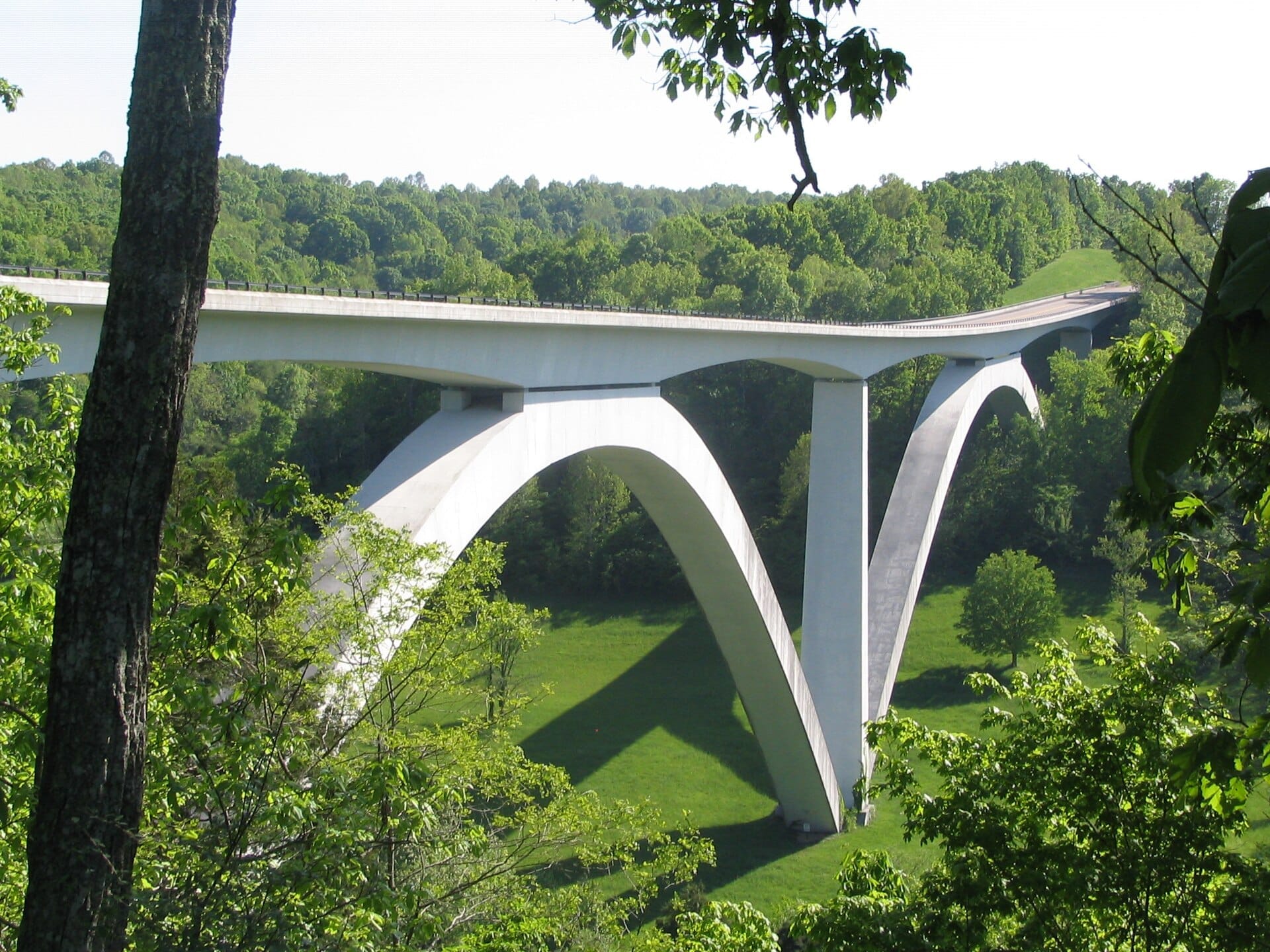
- The double-arched bridge at milepost 438 near Franklin is a frequently photographed landmark and worth the short detour south from Nashville. It was completed in 1994 and is considered one of the most architecturally distinctive structures on the entire parkway, having won the Presidential Award for Design Excellence in 1995.
- Cyclists entering from TN-100 will find a small gravel parking area on the right just after the parkway entrance sign. It fills by mid-morning on spring and fall weekends. Arrive before 8 a.m. if you want a guaranteed spot.
- The Old Trace Drive, a short unpaved section near milepost 401 in Tennessee, lets you walk or slowly drive an actual remnant of the original foot path worn into the earth over centuries. It is one of the most atmospheric spots on the northern route.
- Autumn color on the northern segment typically peaks between mid-October and early November. The exact week shifts year to year depending on rainfall and temperature; check local foliage reports the week before you plan to visit.
- The parkway has no entrance fee and is technically accessible at multiple points along its length, not just from TN-100. If you're already in the Leiper's Fork area, you can pick up the Trace further south and drive north toward Nashville for a different perspective on the approach.
Who Is Natchez Trace Parkway For?
- Road cyclists looking for a commercial-truck-free, well-maintained route close to Nashville
- Drivers who want a slow, scenic alternative to interstate travel and enjoy stopping at historical markers
- History enthusiasts interested in Indigenous American trails, the early American frontier, and Civil War-era travel routes
- Photographers working the golden hour in spring or fall foliage season
- Travelers who want a free, low-key outdoor experience without committing to a full hiking itinerary
Nearby Attractions
Combine your visit with:
- Arrington Vineyards
Arrington Vineyards is a working winery set on 95 acres of rolling Tennessee countryside about 25 miles south of Nashville. With 16 acres of estate vines, five tasting rooms, and a calendar full of live music events, it offers a genuinely relaxed alternative to the city's usual attractions.
- Carnton
Built in 1826 and thrust into Civil War history on a single November night in 1864, Carnton in Franklin, Tennessee stands as one of the most significant and sobering historic sites near Nashville. The mansion served as the principal Confederate field hospital after the Battle of Franklin, and four Confederate generals killed in action were laid on its back porch. Today it operates as a museum alongside the McGavock Confederate Cemetery, one of the largest privately owned Confederate cemeteries in the United States.
- Downtown Franklin Historic District
About 21 miles south of Nashville, the Downtown Franklin Historic District packs genuine 19th-century architecture, Civil War history, and an independently owned Main Street into a walkable few blocks. Entry is free, the streets are open all day, and it rewards slower travelers who actually stop to look up.
- GEODIS Park
Opened in May 2022, GEODIS Park is one of the largest soccer-specific stadiums in the United States, seating over 30,000 fans. Home to Nashville SC and a growing concert calendar, it brings serious sports infrastructure to a city better known for music.
Planning a trip? Discover personalized activities with the Nomado app.