Marathon Village: Nashville's Most Intriguing Industrial Reinvention
Marathon Village occupies the century-old brick factory buildings where one of the earliest Southern automobile manufacturers once operated. Today the four-city-block complex in Nashville houses distilleries, independent retailers, creative studios, and preserved automotive history — all free to enter.
Quick Facts
- Location
- 1305 Clinton St, Nashville, TN 37203 — Charlotte Avenue corridor, just west of downtown
- Getting There
- Best reached by rideshare, car, or Old Town Trolley tour routes; limited free street parking on weekdays, paid lots (~$10) nearby
- Time Needed
- 1.5 to 3 hours depending on how many tenants you visit
- Cost
- Free to enter the complex and view historic displays; individual shops, distilleries, and experiences charge separately
- Best for
- History enthusiasts, whiskey lovers, independent shopping, creative architecture fans
- Official website
- http://marathonvillage.net/visit
What Is Marathon Village?
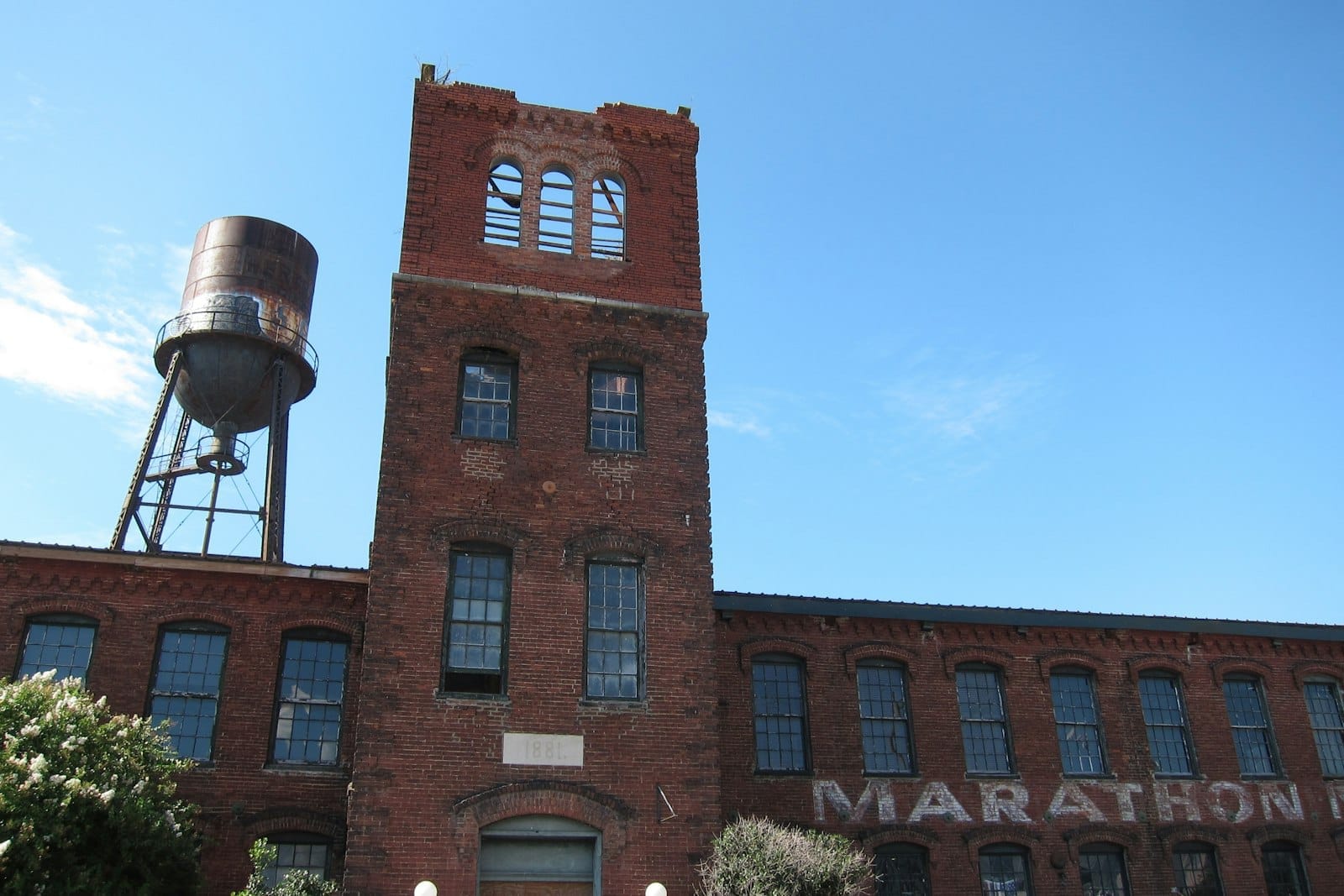
Marathon Village is a sprawling adaptive-reuse complex spread across several blocks of early-twentieth-century brick factory buildings on Clinton Street, just minutes west of downtown Nashville. The bones of the place belong to Marathon Motor Works, which operated here from roughly 1910 to 1914 and was among the earliest automobile manufacturers to operate in the American South. When production ceased, the buildings drifted through various industrial uses before falling into disrepair. Renovation and adaptive reuse began in the late 1980s, gradually transforming the rusting factory floors into what the complex is today: a concentrated pocket of distilleries, independent retailers, creative offices, artist studios, and event venues.
Walking in for the first time, the scale surprises most visitors. The exterior is all weathered red brick and tall factory windows, but inside, wide corridors open into individual spaces that feel like a small village tucked inside a building. The smell shifts as you move: roasting coffee near one entrance, the faint grain-and-oak scent of whiskey production around the distillery section, the occasional waft of candle wax or leather from a boutique. It is an unusual sensory combination that nothing else in Nashville quite replicates.
💡 Local tip
General access to Marathon Village's public halls and historic automotive displays is free. Budget additional money for distillery tastings, retail, and any ticketed experiences run by individual tenants.
The History That Justifies the Visit
The Marathon Motor Works story is genuinely worth knowing before you arrive. Founded in 1907, the company later built automobiles in these very buildings at a time when the American auto industry was still in its chaotic, pre-Ford-dominance phase. That a Southern city was manufacturing cars at this early stage is historically significant, and Marathon Village has preserved physical evidence of that era throughout the common areas: vintage Marathon automobiles are displayed in the interior halls, along with period signage and informational panels that explain the factory's original layout and the cars it produced.
The company folded by 1914, less than a decade after it began, unable to compete as the industry consolidated around larger Northern manufacturers. What remained was a set of exceptionally well-built factory structures that outlasted the business by more than a century. The quality of the original construction is visible in the exposed brick walls, the heavy timber ceiling beams, and the cast-iron detailing that renovation crews preserved rather than replaced. For anyone interested in American industrial architecture, the bones of the building are themselves the attraction.
For broader context on Nashville's industrial and cultural past, the Tennessee State Museum covers the state's economic and manufacturing history in depth, and pairs well with a visit to Marathon Village.
Tickets & tours
Live prices and dates from our booking partner. If you book, we may earn a commission at no extra cost to you.
Old Town trolley tour of Nashville
From 54 €Instant confirmationFree cancellationHatch Show Print guided tour
From 21 €Instant confirmationFree cancellationDowntown walking tour of Nashville
From 21 €Instant confirmationFree cancellationNashville Downtown Underground Donut Tour
From 46 €Instant confirmationFree cancellation
What to See and Do Inside
The tenant mix at Marathon Village changes over time, but the complex has consistently housed a combination of craft distilleries, independent boutiques, a few food and drink options, tattoo studios, and creative production spaces. The distillery presence is one of the main draws. Nelson's Green Brier Distillery has been a prominent tenant, offering tours and tastings of their Tennessee whiskey and Belle Meade Bourbon products inside the historic factory setting. The juxtaposition of copper pot stills against original brick and timber is genuinely photogenic.
If the distillery experience interests you, it fits naturally into a broader Nashville spirits day. The Nashville distillery tour guide covers the city's full range of craft spirits options, including how to combine multiple stops efficiently.
Beyond the distillery, the retail shops skew toward artisan and locally made goods: handmade leather goods, vintage-inspired apparel, specialty candles, and design objects. This is not a mall. The individual spaces feel curated rather than commercial, and browsing without buying is entirely acceptable. The historic car displays in the hallways give even non-shoppers a reason to walk the full length of the building.
Marathon Village also functions as an event venue, and the large interior spaces host private events, markets, and occasional public programming. If you happen to visit during an event weekend, expect significantly higher foot traffic and more activity in usually quieter corridors. Checking the official site before visiting is useful if you prefer a quieter experience or, conversely, want to catch something specific.
How the Experience Changes by Time of Day
Weekday mornings, roughly before 11 a.m., are the quietest time to visit. The corridor lighting is softer, the building feels more like a working creative campus than a tourist destination, and you can move through the automotive history displays without navigating around groups. This is the best window for photography of the architecture and the vintage cars.
Midday on weekends brings the most activity. Shops are fully staffed, distillery tours fill up, and the hallways have the low hum of browsers and small groups. The energy is pleasant rather than overwhelming, but visitors who want space to look around carefully will prefer a weekday afternoon. Late afternoon on any day is a reasonable compromise: business is winding down, but shops are still open.
⚠️ What to skip
Individual tenant hours vary and are not standardized across the complex. Shops typically open around 10:00–11:00 and close by 18:00–19:00, with some Sunday hours from noon onward. Confirm specific business hours before making a detour.
Practical Information: Getting There and Getting Around
Marathon Village sits on Clinton Street in the Charlotte Avenue corridor, roughly a ten-minute drive from downtown Nashville. Rideshare is the simplest option: drop-off is direct, and the complex is compact enough that you only need one arrival point. Driving visitors should be aware that parking can involve a fee in certain nearby lots, reported by visitors at around $10, while some street parking on weekdays is available at no charge. Neither option is guaranteed, so build in a few extra minutes.
Old Town Trolley tour routes have historically included Marathon Village as a stop, which makes it a convenient addition if you are already on a city tour. WeGo Public Transit bus routes serve the broader corridor, but Marathon Village is not a dedicated stop; a short walk from the nearest bus stop is required. Visitors with mobility considerations should note that the complex involves brick-floored corridors and some uneven surfaces between buildings; verifying specific accessibility details directly with individual tenants or the complex management before visiting is advisable.
If you are planning your full day around Nashville's west side, the guide to getting around Nashville has current information on WeGo routes and rideshare logistics.
Photography and What to Wear
The industrial aesthetic makes Marathon Village one of Nashville's better photography environments for those who find the neon-and-honky-tonk of Broadway less interesting. The combination of original brick, timber, cast iron, and vintage automobiles against contemporary retail fitouts creates strong visual contrast. Wide-angle lenses capture the full corridor scale effectively. Natural light from the large factory windows is best in the morning; overhead lighting in the afternoon can feel flat in some sections.
For those building a Nashville photography itinerary, Nashville's mural scene offers outdoor counterparts to the interior industrial aesthetic of Marathon Village, and the two complement each other well as a half-day pairing.
Dress practically. The interior corridors are covered and climate-controlled in most sections, but moving between buildings or stepping outside involves Nashville's seasonal conditions. In summer that means genuine heat and humidity; comfortable, breathable clothing is sensible. In winter, the brick walls retain cold, and layering helps. Flat shoes or sneakers are better than heels on uneven brick floors.
Is Marathon Village Worth Your Time?
For most Nashville visitors spending the bulk of their time on Broadway or Music Row, Marathon Village sits outside the automatic itinerary. That is partly what makes it interesting. It is not performing for the mass tourist market in the way that Lower Broadway does. The visitor experience here is quieter, more self-directed, and shaped more by genuine interest in the specific tenants than by the ambient energy of a crowd.
That said, there is an honest caveat worth stating: if your primary interest is live music, Nashville history broadly, or the major cultural institutions, Marathon Village is a secondary stop rather than a centerpiece. The automotive history displays are engaging but modest in scale compared to a dedicated museum. The retail is interesting but not exceptional. The distillery is the strongest single draw. Visitors who come for all three together will feel the visit was worthwhile; those who come expecting a large-scale attraction may find it smaller than anticipated.
If you are structuring a full Nashville itinerary and trying to decide how Marathon Village fits, the two-day Nashville itinerary offers a practical framework for prioritizing stops based on available time.
Insider Tips
- Nelson's Green Brier Distillery tours inside the complex are popular on weekends — book in advance or arrive right when they open to secure a spot without waiting.
- The vintage Marathon automobiles displayed in the interior corridors are free to view and often overlooked by visitors who head straight to the shops. Spend ten minutes with the informational panels before browsing — the factory context changes how you read the whole space.
- Weekday lunch hours (roughly 11:30 a.m. to 1:30 p.m.) bring a wave of local office workers from the creative studios based in the complex. The atmosphere is livelier than a typical Tuesday morning without the weekend tourist crowd.
- Street parking on weekdays along Clinton Street and adjacent blocks can be free, but it fills quickly after 10 a.m. Arriving before 9:30 a.m. gives you the best chance of a free spot close to the entrance.
- The complex hosts periodic markets and pop-up events that bring additional vendors into the common areas. Checking the Marathon Village social channels or website before your visit can reveal whether a market weekend coincides with your trip — these events meaningfully change the experience.
Who Is Marathon Village For?
- Whiskey and spirits enthusiasts looking for a distillery tour in a genuinely historic setting
- Architecture and industrial history buffs drawn to early-twentieth-century American factory buildings
- Independent shoppers who prefer locally made and artisan goods over chain retail
- Photographers seeking Nashville interiors beyond the neon and honky-tonk aesthetic
- Visitors planning a half-day in the Germantown and Charlotte Avenue area who want a self-paced, free-admission stop
Nearby Attractions
Other things to see while in Germantown:
- City Winery Nashville
City Winery Nashville is one of the few places in Music City where you can sip house-made wine while watching a nationally touring act in an intimate seated venue. Located at 609 Lafayette Street, this 36,000-square-foot facility blends a working urban winery, full-service restaurant, wine bar, and concert hall into one destination worth planning around.
- Marathon Music Works
Housed in a repurposed early-1900s automobile factory in Nashville's Marathon Village, Marathon Music Works is a 1,500-capacity live music venue with serious sound, industrial bones, and a programming range that stretches from indie rock to country to electronic. Here is everything you need to decide if a show here is worth your night.
- Nashville Farmers' Market
The Nashville Farmers' Market is a 16-acre, year-round public market on Rosa L. Parks Boulevard, steps from Bicentennial Capitol Mall State Park. It combines open-air farm sheds selling Tennessee-grown produce with a Market House food hall housing nearly 30 restaurants and shops spanning cuisines from across the globe. Admission is free.
- Nelson's Green Brier Distillery
Nelson's Green Brier Distillery brings a 160-year-old Tennessee whiskey legacy back to life inside Nashville's atmospheric Marathon Village. Expect guided tours, hands-on tastings, and a story that stretches from pre-Prohibition Greenbrier to a modern craft revival run by two brothers.
Planning a trip? Discover personalized activities with the Nomado app.