Lokrum Benedictine Monastery Ruins: A Thousand Years of Stone and Sea
The ruined Benedictine Monastery of St. Mary on Lokrum Island traces its origins to 1023, making it one of the oldest religious sites in the Dubrovnik region. Set among peacocks, subtropical gardens, and Adriatic light, the crumbling cloisters offer a rare blend of medieval history and island atmosphere that no other site near Dubrovnik can replicate.
Quick Facts
- Location
- Lokrum Island, ~600m off Dubrovnik Old Port
- Getting There
- Ferry from Dubrovnik Old Port (Porporela) every 30 min in summer; ~10-15 min crossing
- Time Needed
- 1.5 to 3 hours (monastery + island exploration)
- Cost
- Island entry ~€30 (2026, includes monastery ruins access); verify current price at lokrum.hr
- Best for
- History lovers, photographers, families wanting a half-day escape from the Old Town
- Official website
- www.lokrum.hr/en/history
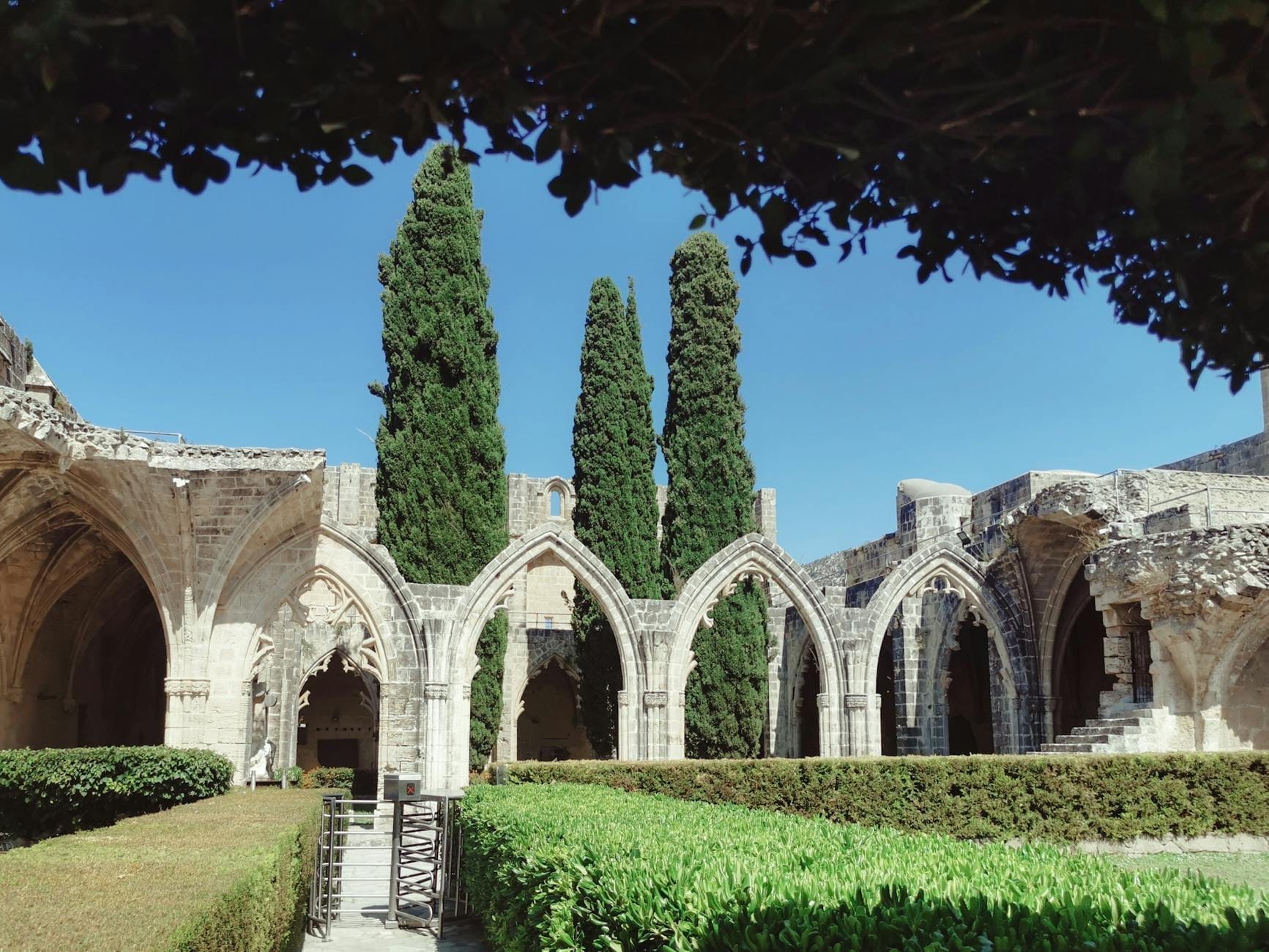
What the Benedictine Monastery of St. Mary Actually Is
The Benedictine Monastery of St. Mary (Benediktinski samostan sv. Marije) is a partially ruined medieval complex sitting near the center of Lokrum Island, a short ferry ride from Dubrovnik's Old Port. First documented in 1023, the monastery operated continuously for centuries before the Benedictine monks were expelled during the French occupation in 1798. The 1667 earthquake had already damaged much of the original structure, and without a monastic community to maintain it, the complex gradually fell into the state you see today: roofless stone walls, a restored cloister, a working restaurant in what was once the refectory, and a botanical garden that has grown up around the ruins over two centuries.
This is not a museum in the conventional sense. There are no guided audio tours playing through speakers, no climate-controlled galleries, no velvet ropes. What you get instead is open-sky ruins with enough surviving architecture to understand the scale and ambition of what the monks built here, surrounded by peacocks that roam freely through the cloisters as if they own the place. Which, in practical terms, they do.
ℹ️ Good to know
The island entry fee (around €30 as of 2026) covers access to the monastery ruins, botanical garden, and the rest of Lokrum. Verify the current price at lokrum.hr before your visit, as rates are updated seasonally.
The History Behind the Stones
Lokrum's monastic history stretches back over a thousand years, making it one of the oldest documented religious sites in the broader Dubrovnik region. The abbey was established in 1023, and over the following centuries it accumulated land, wealth, and political connections to the Republic of Ragusa, the independent city-state that governed Dubrovnik until Napoleon's forces dissolved it in 1808. The monks were part of the social fabric of Ragusan life, and the island itself held a semi-sacred status in the city's collective imagination.
The 1667 earthquake that devastated much of Dubrovnik also left its mark on the monastery, but it was the forced departure of the monks in 1798 that sealed the complex's fate. Without maintenance, the roofs collapsed, the chapels were exposed to the elements, and the gardens ran wild. Paradoxically, that abandonment created something more interesting than a fully restored building might have been: a landscape where architecture and nature have been negotiating a truce for more than two hundred years.
The ruins sit within a broader context worth understanding before you visit. Lokrum was also briefly the residence of Archduke Maximilian of Austria in the 1850s and 1860s, and his influence is visible in the more formal sections of the botanical garden. For more on the island's layered history, the Lokrum Botanical Garden page covers the horticultural side of what Maximilian left behind.
Tickets & tours
Live prices and dates from our booking partner. If you book, we may earn a commission at no extra cost to you.
Half-day tour to Trebinje and Tvrdos Monastery with wine tasting
From 166 €Instant confirmationFree cancellationMostar and Kravice Waterfalls excursion from Dubrovnik
From 120 €Instant confirmationFree cancellationDubrovnik Old Town Tour ith Cable Car Ride
From 56 €Instant confirmationFree cancellationMostar and Kravice Waterfalls full-day tour with pickup from Dubrovnik
From 66 €Instant confirmationFree cancellation
What You See When You Walk Through
The ferry docks at the northern tip of the island, and most visitors follow the main path south toward the monastery complex. The approach is through dense Mediterranean vegetation, with stone pines and laurel creating a tunnel effect that feels deliberately theatrical. When the cloister comes into view, it tends to stop people mid-stride.
The cloister is the visual centerpiece and the best-preserved section of the complex. Its arched arcades surround a rectangular courtyard where a small fishpond sits at the center. The stonework is Romanesque in its proportions, heavy and deliberate, with carved details that repay close inspection. Peacocks pass through regularly, and their calls, a harsh two-note cry that echoes off the stone walls, are the unlikely soundtrack to the whole experience.
Beyond the cloister, the ruins open into larger roofless chambers where you can trace the outline of the original church nave and side chapels. The walls rise high enough to give a real sense of the building's scale, but gaps and collapsed sections let in the sky and surrounding vegetation. It is best described as architectural debris arranged in a way that is still legible. A restaurant now operates in a restored portion of the complex, which some visitors find incongruous and others consider a practical convenience.
💡 Local tip
Photography tip: The cloister is most photogenic in the morning, when light enters at a low angle through the eastern arches. By midday the courtyard fills with harsh overhead light that flattens the stonework. Arrive on the first ferry of the day (typically around 9am in peak season) to have the cloister largely to yourself.
How the Experience Changes by Time of Day
Lokrum's ferry service runs frequently in summer, which means the monastery ruins can get crowded by late morning. The pattern is predictable: the first two ferries bring a mix of early risers and photography-focused visitors. By 11am, the island has enough people that the cloister courtyard is rarely empty. The peak crowd arrives between noon and 3pm, partly because that is when cruise ship passengers tend to visit after their Old Town walking tours.
The late afternoon, from about 4pm onward, brings a different quality to the ruins. The crowds thin, the light turns golden and rakes across the stone at a low angle, and the peacocks become more active. The island closes to new arrivals at 6pm, so if you time your ferry to arrive around 3:30 or 4pm, you will have roughly two hours in increasingly favorable conditions before the last boat back.
⚠️ What to skip
Overnight stays on Lokrum are not permitted. The last ferry back to Dubrovnik departs before 6pm in season, but confirm the exact timetable at the dock or at lokrum.hr before you go, as hours vary by month.
Getting There and Practical Logistics
Ferries depart from Porporela, the pier at the eastern end of Dubrovnik's Old Town, roughly every 30 minutes during peak summer season. The crossing takes 10 to 15 minutes. Tickets are sold at the dock and typically include island entry. The service is seasonal, running primarily from spring through early autumn; it does not operate reliably in winter.
On the island itself, paths are generally clear but uneven. The monastery complex involves some irregular stone paving and a few steps, which makes it awkward for pushchairs and difficult for anyone with significant mobility limitations. Flat sandals are workable for the monastery area alone, but if you plan to explore more of the island after visiting the ruins, proper walking shoes are worth it. The island has no vehicle access whatsoever.
Lokrum combines naturally with several other island attractions on the same visit. The Dead Sea Lake (Mrtvo More) is a short walk from the monastery and offers saltwater swimming in a sheltered lagoon, a worthwhile contrast to the historical weight of the ruins. Budget at least two to three hours total if you want to do both properly.
Who Will Get the Most From This Site (And Who Might Not)
The monastery ruins reward visitors who are willing to slow down and look carefully. If you arrive expecting clearly labeled rooms with explained exhibits, you will be mildly disappointed. The site is atmospheric and historically significant, but it does not do much interpretive work for you. A brief read of the history beforehand makes a significant difference in how much meaning you extract from what you see.
For travelers already exploring Dubrovnik's ecclesiastical architecture, the monastery makes an interesting counterpoint to the better-preserved religious buildings in the Old Town. The Franciscan Monastery in Dubrovnik has a similarly beautiful cloister but in far better condition, which gives you a useful frame of reference for what Lokrum's ruins once looked like in their prime.
Visitors primarily focused on beach time may find the island entry fee hard to justify purely for the ruins, since the accessible swimming spots on Lokrum are rocky rather than sandy. Families with younger children will find the peacocks and open spaces genuinely delightful, though the ruins themselves hold limited attention for kids under eight or nine. Travelers with significant mobility challenges should know in advance that the terrain on the island is rough and uneven throughout.
💡 Local tip
If your time in Dubrovnik is limited to one or two days, consider whether Lokrum fits your priorities. The Old Town walls, the cable car, and the main city sights should come first. Lokrum, including the monastery, is best treated as a half-day addition once you have covered the essentials.
Insider Tips
- The restaurant in the restored refectory section of the monastery complex serves food and cold drinks at prices comparable to Old Town tourist spots. It is a reasonable option if you are spending most of the day on the island, but not worth a special trip on its own.
- The peacocks on Lokrum are fearless and will approach closely, especially near the cloister courtyard. Do not feed them or try to handle them. They will not move for photographs, which is useful to know.
- Bring cash for the ferry ticket. While payment options vary, having euros in small denominations avoids any complications at the dock kiosk.
- The walls of the monastery complex provide useful shade during the midday heat, making this one of the few outdoor Dubrovnik attractions that is actually more comfortable in summer than you might expect, as long as you stay within the ruins rather than on the open paths.
- The island's Game of Thrones connection (it was used as a filming location for Qarth scenes) draws some visitors specifically for that reason. The monastery itself was not heavily featured, but the overall island setting appeared in Season 2. For the full picture of Dubrovnik filming locations, this context is worth noting.
Who Is Lokrum Benedictine Monastery Ruins For?
- History and architecture enthusiasts who want medieval context beyond the Old Town
- Photographers looking for Adriatic light on ancient stone without crowds in the early morning
- Couples wanting a quieter half-day alternative to Dubrovnik's main sights
- Families with older children who can appreciate ruins and enjoy roaming the broader island
- Travelers combining the ruins with a swim at Mrtvo More lake for a complete island day
Nearby Attractions
Other things to see while in Lokrum Island:
- Lokrum Botanical Garden
Founded in 1959, the Botanical Garden on Lokrum is the island's botanical garden. Just a 10-minute ferry ride from Dubrovnik's Old City port, it spans 3.3 hectares and shelters around 500 plant species, including the largest collection of eucalyptus outside Australia.
- Lokrum Dead Sea (Mrtvo More)
Mrtvo More, or the Dead Sea, is a small natural saltwater lake tucked into the southern interior of Lokrum Island, just 600 metres offshore from Dubrovnik. Fed by the Adriatic through underwater fissures and reaching 10 metres deep, it offers calm, warm swimming in a striking rocky setting far removed from the chaos of the mainland beaches.
Planning a trip? Discover personalized activities with the Nomado app.