Las Vegas Natural History Museum: What to Expect Before You Go
The Las Vegas Natural History Museum sits in the city's Cultural Corridor, just north of downtown, offering a genuine natural science experience at a fraction of Strip prices. From animatronic dinosaurs to live sharks and Mojave Desert ecology, it makes a compelling case for a mid-morning detour.
Quick Facts
- Location
- 900 Las Vegas Blvd N, Las Vegas, NV 89101 — Cultural Corridor, north of Downtown
- Getting There
- Free on-site parking; RTC bus routes serve Las Vegas Blvd N. Approx. 10-min drive from Fremont Street.
- Time Needed
- 1.5 to 2.5 hours for a thorough visit; under 2 hours for most adults without children
- Cost
- Adults ~$14 | Seniors/Students/Military ~$12 | Children 3–11 ~$7 | Under 3 free. Verify current prices at lvnhm.org.
- Best for
- Families with kids, budget-conscious travelers, natural history enthusiasts, and anyone looking for a cool indoor break
- Official website
- www.lvnhm.org
What the Las Vegas Natural History Museum Actually Is
The Las Vegas Natural History Museum, officially named the Las Vegas Science & Natural History Museum, is a nonprofit institution at 900 Las Vegas Blvd N, a short drive north of the Fremont Street casino cluster. It is a Smithsonian Affiliate, which means it operates under a collaboration with the Smithsonian Institution in Washington, D.C., and meets national standards for collections management and public education. That affiliation matters: it signals a level of curatorial rigor that casual attraction listings often overlook.
The museum is unapologetically aimed at families and school groups, but that does not make it uninteresting for adults traveling without children. The dinosaur exhibits are anchored by animatronic specimens that move and vocalize, the marine gallery contains live sharks in a large tank, and the Mojave Desert ecology section is one of the more honest presentations of the ecosystem that surrounds Las Vegas on all sides. If you have already walked the Strip and want two hours of air-conditioned substance, this is one of the better uses of a weekday morning downtown.
💡 Local tip
Arrive at or just after 9:00 a.m. on a weekday. School groups typically arrive mid-morning, and the dinosaur gallery in particular gets loud and crowded between 10:00 a.m. and noon. Early arrival means you have the animatronic T. rex largely to yourself.
The Exhibits: What You Will Actually See
Prehistoric Life Gallery
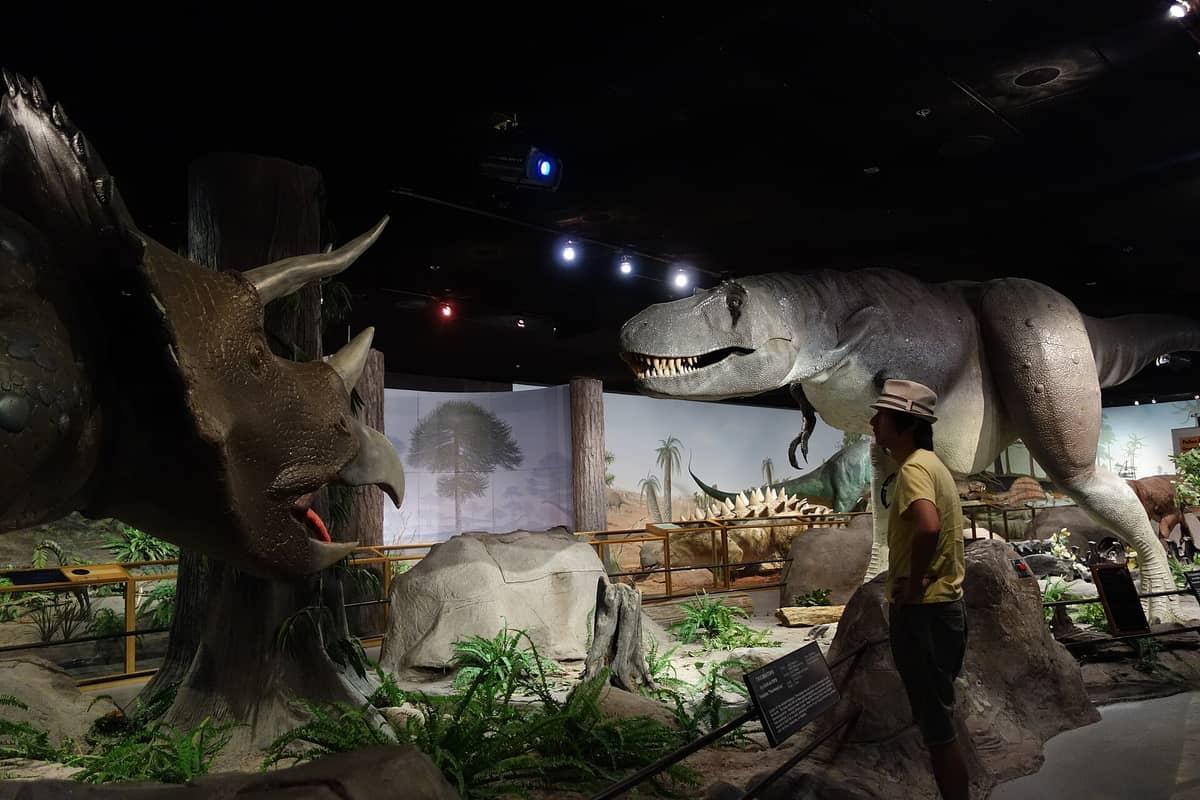
The dinosaur gallery is the centerpiece, and it delivers more than the admission price suggests. Life-size animatronic dinosaurs occupy a large open hall, and several of them move with enough mechanical convincingness to genuinely startle younger visitors. The T. rex is the focal point, positioned at the room's axis so it fills your sightline from the entrance. The lighting in this section is deliberately dim, which adds atmosphere but makes detail photography challenging without adjusting your phone's exposure settings manually.
Beyond the animatronics, the gallery includes fossil specimens and skeletal casts with interpretive panels covering the Cretaceous period and prehistoric Nevada. The region has a richer paleontological history than most visitors realize: Nevada's ancient lake beds and desert sediments have yielded significant fossil records, and the museum contextualizes the exhibits within that local geological story.
Marine Life Gallery and the Shark Tank
The marine section features a large aquarium tank with live sharks — a genuinely unexpected element in a desert city. The tank draws sustained attention from visitors of all ages, not just children. The sharks are smaller reef species rather than the massive open-ocean varieties, but watching them move through the water is calming and oddly meditative after the sensory intensity of the prehistoric gallery.
The surrounding exhibits cover ocean ecosystems, shark biology, and marine conservation. The quality of signage here is above average for a regional museum, with clear explanations pitched at a reading level that works for older children and adults simultaneously. If you are visiting with kids around age 8 to 12, this section tends to hold their attention longer than the animatronic dinosaurs.
Mojave Desert and Nevada Ecology Exhibits
One section that tends to be underappreciated by visitors focused on dinosaurs is the Nevada and Mojave Desert ecology exhibit. Las Vegas sits at roughly 2,000 feet elevation in the Mojave Desert basin, surrounded by mountain ranges that push well above 10,000 feet. The ecological diversity across that elevation gradient is substantial, and the museum maps it clearly: from creosote scrub at the valley floor to pinyon-juniper woodland and alpine zones on peaks like Mount Charleston.
This section provides useful context if you are planning outdoor excursions during your trip. Understanding the Mojave's flora and fauna before heading out to Red Rock Canyon or Valley of Fire makes those landscapes more legible when you arrive.
Tickets & tours
Hand-picked options from our booking partner. Prices are indicative; availability and final rates are confirmed when you complete your booking.
Boulder City historic self-guided tour from Las Vegas
From 23 €Instant confirmationFree cancellationBright lights historic Las Vegas tour
From 101 €Instant confirmationFree cancellationGo City | Las Vegas All-Inclusive Pass
From 140 €Instant confirmationFree cancellationHighlights Over the Grand Canyon air tour from Las Vegas
From 195 €Instant confirmationFree cancellation
How the Experience Changes by Time of Day
The museum opens at 9:00 a.m. daily and closes at 4:00 p.m. The first ninety minutes are often the quietest. Weekday mornings before 10:30 a.m. can offer a noticeably different experience from mid-morning onwards, when organized school field trips may arrive. Those groups are generally well-supervised, but they move through rooms collectively and change the acoustic character of the galleries significantly — the dinosaur hall especially.
Afternoons after 2:00 p.m. see a gradual thinning of crowds as school groups depart, but you lose the buffer of time before closing. The marine gallery stays relatively calm throughout the day because it sits apart from the main school group circulation path. If you cannot visit early, heading to the marine section first and working backward through the building is a reasonable strategy.
⚠️ What to skip
The museum is closed on Thanksgiving and Christmas Day, and operates modified hours on some other holidays including New Year's Day, Easter, and Christmas Eve. Confirm current hours at lvnhm.org before you visit, especially around major holidays.
Getting There and Practical Logistics
The museum is on Las Vegas Boulevard North, in what the local cultural community refers to as the Cultural Corridor — a stretch of civic institutions that includes the Nevada State Museum and the Discovery Children's Museum, all within walking distance of each other. Free parking is available on-site, which removes one of the usual friction points of a downtown detour.
If you are staying on the Strip and do not have a rental car, the most practical approach is a rideshare. The drive from the center of the Strip takes roughly 10 to 15 minutes under normal traffic. RTC bus routes run along Las Vegas Boulevard, though travel time by bus from the Strip to the Cultural Corridor runs longer and requires checking the current RTC schedule. For a broader orientation to moving around the city without a car, the getting around Las Vegas guide covers your main options clearly.
The building is single-story with level flooring throughout, which makes it straightforward for strollers and wheelchairs. Visitors with specific accessibility requirements — including ASL interpretation or specialized services — should contact the museum directly before visiting, as service availability is not fully detailed in standard visitor listings.
Honest Assessment: Worth Your Time?
At roughly $14 for adult admission, the Las Vegas Natural History Museum offers solid value for what it delivers. The Smithsonian affiliation is a meaningful quality signal, and the combination of live animals, animatronic dinosaurs, and genuinely informative regional ecology exhibits makes it more substantive than its modest price point implies.
That said, travelers expecting the scale or depth of a major metropolitan natural history museum — think the Smithsonian National Museum of Natural History or the American Museum of Natural History in New York — will find this compact by comparison. It is a regional institution with regional scope. For Las Vegas, it is the best natural history offering in the city, and it pairs well with a morning at the Mob Museum or an afternoon at the Neon Museum, both of which are a short drive away in the same downtown corridor.
Visitors who are exclusively interested in casino gaming, nightlife, or high-end dining will find nothing here that connects to those interests. Travelers visiting Las Vegas solely for the Strip experience and with limited time are better served spending their hours elsewhere. This museum rewards curiosity — and travelers who build intellectual texture into their trips will find it worthwhile.
Photography and Practical Tips for the Visit
Photography is permitted throughout the museum. The dinosaur gallery's low ambient light is the main challenge: smartphones default to slower shutter speeds that blur the animatronic movement. Bumping your ISO manually or using your camera's portrait mode, which tends to open the aperture wider, helps significantly. The shark tank benefits from patience — wait for a shark to pass close to the glass before shooting, since the tank's depth flattens distant subjects.
Wear comfortable shoes; the visit involves more standing and slow walking than you might expect for a building this size. If you plan to combine the museum with outdoor time at nearby sites like Fremont Street, the Cultural Corridor is a natural first stop before the afternoon heat sets in, particularly between May and September when Las Vegas temperatures regularly exceed 100°F (38°C).
Insider Tips
- Arrive within the first 30 minutes of opening on weekdays to walk the dinosaur gallery in near-silence before school groups arrive — the difference in atmosphere is substantial.
- The gift shop carries a modest but thoughtful selection of fossils, mineral specimens, and science kits. If you have children on your list, the prices here are more reasonable than Strip souvenir shops.
- The Cultural Corridor location means you can combine this with the Discovery Children's Museum next door if you have young kids — plan for a full half-day rather than a single attraction stop.
- Parking is free, but the lot is small. On busy school field-trip days (typically Tuesday through Thursday), arriving early also prevents parking complications.
- The museum's Smithsonian Affiliation occasionally enables access to traveling exhibits from the Smithsonian network. Check the current exhibitions page on lvnhm.org before your visit — the rotating content can shift the value proposition considerably.
Who Is Las Vegas Natural History Museum For?
- Families with children aged 4 to 14 looking for an educational and genuinely engaging indoor experience
- Budget-conscious travelers who want substantive cultural content without Strip-level pricing
- Natural history and science enthusiasts who want regional geological and ecological context for Nevada
- Visitors planning desert hikes or outdoor excursions who want background on Mojave ecosystems before heading out
- Travelers looking for a cooler mid-morning activity during Las Vegas's hot summer months
Nearby Attractions
Other things to see while in Downtown Las Vegas:
- Circa Resort & Casino
Circa Resort & Casino is the first ground-up casino resort built in Downtown Las Vegas in decades, stacking 35 floors of adults-only luxury above the Fremont Street Experience. From a six-pool amphitheater to a three-story sportsbook with a 78-million-pixel screen, it's a serious operation with a distinct downtown identity.
- Downtown Container Park
Built from stacked and repurposed shipping containers in the Fremont East Entertainment District, Downtown Container Park offers free admission, local boutique shopping, casual dining, live music on a central stage, and a playground — all in a walkable outdoor setting distinct from the Strip's casino corridors.
- Discovery Children's Museum
Tucked inside Symphony Park just north of downtown Las Vegas, DISCOVERY Children's Museum offers three floors of interactive science, art, and early-learning exhibits designed for children from toddlers to pre-teens. It is one of the few genuinely kid-first attractions in a city built for adults.
- Fremont Street Experience
The Fremont Street Experience is a five-block pedestrian mall covered by an approximately 1,375-foot LED canopy that lights up downtown Las Vegas every night. Entry is free, the energy is raw, and the history runs deeper than anything on the Strip.