Koh Rok: The Remote Island Pair Worth the Boat Ride from Koh Lanta
Koh Rok is a two-island group within Mu Ko Lanta National Park, sitting roughly 30 kilometres south of Koh Lanta in Krabi Province. With shallow coral reefs, white-sand bays, and no overnight accommodation, it draws snorkelers and day-trippers looking for something quieter than the main Andaman circuits.
Quick Facts
- Location
- Ko Lanta Yai Subdistrict, Ko Lanta District, Krabi Province — approx. 30 km south of Koh Lanta
- Getting There
- Day-tour speedboat or long-tail boat departing from Koh Lanta or arranged via tour operators in Krabi; no public ferry service
- Time Needed
- Full day (most tours run 7–8 hours including travel time)
- Cost
- National park entry fee applies; current rate unconfirmed — verify with Mu Ko Lanta National Park or your tour operator before booking
- Best for
- Snorkeling, reef fish spotting, quiet beach days, underwater photography
What Koh Rok Actually Is
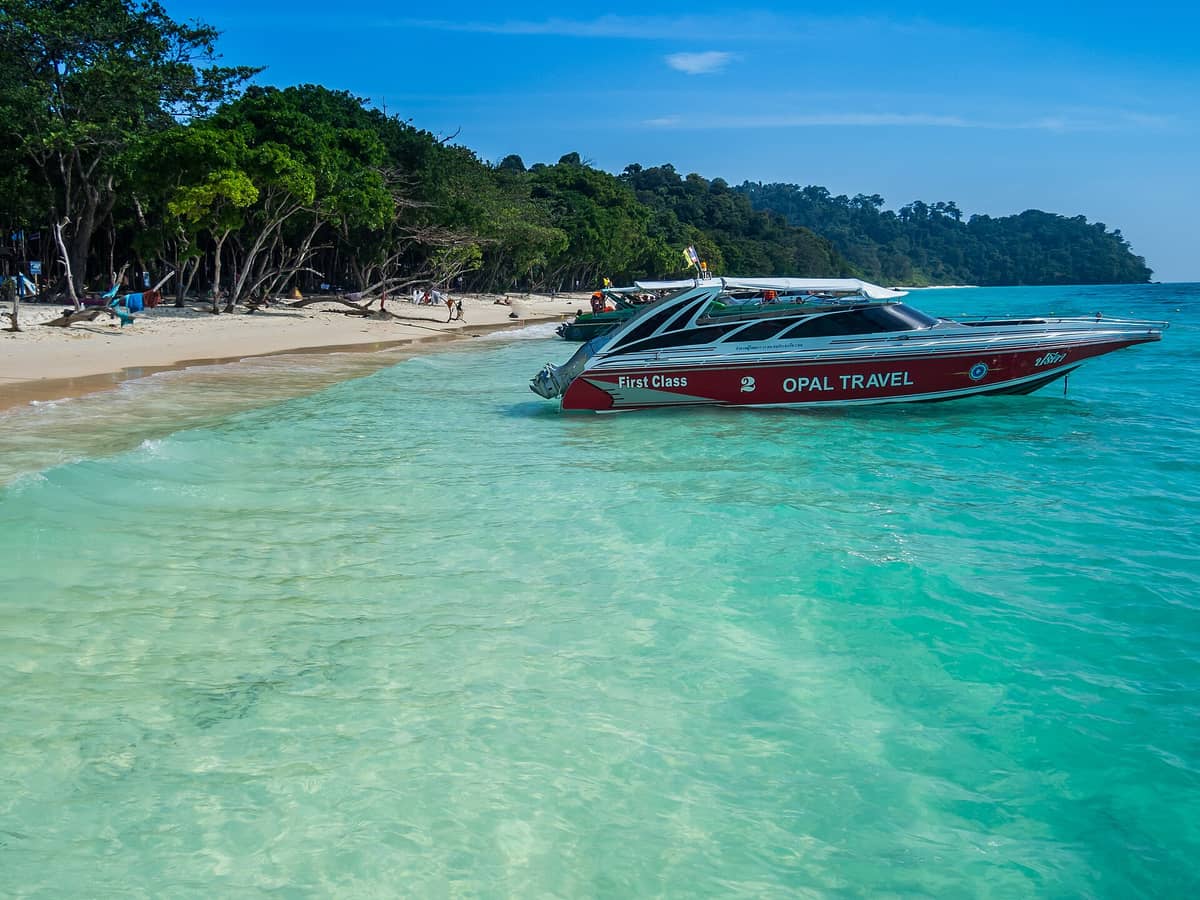
Koh Rok is not one island but two: Koh Rok Nai (เกาะรอกใน, the inner island) and Koh Rok Nok (เกาะรอกนอก, the outer island), separated by a shallow channel of roughly 100 metres. Both fall within Mu Ko Lanta National Park, the protected marine area that covers the southern reaches of Krabi Province's island chain. There are no hotels, and a restaurant and ranger station provide the limited facilities available during the open season. What you get instead is a stretch of fine white sand backed by forest, water that shifts from pale turquoise in the shallows to deep green offshore, and coral gardens close enough to the beach that you can swim to them without a boat.
The islands sit at the southern end of Koh Lanta's orbit, which means getting here takes longer than a typical Andaman day trip. That distance is, paradoxically, the attraction. Most tours departing from Koh Lanta take around 45 minutes to an hour by speedboat. The extra travel time filters out casual visitors, so the beaches rarely feel as crowded as the more accessible reefs closer to the mainland.
ℹ️ Good to know
Koh Rok is part of Mu Ko Lanta National Park. A national park entry fee applies to all visitors. The fee rate is not fixed in this guide — confirm the current amount with the park office or your tour operator before you go, as park fees in Thailand are periodically revised.
The Underwater Experience: What the Reef Looks Like
The main draw at Koh Rok is the snorkeling, and it delivers in a way that many more heavily trafficked sites in Krabi no longer do. The reef systems around Koh Rok Nai in particular still support genuine coral coverage, including hard coral formations in relatively good condition given the wider pressures on Andaman reefs. In the shallows, you can expect parrotfish, surgeonfish, wrasse, and schools of smaller reef fish moving through table coral and brain coral. In slightly deeper water beyond the bay entrance, larger species including barracuda and occasional reef sharks have been reported by dive operators working the area.
Visibility varies considerably with season and tidal movement. During the dry season (roughly December through April), visibility can reach 15 to 20 metres on a good day. In the shoulder months of November and May, it is more variable. Water temperature typically sits between 27 and 30 degrees Celsius throughout the season.
If you are serious about the underwater side of the visit, consider whether a dedicated diving trip might serve you better than a standard day tour. Krabi's snorkeling options range from shallow reef paddles to open-water sites, and Koh Rok sits at the more committed end of that spectrum in terms of travel effort.
Tickets & tours
Live prices and dates from our booking partner. If you book, we may earn a commission at no extra cost to you.
Full-day Koh Rok and Koh Haa from Koh Lanta
From 47 €Instant confirmationFree cancellationKoh Kradan and Four Islands Boat Tour from Koh Lanta Yai
From 52 €Instant confirmationFree cancellationMuay Thai introductory group class for beginners in Koh Lanta
From 14 €Instant confirmationFree cancellationMuay Thai introductory private class for beginners in Koh Lanta
From 45 €Instant confirmationFree cancellation
How the Islands Change Through the Day
Most tours arrive at Koh Rok between 10am and 11am, after the journey from Koh Lanta. That window corresponds to the peak crowd moment: multiple speedboats unloading at the main beach on Koh Rok Nai at roughly the same time. The main bay can feel genuinely busy during this hour, with snorkel gear floating in every direction and tour guides herding groups along the reef edge.
By early afternoon, the dynamic shifts. Groups rotate between snorkeling and the beach, energy drops with the midday heat, and the water off the flanks of the bay becomes noticeably quieter. If you want reef time with fewer people around you, the late-morning arrival rush is the thing to outlast, not the place itself. Early-arriving boats that depart before 7am from Koh Lanta get here first and claim the calmest conditions.
By 3pm, most tours begin loading for the return journey. In that final hour before departure, the beach empties to the point where it is almost unrecognisable compared to the midday scene. The light at this angle is also better for photography: softer, warmer, and without the harsh overhead glare that flattens colour in the middle of the day.
💡 Local tip
Book the earliest available departure from Koh Lanta. Arriving at Koh Rok before 10am gives you 30 to 60 minutes on the reef before the main wave of boats, when the water is clearest and the fish least disturbed.
Getting There: Practical Logistics
There is no scheduled public boat service to Koh Rok. The standard approach is to book a day tour through an operator based in southern Koh Lanta or through your accommodation on the island. Tours typically include return speedboat transfer, a guide, snorkeling equipment, and lunch on or near the island during peak season. Long-tail boat hire is also possible but takes significantly longer and is more exposed to sea conditions.
If you are based in Krabi Town or Ao Nang rather than Koh Lanta, some operators run longer combined trips that include Koh Rok alongside other southern sites. These trips involve considerably more time on the water — typically four or more hours of boat travel in a single day — so factor that into your decision, particularly if anyone in your group is prone to seasickness.
Island access is seasonal. Koh Rok typically closes to visitors during the southwest monsoon season, generally from May through October, under the park’s seasonal closure. The exact closure dates can shift year to year depending on park authority decisions. Confirm access dates directly with Mu Ko Lanta National Park or a local tour operator before booking, especially if you are travelling in April, May, or November.
⚠️ What to skip
Koh Rok closes seasonally during the monsoon — typically from around May to October, though exact dates vary. Do not assume the island is accessible based on the calendar month alone. Check with the park or your operator before booking any transport.
The Beach Itself: What to Expect on Land
The main beach on Koh Rok Nai is a gently curving bay of fine white sand backed by dense vegetation. The sand is soft and pale, the kind that stays relatively cool underfoot even in direct sun. There are no sun loungers for hire, no beach bars, and no vendors walking the shoreline. During peak season, the national park maintains basic facilities including toilets and a ranger station, but the infrastructure is minimal by design.
Shade is available under the tree line at the back of the beach. If you plan to spend significant time on land rather than in the water, a portable sunshade or a sarong rigged as a windbreak is worth bringing. The open sand has no natural shelter from the midday sun, and the heat reflected off the pale surface is intense between 11am and 2pm.
The channel between Koh Rok Nai and Koh Rok Nok is shallow enough in parts to wade or swim across, and some visitors do exactly that to explore the outer island's smaller beach. The crossing is not formally organised as part of most tours, so ask your guide before attempting it independently.
Practical Preparation: What to Bring
Koh Rok has no shops or resupply points once you are on the island. Bring everything you need for the day before boarding the boat. Sun protection is not optional: the combination of direct sun, reflected glare off white sand, and reflected glare off water means UV exposure here is higher than it appears. Reef-safe sunscreen is recommended given the proximity to coral. Bring more water than you think you need. Most tours include lunch, but snacks and extra hydration matter on a full day in this heat.
A mask and snorkel that fits well makes a real difference to the experience. Tour-provided equipment is functional but generic. If you already own gear, bring it. For a broader sense of how to approach a day on the water here, the Krabi island-hopping guide covers logistics and packing in more detail.
There is no reliable mobile signal on Koh Rok. Download any maps or information you need before departure. The return boat typically departs in the mid-to-late afternoon; missing it is not a minor inconvenience given there is no accommodation on the island. Keep track of your departure time and your guide's instructions.
Who This Island Suits and Who Should Think Twice
Koh Rok is best suited to people whose primary goal is time in the water. The snorkeling quality justifies the travel effort for reef enthusiasts. It also works well as part of a wider Mu Ko Lanta National Park experience, pairing naturally with other southern sites.
Families with young children should think carefully about the logistics: the boat journey can be rough, there are no facilities to manage a difficult day with a small child, and the open-water snorkeling is not ideal for non-swimmers or very young kids. It is also not an appropriate day trip for anyone who gets seriously seasick, particularly on the return leg when afternoon winds can increase chop on the crossing.
Travellers seeking a beach day with food, drinks, shade infrastructure, and things to do on land will find Koh Rok underwhelming. The island offers almost nothing in that category. Its value is entirely in the water and the reef.
Insider Tips
- Book the first departure of the day from Koh Lanta. The 30 to 60 minutes before the main crowd arrives is when the reef is quietest and the water clearest — this difference is significant enough to be worth the earlier alarm.
- Bring your own snorkel mask if you own one. Hire equipment works, but a mask that actually seals to your face without leaking changes the entire experience at a reef site as good as this.
- The channel between Koh Rok Nai and Koh Rok Nok is shallow in parts. Ask your guide whether the conditions that day make it safe to swim or wade across to the outer island's beach, which almost always has fewer visitors.
- Reef-safe sunscreen is not just an environmental preference here — standard sunscreen leaves a visible oily residue in the water that affects visibility in the shallows. Switch to a mineral-based formula before this trip.
- Confirm island access before booking any transport. Koh Rok closes seasonally and exact dates shift year to year. A quick check with your tour operator or the national park saves a wasted journey.
Who Is Koh Rok For?
- Snorkelers wanting intact coral reefs with good fish diversity
- Underwater photographers looking for clear, relatively uncrowded water
- Travellers already based on Koh Lanta looking for a full-day excursion
- Divers wanting an introduction to the southern Krabi reef systems
- Anyone willing to trade convenience for a noticeably quieter island experience
Nearby Attractions
Other things to see while in Koh Lanta:
- Kantiang Bay
Kantiang Bay sits near the southern tip of Koh Lanta Yai, backed by forested hills and flanked by limestone headlands. The beach is free, uncrowded compared to Koh Lanta's northern stretches, and rewards visitors who make the effort to get there with a genuinely peaceful atmosphere and clear water.
- Khlong Chak Waterfall
Khlong Chak Waterfall sits deep inside Mu Ko Lanta National Park on Ko Lanta Yai, reached by a trail that weaves through dense jungle and crosses a stream multiple times. It rewards patient hikers with a shaded, 8-metre cascade and a natural pool, well away from the island's beach crowds.
- Klong Dao Beach
Stretching nearly 3 kilometres along Koh Lanta Yai's west coast, Klong Dao Beach is one of the island’s longest and most well-developed beaches. Wide, calm, and easy to reach from Saladan Pier, it offers something that rarer shores often don't: comfort without sacrifice.
- Klong Nin Beach
Klong Nin Beach runs for roughly 2.4 km along the west coast of Koh Lanta Yai, offering calm waters, affordable beachside restaurants, and dramatically low crowds compared to Thailand's more famous shores. It rewards travelers who prioritize atmosphere over facilities.
Planning a trip? Discover personalized activities with the Nomado app.