Kizimkazi Dimbani Mosque: Over 900 Years of East African Islamic History
Built in 1107 CE, the Kizimkazi Dimbani Mosque is widely considered one of the oldest mosques on the East African coast and one of the oldest Islamic buildings on the East African coast. Partially rebuilt in the 18th century, this active place of worship in Unguja's southern district combines genuine antiquity with living religious practice, making it unlike almost anywhere else on the island.
Quick Facts
- Location
- Dimbani village, Kusini District, Unguja South Region — not the same settlement as Kizimkazi itself
- Getting There
- Hire a taxi or rent a scooter/car from Stone Town or Paje; no direct public dala-dala route is confirmed — verify locally before travel
- Time Needed
- 30–60 minutes at the mosque itself; combine with dolphin watching at Kizimkazi Bay for a half-day trip
- Cost
- No confirmed entry fee; a small donation to the mosque is customary and appreciated — confirm current practice on arrival
- Best for
- History enthusiasts, architecture lovers, and travelers seeking genuine cultural depth beyond Stone Town
Why This Mosque Matters
The Kizimkazi Dimbani Mosque is not a ruin, a reconstruction, or a museum exhibit. It is a functioning mosque that has been in use since its 18th-century reconstruction. The founding inscription carved into its wall records construction in 1107 CE, placing it among the oldest surviving mosques anywhere on the East African coast. For context, it predates the arrival of Portuguese traders and the Ottoman Empire's influence in the region. Whatever political order rose and fell around it, this building endured.
Most of the structure visitors see today reflects an extensive rebuilding undertaken in 1772 to 1773, but the original Kufic inscription panel and several early architectural elements are still in place. This layering of different eras in a single building is part of what makes the mosque so valuable to historians. It is not a single frozen moment in time. It is a document of continuity.
ℹ️ Good to know
Geography note: The mosque sits in Dimbani village, which is distinct from the nearby settlement also called Kizimkazi. When navigating or asking for directions, say 'Kizimkazi Dimbani' or 'msikiti wa kale' (the old mosque) to avoid confusion.
What the Mosque Looks Like Up Close
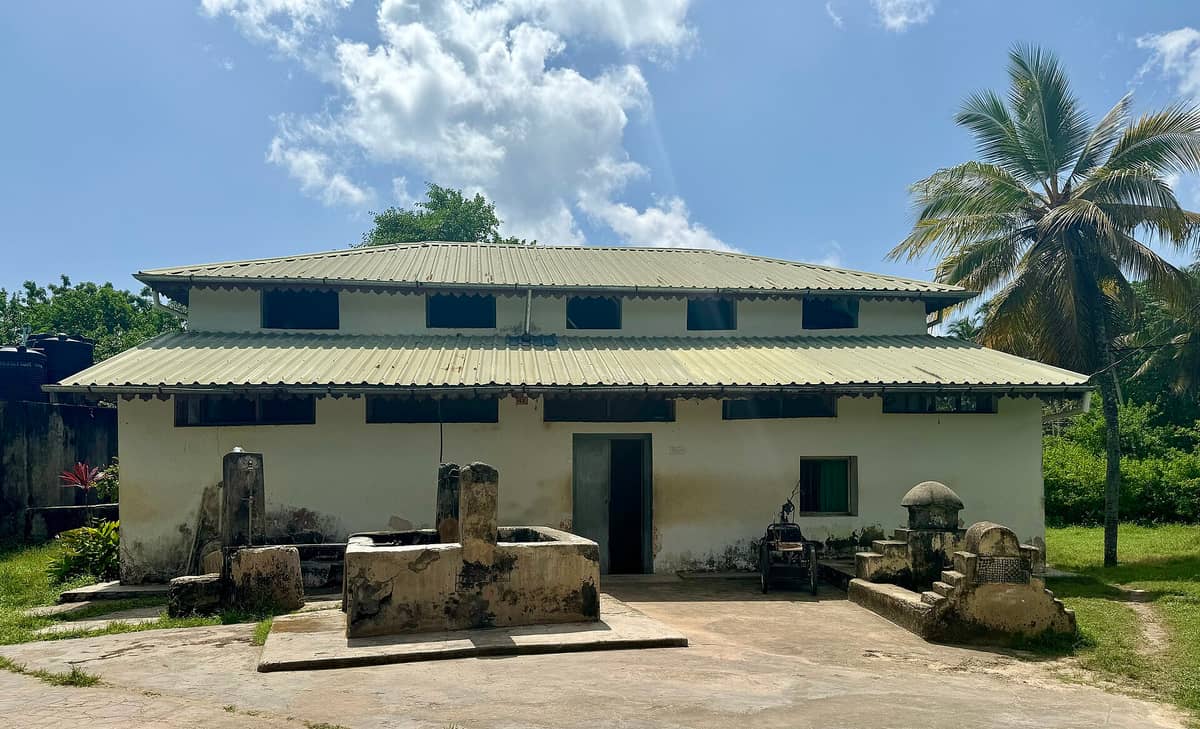
From the outside, the Kizimkazi Dimbani Mosque is deliberately modest. There is no soaring minaret visible from a distance, no imposing gateway. A low whitewashed wall defines the compound, and the building itself sits close to the ground, its proportions intimate rather than grand. Coral stone, the dominant building material across Zanzibar's historic structures, makes up the walls. You can see its porous texture and pale color up close, worn smooth in places by generations of hands.
Inside, the mihrab (the prayer niche indicating the direction of Mecca) is the focal point, and it is genuinely remarkable. Intricate floral panels and inscriptions frame the niche, with craftsmanship that reflects the 18th-century rebuilding and earlier elements incorporated into the mosque. The Kufic inscription in particular draws scholars of Islamic epigraphy: the script style helps confirm the dating and connects the building to a broader tradition of mosque architecture along the Swahili coast. The prayer hall’s spatial arrangement also preserves elements from earlier periods.
The overall atmosphere is one of quiet, worn dignity. This is not a polished heritage site with interpretive panels and gift shops. It is a place people pray in, and that fact is palpable in the atmosphere.
Tickets & tours
Live prices and dates from our booking partner. If you book, we may earn a commission at no extra cost to you.
Zanzibar catamaran and snorkelling tour to Mnemba Marine Park
From 114 €Instant confirmationFree cancellationNyerere National Park two-day safari with two game drives
From 866 €Instant confirmationFree cancellationSerengeti National Park private three-day safari from Zanzibar
From 2.144 €Instant confirmationFree cancellationZanzibar north coast sunset dhow cruise
From 42 €Instant confirmationFree cancellation
Visiting as an Active Mosque: What You Need to Know
⚠️ What to skip
Because the Kizimkazi Dimbani Mosque is an active place of worship, access during the five daily prayer times is restricted to worshippers. Time your visit to avoid prayer windows, and always ask a local caretaker or guide for permission before entering. Confirm current visiting hours locally, as no official published schedule exists.
Dress conservatively regardless of season: shoulders and knees should be covered for both men and women. Women are expected to cover their hair. Remove shoes before entering the prayer hall. Speak quietly inside, and do not photograph worshippers without clear permission. These are not unusual expectations for a historic mosque anywhere in the world, but they are worth stating plainly.
A local caretaker is typically present at the mosque and can provide basic information about the building's history. A small donation to the mosque is a respectful way to contribute to its upkeep. Photography of the mihrab and interior architectural details is generally permitted during non-prayer periods, but ask first. The lighting inside the prayer hall is soft and directional, so give your eyes a moment to adjust before reaching for a camera.
The Journey South: Getting to Kizimkazi Dimbani
The road south from Stone Town passes through a distinctly different Zanzibar than the tourist infrastructure of the north coast. Villages grow quieter, the road narrows in places, and the landscape shifts toward dry scrub and small farms. The drive takes roughly one to one and a half hours from Stone Town depending on road conditions and traffic.
Most visitors reach the mosque by hiring a private taxi or renting a scooter or car. No reliable dala-dala route to Dimbani has been confirmed in available sources, so verify public transport options locally before relying on them. If you are already staying in Paje or Jambiani on the southeast coast, the drive is considerably shorter. Consider combining the mosque with a dolphin-watching excursion at Kizimkazi Bay to make the journey worthwhile as a half-day trip.
Organized day trips from Stone Town that include the mosque exist but are not always easy to find as standalone offerings. More often, tour operators bundle it with dolphin spotting, a spice stop, or other southern attractions. If you prefer a self-guided visit, the road is navigable with a basic map or GPS, though mobile signal can be patchy in the south.
Historical Context: The Mosque in the Broader Swahili World
The 12th century was a period of significant commercial and cultural expansion along the East African coast. Swahili city-states were growing wealthy through trade networks that connected the African interior to the Arabian Peninsula, the Persian Gulf, and the Indian subcontinent. Islam had been present on this coast since at least the 8th or 9th century, carried by traders and settlers. The founding inscription dates the mosque at Kizimkazi Dimbani to 1107 CE, a notable early marker of Islamic architecture on the East African coast. For a wider view of how this history shaped the island's built environment, the Zanzibar Stone Town architecture guide provides useful context on Swahili building traditions.
The 1772 to 1773 rebuilding reflects a later chapter: the Omani Arab period, when Zanzibar was increasingly drawn into the orbit of Oman's maritime empire and would eventually become the Sultanate's primary East African base. That same political shift left marks across the island, from palace ruins to the slave trade infrastructure. The history of slavery in Zanzibar and the architectural record are part of the same colonial story, and visiting the mosque with that broader context in mind adds a layer of meaning to what might otherwise seem like a simple old building.
What to Realistically Expect: An Honest Assessment
The Kizimkazi Dimbani Mosque is not a spectacle. There is no dramatic interior, no elaborate museum display, and no visitor infrastructure to speak of. If your primary interest is visual drama or checking off a well-known landmark, this site will feel understated to the point of confusion.
What it offers instead is rarity: the genuine texture of a place that has outlasted empires and continues to function as intended. Visitors who come with some historical background, who take a few minutes to examine the mihrab carvings up close, and who approach the visit with patience are typically the ones who leave genuinely moved. Those expecting a polished museum experience, or who have limited time and must prioritize, may find the journey south difficult to justify on the mosque alone.
Weather also affects the experience. The road and surroundings can become difficult during the long rains (typically April to May). The dry season, broadly June through October, is the most comfortable and reliable time to visit. For a full picture of seasonal considerations, the best time to visit Zanzibar covers the island's seasonal patterns in detail.
Combining the Mosque with the Southern Coast
The southern tip of Unguja rewards slower, more deliberate exploration. Kizimkazi village is the main departure point for dolphin-watching boat trips in the bay, and the beaches here are quieter and less developed than the north. If you are based in Jambiani or Paje, the mosque is a logical and relatively short detour. From Stone Town, building a full day around the south makes the most sense: visit the mosque in the morning before the heat builds and prayer times create access gaps, then head to the coast for dolphins and lunch.
Jozani Forest is also within reasonable distance for those traveling from the north, making a combined day possible. The Jozani Chwaka Bay National Park sits roughly mid-island and can anchor a southern loop that includes the mosque without requiring an overnight stay.
Insider Tips
- Visit in the mid-morning window between Fajr (dawn) and Dhuhr (midday) prayers to maximize your time inside the mosque with the best available light and minimal disruption to worshippers.
- The caretaker who manages the mosque can sometimes provide a brief informal explanation of the building's history. A small tip or donation is appropriate and helps sustain the site.
- Bring your own water. The surrounding village of Dimbani has limited facilities for visitors, and the drive south on a hot day is longer than it looks on a map.
- If you have a genuine interest in Islamic epigraphy or Swahili coast archaeology, contact a specialist guide in Stone Town before your trip. A few local historians and academic guides operate on the island and can provide context that transforms a short visit into a memorable one.
- The mosque exterior photographs best in the softer light of early morning or late afternoon. Midday sun creates harsh shadows that flatten the texture of the coral stone walls.
Who Is Kizimkazi Mosque For?
- History and archaeology enthusiasts who want to engage with Zanzibar's pre-colonial and early Islamic past
- Architecture travelers interested in Swahili coast building traditions and coral stone construction
- Culturally curious visitors who prefer active, living heritage sites over sanitized museum reconstructions
- Travelers combining a southern Zanzibar day trip with dolphin watching and coastal exploration
- Photographers seeking understated, authentic subjects away from the island's more photographed landmarks
Planning a trip? Discover personalized activities with the Nomado app.