Kabukiza Theatre: How to Watch Kabuki in Ginza Without a Full Commitment
Kabukiza Theatre is Tokyo's most celebrated kabuki venue, a grand neo-baroque building in Ginza where centuries-old theatrical tradition plays out on stage daily. Whether you want a full program or just a single act, this guide tells you exactly how to visit, what to see, and what to expect.
Quick Facts
- Location
- 4-12-15 Ginza, Chuo-ku, Tokyo 104-0061
- Getting There
- Higashi-ginza Station (Exit 3), Tokyo Metro Hibiya Line / Toei Asakusa Line. Ginza Station (Exit A7) is about a 5-minute walk.
- Time Needed
- 30–60 min for a single act; around 4 hours for a full program
- Cost
- Single Act: from ¥800 / Full Program gallery: from ¥1,000 (cash only for these options; reserved seats vary). Visitor gallery area open 10:00–18:00 on performance days.
- Best for
- Cultural immersion, architecture admirers, travelers with limited time who want a genuine Tokyo arts experience
- Official website
- www.kabukiweb.net/theatres/kabukiza/kabukiza-information
What Kabukiza Theatre Actually Is
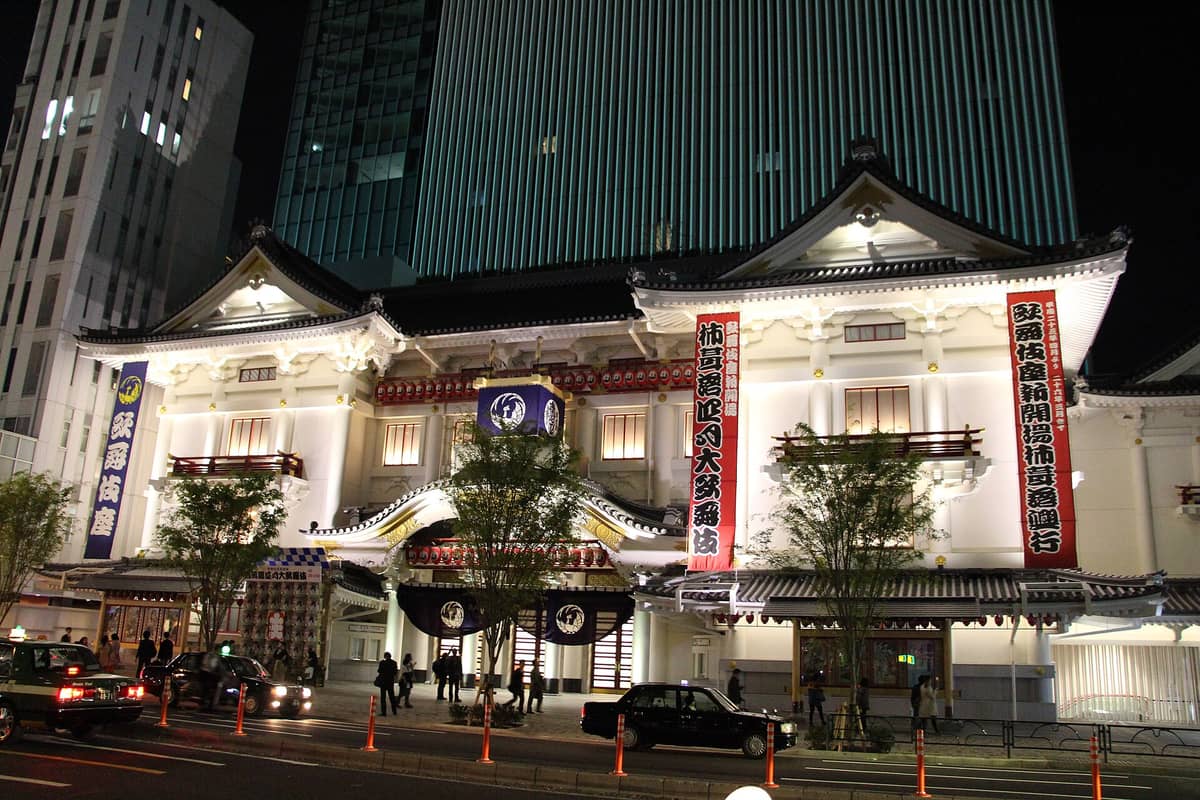
Kabukiza Theatre is the principal dedicated kabuki venue in Japan. It sits at the southern end of Ginza, the Chuo Ward's prestige shopping and arts corridor, occupying a spot that has hosted kabuki audiences for well over a century in various building incarnations. The current structure, reopened in 2013 after a major reconstruction, is the fifth-generation building on this site. It fuses a deliberately traditional Japanese castle-style facade, with layered green roofs and white plasterwork, into a modern 29-story tower that rises behind it. From street level, the theatre facade commands the intersection in a way that stops even jaded Tokyo commuters.
Kabuki itself is a classical Japanese performing art combining highly stylized movement, elaborate costuming, live music, and a distinct vocal delivery that sounds unlike anything else you've encountered. Performances are almost always in classical Japanese, but the theatre provides earphone guides with English commentary, which transform the experience from visually impressive but opaque, to genuinely gripping. If you've avoided kabuki because you assumed the language barrier would make it inaccessible, this changes the calculation entirely.
ℹ️ Good to know
English earphone guides are available for rent at the theatre. They provide scene-by-scene narration and cultural context. Picking one up before entering is strongly recommended for first-time visitors.
The Single-Act Option: The Smartest Entry Point
Full kabuki programs are long. A day's performance schedule can span five or six hours across two shifts, morning and afternoon. For most international visitors working through a Tokyo itinerary, committing that much time to one venue is unrealistic. The single-act (hitomaku) ticket solves this cleanly. You pay ¥800 in cash at the ticket counter, take a seat in the top-gallery area, and watch one self-contained act, typically running 30 to 90 minutes depending on the production. You leave when it ends, no obligation to stay.
The top-gallery seats are not premium views, but they are adequate. You're looking down at the full stage width, including the hanamichi, the elevated runway that extends from the stage into the audience, which actors use for dramatic entrances and exits. Some of the most charged moments in kabuki happen on that runway, and from the gallery, you see the full geometry of it in a way that lower seats don't always allow.
The single-act counter opens shortly before each act begins. Lines can form, particularly for popular productions or weekend matinees. Arriving 20 to 30 minutes before the act you want is prudent. The monthly program is listed on the Kabuki Web website, where you can check which acts are scheduled and plan accordingly.
⚠️ What to skip
Single-act tickets and the Full Program gallery ticket (from ¥1,000; Single Act from ¥800) are cash only. There are ATMs in the basement shopping area beneath the theatre. Bring cash before queuing.
Tickets & tours
Hand-picked options from our booking partner. Prices are indicative; availability and final rates are confirmed when you complete your booking.
Tsukiji Fish Market Walking Food Tour
From 40 €Instant confirmationFree cancellationMt.Fuji,Owakudani, Hakone Cruise & Ropeway, Oshino Hakkai 1-Day Trip
From 54 €Instant confirmationFree cancellationTour to Mt. Fuji Area, Oshino Hakkai and Kawaguchi Lake from Tokyo
From 57 €Instant confirmationFree cancellationNikko UNESCO Shrine and Nature View 1-Day Tour from Tokyo
From 78 €Instant confirmationFree cancellation
Arriving at Kabukiza: The Exterior and the Approach
The best approach is from Higashi-ginza Station, Exit 3, which brings you up almost directly in front of the theatre. The walk from Ginza Station's A7 exit takes about five minutes along Showa-dori, past bakeries and pharmacy chains that give way abruptly to the theatre's distinctive roofline. Arriving in the evening before a night performance is particularly worthwhile: the facade is lit in warm gold tones, and the pre-curtain crowd gathered on the forecourt, many dressed in kimono, creates a visual atmosphere you won't replicate in daylight.
The forecourt area functions as a kind of informal gathering space. Vendors sell program booklets and theatre-related goods from stands, and the smell of grilled foods from nearby stalls sometimes drifts across depending on the time of year. In spring, cherry blossom context from the broader Ginza district adds another layer. The building itself rewards a slow walk around its base: look at the carved decorative details under the eaves, the painted lanterns flanking the entrance, and the way the modern tower behind it is architecturally separated enough not to visually intrude when you're standing close.
Inside the Theatre: Atmosphere and Practical Layout
The interior public areas are more ornate than functional. The lobby features heavy woodwork, decorative lanterns, and display cases showing current and upcoming productions. In the corridors between acts, audience members circulate with bentō boxes purchased from the theatre's food vendors, which is a normal and expected part of the kabuki experience. Eating in your seat between acts is entirely acceptable and has been part of theatre culture here for centuries.
The theatre's facilities are thorough by any standard. Wheelchair access is provided through ramps, elevators, and designated parking. Multipurpose toilets and baby-changing facilities are available. If you need a wheelchair, lending is available, though checking ahead with the theatre is advisable for planning.
The basement level connects to a dedicated shopping and gallery space called Kabukiza Gallery (operating hours: 10:00 to 18:00 on performance days, with variations on non-performance days). It stocks kabuki-themed goods, traditional crafts, fans, and printed materials that make for more considered souvenirs than typical tourist merchandise. Even if you don't attend a performance, the gallery and ground-level exterior are freely accessible.
What to Watch For: Understanding the Performance
Kabuki programs draw from a repertoire developed over roughly 400 years. Productions fall broadly into two types: historical dramas (jidaimono), often set in samurai-era Japan with elaborate battle scenes and moral conflicts, and domestic dramas (sewamono), which deal with merchant-class life, love affairs, and tragedy in a more grounded register. Both categories use the same visual vocabulary of costume, makeup, and movement, but the emotional pitch differs considerably.
The makeup system, called kumadori, is worth knowing before you go. Characters wear color-coded patterns: red lines indicate heroism and strength, blue or indigo suggest villains or supernatural beings, and brown indicates demons. A glance at the stage immediately tells you something about who is who, even before the narration clarifies the plot. The transformation scenes, where actors shift character through costume changes executed on stage with breathtaking speed, are highlights that need no translation.
All-male casts are a defining feature of kabuki. Female roles (onnagata) are played by male actors who have trained for years specifically in feminine movement and vocal delivery. The artistry involved is significant, and watching a skilled onnagata perform is unlike anything in western theatrical tradition. For broader cultural context on Tokyo's traditional arts landscape, the guide to Tokyo's temples and cultural sites provides useful background on how Japan's classical traditions are maintained in a modern city.
When to Visit and How Time of Day Affects the Experience
Kabukiza runs two main program shifts: a daytime performance that typically begins late morning and runs into the afternoon, and an evening performance starting in the late afternoon and usually ending around 20:30–21:00. The evening shift tends to draw a more formally dressed crowd, with more kimono visible among Japanese attendees. If atmosphere and visual richness matter to you as much as the performance itself, evening is the better choice.
Midweek visits are generally quieter for the single-act queue. Weekend and holiday matinees attract larger audiences and can sell out the gallery section. January and May are traditional grand-production months in the kabuki calendar, drawing higher demand. Conversely, the theatre has occasional dark days and touring periods, so checking the monthly schedule before building your plans around a specific date is essential.
💡 Local tip
Check the monthly program on the official Kabuki Web site before your visit. The schedule changes each month, and performance times, acts, and available single-act slots vary significantly between productions.
Who Might Not Enjoy This
Kabuki is not the right fit for every traveler. If you are not prepared to sit quietly for 30 to 90 minutes watching a highly stylized performance in classical Japanese, even with earphone narration, the experience may feel slow. Young children are not well-suited to the format: the performance demands sustained attention, and audience noise is not tolerated. Travelers primarily interested in fast-paced sightseeing should factor in that even a single act requires some patience. For those who want a wider view of Tokyo's cultural depth but prefer more active exploration, the Tokyo walking tours guide covers neighborhood routes that incorporate cultural context at a different pace.
Insider Tips
- The earphone guide (available in English, Chinese, and other languages) is your most important preparation. Rent one at the counter inside before taking your seat. Without it, about 80% of the contextual meaning is inaccessible.
- If you're watching a single act, look up the act title on the Kabuki Web monthly program beforehand and read a brief synopsis. Even two or three sentences of plot context makes the difference between following the drama and watching beautiful confusion.
- The Kabukiza Gallery basement shop is open without a performance ticket. It carries ukiyo-e prints, traditional accessories, and kabuki-themed goods not found in general souvenir shops. Worth 20 minutes regardless of whether you're seeing a show.
- For the best sight lines on the hanamichi runway from the gallery, choose a seat on the left side of the gallery section (house left, facing the stage). The hanamichi runs along the left side of the auditorium from the audience's perspective.
- The forecourt area before evening performances fills with people photographing the illuminated facade. If you want a clean exterior shot without crowds, arrive before 16:00 on weekdays, when foot traffic is lighter.
Who Is Kabukiza Theatre For?
- Travelers who want an authentic, non-tourist-fabricated encounter with traditional Japanese performing arts
- Architecture enthusiasts interested in the tension between historical revival design and contemporary construction
- Time-limited visitors: a single act fits into a Ginza afternoon without disrupting a full itinerary
- Cultural travelers who have covered temples and gardens and want to engage with living tradition
- Anyone who has seen kabuki referenced in Japanese art, film, or literature and wants to understand it from the inside
Nearby Attractions
Other things to see while in Ginza & Tsukiji:
- Ginza Shopping District
Ginza is Tokyo's most storied commercial district, where Meiji-era brick boulevards gave way to gleaming flagship stores, world-class galleries, and some of the city's finest restaurants. Walking its grid of avenues costs nothing, and even window-shopping here is a refined experience in itself.
- Hamarikyu Gardens
Hamarikyu Gardens (浜離宮恩賜庭園) is a roughly 250,000 sqm tidal garden in Chuo Ward that once belonged to the Tokugawa shoguns and later served as an imperial retreat. Today, its seawater ponds, flowering plum and rapeseed fields, and framing views of the Shiodome skyscrapers make it one of the most visually striking public parks in central Tokyo.
- Tsukiji Outer Market
Tsukiji Outer Market (築地場外市場) is Tokyo's most concentrated stretch of seafood stalls, tamagoyaki shops, and counter sushi bars. Free to enter and open most mornings, it rewards early risers with fresh uni, grilled skewers, and some of the best street-level food in Japan.