Jungle Island Miami: The Complete Visitor Guide
Jungle Island is an 18-acre wildlife and adventure park on Watson Island, positioned between Downtown Miami and South Beach. Originally founded in 1936 as Parrot Jungle, it has evolved into a broad family attraction featuring exotic birds, primates, reptiles, and interactive experiences. Here is what a visit actually looks like, hour by hour.
Quick Facts
- Location
- 1111 Parrot Jungle Trail, Watson Island, Miami, FL 33132
- Getting There
- Miami-Dade Transit buses C, M, S, and 120 serve the area; by car via I-395 East (MacArthur Causeway), first right after the bridge
- Time Needed
- 3 to 5 hours for a full visit; shorter if skipping add-on experiences
- Cost
- General admission from about $35 per adult (USD) online; book through the official site for current rates and promotions
- Best for
- Families with children, first-time Miami visitors, wildlife enthusiasts, group outings
- Official website
- www.jungleisland.com
What Jungle Island Actually Is
Jungle Island is a wildlife and adventure park spread across 18 acres on Watson Island, a slim strip of land along the MacArthur Causeway midway between Downtown Miami and South Beach. The location alone makes it unusual: you are surrounded by Biscayne Bay, with skyline views on one side and the causeway traffic overhead, while inside the gates you are walking 1.35 miles of shaded, canopied trails among free-roaming birds, reptile exhibits, primate habitats, and interactive animal encounters.
The park is generally open daily from 9:30 am to 5:00 pm, with last admission at 4:00 pm, though hours can vary on select dates or for special events. That daily schedule, combined with its compact footprint, makes it a realistic half-day or full-day outing rather than a multi-day destination. For context, this is a wildlife attraction first and a thrill park second: the emphasis is on animal exhibits and up-close encounters, not roller coasters or live entertainment spectacles.
💡 Local tip
Buy tickets online before you arrive. General admission starts from about $35 per adult, but pricing shifts by date and promotion. The gate price is typically higher, and online booking often includes time-entry slots that reduce waiting at peak hours.
A Brief History: From Parrot Jungle to Watson Island
Jungle Island's origin story is genuinely unusual. In 1936, a man named Franz Scherr opened Parrot Jungle in south Miami with a straightforward vision: a place where birds could fly free among visitors rather than sit behind glass. It worked. The attraction became a South Florida institution across several decades, drawing tourists who wanted the novelty of macaws landing on their shoulders while they walked beneath subtropical canopies.
Eventually the operation outgrew its original south Miami site and relocated to its current Watson Island home, at which point the name changed to Jungle Island to signal the expanded roster of animals and experiences. The parrot heritage has not been abandoned — birds remain central to the park's identity — but the collection now spans primates, reptiles, and various other species alongside the famous avian residents.
For travelers who want context on how Miami's attraction landscape has developed since the mid-20th century, the HistoryMiami Museum in Downtown offers a deeper look at the region's cultural and urban evolution, including the tourism industry that shaped places like Jungle Island.
Tickets & tours
Hand-picked options from our booking partner. Prices are indicative; availability and final rates are confirmed when you complete your booking.
Everglades admission ticket with airboat ride and wildlife show
From 24 €Instant confirmationFree cancellationKey West day trip with glass bottom boat ride
From 110 €Instant confirmationFree cancellationEverglades airboat ride with Biscayne Bay boat tour and transportation
From 67 €Instant confirmationFree cancellationGrand Bahama tour with optional Pig Beach visit
From 309 €Instant confirmationFree cancellation
What You See Inside: The Trail and the Animals
The 1.35-mile trail system is almost entirely covered by shade structures and dense tropical planting, which matters considerably during Miami summers when the heat index routinely exceeds 100°F (38°C). The shade is real, not decorative: you will feel it immediately as you step in from the parking area. The air smells of damp soil, tropical foliage, and the faintly pungent edge that comes with any serious animal park — not unpleasant, but present.
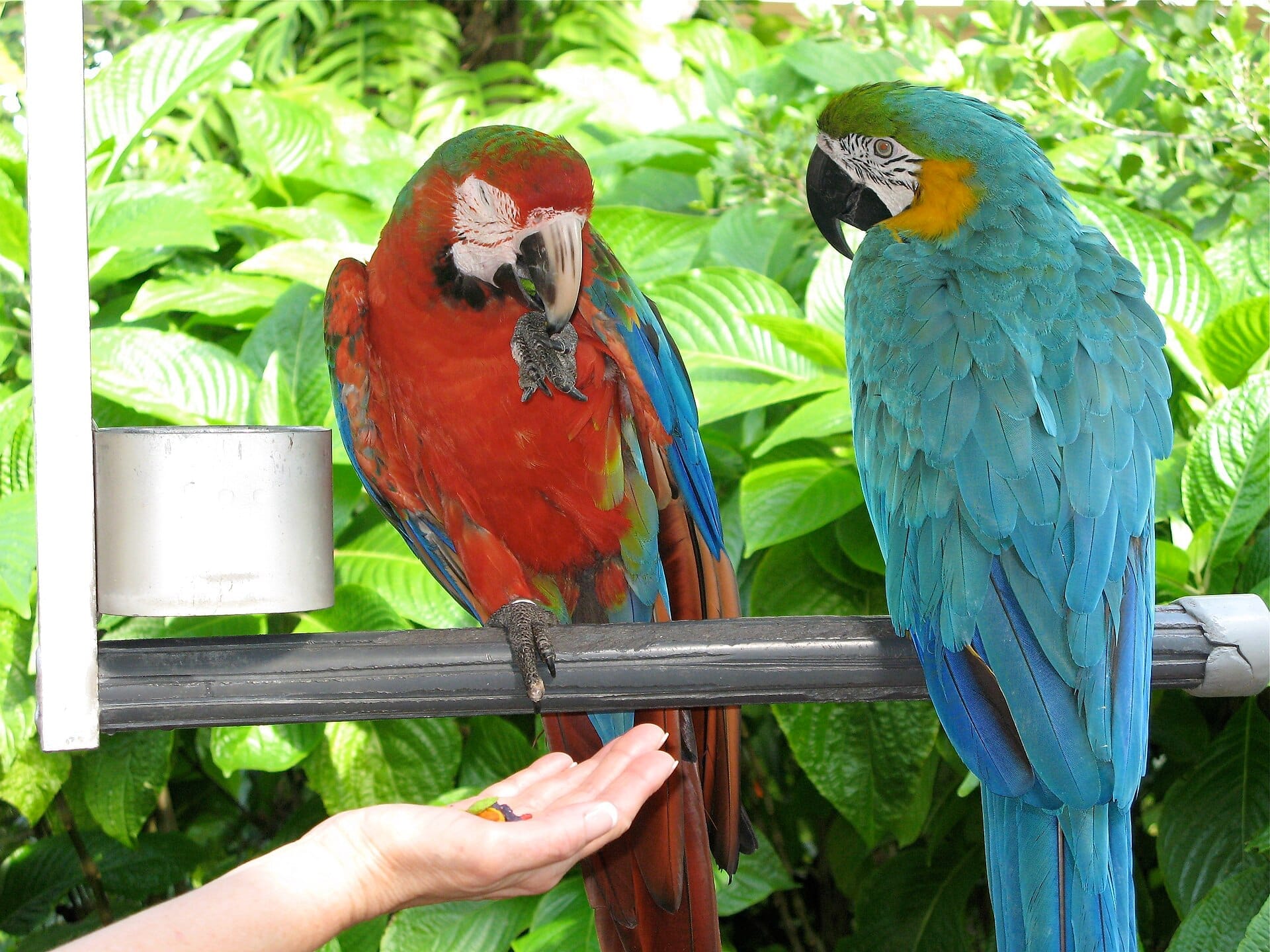
Birds are everywhere and frequently at close range. Macaws perch near visitor paths and, depending on the time of day and scheduled encounters, may be handled directly. The sound layer is notable: the calls overlap into something between a nature documentary and a crowded neighborhood, with the occasional shriek cutting through the ambient noise of other visitors. Early morning, in the first hour after gates open, the animal sounds dominate because the crowd has not yet arrived.
Beyond the birds, the park houses primates, lemurs, reptiles, and alligators, among other species. Interactive experiences — some included in general admission, others as paid add-ons — allow for close contact with select animals. These are scheduled throughout the day, so checking the daily program board at the entrance when you arrive helps you plan your route around the timed events.
ℹ️ Good to know
The daily schedule of animal encounters and shows is posted at the park entrance and on the Jungle Island app or website. Plan your arrival around the first or second show of the day to avoid the heaviest midday crowds that tend to concentrate around the main animal contact areas.
How the Experience Changes by Time of Day
The 9:30 am opening is the best time to arrive for two reasons: the animals are most active in the cooler morning air, and the crowds are thinnest. In the first 90 minutes, you can move through most of the trail without bottlenecks at the animal encounter stations. The light is also better for photography during this window, filtering softly through the canopy before the sun climbs directly overhead.
By midday, particularly on weekends and during the school holiday calendar, the park fills noticeably. The animal encounter lines extend, the paths near the main bird exhibits get congested, and the dining and snack areas see queues. If you are visiting with young children who have limited stamina, arriving at opening and planning to leave by noon is the most effective strategy.
The late afternoon window, roughly 3:00 to 4:30 pm (remembering last admission is 4:00 pm), offers a secondary quiet period as morning visitors depart and the heat starts to ease slightly. This is a good time for a second pass through any exhibits you want to revisit, though some scheduled encounters may have concluded for the day.
Getting There: Location Logic and Transit
Watson Island sits directly on the MacArthur Causeway, which means the park is roughly equidistant between Downtown Miami and South Beach, accessible from either direction. From the mainland, take I-395 East and after crossing the bridge, turn right at the first exit onto Parrot Jungle Trail. The signage is clear. From Miami Beach, take I-395 West and turn right after Palm Island, beside the Miami Yacht Club, then left onto Parrot Jungle Trail to the parking garage.
By public transit, Miami-Dade Transit bus routes C, M, S, and 120 serve the Watson Island area, according to Miami-Dade Transit information referenced by Jungle Island. Check the Miami-Dade Transit website or app for current schedules and stop locations before your visit, as route details can change. If you are coming from South Beach, the causeway is walkable or cyclable on a good day, though the pedestrian path alongside heavy causeway traffic is not particularly pleasant.
For a broader overview of moving around the city, the getting around Miami guide covers Metrorail, Metrobus, Metromover, and ride-hailing options in practical detail.
Practical Considerations: Weather, Accessibility, and What to Bring
Miami's climate is tropical, which shapes any outdoor attraction visit significantly. The dry season, roughly November through April, brings cooler temperatures (average highs in the mid-to-upper 70s°F / around 25°C) and lower humidity, making this the most comfortable period for a park visit. The wet season, May through October, brings afternoon thunderstorms and high humidity. The park's shaded trails mitigate the heat somewhat, but a visit in July at 1:00 pm is genuinely demanding regardless.
Wear light, breathable clothing and closed shoes if you are participating in any ground-level animal encounters. Bring water, even though there are food and beverage vendors on-site. Sunscreen matters for the less-shaded sections near the entrance and lagoon areas. A small backpack is useful for keeping hands free during animal interactions.
⚠️ What to skip
Afternoon thunderstorms during Miami's rainy season (May through October) can arrive quickly and intensify within 20 minutes. If you see a darkening western sky, move toward covered areas. The park's trail infrastructure is largely covered, but open exhibit areas and the lagoon-facing sections are exposed.
For accessibility, the park's shaded trail system and generally flat Watson Island terrain make most of the route manageable. However, the park has not published detailed wheelchair rental or assistive service information on its main web pages. If you have specific accessibility requirements, contacting Jungle Island directly before your visit is the most reliable approach.
Photography Tips and What Stands Out Visually
The bird encounters are the most rewarding subjects here. A macaw perched at shoulder height against a background of tropical green makes for a genuinely striking image that requires minimal composition effort. Early morning light through the canopy creates warm, diffused conditions that work for close-range animal portraits. The dappled shade can fool automatic exposure on smartphones, so switching to portrait or manual mode improves results.
The lagoon area offers an unexpected angle: with Downtown Miami's skyline visible across Biscayne Bay, you can frame a wildlife shot against an urban backdrop that is specific to this location alone. It is one of the few places in Miami where you can photograph an exotic bird with a recognizable city silhouette behind it.
If wildlife and nature settings are a priority for your Miami trip, consider pairing Jungle Island with a visit to the Fairchild Tropical Botanic Garden in Coral Gables, which provides a different but complementary experience focused on rare tropical plants and butterflies.
Honest Assessment: Is It Worth Your Time?
Jungle Island occupies a genuine niche in Miami's attraction landscape: it is more intimate than a large zoo, more wildlife-focused than a theme park, and more interactive than a standard aquarium. For families with children in roughly the 3 to 12 age range, it delivers reliably. The combination of animal encounters, shaded walking, and a manageable scale means children can engage without being overwhelmed.
For adults traveling without children, the value calculation is less obvious. If you have a particular interest in exotic birds, primates, or wildlife interaction experiences, the park rewards that interest directly. If you are primarily looking for Miami's cultural, culinary, or nightlife offerings, Jungle Island is probably not competing for your limited days.
Travelers working through a tighter budget should also weigh the admission cost against free or low-cost alternatives. For comparison, the free things to do in Miami guide outlines nature walks, public beaches, and cultural sites that cost nothing to enter.
The park is also not for visitors who find wildlife-in-captivity settings ethically uncomfortable, regardless of how well the animals appear to be maintained. That is a legitimate and personal consideration worth acknowledging before purchasing tickets.
Insider Tips
- Arrive within the first 30 minutes of opening at 9:30 am. The animals are most active, the paths are nearly empty, and the morning light makes photography significantly better than at midday.
- Check the daily encounter schedule at the entrance gate before you start walking. Some of the most popular animal interactions — particularly primate and bird encounters — run on fixed times and fill up. Knowing the schedule lets you build your route around these rather than missing them.
- The park sits on Watson Island with Biscayne Bay on its perimeter. Walk to the lagoon-facing edge near the main entry area for a view of the Downtown Miami skyline across the water. It is one of the better skyline vantage points in the area and most visitors walk past it.
- Paid add-on experiences (such as private animal encounters or specialty experiences beyond general admission) can be pre-booked online. If there is a specific interaction you are set on, do not assume availability on the day. Book it in advance and confirm the time slot.
- Watson Island has limited shade outside the park itself. If you are arriving by rideshare or public transit, plan for a short exposed walk from the drop-off area. Bring a hat and water for the approach, especially in summer months.
Who Is Jungle Island For?
- Families with young children who want hands-on wildlife experiences rather than passive exhibits
- First-time Miami visitors looking for a half-day activity that differs from the beach and nightlife circuit
- Bird enthusiasts and wildlife photographers who want close-range access to macaws, cockatoos, and tropical species
- Group outings and organized tours, given the park's event space infrastructure and manageable layout
- Visitors during Miami's hot summer months who need shaded outdoor activity options
Nearby Attractions
Combine your visit with:
- Aventura Mall
Aventura Mall is Florida's largest enclosed shopping center, spanning roughly 2.7 million square feet with more than 300 stores, dozens of restaurants, and a growing collection of public art. Positioned between Miami and Fort Lauderdale, it draws shoppers from across South Florida and beyond. Whether you are hunting flagship luxury brands or simply escaping the afternoon heat, the mall delivers a surprisingly complete half-day experience.
- Biscayne National Park
Biscayne National Park protects one of the largest coral reef ecosystems in North America, about 35 miles south of downtown Miami. With 95% of its 172,971 acres underwater, this is not a typical roadside park — it rewards those who come prepared to snorkel, dive, kayak, or sail.
- Deering Estate
The Deering Estate is a 444-acre historic preserve in South Miami-Dade that combines 1920s-era architecture, fossil-rich limestone terrain, coastal mangroves, and a surprisingly ambitious arts program. It rewards slow exploration and offers a side of Miami most visitors never see.
- Everglades National Park
Everglades National Park protects the largest subtropical wilderness in the United States, just an hour from Miami. From alligator-lined boardwalks to silent sawgrass prairies stretching to the horizon, it rewards visitors who prepare — and humbles those who don't.