Irish Whiskey Museum: A Complete Guide to Dublin's Whiskey Story
Housed in a historic building opposite Trinity College, the Irish Whiskey Museum takes visitors through four centuries of distilling tradition via guided tours, tasting sessions, and immersive exhibits. It is one of the most focused whiskey experiences in Dublin city centre, combining education with genuine sensory pleasure.
Quick Facts
- Location
- 119 Grafton Street, Dublin 2 (opposite Trinity College)
- Getting There
- Luas Green Line: Trinity or Westmoreland St stop; DART: Tara Street (10-min walk); Bus: College Green / Dame Street
- Time Needed
- 1–1.5 hours for Classic Guided Tour; longer for masterclasses
- Cost
- Adult €23 / Student & Senior €21 / Child €10 (Classic Tour, prices subject to change; verify before booking)
- Best for
- Whiskey enthusiasts, food and drink travellers, rainy-day culture seekers
- Official website
- irishwhiskeymuseum.ie
What the Irish Whiskey Museum Actually Is
The Irish Whiskey Museum opened in 2014 in a handsome Victorian-era building at 119 Grafton Street, directly across from the front gates of Trinity College. It is not a working distillery, and it does not produce whiskey on site. What it offers instead is a structured, guide-led journey through the history, near-collapse, and extraordinary revival of Irish whiskey as a global category. That distinction matters: visitors expecting floor-to-ceiling copper stills and the smell of fermentation will need to look elsewhere. What they will find is a genuinely well-designed museum experience built around storytelling, tasting, and context.
The exhibits are arranged across four themed rooms covering distinct chapters of the whiskey story: the medieval origins of distilling in Ireland, the peak era when Irish whiskey dominated global markets, the catastrophic twentieth-century decline caused by trade wars and Prohibition, and the modern renaissance that began in the 1990s and accelerated rapidly from 2010 onward. Each room is designed to feel distinct, and the transitions between them give the overall tour a clear narrative arc that even visitors with no prior interest in whiskey tend to find engaging.
💡 Local tip
Book your tour slot in advance online, especially on weekends and during summer. Walk-up availability is possible but not guaranteed, and popular slots sell out by mid-morning.
The Tour Experience: Room by Room
Tours last approximately one hour and are led by guides whose knowledge goes well beyond the scripted points on the walls. Groups are typically capped at a manageable size, which keeps the experience from feeling like a conveyor belt. The tone is conversational rather than academic, and guides field questions fluidly. If you arrive with even passing curiosity about distilling or Irish economic history, you will leave having learned something concrete.
The first section covers the earliest recorded references to distilling in Ireland, stretching back to monastic traditions. The second room addresses the nineteenth-century peak, when Dublin distilleries such as Jameson, Power, and Roe were among the largest in the world and Irish whiskey outsold Scotch by a significant margin in key export markets including the United States and Australia. The third room is perhaps the most compelling: it traces the sequence of events, including the Irish War of Independence, British trade embargoes on Irish exports, the onset of American Prohibition, and a failure to adapt quickly to blended Scotch preferences, that reduced Ireland from dozens of active distilleries to just two by the 1980s.
The final room covers the revival era and introduces visitors to the now-crowded landscape of Irish craft distillers. The tasting element happens here, with guides walking participants through two or three pours and explaining how to assess colour, nose, and finish. The whiskeys sampled depend on the specific tour package, so check the museum's booking page for current inclusions.
Tickets & tours
Hand-picked options from our booking partner. Prices are indicative; availability and final rates are confirmed when you complete your booking.
Irish Whiskey Museum Premium 1-Hour Tour and Tasting
From 28 €Instant confirmationFree cancellationTour and Blending Experience at Irish Whiskey Museum
From 35 €Instant confirmationFree cancellationIrish Whiskey Museum Classic 1-Hour Tour and Tasting
From 23 €Instant confirmationFree cancellationDoDublin hop-on, hop-off city tour
From 0 €Instant confirmationFree cancellation
Masterclasses and Additional Experiences
Beyond the standard Classic Guided Tour, the museum offers blending masterclasses and premium tasting sessions. The blending experience is particularly popular with groups: participants receive component whiskeys and guidance on how to combine them to create their own blend, which they can bottle and take home. These sessions run longer than the standard tour and should be booked well in advance; check the current schedule on the official site, as evening hours for special events can vary.
If whiskey is a serious interest rather than a passing one, it is worth comparing this experience against Jameson Distillery Bow St in Smithfield, which offers the advantage of visiting an actual historic distillery building. The Irish Whiskey Museum's strength is its breadth and historical framing; Jameson's strength is atmosphere and brand depth. Both are worth considering depending on your priorities.
Getting There and Navigating the Building
The museum's Grafton Street address is one of the most central in Dublin. The Luas Green Line stops at both Trinity and Westmoreland Street, each a short walk away. The DART at Tara Street adds another option for visitors arriving from the coast. Multiple Dublin Bus routes serving College Green, Dame Street, and Nassau Street put the entrance within a five-minute walk. There is no on-site parking, which is expected given the location; nearby multi-storey car parks on Trinity Street, Fleet Street, and at Brown Thomas on Grafton Street are all within a few minutes on foot.
The building is historic, which means narrow stairwells and uneven floor levels in places. A lift is available for visitors who need it, and the museum is listed as wheelchair accessible. If you are travelling with large luggage, the tourist office below on College Green will store bags for a small fee when you show your tour ticket, which is a practical detail not widely advertised.
ℹ️ Good to know
Tours run daily, with tour times generally between 10:00 and 18:30 and the first tour at 10:30. Seasonal hours vary slightly between summer and winter, and special evening events may run later. Check the official site for current schedules as times can vary.
When to Visit and What to Expect at Different Times
Weekday morning slots are consistently the quietest. The 10:30 and 11:30 tours on Monday through Thursday rarely fill to capacity outside peak summer months, and guides tend to have more space for questions and tangents. By early afternoon on weekends, groups are larger and the energy in the tasting room is livelier, which some visitors prefer. The evening sessions on Friday and Saturday have a distinctly different atmosphere: they skew toward groups celebrating birthdays, stag and hen parties, and corporate events, and the tone is more social than educational.
The museum is entirely indoors, so weather is irrelevant to the experience itself. Dublin's rain makes it a reliable option on grey days when outdoor plans fall apart. It works particularly well as a morning activity before lunch in the nearby streets of the Trinity College area, or as a late afternoon stop before dinner.
If you are planning a broader day in the neighbourhood, the Trinity College area offers a tight cluster of high-quality options within walking distance, including the Book of Kells at Trinity College and the Little Museum of Dublin a few minutes up St Stephen's Green.
Photography and Practical Details
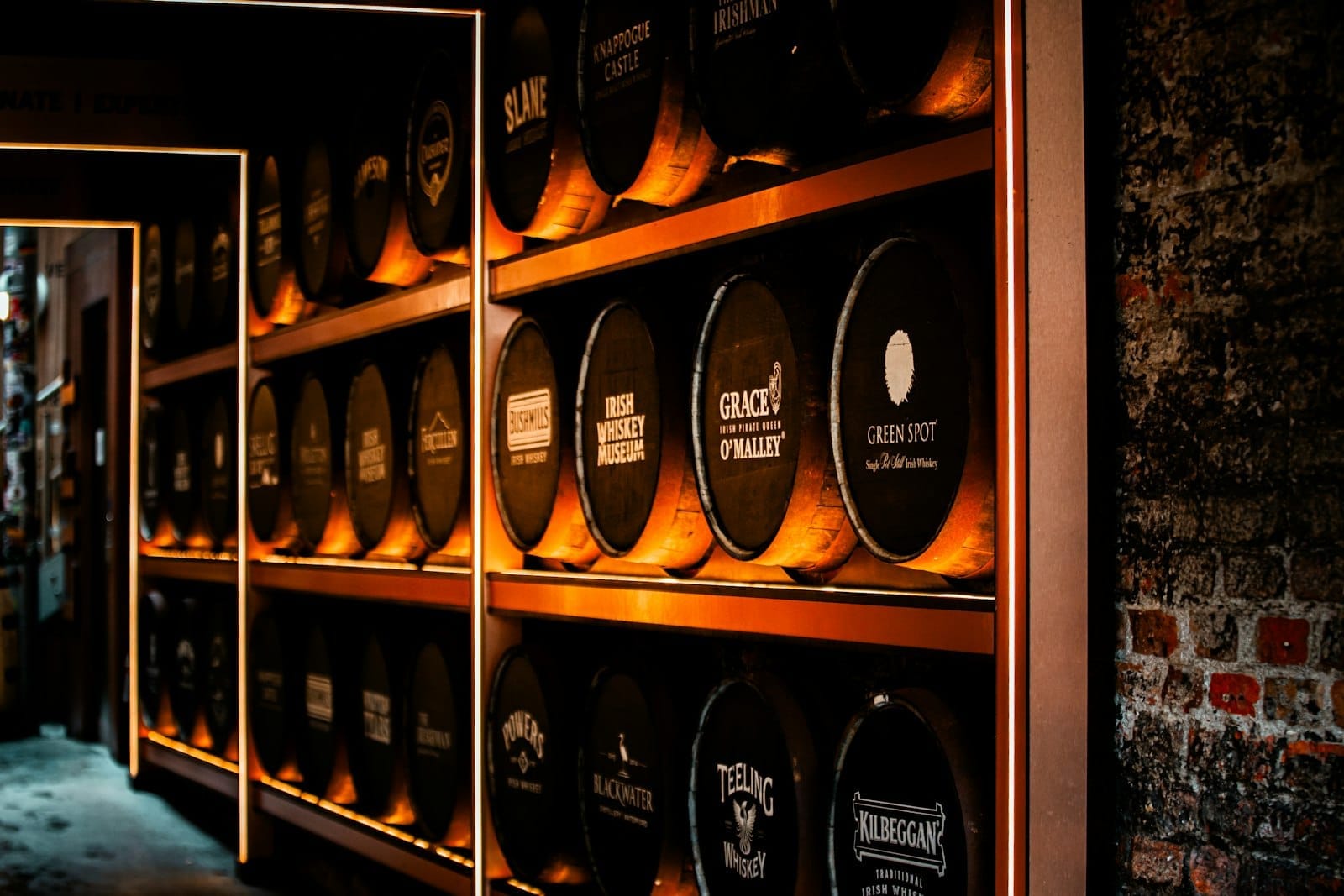
The museum's interior is well-lit for a historic building and photogenic in a quiet way. Amber bottles, antique labels, and the warm colour palette of the exhibit rooms photograph well without flash. There are no restrictions on personal photography during tours. The tasting session at the end, with glasses arranged on dark wood surfaces, is a natural moment to document if that matters to you.
For visitors working through a broader Dublin itinerary, the Grafton Street shopping thoroughfare begins immediately outside the museum entrance, connecting easily to St Stephen's Green at its southern end. Combining all three into a single afternoon is straightforward and popular.
Honest Assessment: Is It Worth Your Time?
The Irish Whiskey Museum delivers what it promises clearly, and for visitors with even moderate interest in food, drink, or Irish economic and social history, the hour passes quickly. The guides are generally well-trained and the narrative structure of the exhibits is genuinely better than most city museum experiences of this type. At €23 for an adult including tastings, it represents reasonable value in the context of Dublin's attraction pricing.
That said, it will not satisfy everyone. Visitors who have already done the Jameson Distillery tour or who have spent significant time in Irish distilleries may find the historical content familiar. Those hoping for industrial-scale atmosphere, the smell of a working still, or large-scale production exhibits will be disappointed: this is a museum of stories and artefacts, not an operating facility. People who do not drink alcohol at all can still enjoy the historical content, but the tastings that anchor the experience will not apply to them, which is worth factoring into the decision.
⚠️ What to skip
The museum does not operate as a drop-in attraction. All visits are structured around guided tour slots. If you are short on time or prefer self-guided exploration at your own pace, this format may not suit you.
Insider Tips
- Book the 10:30 weekday slot if you want the most attentive guide experience. Group sizes are smallest at this hour and guides have more room to expand on topics.
- The luggage storage arrangement at the tourist office on College Green is genuinely useful if you are arriving from or heading to Dublin Airport the same day. Show your tour ticket and the fee is nominal.
- If you are considering both the Irish Whiskey Museum and Jameson Distillery Bow St on the same trip, do the Irish Whiskey Museum first. The historical framing here makes the Jameson brand story more meaningful when you encounter it.
- Evening masterclass sessions on Friday and Saturday tend to attract groups, which can affect the atmosphere. If you want a quieter, more focused tasting experience, the afternoon Classic Tour on a weekday is consistently calmer.
- The gift shop stocks a curated range of Irish whiskeys including several smaller craft labels that are difficult to find in standard off-licences, so it is worth browsing even if purchasing is not a priority.
Who Is Irish Whiskey Museum For?
- Whiskey enthusiasts wanting historical context beyond a single brand's story
- Food and drink travellers who treat tastings as part of cultural exploration
- Rainy-day visitors looking for a quality indoor alternative to walking tours
- Groups celebrating birthdays or special occasions, especially for evening masterclasses
- Visitors who want a compact, well-structured cultural experience without a full museum day
Nearby Attractions
Other things to see while in Trinity College & College Green:
- Book of Kells & Old Library
The Book of Kells Experience at Trinity College Dublin puts two of Ireland's most extraordinary things in one visit: an illuminated 9th-century gospel manuscript and a 65-metre Georgian library housing 200,000 ancient books. Here is exactly what to expect, when to go, and how to make the most of limited time.
- Trinity College Dublin
Founded in 1592 on the site of a medieval priory, Trinity College Dublin sits at the heart of the city and draws visitors for its cobblestoned Front Square, Georgian architecture, and the celebrated Book of Kells exhibition. Entry to the outdoor campus is free, though the Old Library requires a ticket.