Imam Muhammad ibn Abd al-Wahhab Mosque: Inside Qatar's Grand Mosque
Qatar's national mosque is one of the most architecturally striking buildings in Doha, and one of the few in the Gulf that genuinely welcomes non-Muslim visitors. Free to enter, serene in atmosphere, and grand in scale, it offers something most big-city mosques don't: quiet access to an active place of worship.
Quick Facts
- Location
- Al Muhandiseen Street, Lejbailat area, Doha, Qatar
- Getting There
- Red Line metro to Corniche station (~30 min walk), or bus route T605 from central Doha
- Time Needed
- 45–90 minutes
- Cost
- Free admission
- Best for
- Architecture lovers, cultural travellers, photography
What Is the Imam Muhammad ibn Abd al-Wahhab Mosque?
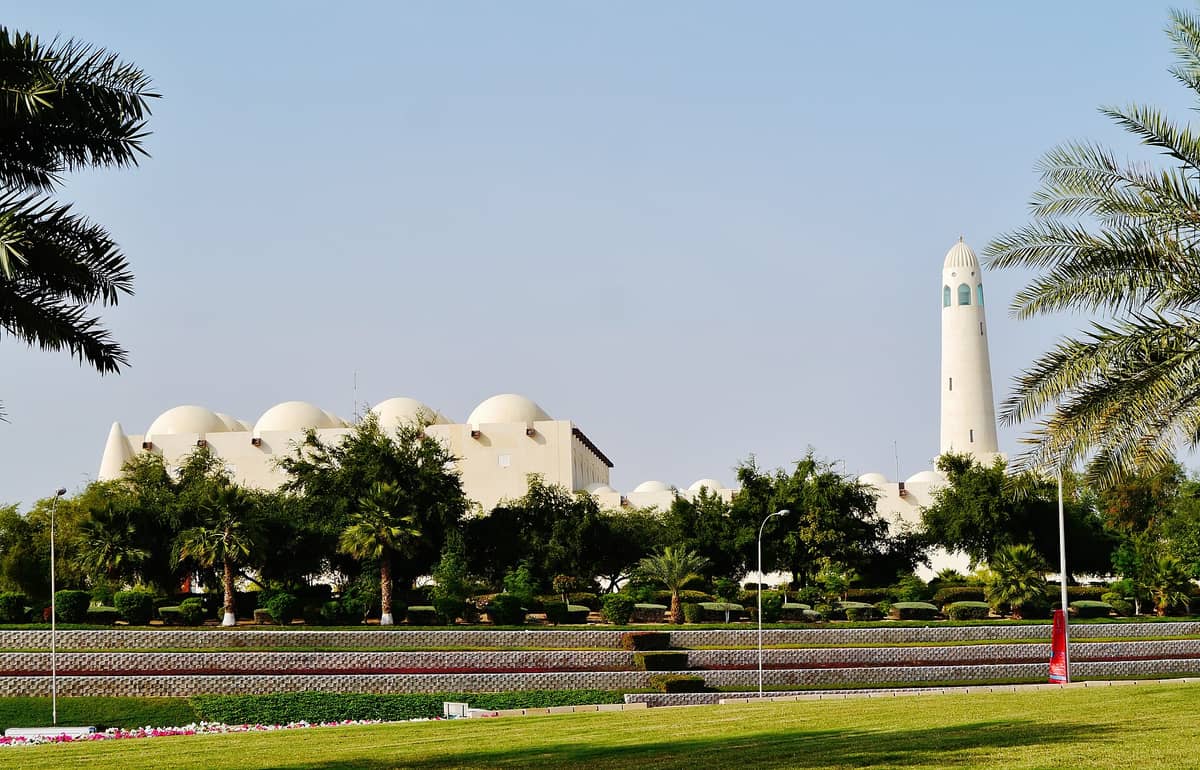
The Imam Muhammad ibn Abd al-Wahhab Mosque, formally known as the Qatar State Grand Mosque, is the national mosque of Qatar. Inaugurated in 2011, it sits in Doha's Lejbailat area and serves as the country's most significant religious building. Named in memory of the 18th-century Islamic scholar Muhammad ibn Abd al-Wahhab, the mosque is not a tourist attraction in any conventional sense: it is an active, functioning house of worship that happens to be open to non-Muslim visitors during non-prayer hours. That distinction matters when you visit.
With capacity for around 30,000 worshippers, this is a building that operates at a different scale from most things you will see in Doha. Yet it does not feel overwhelming when you enter. The design channels classical Islamic architecture through a contemporary lens, and the interior spaces are laid out so that even first-time visitors move through them naturally.
ℹ️ Good to know
Opening hours: Visiting times for non-Muslim visitors vary and are typically limited to designated windows outside prayer times. Friday access may only be possible after Jumu'ah prayers. Hours often change during Ramadan and major Islamic holidays, so always confirm directly with the mosque or current tourism information before going.
The Architecture: What You Are Actually Looking At
Approach from Al Muhandiseen Street and the mosque announces itself through open sky rather than urban clutter. Unlike many of Doha's landmark buildings, which are hemmed in by traffic and construction, the Grand Mosque sits within expansive plazas that give you the room to actually see it. The dominant features are the main dome and the surrounding minarets, all finished in pale stone that shifts from cream to a warm sand tone as the light changes through the day.
The exterior reflects a Gulf interpretation of classical Mamluk and Ottoman mosque architecture, with pointed arched windows, geometric stone screens, and a formal symmetry that reads clearly even at a distance. At ground level, the details become more intricate: carved decorative panels, calligraphic inscription bands, and the texture of the masonry itself. The building rewards slow observation rather than a quick scan.
Inside, the prayer hall is vast. The central dome channels natural light downward, and the interior walls are dressed in marble and intricate tilework. The carpet underfoot is deep and absorbs sound, which is part of why the interior feels so still, even on days when the surrounding city is noisy. The aesthetic is formal and intentional: this is a space designed to convey permanence and devotion, and it succeeds.
How the Visit Changes by Time of Day
Mid-morning on a weekday is the calmest window for a visit. Between roughly 9:30 and 11:00, the plazas are quiet enough that you can hear your own footsteps on the stone. The light at this hour is soft and even, which makes the exterior stonework look its best for photography without the harsh midday bleaching.
By late afternoon, especially on weekends, the atmosphere shifts noticeably. Qatari families tend to visit after the Asr prayer, and there is a social dimension to those hours: groups in the courtyard, children near the fountains, the low sound of Arabic conversation. This version of the mosque is warmer and more human, if a little busier.
Friday is the most significant day in the Islamic week, and the mosque generally observes this by limiting access for non-Muslim visitors during the Jumu'ah prayer period; visitors are typically only allowed during designated windows after prayers conclude. If you do arrive on a Friday afternoon, the post-prayer courtyard has a particular energy. The crowd disperses slowly, the sound of traffic is muffled by the plaza, and the late afternoon sun cuts across the stonework at a low, dramatic angle.
💡 Local tip
For the best photographs of the exterior, visit between 9:00 and 10:30 on a weekday. By midday the glare off the pale stone can flatten the detail. The hour before closing at 19:00 also offers warm golden light, though interior access may become limited.
Dress Code and Practical Access for Visitors
The mosque welcomes non-Muslim visitors, but the dress code is genuinely enforced, not merely suggested. For women, this means covering hair, arms, and legs fully. Abayas and head coverings are available to borrow at the entrance if you have not brought your own, though arriving already dressed appropriately is more comfortable and shows respect for the space. For men, long trousers and a shirt that covers the shoulders are required. Shorts and sleeveless tops are not permitted.
Shoes are removed before entering the prayer hall, so slip-on footwear makes the transition smoother. The mosque is large, and you will likely walk across the stone plazas barefoot or in socks while moving between sections, so clean socks are worth keeping in your bag.
Visitors are asked to remain quiet inside the prayer areas and to avoid wandering during active prayer times. If a prayer call sounds while you are inside, follow the guidance of mosque staff. Photography is generally permitted in non-prayer areas, but photograph worshippers only with explicit permission and never during prayer.
⚠️ What to skip
Accessibility details for the mosque, including information on step-free routes and lift access, are not clearly documented in public sources. If you have specific mobility requirements, contact the mosque directly before your visit or check with your hotel concierge.
Honest Assessment: Is It Worth Your Time?
For travellers interested in Islamic architecture or religious heritage, the Grand Mosque is a genuine highlight of Doha, and it pairs naturally with a visit to the Museum of Islamic Art or the historic Msheireb Museums. The scale, craftsmanship, and accessibility for non-Muslim visitors put it in a different category from most mosques in the region.
That said, if you are visiting Doha primarily for outdoor experiences, the waterfront, or shopping, this will feel like a detour. The mosque is not located within walking distance of most other central attractions, and the journey out here requires a specific decision to go. It is not something you stumble upon.
Travellers who find religious spaces uncomfortable, or who are not prepared to observe the dress code, should probably skip it. The experience depends on a degree of quiet participation, and visitors who treat it as a photo stop rather than a space to walk through slowly tend to leave without understanding what they have seen.
Getting There and Planning Your Route
The most straightforward public transport option is the Doha Metro Red Line to Corniche station, followed by approximately a 30-minute walk. Bus route T605 from central Doha also serves the area. A taxi or ride-hailing app (Karwa taxis are the official metered option) will cut travel time significantly and is recommended if you are combining the mosque with other destinations in a single day. For a broader orientation to moving around the city, the getting around Doha guide covers metro, bus, and taxi options in detail.
Consider building the mosque into a cultural half-day that starts in Doha's heritage core. Begin at Souq Waqif in the morning, take a taxi out to the mosque for mid-morning, then return along the Corniche waterfront in the afternoon. This route gives the visit a logical shape rather than making it a standalone trip.
Photography Notes
The Grand Mosque is one of the more rewarding architectural subjects in Doha for photographers. The pale stone exterior works well in the soft morning light, and the geometric patterns on the screens and arches provide strong compositional elements even with a smartphone. For context on photographing Doha's religious and architectural sites, the Doha photography guide covers both technical and etiquette considerations.
Inside, light levels in the prayer hall vary by time of day. The dome illumination is most dramatic in late morning when natural light filters in from the upper windows. A wide-angle lens captures the ceiling geometry well, but be mindful of other visitors in the frame. Never photograph people in prayer, and always ask before photographing individuals.
Insider Tips
- The mosque's exterior plazas are large enough to photograph the full building without distortion. Walk to the far end of the courtyard and use a portrait orientation to capture both dome and minarets in a single frame.
- If you are visiting during Ramadan, opening hours and access protocols will differ significantly. The atmosphere inside during Iftar preparation is extraordinary, but the building will be very busy. Confirm hours in advance.
- Borrow an abaya from the entrance if needed, but bring a lightweight scarf of your own if you prefer not to wear the heavier borrowed coverings, especially during Doha's warmer months. Even between November and March, the abaya can feel warm indoors.
- Combine the visit with the nearby Al Bidda Park for a complete morning. The park sits close enough that you can walk between them, and it provides a grounded contrast to the mosque's formality.
- Arrive at least 30 minutes before your preferred prayer time window closes. Staff manage visitor flow carefully before prayers, and arriving last-minute can mean waiting outside until the next visitor window opens.
Who Is Grand Mosque (Imam Muhammad ibn Abd al-Wahhab Mosque) For?
- Travellers with an interest in Islamic art and architecture who want to see it in a living context, not just a museum
- First-time visitors to Qatar looking to understand the country's religious and cultural identity
- Photographers focused on architectural subjects and geometric patterns
- Visitors building a full cultural day alongside the Museum of Islamic Art and Souq Waqif
- Travellers during the cooler winter months (November to March) who can walk the exterior plazas comfortably
Nearby Attractions
Combine your visit with:
- Al Hazm Mall
Al Hazm Mall is not a typical shopping centre. Built in a classical European-inspired style with colonnaded stone arcades and soaring ceilings, this northern Doha landmark houses luxury boutiques, acclaimed restaurants, and art installations in a setting that feels more like a Milanese galleria than a Gulf mall. Entry is free, the architecture alone justifies the visit, and the restaurant scene is among the strongest in the city.
- Al Safliya Island
A small, uninhabited sand island off the Doha coast, Al Safliya Island draws visitors with clear Gulf waters, a quiet beach, and easy half-day boat access from The Pearl-Qatar or the Corniche. There are no facilities on the island, so what you bring is what you have.
- Al Shahaniya Camel Racetrack
Al Shahaniya Camel Racetrack is Qatar's principal venue for camel racing, a sport central to the country's Bedouin heritage. Located about 40–60 minutes west of central Doha along the Dukhan Highway, the track draws local families, Qatari enthusiasts, and curious visitors during its October-to-April season. Entry to regular race days is free.
- Al Thakira Mangroves
About 64 km north of Doha, the Al Thakira Mangroves protect one of Qatar's largest and most ecologically significant coastal habitats. Whether you paddle through the channels at sunset or simply walk the shoreline at low tide, this protected reserve offers a rare contrast to the capital's urban skyline.