Ice Box Canyon Trail: Red Rock's Best-Kept Slot Canyon Hike
Ice Box Canyon Trail delivers one of the most rewarding short hikes in Red Rock Canyon National Conservation Area, combining a well-marked desert path with boulder scrambling, cool canyon shade, and a seasonal waterfall. At roughly 2.5 to 3 miles round trip, it delivers a lot of scenery for a short hike for scenery and adventure.
Quick Facts
- Location
- Red Rock Canyon National Conservation Area, Las Vegas, NV 89161 (approx. 8 miles along the Scenic Drive from the Visitor Center)
- Getting There
- Private vehicle via State Route 159 to the Red Rock Canyon entrance, then the one-way Scenic Drive. No public transit reaches the trailhead.
- Time Needed
- 2 to 3.5 hours round trip depending on scrambling and pace
- Cost
- Entry via Red Rock Canyon fee area: $20/vehicle, $10/motorcycle, $8/cyclist, and timed-entry reservation required October 1–May 31 between 8:00 and 17:00 via Recreation.gov; America the Beautiful passes are accepted.
- Best for
- Hikers wanting shade, slot canyon scenery, light scrambling, and a break from desert heat
- Official website
- www.blm.gov/nevada/red-rock-canyon-nca/recreation
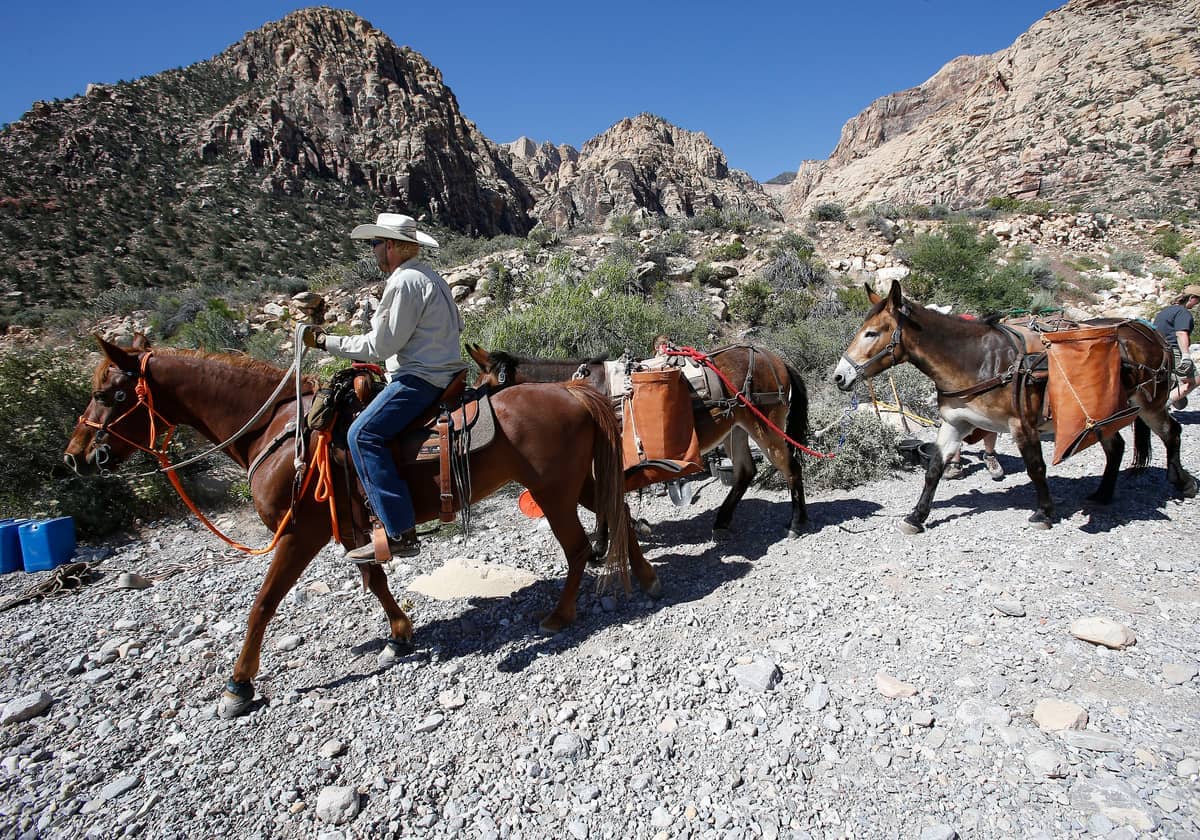
What Makes Ice Box Canyon Different from Other Red Rock Trails
Most trails at Red Rock Canyon National Conservation Area put you in full Mojave sun from start to finish. Ice Box Canyon Trail is the exception. Within the first half-mile, the sandstone walls close in on both sides, the sky narrows to a ribbon of blue overhead, and the temperature drops noticeably. On a summer morning when the parking lot already feels like a griddle, stepping into the canyon is a physical relief.
The trail takes its name from the cold air that pools at the canyon bottom, kept cool by shade, rock mass, and seasonal water. That same geology makes it one of the more photogenic routes in the conservation area: deep red and orange Aztec sandstone streaked with desert varnish, walls that narrow to perhaps 15 feet in places, and a floor that transitions from packed dirt to water-smoothed boulders the deeper you go.
The canyon sits within the broader Red Rock Canyon Scenic Drive loop, managed by the U.S. Bureau of Land Management. It is listed officially as hike #12 in BLM's Red Rock Canyon recreation guide, and it earns that spot. For visitors who have done the Calico Hills loop and want something with more verticality and drama, this is the natural next step.
ℹ️ Good to know
Timed-entry reservations for the Red Rock Canyon Scenic Drive are required during peak periods and must be booked in advance at Recreation.gov. Arriving without a reservation during busy months can mean being turned away at the entrance gate.
The Trail Itself: What to Expect Step by Step
The hike begins at the signed Ice Box Canyon Trailhead, located approximately 8 miles along the one-way Scenic Drive from the Visitor Center. The parking area is moderately sized and fills quickly on weekends between March and May. Arrive before 8:00 a.m. if you want a spot without circling.
The first stretch of trail is wide, well-defined, and relatively flat, crossing open desert scrub with creosote and blackbrush on either side. This section takes roughly 20 to 30 minutes and gives you clean views back toward the Calico Hills. Then the terrain shifts. The path descends into the canyon bottom and the character of the hike changes entirely.
Once you drop into the wash, the official trail ends at a large ponderosa pine, roughly 1.25 miles from the trailhead. BLM describes what lies beyond as a route rather than a trail: boulder hopping and scrambling over and around large sandstone blocks to reach an upper pool. This scrambling section involves using hands, reading the terrain for stable footing, and occasionally committing to moves that feel mildly exposed. It is manageable for most reasonably fit adults but is not a casual stroll.
The total round-trip distance is approximately 2.5 miles to the ponderosa pine and about 3 miles if you continue to the upper pool. Elevation gain is modest by desert standards but the uneven footing makes the scrambling section slower and more tiring than the numbers suggest.
⚠️ What to skip
Flash floods are a real risk in slot canyons. If there is any storm activity in the surrounding mountains, do not enter the canyon bottom. Water can rise rapidly with no warning even when skies above the trailhead appear clear.
Tickets & tours
Hand-picked options from our booking partner. Prices are indicative; availability and final rates are confirmed when you complete your booking.
Go City | Las Vegas All-Inclusive Pass
From 140 €Instant confirmationFree cancellationGolden Eagle West Rim helicopter tour with Hoover Dam and Lake Mead
From 401 €Instant confirmationFree cancellationGrand Canyon 6-in-1 tour
From 417 €Instant confirmationFree cancellationHighlights Over the Grand Canyon air tour from Las Vegas
From 195 €Instant confirmationFree cancellation
Seasonal Waterfalls and the Upper Pool
The payoff for the scrambling section is a tiered waterfall that drops into a shallow pool at the canyon's upper reach. After winter rains or spring snowmelt from the Spring Mountains above, this waterfall runs with real force and the sound of it carries down the canyon well before you arrive. By June, it typically slows to a trickle, and by midsummer it may be dry entirely.
Late February through April is the window when both the waterfall and the canyon flora are at their best. The walls are streaked with moisture, small ferns grow from cracks in the rock, and the contrast between the dark canyon shade and the bright sandstone above catches light in a way that is genuinely striking. Photographers working with wide-angle lenses will find the most interesting compositions deep in the canyon where the walls compress and the light becomes directional.
If the waterfall is your primary motivation, check recent trip reports on AllTrails or hiking forums before committing to the drive. Water levels are unpredictable. For context on what other Red Rock Canyon hiking experiences look like in different seasons, our Calico Hills guide covers the landscape and seasonal conditions in detail.
How the Experience Changes by Time of Day
Early morning, around sunrise to 8:00 a.m., is when the canyon has its most atmospheric quality. The upper sandstone walls catch the first light in shades of copper and amber while the canyon floor below remains in deep shadow. There is often complete silence except for canyon wrens and the occasional rattle of a loose rock. The parking lot at this hour is sparsely populated.
Midmorning, from around 9:00 to 11:00 a.m., is when foot traffic picks up sharply on weekends. The trail to the canyon rim is social and pleasant; the canyon bottom gets congested at the scrambling sections where groups move at different speeds and bottlenecks form at the trickier boulder moves.
Midday in summer is not advised. Even with canyon shade, temperatures in the conservation area regularly exceed 100°F between June and September. The canyon floor provides relief but the open approach trail does not. If you visit in summer, be on the trail no later than 7:00 a.m. and plan to be back at your car by 10:00.
Practical Details: Getting There, Fees, and What to Bring
Ice Box Canyon Trail is not accessible by public transit. There is no bus route that reaches the conservation area trailheads. You need a private vehicle or a rental car. From the Las Vegas Strip, the drive covers about 17 miles and takes approximately 30 minutes via Charleston Boulevard west to State Route 159. The Red Rock Canyon Visitor Center is open daily from 8:00 to 16:30 and is worth a quick stop for trail maps and current conditions.
The Scenic Drive is one-way and seasonal hours apply. The loop opens at 6:00 a.m. year-round but closes at varying times: 17:00 from November through February, 19:00 in March and October, and 20:00 from April through September. Entry fees are $20 per vehicle for a single day, $10 for motorcycles, and $8 per person for cyclists. America the Beautiful passes (National Parks Pass) are accepted, and from October 1 to May 31 a timed-entry reservation is required for 8:00 to 17:00 entry via Recreation.gov.
- Footwear: Wear trail runners or hiking boots with grip. Sandals and flat-soled shoes are genuinely inadequate for the boulder scrambling section.
- Water: Carry at least 2 liters per person. There is no water source on the trail and no facilities at the trailhead.
- Sun protection: The approach trail is fully exposed. Sunscreen, a hat, and sun-protective clothing matter more than most people expect.
- Layers: The canyon bottom can be 10 to 15 degrees cooler than the surrounding desert in spring and autumn. A light layer is useful.
- Trekking poles: Optional but helpful for descending into the canyon and navigating wet boulders near the pool.
For a broader overview of planning a day in this area, the hiking near Las Vegas guide covers trailhead logistics, seasonal recommendations, and how to combine multiple hikes in a single day trip.
Who Will Love This Trail and Who Should Think Twice
Ice Box Canyon Trail works well for hikers who want more than a flat desert walk but are not ready for a full technical scramble. The two-stage nature of the route is actually its strength: you can turn around at the ponderosa pine for a satisfying 2.5-mile out-and-back, or press on into the scrambling section for a more committing experience. It suits confident beginners who do not mind putting hands on rock.
It is not well-suited to families with young children who are not comfortable scrambling, or to anyone with limited mobility. The boulder section is uneven, requires balance and upper body involvement at times, and has no marked route through it. Similarly, visitors who want a peak view or a panoramic payoff at the end will be underwhelmed: the canyon is enclosed by design and the visual reward is inward, not outward.
If sweeping views are what you are after, the best viewpoints around Las Vegas guide covers options across the region, including several within Red Rock Canyon that offer open panoramas of the valley. For those planning a full day in the conservation area, combining Ice Box Canyon with the Pine Creek Canyon Trail in the afternoon makes for a well-rounded itinerary.
Red Rock Canyon in Context
Red Rock Canyon National Conservation Area protects approximately 195,000 acres of Mojave Desert terrain about 17 miles west of Las Vegas. The Aztec sandstone formations that define the canyon walls were deposited as ancient sand dunes roughly 180 million years ago during the Jurassic period, then uplifted and folded by tectonic forces. The result is the layered, multicolored stratigraphy visible throughout the conservation area, most dramatically in the Calico Hills and in slot canyons like Ice Box.
The conservation area draws over 2 million visitors annually, making it one of the most visited BLM sites in the United States. Despite that volume, the trail system is extensive enough that quiet sections are still findable with some planning. For first-time visitors trying to decide how Red Rock fits into a broader Las Vegas itinerary, the day trips from Las Vegas guide puts the conservation area in context alongside destinations like Valley of Fire and Mount Charleston.
Insider Tips
- The timed-entry reservation system applies to the Scenic Drive, not specifically to Ice Box Canyon. If the day's reservations are sold out, you can still enter before 8:00 a.m. or after 5:00 p.m. on most days during the October 1–May 31 reservation season (check current BLM policies as exact windows can change).
- The scrambling route through the canyon bottom is not marked. When in doubt, look for cairns and follow the drainage. The walls eventually funnel you toward the waterfall area without much chance of serious route-finding error.
- The ponderosa pine at the official trail's end is a useful landmark and rest point. Its presence deep in a desert canyon is itself unusual enough to be worth noting: it survives on the cool, moist microclimate the canyon creates.
- If you are visiting in spring after a wet winter, the canyon floor may have standing water and slick algae-covered boulders near the pool. Traction matters more on wet sandstone than dry, and falls are more common in these conditions than they look.
- Weekday visits in March and April offer the best combination of conditions: waterfall likely flowing, temperatures moderate, and weekday foot traffic significantly lighter than Saturday or Sunday. Arriving at 7:00 a.m. on a Tuesday in April is about as close to having the canyon to yourself as is realistic.
Who Is Ice Box Canyon Trail For?
- Intermediate hikers wanting a shaded canyon experience close to Las Vegas
- Photographers chasing dramatic slot canyon light and seasonal waterfall shots
- Visitors who have already done the Calico Hills loop and want something more physically engaging
- Spring travelers combining outdoor adventure with a Las Vegas city stay
- Anyone escaping summer heat who can commit to an early morning start
Nearby Attractions
Other things to see while in Red Rock Canyon Area:
- Calico Hills
Calico Hills is a stretch of dramatically banded red and cream sandstone formations along the Scenic Loop Drive in Red Rock Canyon National Conservation Area. Accessible by car, foot, or bike, it offers some of the most photogenic desert scenery within striking distance of Las Vegas, with trails ranging from easy wanders to rocky scrambles.
- Pine Creek Canyon Trail
Pine Creek Canyon Trail cuts into one of Red Rock Canyon's most visually dramatic corridors, delivering towering Aztec sandstone walls, a seasonal creek lined with cottonwoods, and remnants of a historic homestead, all within a manageable 2-mile round trip. Located inside the Red Rock Canyon National Conservation Area about 17 miles west of the Las Vegas Strip, it rewards hikers of most fitness levels with outsized scenery relative to the effort involved.
- Red Rock Canyon Scenic Drive
The Red Rock Canyon Scenic Drive is a 13-mile one-way road through one of the Mojave Desert's most geologically dramatic landscapes, located about 17 miles west of Las Vegas. From cream-colored limestone cliffs to rust-red sandstone formations, it delivers a complete change of scene from the Strip — and requires almost no hiking to appreciate.