Ehrenfeld Street Art & Murals: Cologne's Open-Air Gallery
Ehrenfeld is a major hub in Cologne's street art scene. Centered on the Street Art Wall an der Heliosstraße, this former industrial district has evolved into the city's most creatively charged neighborhood, with large-scale murals, stencil work, and paste-ups covering its railway bridges, factory walls, and residential blocks. Entry is free, the art changes over time, and no two visits look exactly the same.
Quick Facts
- Location
- Heliosstraße, 50825 Köln-Ehrenfeld
- Getting There
- Köln-Ehrenfeld station (S-Bahn/Regional); KVB tram 3 or 4 to Venloer Str./Gürtel
- Time Needed
- 1–2.5 hours depending on how far you wander
- Cost
- Free — no ticket required
- Best for
- Photography, urban culture, self-guided walks, creative travelers
Where Cologne's Street Art Began
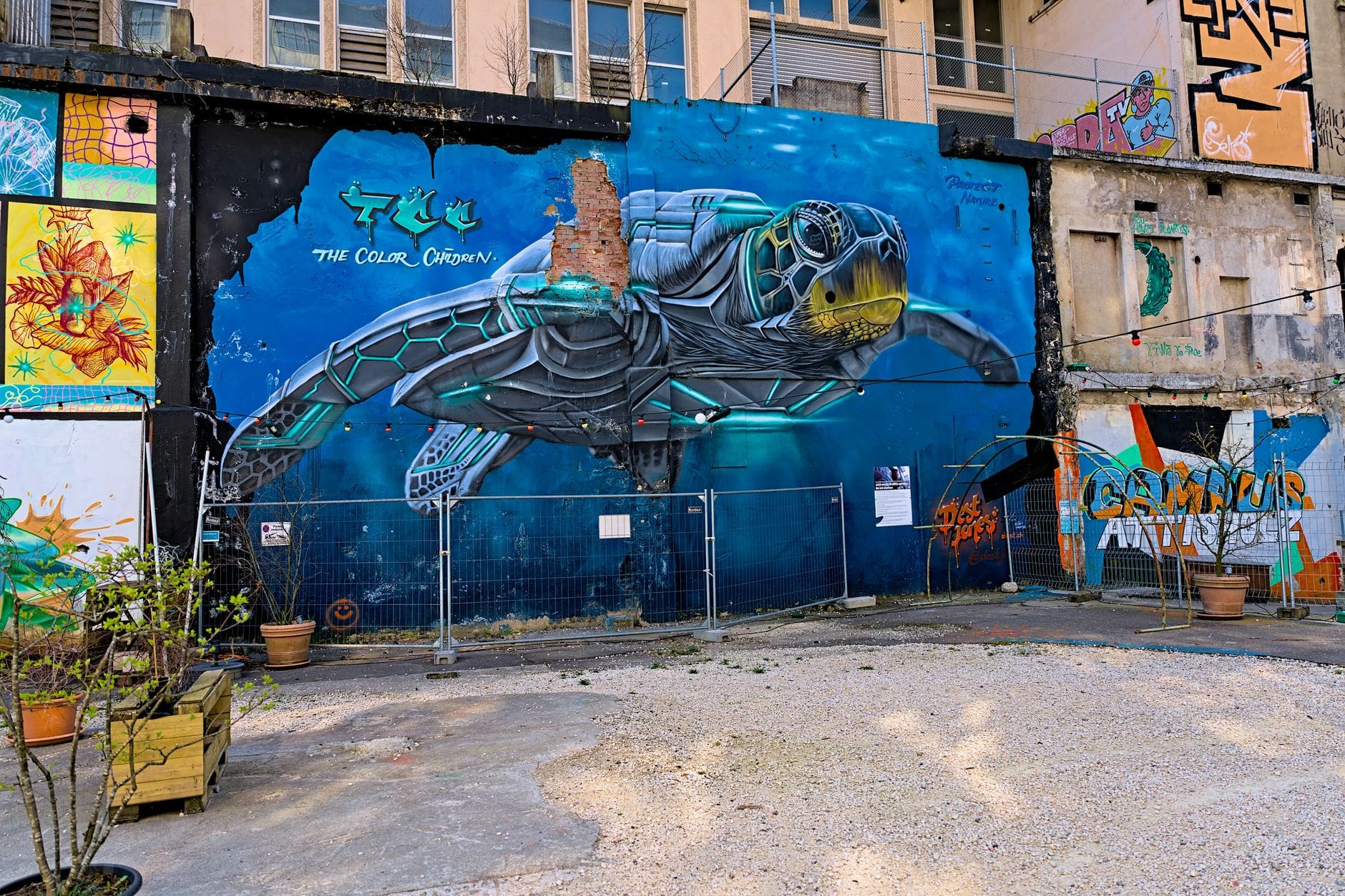
The Street Art Wall an der Heliosstraße is not a gallery, a ticketed attraction, or a curated installation. It is a stretch of exterior wall in the Ehrenfeld district of Cologne The Street Art Wall an der Heliosstraße is not a gallery, a ticketed attraction, or a curated installation. It is a stretch of exterior wall in the Ehrenfeld district of Cologne that the city's own tourism office describes as a key street art hotspot in the city. That is a meaningful designation. What started as a single sanctioned surface for murals has expanded outward into the surrounding streets over the years, turning Ehrenfeld into one of the most visually dense districts in Cologne for urban art.
Ehrenfeld's character as a former industrial and working-class quarter is central to why the art landed here. The neighborhood has railway infrastructure, long blank factory walls, underpasses, and a mix of older residential blocks that provide both the surfaces and the audience. It sits west of the city center, a short tram or S-Bahn ride from Cologne's historic core, and today it functions as a major creative district. For context on how Ehrenfeld fits into Cologne's broader geography, see the Ehrenfeld neighborhood guide.
💡 Local tip
Start at Heliosstraße and then walk north toward the railway viaducts. The density of murals increases as you move away from the main road, and side streets often hide the most detailed work.
What You Actually See at Heliosstraße
The wall itself is a long, painted surface that functions as a rotating canvas. Artists work here on both commissioned projects and tolerated independent pieces, which means the imagery shifts over months and years. On a given visit, you might find large portrait-style murals covering four meters of wall, geometric abstraction in high-contrast colors, lettering in the European graffiti tradition, and smaller stencil work layered over older paint. The palimpsest effect, where you can see traces of previous murals beneath newer ones, is one of the more interesting visual details up close.
The surrounding streets compound the effect. Underpasses along the rail lines carry murals that stretch across entire concrete ceilings. Garage doors on residential side streets show smaller pieces. Some building-end walls carry murals several stories tall. There is no single route that captures everything, and that is partly the point: Ehrenfeld street art rewards aimless walking more than a fixed itinerary.
The quality is uneven, as it always is with street art. Some pieces are technically accomplished works by artists with international reputations. Others are tags, throwups, or practice runs. Experienced visitors to urban art scenes will find plenty to engage with; travelers expecting a uniform standard comparable to a curated museum show should calibrate expectations accordingly.
Tickets & tours
Live prices and dates from our booking partner. If you book, we may earn a commission at no extra cost to you.
Discover Cologne's top street art quarter with a local
From 71 €Instant confirmationFree cancellationCologne haunted places and ghost stories: interactive city game
From 8 €Instant confirmationFree cancellationFood Tour Cologne Sudstadt
From 44 €Instant confirmationFree cancellationCologne brewery tour including 3 Kolsch beer
From 28 €Instant confirmation
Morning, Afternoon, and Evening: How Light Changes the Experience
Lighting matters considerably for viewing and photographing street art, and Ehrenfeld's orientation means the quality of light shifts throughout the day in ways worth planning around. In the morning, some side streets catch direct light first, while the longer Heliosstraße wall sits in shade until late morning. This often makes mid-morning to early afternoon a good window for the main wall.
By afternoon, the light becomes flatter and more even across most surfaces, which reduces shadows in photographs but also reduces the sense of depth and texture in the paint layers. On overcast days, which are common in Cologne from October through March, this distinction largely disappears, and diffuse cloud cover is actually flattering for mural photography, eliminating harsh shadows and blown-out highlights.
In the evening, Ehrenfeld comes into its own as a social district. Bars and cafes fill up, the streets carry more pedestrian traffic, and the atmosphere around the murals changes from quiet appreciation to background streetlife. If you visit around dusk in summer, some walls catch the warm low light at angles that make the texture of spray paint remarkably visible. Winter evenings are dark early, and the area around Heliosstraße is less active after dark, though it is not unwelcoming.
ℹ️ Good to know
Cologne's weather is maritime and changeable. Rain is possible year-round. The art is on permanent outdoor surfaces, so it is fully accessible in wet weather, but puddles can create interesting reflections beneath murals near the rail viaducts.
Getting There and Navigating the District
Ehrenfeld is well-connected by public transport. The most direct routes from the city center are KVB tram lines 3 and 4, which stop at Venloer Str./Gürtel, within easy walking distance of Heliosstraße. S-Bahn and regional trains also serve Köln-Ehrenfeld station, which deposits you directly into the core of the district. The journey from Cologne Hauptbahnhof takes roughly ten to fifteen minutes by tram.
Cycling is a practical option. Ehrenfeld is flat and has reasonable cycling infrastructure, and the distances between murals are short enough that a bicycle lets you cover considerably more ground in an hour than walking. For broader orientation around Cologne's transport network, the getting around Cologne guide covers KVB routes, day tickets, and cycling options in detail.
There is no defined starting point or marked trail. The practical approach is to arrive at Heliosstraße, look at the main wall, and then follow whichever side street looks most promising. The area between Heliosstraße, Venloer Straße, and the railway lines contains the highest concentration of work. Give yourself at least ninety minutes if you want to explore the surrounding blocks properly, not just the headline wall.
Ehrenfeld in Context: Why the Art Scene Took Root Here
Ehrenfeld was developed primarily as an industrial district in the late nineteenth and early twentieth centuries, housing factories, workers' housing blocks, and rail infrastructure. After deindustrialization, the neighborhood saw periods of vacancy and disinvestment, which created the conditions for creative reuse: cheap rents, available spaces, and a population tolerant of unconventional use.
The district now hosts independent record shops, studios, cultural venues, and some of Cologne's most active nightlife. This broader creative ecology is what sustains the street art scene, because it provides both the artists and the audience. Ehrenfeld sits in the same cultural lineage as districts like Kreuzberg in Berlin or Baumwall in Hamburg, where industrial heritage became the substrate for creative communities. For travelers interested in this aspect of the city, the Cologne nightlife guide covers several Ehrenfeld venues in detail.
The fact that Cologne tourism officially recognizes Heliosstraße as a key street art site in the city signals how far the neighborhood's creative identity has moved from the margins to the mainstream. That shift has not neutralized the art, but it has changed it: some of the newer large-scale murals are commissioned by building owners or local organizations, which brings in artists who might not otherwise work in Cologne.
Photography Tips and What to Bring
A smartphone camera is sufficient for most mural photography here. The scale of some pieces means you need to step back considerably to capture a full wall, which requires open space opposite, and some of the narrower side streets do not allow this. A wide-angle lens, even a clip-on smartphone attachment, helps with the larger compositions. For detail shots of stencil layers and texture, getting close and shooting in natural light (avoiding flash) produces better results.
Wear shoes suited to uneven pavement. Some of the best murals are along surfaces adjacent to rail infrastructure where the ground is rougher than on main streets. The walk is entirely flat, so fitness is not a concern, but weather-appropriate clothing matters more than footwear grip. In wet weather, the pavements around the viaducts can be slippery.
💡 Local tip
If you plan to combine street art with a broader Ehrenfeld visit, leave time for a coffee stop on Venloer Straße. The main street has cafes and is worth twenty minutes in its own right.
Who Will Enjoy This, and Who Should Probably Skip It
Travelers with a genuine interest in urban art, photography, or the sociology of creative neighborhoods will find Ehrenfeld consistently rewarding. It pairs well with other culturally oriented stops in Cologne: the Kolumba Art Museum in the city center offers a very different register of contemporary art, and the contrast between the two makes each sharper. The street art walk also fits naturally into a broader Cologne walking itinerary if you build in a half-day for the district.
Travelers who need a defined experience with a clear start, end, and interpretive content may find the open-ended nature of this walk unsatisfying. There are no information panels, no audio guide, no maps marking individual pieces, and the art changes. If you arrive expecting a stable, curated outdoor exhibition, the reality is more chaotic and more interesting than that, but it requires a tolerance for ambiguity.
Families with young children can navigate the area without difficulty, as the terrain is flat and stroller-accessible. The content of the murals is generally appropriate, though some pieces contain political imagery, nudity, or graphic abstraction. There are no barriers or supervised areas, so the standard considerations for street-level urban walking apply.
Insider Tips
- The railway viaducts north of Heliosstraße carry some of the largest and most technically complex murals in the neighborhood. They are easy to miss if you only walk the main street.
- Street art in Ehrenfeld changes continuously. If you visited two years ago, a significant portion of what you remember will have been painted over. This is a reason to return, not a limitation.
- Visit on a weekday morning for the quietest experience. Weekend afternoons bring more foot traffic, and you will be sharing sightlines with other photographers.
- Check local Cologne cultural listings before your visit. Occasionally, live mural painting events and street art festivals are held in Ehrenfeld, which offer the chance to watch artists work in real time.
- The Ehrenfeld street art scene extends well beyond Heliosstraße. Walk east toward the Belgisches Viertel direction and you will find murals thinning out but individual pieces appearing on otherwise unremarkable streets as late discoveries.
Who Is Ehrenfeld Street Art & Murals For?
- Photography enthusiasts looking for large-scale urban subjects in natural light
- Travelers interested in creative neighborhood culture and post-industrial urban change
- Budget travelers: the entire experience is free and pairs with Ehrenfeld's many affordable cafes
- Return visitors to Cologne who have covered the main sights and want something off the cathedral-and-museums circuit
- Anyone building a self-guided walking day that combines multiple Cologne districts
Planning a trip? Discover personalized activities with the Nomado app.