Del Mar Racetrack: The Complete Guide to a Day at the Races
Del Mar Racetrack, home of the Del Mar Thoroughbred Club, is one of Southern California's most storied racing venues. Perched just steps from the Pacific, it draws crowds for its seasonal race meets, fashion traditions, and seaside atmosphere that sets it apart from any inland track.
Quick Facts
- Location
- 2260 Jimmy Durante Blvd, Del Mar, CA 92014 — about 22 miles north of downtown San Diego
- Getting There
- Amtrak to Solana Beach Station; free race-day shuttles have historically run to the track (confirm before travel). By car: I-5 to Via De La Valle exit, then left on Jimmy Durante Blvd.
- Time Needed
- 3 to 6 hours for a full race day; shorter visits possible for select races
- Cost
- Children 17 and under free with parent/guardian. General admission has historically been around US$10–20, with clubhouse admission higher; premium seating and dining cost more. Verify current pricing at dmtc.com before visiting.
- Best for
- Sports fans, date-day visitors, families during summer meets, fashion-forward crowds, first-time racing fans
- Official website
- www.dmtc.com
What Del Mar Racetrack Actually Is
Del Mar Racetrack, operated by the Del Mar Thoroughbred Club, is a seasonal thoroughbred horse-racing facility located in the coastal city of Del Mar, just north of San Diego. It is not a year-round attraction. The track hosts two distinct racing meets: a summer meet that traditionally runs from late July through early September, and a separate fall meet. Outside of those windows, the grounds are largely quiet and the main draw is absent.
That seasonal character is the first thing to understand before making plans. Visitors who show up expecting racing outside the meet dates will find a shuttered grandstand. But for those who time it right, Del Mar delivers a kind of spectacle rare for San Diego: a live sport with genuine stakes, played out against ocean air and mountains to the east.
⚠️ What to skip
Del Mar Racetrack is only open for live racing during its seasonal meets. Always confirm the current racing calendar at dmtc.com before booking travel or accommodation.
The Setting: Why the Location Matters
Few racetracks anywhere in the United States share Del Mar's physical context. The track sits less than a mile from the Pacific Ocean, close enough that a marine layer regularly rolls in during morning training sessions and afternoon gates. On clear afternoons, which are common from August onward, the combination of blue sky, distant surf, and the sound of hooves on turf creates an atmosphere that photographs struggle to capture.
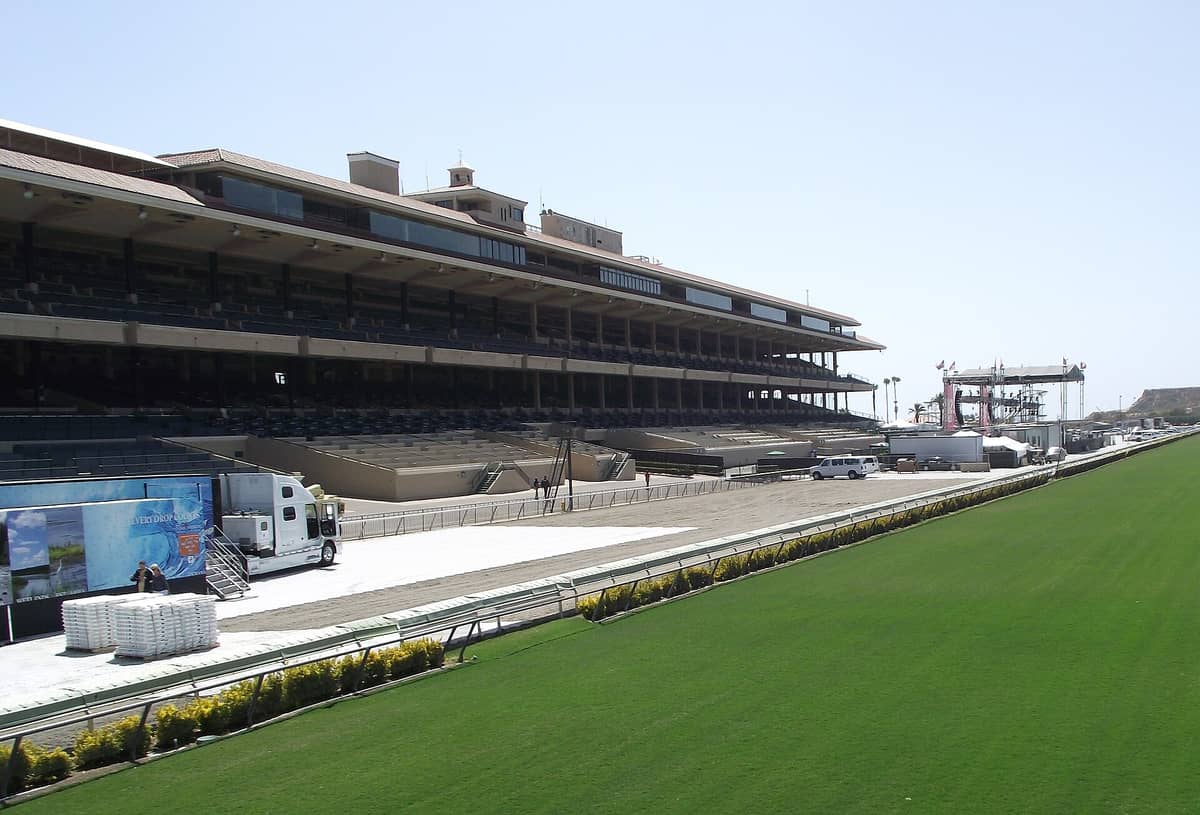
The grandstand itself is a Spanish Colonial Revival structure with arched walkways and terracotta tones that echo Southern California's architectural heritage. The building has been updated over the decades, but its bones still reflect the original 1930s construction, which gives it a weathered, authentic feel that newer entertainment venues often lack. The infield is manicured to a degree that surprises first-time visitors: it reads more like a botanical garden than a sports facility between races.
If you want to compare San Diego's most scenic outdoor settings, the guide to best views in San Diego puts Del Mar's coastal position in context alongside the city's other standout vantage points.
How a Race Day Unfolds: Morning Through Afternoon
Gates typically open around midday on weekdays and mid-to-late morning on weekends, though these times shift by season and day of week. The early hour after opening is the most relaxed: crowds are thin, you can walk the paddock without jostling for position, and the horses are still being warmed and prepared. The smell of fresh turf, horse, and sunscreen mingles in a way that becomes immediately familiar to regular attendees.
Post time for the first race varies, and some days feature a special schedule. The popular 'Four O'Clock Fridays' format in past seasons pushed the first post to late afternoon, creating an end-of-week event with a different crowd energy than a standard afternoon card. By the third or fourth race, the grandstand fills and the paddock ring draws serious attention from bettors studying form. The noise level builds incrementally: quiet analysis gives way to crowd surges as horses round the final turn.
The light changes noticeably by late afternoon. The low sun from the west catches the dust and sea haze, turning the finish line stretch golden around 4 to 5 p.m. during the summer meet. This is the most photogenic window of the day, and also when the grandstand energy peaks. Late-day races attract the largest single-race crowds.
💡 Local tip
Arrive at gate opening to walk the paddock without crowds, study the horses up close before races begin, and claim a good spot in the general admission area before it fills.
Tickets, Seating, and What to Expect Inside
Admission pricing varies by seating area, event, and date, so confirming current rates at dmtc.com before visiting is essential. As a reference point, general grandstand admission has historically been affordable, with the clubhouse level carrying a higher price. Children 17 and under enter free with a parent or legal guardian, making race days a realistic family outing during the summer meet.
The seating hierarchy runs from general admission areas in the grandstand, through reserved seating, to the clubhouse level and private suites. The general admission experience gives you mobility: you can wander the rail, the paddock, the infield, and the food concessions without restrictions. The clubhouse provides table seating and a closer view of the finishing stretch, with trackside dining options available. Neither experience is strictly superior; it depends on whether you prefer freedom of movement or a fixed base.
Accessible seating is available in reserved seating and trackside dining areas and can be requested through the ticket office or online. Accessible parking is offered in main lots on a first-come, first-served basis, with complimentary shuttle service between parking and admission gates during live racing. A limited number of loaner wheelchairs are available for race days; contacting the accessibility office in advance is recommended. Service animals as defined by the ADA are permitted; emotional support animals are not.
The Dress Code Culture and Opening Day Traditions
Del Mar has a fashion culture that is unusual in American sports. Opening Day of the summer meet is the anchor event for it: elaborate hats, sundresses, and linen suits appear in quantities that turn the grandstand into an informal runway. The tradition is not enforced by any official dress code for general areas, but it is socially embedded enough that first-timers who show up in shorts and a t-shirt on Opening Day will feel underdressed relative to the crowd around them.
On regular weekday cards, the crowd is more mixed. Racing regulars in casual clothing share space with office groups and families. The fashion element scales back considerably, and the atmosphere tilts toward the sport itself rather than the social scene. If you are coming purely for the racing and not the pageantry, a midweek visit is a more comfortable choice.
Getting There and Practical Planning
Del Mar Racetrack sits about 22 miles north of downtown San Diego at 2260 Jimmy Durante Blvd, Del Mar, CA 92014. By car, take I-5 north to the Via De La Valle exit, turn left on Via De La Valle to head west, then left onto Jimmy Durante Boulevard. Parking is available on-site, though lots fill quickly on high-attendance days and weekend gates. Arriving within the first 30 minutes of opening reduces parking stress significantly.
By train, Amtrak serves Solana Beach Station, which is located close to the track. In past seasons, free shuttle service operated between the station and the track on race days. This is worth confirming directly with Del Mar Thoroughbred Club before your visit, as shuttle availability can change between seasons. Taking the train also sidesteps parking costs and lot congestion entirely, which makes it a practical option for groups.
Del Mar is situated in San Diego County's coastal north, an area with a range of additional activities. If you are making a full day of the area, the guide to things to do in San Diego covers nearby options worth pairing with a race day.
Photography, Weather, and What to Bring
San Diego's Mediterranean climate means race season falls almost entirely within the dry months. Rain during the summer meet is uncommon. However, the marine layer, which is a low coastal fog common along this stretch of coast in June and into early July, can keep mornings gray and cool before clearing. By the time afternoon racing begins, conditions are typically sunny and warm, often 70 to 76 degrees Fahrenheit (21 to 24 degrees Celsius).
Sunscreen is genuinely important here. The grandstand offers partial shade in some sections, but the rail, paddock, and infield are largely exposed. A hat serves double duty for sun protection and, on Opening Day, as a fashion statement. The ocean breeze that makes Del Mar comfortable by Southern California standards also means temperatures drop faster after sunset than visitors expect.
For photography, the paddock before races provides close access to the horses with relatively controlled lighting. The stretch run from the rail offers dynamic shots but requires a longer lens to isolate subjects. Afternoon light from the west behind the grandstand tends to backlight horses running toward the finish line, so positioning on the far turn gives better front-lit opportunities during late-day races.
The broader San Diego region has a similar Mediterranean climate pattern that influences how you should pack for any outdoor activity. The best time to visit San Diego guide breaks down seasonal weather in detail.
Who Might Want to Skip Del Mar
Del Mar Racetrack is a strong fit for a specific kind of visitor but a poor fit for others. If you have no interest in horses, wagering, or the social event aspect of racing, spending half a day here is unlikely to convert you. The racing itself, while exciting in bursts, involves long pauses between races that can stretch 25 to 30 minutes. Visitors expecting continuous action in the style of stadium sports may find the rhythm slow.
The cost also adds up quickly if you move beyond general admission. Food and beverage pricing at the track reflects a captive audience. Parking fees, admission, food, and any wagering can combine into a significant outlay for a family or group before the day is finished.
Travelers managing a tight budget should weigh Del Mar against the many free things to do in San Diego that the region offers, particularly at the coast.
Insider Tips
- The paddock ring before each race is where serious horse people spend their time. Walking here 10 minutes before post and watching which horses are calm versus agitated gives you information that betting sheets do not provide.
- Weekday cards during the middle of the summer meet draw smaller crowds than weekends and Opening Day. You get better rail access, shorter food lines, and often the same quality of racing without the social scrum.
- Amtrak's Pacific Surfliner stops at Solana Beach Station. If free shuttles are running that season, the train trip from downtown San Diego takes roughly 40 minutes and drops you close to the track without the parking overhead.
- The infield is open to general admission ticket holders and provides a completely different perspective on the race: you are inside the track, watching horses pass in both directions. It is less crowded than the grandstand rail and gives a better sense of how fast these animals actually move.
- If you are attending Opening Day, commit to the fashion element or accept that you will be the exception. A well-chosen hat is the minimum social investment. Renting one from a local boutique in Del Mar or La Jolla the week before is a real option locals use.
Who Is Del Mar Racetrack For?
- First-time racing fans who want a beginner-friendly, scenic introduction to thoroughbred racing
- Families with children during the summer meet, since kids 17 and under enter free
- Couples looking for a distinctive date experience beyond the standard San Diego restaurant or beach outing
- Fashion-forward visitors who want to participate in Opening Day hat culture
- Sports bettors and horse enthusiasts who want to combine wagering with quality coastal scenery
Nearby Attractions
Combine your visit with:
- Anza-Borrego Desert State Park
Anza-Borrego Desert State Park stretches across more than 600,000 acres of Colorado Desert in eastern San Diego County, making it one of the largest state parks in the United States. From spring wildflower carpets to ancient slot canyons and some of the darkest skies in Southern California, it rewards visitors who plan carefully and respect the terrain.
- Border Field State Park
Border Field State Park occupies the southwestern corner of the continental United States, where Pacific surf meets the U.S.–Mexico border fence. It offers coastal wetlands, a historic marble boundary monument, and views toward Friendship Park — the U.S.-side gathering space has been closed since 2020, so confirm current access before you go.
- Cedar Creek Falls
Cedar Creek Falls is a backcountry waterfall deep inside Cleveland National Forest, reached by a strenuous 6-mile round-trip hike from Ramona. A mandatory day-use permit keeps crowds manageable, but you'll earn every step of the descent into this rugged gorge. This guide covers the permit process, trail conditions, safety warnings, and what to realistically expect.
- Chicano Park
Chicano Park is a National Historic Landmark tucked beneath the San Diego–Coronado Bridge in Barrio Logan, where more than 80 monumental murals cover the concrete pillars of a freeway overpass. Free to enter and open daily, it is one of the most culturally layered outdoor spaces in the American Southwest.