deCordova Sculpture Park and Museum: New England's Premier Outdoor Art Experience
Set on 30 acres of rolling lawns and woodland trails along Flint's Pond, deCordova Sculpture Park and Museum in Lincoln, Massachusetts is the largest sculpture park of its kind in New England. With more than 60 outdoor works on display at any given time, it offers a distinctly different experience from Boston's city-center art institutions.
Quick Facts
- Location
- 51 Sandy Pond Road, Lincoln, MA 01773 — approx. 20 miles northwest of Boston
- Getting There
- Best reached by car; no direct MBTA subway service to the park — check ride-share or driving routes
- Time Needed
- 2 to 3 hours for a thorough outdoor walk; allow more if lingering at individual works
- Cost
- Ticketed; timed entry sold online and on-site. Prices vary by category — verify current USD rates before visiting
- Best for
- Contemporary art enthusiasts, families, walkers, and day-trippers from Boston
- Official website
- thetrustees.org/place/decordova
What deCordova Actually Is
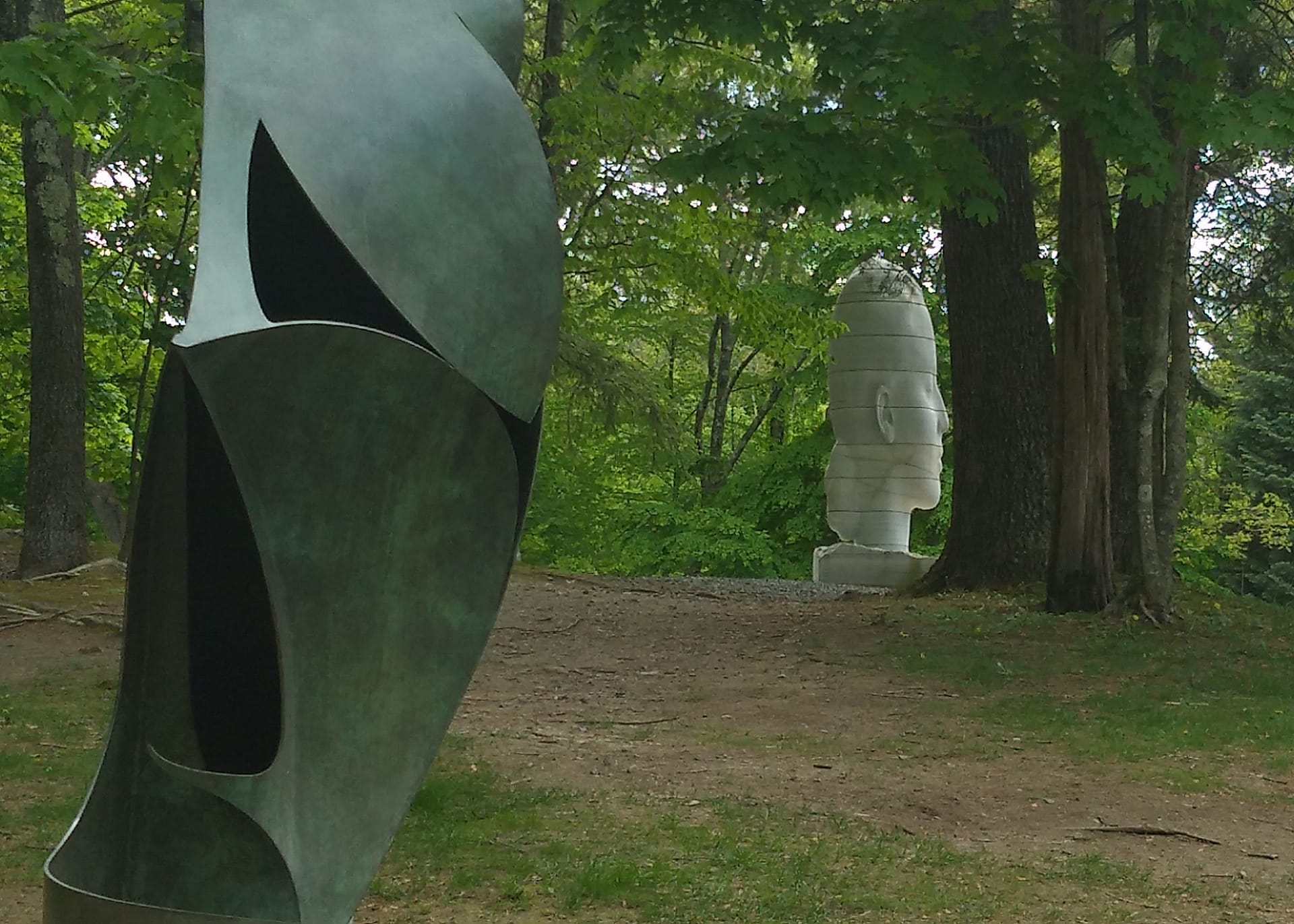
The deCordova Sculpture Park and Museum is not a city attraction in the conventional sense. It sits in Lincoln, Massachusetts, a quiet suburb 20 miles west of Boston, on the southern shore of Flint's Pond. The setting matters enormously: this is a place where contemporary sculpture exists alongside meadows, mature trees, and lake views rather than white gallery walls. That context changes how you read the work.
Established in 1950, deCordova is the largest sculpture park of its kind in New England, covering approximately 30 acres. The collection displays more than 60 outdoor works at any given time, most of which are on loan to the museum rather than held permanently. That rotating nature means the landscape changes from year to year. A piece that anchored a particular hillside on one visit may be gone on the next, replaced by something entirely different in scale, material, or tone.
ℹ️ Good to know
Important update: As of 2023, the museum building is closed for a multi-year HVAC renovation. The outdoor sculpture park remains fully open. Visitors looking for indoor gallery programming should check the official site for the latest timeline before planning.
Walking the Park: What the Experience Feels Like
The terrain at deCordova is varied in a way that rewards slow movement. The main lawn opens up broadly when you arrive, and large-scale works announce themselves immediately, some towering several meters high, others low and horizontal against the grass. The scale play is deliberate. A piece that looks modest in a photograph may be imposing when you are standing beside it on a slope.
Moving further from the entrance, the paths become more wooded, the light shifts, and the relationship between sculpture and environment becomes more intimate. Sound changes too: in the open sections you hear wind and the faint traffic of Sandy Pond Road, but the tree-covered paths muffle that, leaving birdsong and the crunch of gravel underfoot. Several works are positioned specifically to interact with light and shadow — mid-morning on a sunny day shows them differently than the flat illumination of an overcast afternoon.
The pond is visible from certain points in the park, adding a reflective, quieter quality to the eastern sections. Children tend to run freely across the lawns here, and the park is suitable for families with kids who have limited patience for traditional museum formats. The artwork is touchable in some cases, and the open-air format makes movement and noise acceptable in ways an indoor gallery does not.
💡 Local tip
Wear comfortable walking shoes with some grip — gravel paths and uneven terrain mean smooth-soled shoes become a liability after recent rain. The lawn sections can stay soft well into spring.
Tickets & tours
Hand-picked options from our booking partner. Prices are indicative; availability and final rates are confirmed when you complete your booking.
Boston Summer Night Trolley Tour and River Cruise
From 27 €Instant confirmationFree cancellationLEGOLAND Discovery Center Boston tickets
From 26 €Instant confirmationFree cancellationGhosts and Gravestones tour of Boston
From 39 €Instant confirmationFree cancellationBest of Boston tour
From 182 €Instant confirmationFree cancellation
Best Time to Visit
Late spring through early fall is the optimal window. May and June bring the lawns to full color with wildflowers at the edges of the paths, and the sculpture reads vividly against green. September and October are arguably the most striking months: New England's autumn foliage creates a backdrop that transforms almost every work, adding warm golds and deep reds around pieces that look entirely different in summer light.
Winter visits are possible when the park is open, and snow-covered sculptures have a genuine visual drama, but the reduced hours and cold make lingering difficult. The park's operating schedule currently runs Wednesday through Sunday, typically from 10:00 until 17:00, with occasional seasonal adjustments. Hours contract in colder months. Always verify the current schedule directly with The Trustees before traveling, as hours can shift seasonally or for special events. For broader planning context around Boston day-trip timing, see the guide to the best time to visit Boston.
Arriving shortly after opening on a weekday is the quietest option. Weekend afternoons, particularly in fall, draw larger crowds and parking at the Sandy Pond Road lot can become competitive. The park does not feel overcrowded even on busy days given the scale of the grounds, but solitude around individual works becomes harder to find.
Getting There from Boston
This is not a walk-to attraction. The park sits in a residential part of Lincoln with no direct MBTA subway connection. The practical reality for most visitors is driving, which takes roughly 30 to 40 minutes from central Boston depending on traffic. Route 2 westbound is the most direct approach; consult a mapping app for current routing from your specific starting point.
Ride-share services operate in the area, but the suburban location means costs and wait times will be higher than city fares. There is no regular bus service that connects the park easily from Boston. For travelers without a car, deCordova fits best into a broader day trip to the Lincoln-Concord area — Minute Man National Historical Park is nearby, and the town of Concord has historical and literary significance worth pairing with the visit. The day trips from Boston guide has useful context for structuring that kind of itinerary.
The Collection and Curatorial Approach
deCordova focuses specifically on contemporary and modern art with a regional emphasis, prioritizing artists from New England. This is not a general survey of 20th-century sculpture — the programming reflects a sustained commitment to living artists and emerging voices rather than blue-chip names collected for prestige. That orientation gives the park a different energy from larger survey institutions.
The works span a wide range of materials: weathering steel, bronze, wood, ceramic, glass, and site-specific installations that use the natural landscape as a compositional element. Some pieces have remained in the park for years and have taken on a weathered, embedded quality, their surfaces patinated by New England winters. Others are freshly installed and still carry the crispness of new fabrication. If you want indoor contemporary art in Boston proper, the Institute of Contemporary Art offers a strong complement to deCordova, and the two institutions approach contemporary work from quite different angles.
The museum building, which houses rotating indoor exhibitions and education programs, is currently closed for a major HVAC infrastructure upgrade that began in 2023. The timeline for reopening has not been definitively published. This means the full institutional experience — indoor galleries, the museum store, and certain programming — is temporarily unavailable. The outdoor sculpture park is entirely unaffected by this work.
Photography, Accessibility, and Practical Details
Photography is popular at deCordova, and the combination of natural light, varied terrain, and sculptural forms offers compelling compositions throughout the year. Overcast days often produce more even light for photographing metallic or highly polished surfaces that blow out in direct sun. The golden hour before closing in late afternoon creates long shadows across the lawn that emphasize texture and three-dimensionality.
Accessibility across 30 acres of varied terrain is inherently limited in parts of the park. Some paths are paved or compacted gravel and manageable for mobility aids; others involve grass, slopes, and uneven ground. The Trustees note that accessibility features can change and direct visitors with specific needs to contact staff directly before arrival for up-to-date information on accessible routes, parking, and building access. The terrain is honestly more challenging than a typical urban museum, and visitors with significant mobility limitations should plan accordingly.
Timed tickets are available online through The Trustees' ticketing platform, and booking in advance is recommended on weekends in fall. Pricing is listed in USD and varies by membership status, age, and category — check the current rates at time of booking, as prices are periodically revised. For those building a wider Boston cultural itinerary, the best museums in Boston guide covers the full range of options across the city and suburbs.
Who Should Skip This
Visitors with very limited time in Boston who are prioritizing the city's core historic sites will find deCordova an inefficient use of a half-day. The 40-minute drive each way, combined with two to three hours in the park, is a meaningful time commitment. It also requires either a car or specific ride-share planning, which adds friction for travelers relying entirely on the MBTA.
Anyone specifically seeking the indoor gallery experience should be aware the museum building is currently closed. If contemporary indoor exhibitions are the primary draw, deCordova cannot fulfill that right now and alternatives in the city would serve better. Similarly, visitors who find outdoor walking in variable New England weather unappealing will not get the best from a park that is fundamentally an open-air experience.
Insider Tips
- The park's eastern section near the pond is the least-visited part of the grounds — quieter, more shaded, and where some of the most site-responsive installations tend to appear. Walk the full loop rather than turning back when the main lawn ends.
- October weekday mornings are arguably the ideal visiting window: autumn foliage peaks around mid-October in eastern Massachusetts, crowds are thinner on weekdays, and the morning light hits the hillside works at a low angle that emphasizes form and shadow.
- If you are driving from Boston, combine the trip with a stop in nearby Concord or a walk at Walden Pond — the proximity to Concord makes a paired itinerary straightforward and the drive time does not change significantly.
- The gravel path surfaces photograph well as leading lines in compositions framing sculptures. The curve of the main path through the open lawn is especially effective for wide-angle shots that place a work in its full environmental context.
- Pack a picnic. The park's lawns permit sitting and eating, and spending time stationary with a specific work often reveals details — the texture of weathered steel, the movement of a kinetic element in the breeze — that walking past misses entirely.
Who Is deCordova Sculpture Park and Museum For?
- Contemporary art enthusiasts who want sculpture in a natural setting rather than a traditional gallery
- Families with young children who need outdoor space and movement alongside cultural programming
- Day-trippers pairing deCordova with other sites in the Lincoln-Concord area
- Photographers looking for distinctive autumn foliage and sculpture compositions
- Walkers and nature-oriented visitors who want art integrated into landscape rather than isolated from it
Nearby Attractions
Combine your visit with:
- Arnold Arboretum
Founded in 1872, the Arnold Arboretum is the oldest public arboretum in North America — a free, 281-acre landscape in Jamaica Plain managed by Harvard University. With over 15,000 accessioned plants and sweeping hillside views, it draws botanists, dog walkers, and curious visitors in equal measure across all four seasons.
- Blue Hills Reservation
Ten miles south of downtown Boston, Blue Hills Reservation spreads across more than 7,000 acres of forested hills, rocky ridgelines, and glacial wetlands. Free to enter and open year-round from dawn to dusk, it offers 125 miles of trails ranging from easy pond-side loops to a genuine summit climb at 635-foot Great Blue Hill.
- Boston Duck Tours
Boston Duck Tours puts you aboard a replica World War II DUKW amphibious vehicle for an 80-minute circuit of the city's most historic landmarks, finishing with a splash into the Charles River. Running seasonally from late March through late November, it's one of the few tours in Boston that covers both street-level sights and a Charles River perspective in a single trip.
- Boston Harbor Islands
Boston Harbor Islands National and State Park puts 34 islands and peninsulas within easy ferry reach of downtown Boston. From Civil War earthworks on Georges Island to the oldest lighthouse station in the United States on Little Brewster, the park rewards visitors who are willing to trade the city's brick sidewalks for salt air and open water.