Crane Beach: The Best Beach Day Trip from Boston
Crane Beach on the Crane Estate in Ipswich, Massachusetts is a 4-mile stretch of barrier beach backed by rolling dunes and maritime forest, managed by The Trustees of Reservations. About an hour from Boston by commuter rail or shuttle, it offers swimming, hiking, and genuine coastal scenery with far less concrete than most New England beach towns.
Quick Facts
- Location
- 310 Argilla Road, Ipswich, MA 01938 — about 30 miles north of Boston
- Getting There
- MBTA Commuter Rail (Newburyport Line) to Ipswich Station; free CATA shuttle to beach on weekends & holidays, June 14–September 1 (2026 season)
- Time Needed
- Half day to full day; 3–4 hours minimum for beach + dune trail
- Cost
- Approx. USD $30–$45 per vehicle for non-members (weekday vs. weekend); Timed Entry Passes are required on weekends. Verify current rates with The Trustees before visiting.
- Best for
- Swimming, beach walking, birdwatching, dune hiking, family outings
- Official website
- thetrustees.org/place/crane-beach-on-the-crane-estate
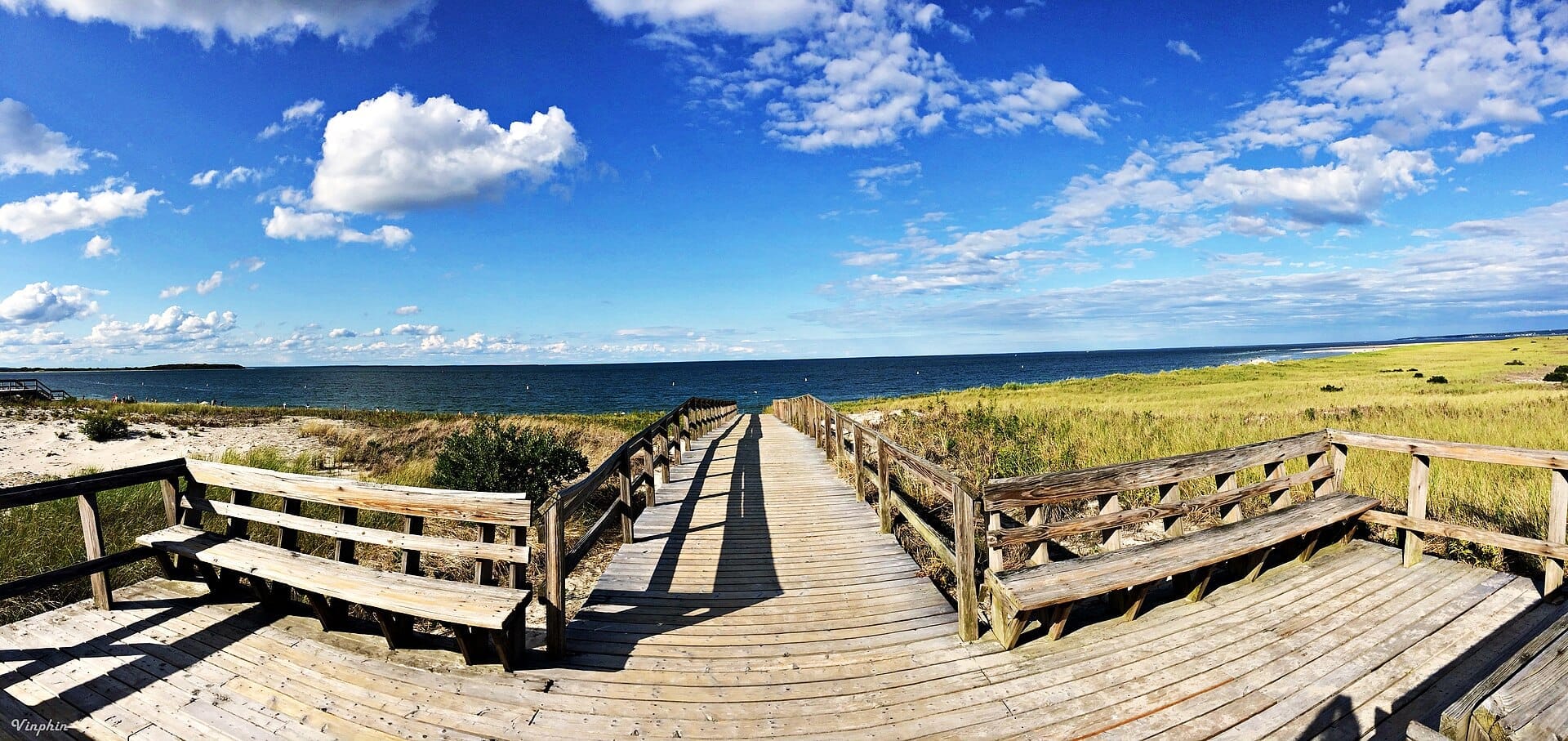
What Crane Beach Actually Is
Crane Beach on the Crane Estate is a 1,234-acre conservation property owned and managed by The Trustees of Reservations, a Massachusetts land trust. The beach itself stretches about 4 miles along the Atlantic, making it one of the Northeast's most spectacular beaches. Behind the waterline, an expansive dune system transitions into maritime forest and tidal marshes, with roughly 5.5 miles of marked trails threading through it. This is not a boardwalk beach town with fried dough and souvenir shops. It is a working conservation reserve that happens to allow swimming.
The property's official name is the Richard T. Crane, Jr. Memorial Reservation. The Crane family gifted it to public use in 1945. That origin matters: the land was preserved intentionally, and The Trustees have kept the infrastructure deliberately minimal. You will find bathhouses, a refreshment stand, and boardwalk paths to the water, but nothing that competes with the scenery. The parking lot, the dunes, and the ocean are the entire proposition.
⚠️ What to skip
Timed Entry Passes are required on weekends and are released on a rolling schedule at thetrustees.org. On summer weekends, passes sell out. Book at least a week in advance or arrive by car on a weekday to skip the reservation requirement.
Getting There from Boston
Crane Beach sits about 30 miles north of downtown Boston in Ipswich, Massachusetts, and driving is the most direct way to reach it. From Route 128, take exit 45B onto Route 1A North for 8 miles into Ipswich, then turn right on Route 133 East for 1.5 miles, left on Northgate Road for half a mile, and right on Argilla Road for 2.5 miles to the entrance gate. From I-95, exit 78 puts you on Route 133 East; follow it for 4.5 miles, then turn right onto Rt. 1A South/Rt. 133 East to Ipswich and follow it for 3.5 miles, then turn left on Argilla Road for 3.9 miles to the entrance. The last stretch of Argilla Road passes through open farmland and salt marsh, which gives a strong first impression of how rural this corner of Essex County remains.
Car-free travel is possible. The MBTA Newburyport/Rockport Commuter Rail line connects North Station in Boston to Ipswich Station in about an hour. On weekends and holidays from June 14 through September 1, the Cape Ann Transportation Authority (CATA) runs a free beach shuttle between Ipswich Station and the beach entrance for the 2026 season. Confirm the shuttle schedule directly with The Trustees or CATA before planning your trip, as seasonal service dates shift year to year.
If you are staying in Boston and want guidance on planning the larger trip, the Boston beaches guide covers Crane alongside closer options like Revere and Carson Beach, which helps with realistic comparison.
Tickets & tours
Hand-picked options from our booking partner. Prices are indicative; availability and final rates are confirmed when you complete your booking.
Boston Summer Night Trolley Tour and River Cruise
From 27 €Instant confirmationFree cancellationLEGOLAND Discovery Center Boston tickets
From 26 €Instant confirmationFree cancellationGhosts and Gravestones tour of Boston
From 39 €Instant confirmationFree cancellationBest of Boston tour
From 182 €Instant confirmationFree cancellation
The Beach Itself: What to Expect
The sand at Crane Beach is fine and pale, the kind that holds heat in the afternoon and squeaks faintly underfoot when dry. The surf is Atlantic-facing, which means there is usually some wave action, but Crane Beach's orientation and the gradual slope of the seabed make it generally calmer than fully exposed Cape Cod beaches. Water temperatures run cold until late July, typically hovering in the low-to-mid 60s Fahrenheit in June and reaching the low 70s by August. Swimmers who know New England beaches will find this normal; anyone expecting Caribbean warmth should adjust expectations.
Lifeguard coverage is 9:00 am to 5:00 pm daily from Memorial Day through Labor Day, weather permitting. The swimming area is marked with buoys. Outside those hours, or outside the guarded season, swimming is at your own risk. The beach opens at 8:00 am daily, and the entry gate closes 20 minutes before sunset, with the parking lot locked at sunset. Arriving at 8:00 am on a weekday in July means you may have a significant stretch of the beach to yourself for the first 90 minutes, which is a different experience entirely from arriving at noon.
💡 Local tip
Greenhead flies (biting flies native to coastal salt marshes) are present at Crane Beach from roughly mid-July through early August. They are aggressive and repellent has limited effect on them. If you are sensitive to insect bites, plan your visit before mid-July or after the first week of August. The Trustees typically posts greenhead fly status updates on the Crane Beach page during this period.
The Dune Trails and Natural Character
Over 5 miles of trails are what separate Crane Beach from most beach destinations in the region. The dune system here is a classic barrier beach landform, with active and stabilized dunes supporting beach grass, scrub oak, and bayberry. Walking the Dune Trail loop, you pass from open beach into a sheltered corridor where the wind drops, the light changes, and the sound of the ocean becomes muffled. In the right season, the smell of warm pine and bayberry is specific enough to be memorable.
The maritime forest portion of the trail system covers pine and oak woodland that feels older and denser than the dune scrub. Birding is consistently productive here, especially during spring and fall migration. The property's position on the Atlantic Flyway means migrating shorebirds and warblers use the marsh and forest edges. Birders should bring binoculars, and early morning is significantly better than midday for activity.
Boardwalks and marked trail surfaces make most of the primary routes accessible for people who find soft sand difficult, though the deeper dune sections involve uneven footing. Anyone with significant mobility limitations should call The Trustees directly at 978-356-4354 or email cranebeach@thetrustees.org for current accessibility conditions before making the trip.
For context on Boston-area outdoor experiences, the Boston outdoor activities guide includes Crane alongside urban parks and harbor options, useful for building a multi-day itinerary.
How the Experience Changes by Time of Day and Season
Morning visits before 10:00 am on weekdays offer the quietest conditions. The light is low and angled, the beach reads wider without crowds compressing the view, and the parking lot fills slowly. By 11:00 am on summer weekends, the lot can reach capacity, and the beach becomes a dense patchwork of umbrellas from the water's edge back to the dune line. Neither experience is wrong, but they are distinctly different.
Late afternoon, from around 4:00 pm onward, sees a second quieter window as day-trippers with young children begin to leave. The light in the late afternoon turns the dune grass gold and softens the contrast of the water, which makes this the best window for photography. The beach closes at sunset, so there is no evening visit option, which means you lose the blue-hour light typical at more accessible shorelines.
Off-season visits, particularly in October and November, offer a sharply different character. The beach is nearly empty, the dune colors shift to amber and rust, and shorebird diversity peaks during fall migration. Parking is generally cheaper outside the summer season, and the greenhead flies are long gone. Winter visits are permitted but can be severe — wind off the Atlantic on a January day is not casual coastal walking. Spring, especially May, brings warmth back without summer crowds, and the dune vegetation starts greening noticeably by late April.
Boston's shoulder seasons are covered in detail in the Boston in fall guide, which makes the case for October as one of the most productive months for day trips like this one.
Practical Details and What to Bring
Parking fees are charged per vehicle, not per person, which makes a car the most cost-efficient option for groups of three or more. For the 2026 season, non-member rates are approximately USD $30 on weekdays and USD $45 on weekends and holidays; these figures shift annually, so verify the current schedule on The Trustees' website before booking. Timed Entry Passes must be purchased in advance on weekends; walk-up availability on peak summer weekends is limited. Trustees members pay reduced rates.
The on-site snack bar operates during the summer season, selling drinks, ice cream, and light food. It is not a full restaurant. Pack a real lunch if you plan to spend the day, and bring significantly more water than you think you will need, especially on hot days when the dune trail exposes you to full sun with minimal shade. Sunscreen, a hat, and a windbreaker for the afternoon sea breeze are all worth including.
Dogs are not permitted at Crane Beach from April 1 through September 30. Outside those months, dogs on leashes are allowed. This is strictly enforced and worth knowing before you plan a trip with a pet during summer.
- Bring: sunscreen, hat, water (at least 2 liters per person on hot days), lunch, windbreaker
- Wear: water shoes are useful on the rocky sections near the trail exits; sandals work on the main beach
- Photography: morning light from the east is best for beach shots; late afternoon for dune grass and warm tones
- Cell service: generally adequate for navigation but can be spotty in the dune interior — download offline maps in advance
- No pets April 1 – September 30
Who Should Think Twice
Crane Beach requires real planning effort: advance pass booking, a one-hour transit ride or a car trip, and a parking fee that is among the higher in the region. If you want a beach with immediate convenience from downtown Boston, Castle Island and Revere Beach are both accessible by MBTA in under 30 minutes, with no advance booking required. Crane Beach rewards the effort, but it demands it.
Visitors primarily interested in urban beach activity with food vendors and easy transit should consider Revere Beach as a simpler alternative. For a full overview of coastal options reachable from the city, the day trips from Boston guide compares Crane with other North Shore destinations including Rockport.
Insider Tips
- Book Timed Entry Passes the moment they open on The Trustees website — popular summer weekends sell out days in advance. Check the release schedule on the Crane Beach page for exact booking windows.
- The greenhead fly season runs roughly midsummer. If you visit during this window, cover exposed skin and keep moving on the trails. The flies are less active directly on the windy beach than in the dune corridors.
- Arriving at 8:00 am on a weekday in June or September gives you two hours of quiet before the beach fills. The early light is also better for photography than anything you will get at midday.
- The CATA shuttle from Ipswich Station runs free on summer weekends, which means you avoid the parking fee entirely if you take the commuter rail. A round-trip commuter rail ticket from North Station plus the shuttle is considerably cheaper than weekend parking.
- The dune trail loop is most rewarding if you walk it counterclockwise (heading north from the parking area first), which puts the best salt marsh views at the midpoint rather than the end when energy is lowest.
Who Is Crane Beach For?
- Families with older children who want a full beach day without a resort setting
- Birders, especially during spring and fall migration periods
- Photographers who want dune and shoreline landscapes without crowds in the frame
- Day-trippers from Boston looking for genuine coastal scenery within an hour of the city
- Hikers who want to combine beach time with a proper trail walk
Nearby Attractions
Combine your visit with:
- Arnold Arboretum
Founded in 1872, the Arnold Arboretum is the oldest public arboretum in North America — a free, 281-acre landscape in Jamaica Plain managed by Harvard University. With over 15,000 accessioned plants and sweeping hillside views, it draws botanists, dog walkers, and curious visitors in equal measure across all four seasons.
- Blue Hills Reservation
Ten miles south of downtown Boston, Blue Hills Reservation spreads across more than 7,000 acres of forested hills, rocky ridgelines, and glacial wetlands. Free to enter and open year-round from dawn to dusk, it offers 125 miles of trails ranging from easy pond-side loops to a genuine summit climb at 635-foot Great Blue Hill.
- Boston Duck Tours
Boston Duck Tours puts you aboard a replica World War II DUKW amphibious vehicle for an 80-minute circuit of the city's most historic landmarks, finishing with a splash into the Charles River. Running seasonally from late March through late November, it's one of the few tours in Boston that covers both street-level sights and a Charles River perspective in a single trip.
- Boston Harbor Islands
Boston Harbor Islands National and State Park puts 34 islands and peninsulas within easy ferry reach of downtown Boston. From Civil War earthworks on Georges Island to the oldest lighthouse station in the United States on Little Brewster, the park rewards visitors who are willing to trade the city's brick sidewalks for salt air and open water.