CosmoCaixa Barcelona: The Science Museum Worth the Uphill Trek
CosmoCaixa is Barcelona's flagship science museum, housed in a century-old Modernista building expanded to nine floors and 30,000 square metres. From a living slice of the Amazon to geological fault demonstrations and a full planetarium, it rewards curiosity at every age. Entry starts at just €4, making it one of the city's best-value cultural stops.
Quick Facts
- Location
- Carrer d'Isaac Newton, 26, Barcelona (upper Avinguda del Tibidabo)
- Getting There
- FGC Line 7 to Av. del Tibidabo (800m walk), then Bus 196 or Tramvia Blau to Tibidabo
- Time Needed
- 2.5–4 hours (add 45 min for Planetarium)
- Cost
- €4.00 adults; free under 16; Planetarium €4 extra; free with Barcelona Card
- Best for
- Families, science enthusiasts, rainy days, budget-conscious visitors
- Official website
- www.fundaciolacaixa.es
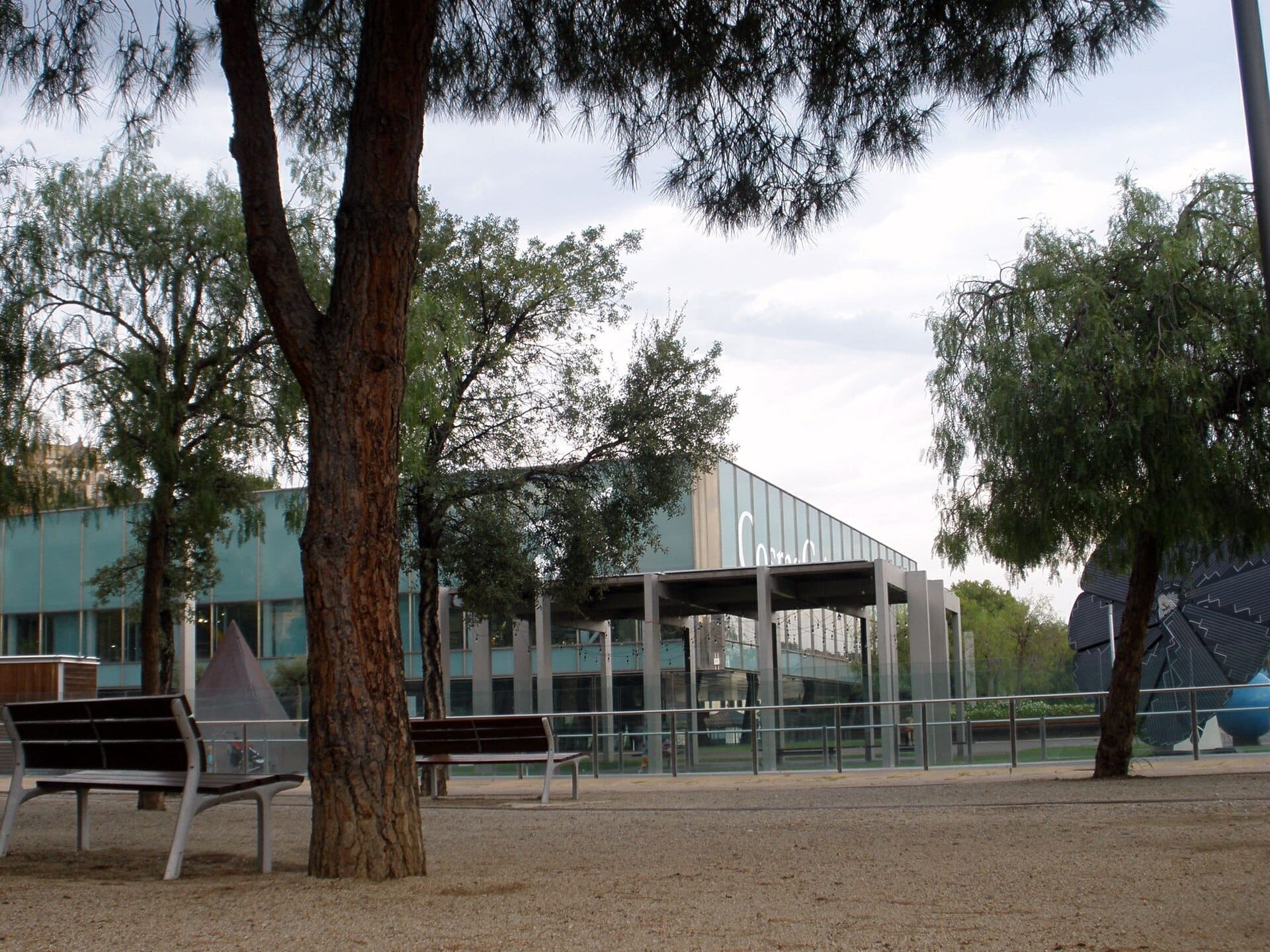
What CosmoCaixa Actually Is
CosmoCaixa is Barcelona's principal science museum, and it operates on a different scale than most European equivalents. Spread across nine floors and roughly 30,000 square metres, it covers physics, geology, biology, ecology, and cosmology through a combination of permanent installations, interactive stations, and live environments. The headline attraction is not a display case or a scale model. It is a 1,000-square-metre section of living Amazonian rainforest, housed inside the building with real vegetation, humidity, and animal species. That alone separates CosmoCaixa from the typical science centre.
The museum opened in its current expanded form in 2004 and won the European Museum of the Year Award in 2006. Those credentials are not just marketing: the spatial design, the flow between exhibits, and the quality of interpretation are consistently above average. Admission is €4 for adults, which by Barcelona standards is modest. Children under 16 enter free, which makes the pricing among the most family-friendly of any major attraction in the city.
💡 Local tip
Book Planetarium sessions online before you visit. They sell out on weekends and during school holidays, and the ticket desk cannot always accommodate walk-ins for the next available show.
The Building: From Asylum to Award-Winning Museum
The structure at Carrer d'Isaac Newton, 26 was built between 1904 and 1909 by Josep Domènech i Estapà, one of the Catalan Modernisme architects who worked alongside but independently from Antoni Gaudí. Domènech i Estapà designed it as a residential institution for blind and mentally ill patients, and it operated in that capacity until 1979. The building's original function is evident in its heavy masonry, large internal courtyards, and the calm, institutional rhythm of its facades. It is not ornamental in the way of Gaudí's work, but it has a quiet authority that holds up well against its expanded modern interiors.
The conversion to a science museum began in 1981. The major transformation came between 1998 and 2005, when architects expanded the structure to four times its original footprint, excavating downward to create the subterranean floors that now hold the most dramatic exhibits. The exterior Modernista shell was preserved and restored, while the new construction descends underground, meaning the grandest spaces are below street level. Arriving at the entrance, the building looks contained and almost domestic. The scale only reveals itself once you are inside and moving down.
The museum sits in the upper residential area of Barcelona near the foot of the Collserola hills, not far from Tibidabo amusement park. The neighbourhood is quiet, leafy, and considerably less congested than the city centre, which affects the experience positively: there are no hawkers outside, the entrance area is calm, and the café terrace in the garden feels genuinely relaxed.
Tickets & tours
Live prices and dates from our booking partner. If you book, we may earn a commission at no extra cost to you.
Picasso Museum guided tour
From 30 €Instant confirmationFree cancellationOlympic and Sports Museum Juan Antonio Samaranch tickets
From 6 €Instant confirmationFree cancellationCasa Vicens skip-the-line tickets and guided visit in small groups
From 21 €Instant confirmationSunset Sailing Experience with Spanish Tapas and Premium Open Bar
From 69 €Instant confirmationFree cancellation
The Flooded Forest: CosmoCaixa's Defining Exhibit
The Amazon section, officially called the Flooded Forest (Bosc Inundat), occupies a glass-enclosed greenhouse structure within the lower floors. It reproduces a flooded Amazonian ecosystem: the floor is covered with water, the vegetation is dense and tropical, and the humidity is immediate the moment you step inside. Anacondas, caimans, piranhas, and dozens of bird and insect species live within this enclosure. Maintenance staff move through it regularly, and the animals are not separated by conventional barriers in many areas.
The effect is genuinely immersive. The sounds change as you enter: the acoustic signature shifts from the museum's ambient hum to something closer to a greenhouse crossed with a river bank. The smell is wet earth and vegetation. Children tend to stop talking and start looking. Adults do too. The walkways allow you to observe the water level below the planks, and signage is detailed without being overwhelming. This is the section that most visitors remember, and it earns that reputation.
ℹ️ Good to know
The Flooded Forest maintains its own microclimate: temperatures inside are higher and humidity is significantly elevated. If you visit in summer, the contrast with air-conditioned sections elsewhere in the museum is noticeable. Layers are not needed, but good ventilation helps.
The Rest of the Permanent Exhibition
Beyond the Amazon enclosure, the permanent collection is organised around broad scientific themes. The geology section includes a wall of exposed rock strata and a demonstration of geological fault movement. The cosmology rooms use scale models and projection to address the origins of the universe, with enough visual drama to hold the attention of non-specialists. The Matter Room examines atomic and subatomic physics through interactive panels and experiments.
The interactive stations are spread throughout and are designed for different age ranges. Younger children gravitate to the hands-on physics demonstrations near the main atrium. Older visitors tend to spend longer in the geology and biology sections. The museum's approach avoids pure edutainment: exhibits expect some engagement, and the information density is higher than at many family-oriented science centres. This works in favour of adults but can mean shorter attention spans are tested.
The Planetarium is located within the complex and runs separate ticketed sessions throughout the day. The shows cover different topics depending on the season, from solar system surveys to deep-space programmes. The projection quality is high. Sessions typically run 30 to 40 minutes and are available in Catalan, Spanish, and sometimes English. Check the schedule on the official site before arriving if the Planetarium is a priority.
Visiting: Time of Day, Crowds, and Flow
CosmoCaixa opens Tuesday through Sunday at 10:00 and closes at 20:00. It is closed on Mondays (except public holidays), December 25, January 1, and January 6. Morning visits before noon are quieter and work best for the Planetarium, whose first sessions of the day are less competitive for tickets. Midday sees an influx of school groups on weekdays during the academic year, roughly October through May. If a Tuesday-to-Friday school trip crowd is something you want to avoid, aim for after 15:00 or plan a weekend morning instead.
Weekend afternoons are the peak period for family visits. The Flooded Forest walkway can become crowded enough that you are moving at the pace of the group ahead of you, which undermines the experience. Arriving when the museum opens on a weekend morning gives you the Amazon section largely to yourself for the first 30 to 45 minutes, which is worth the early start.
⚠️ What to skip
CosmoCaixa is located uphill from central Barcelona. The FGC Line 7 gets you to Avinguda del Tibidabo station, but the museum is still an 800-metre walk from there, partly uphill. Factor this into your journey, especially with young children or mobility considerations.
The museum's café and restaurant terrace overlooks the garden and is well maintained. It is a reasonable stop for lunch, particularly on days when the outdoor terrace is usable (spring and autumn are ideal). The garden itself, planted with Mediterranean species, is free to access and offers a quiet transition between the museum and the surrounding residential streets.
Getting There and Practical Logistics
The most straightforward route from central Barcelona is FGC Line 7 (Gràcia station or Plaça Catalunya FGC) to Avinguda del Tibidabo. From the station, Bus 196 covers the remaining distance to the museum entrance. Alternatively, the Tramvia Blau (Barcelona's surviving historic tram line) runs from Avinguda del Tibidabo up toward Tibidabo and stops near the museum area, though check current operating status before planning around it. Taxis and ride-hailing apps (Uber, Bolt, Cabify) are straightforward options if transit connections feel complicated with luggage or young children.
Driving is possible and parking is available nearby, though the residential streets near Carrer d'Isaac Newton have limited space. CosmoCaixa is not within convenient walking distance of the city's main tourist corridor, so it works best as a dedicated half-day excursion rather than a quick detour. If you are planning a broader day in this part of the city, consider pairing it with a visit to Tibidabo or a walk into the lower Gràcia neighbourhood on the way back.
Photography throughout the museum is generally permitted without flash. The Flooded Forest is the most challenging space to photograph well: the glass enclosure creates reflections, and the light levels are low. Patience and a phone with good low-light performance make a difference. For broader context on navigating Barcelona's museum landscape and transport options, the getting around Barcelona guide covers transit passes and zone pricing in detail.
Who This Museum Suits, and Who Might Not Love It
CosmoCaixa rewards curiosity. Families with children between roughly 5 and 14 get the most out of it: the interactive elements engage younger visitors, while the deeper content in geology, cosmology, and ecology holds older children. Adults without children who have a genuine interest in science will find it worth several hours. The information design is serious enough to hold an adult's attention without being academic to the point of exclusion.
Visitors primarily interested in art, architecture, or Catalan history will find CosmoCaixa less relevant to those interests. The building has architectural merit, but it does not compete with Barcelona's Modernisme landmarks. If your priority is cultural heritage, the Palau de la Música Catalana or the Hospital de Sant Pau are stronger choices. Similarly, visitors looking for a quick 45-minute cultural tick during a dense sightseeing day will find the location and time commitment too significant.
Travellers on a tight budget will find CosmoCaixa genuinely accessible: €4 entry is hard to beat for four hours of content. The Barcelona on a budget guide notes that the Barcelona Card covers entry, which makes sense if you are already planning to use the card for transit and other museums.
Insider Tips
- The first Planetarium session of the day (usually around 10:30) is the easiest to get without advance booking. Arrive at opening and buy tickets at the desk immediately before exploring the rest of the museum.
- The Flooded Forest is most atmospheric in the morning before crowd levels rise. The caiman is often visible from the upper walkway in the first hour after opening, when foot traffic is minimal.
- The museum's garden level and café terrace are accessible without a museum ticket. If you are in the area on a clear spring afternoon and just want a quiet outdoor stop with good coffee, it functions as a neighbourhood garden with a decent café.
- School groups typically arrive between 09:30 and 11:00 on weekday mornings and leave around 13:00. Visiting on weekday afternoons avoids the bulk of organised group traffic.
- The Barcelona Card covers CosmoCaixa entry and includes unlimited FGC travel, which makes the journey from central Barcelona entirely free on top of the museum admission. If you are using the card for two or more days, this is one of the cleaner value propositions in the city.
Who Is CosmoCaixa For?
- Families with children aged 5 to 14 looking for a full half-day of structured discovery
- Adults with a genuine interest in earth sciences, ecology, or cosmology
- Rainy-day visitors needing a substantial indoor programme away from the crowded city centre museums
- Budget-conscious travellers: one of Barcelona's best value-to-content ratios at €4 adult entry
- Visitors who want to combine culture with a quieter, residential part of upper Barcelona
Nearby Attractions
Combine your visit with:
- Fòrum Barcelona & Diagonal Mar Beach
Parc del Fòrum sits at the northeastern tip of Barcelona's coastline, where a vast concrete esplanade, striking modernist architecture, and calmer, less-crowded beaches meet the open sea. Created for the 2004 Universal Forum of Cultures, it is one of the city's most undervisited public spaces and one of its most architecturally surprising.
- Tibidabo Amusement Park & Church
Perched at 512 metres on the Collserola range, Tibidabo offers a rare combination of vintage fairground rides dating to 1901, panoramic views stretching across Barcelona to the sea, and the towering Temple Expiatori del Sagrat Cor. It rewards visitors who plan ahead but punishes those who show up on a cloudy day or without checking the seasonal schedule.
Planning a trip? Discover personalized activities with the Nomado app.