Collingwood Children's Farm: A Working Farm in the Heart of Inner Melbourne
Collingwood Children's Farm is an eight-hectare working farm on the banks of the Birrarung (Yarra River) in Abbotsford, offering hands-on encounters with farm animals, kitchen gardens, and open green space just minutes from central Melbourne. Founded in 1979, it operates as a community farm and is one of the few places in inner Melbourne where children and adults can genuinely connect with farm life.
Quick Facts
- Location
- 18 St Heliers Street, Abbotsford, Victoria (Fitzroy/Collingwood area)
- Getting There
- Victoria Park train station (Hurstbridge/Mernda lines); also accessible via the Yarra trail by foot or bike from the CBD
- Time Needed
- 2–3 hours for families; 1–1.5 hours for adults without children
- Cost
- Adult A$20; Child (24 months–17 years) A$10; Under 24 months free. Concession, Companion Card, and Carer Card rates available.
- Best for
- Families with young children, nature-seekers, weekend slow-travel days
- Official website
- www.farm.org.au
What Collingwood Children's Farm Actually Is
Collingwood Children's Farm is not a theme park, and it is not trying to be. It is a genuine working farm, established in 1979, on eight hectares of river flats along the Birrarung (Yarra River) in Abbotsford. Cows are milked, eggs are collected, and the kitchen garden produces seasonal vegetables. The animals are not props — they are residents with routines, and visitors fit around those routines rather than the other way around.
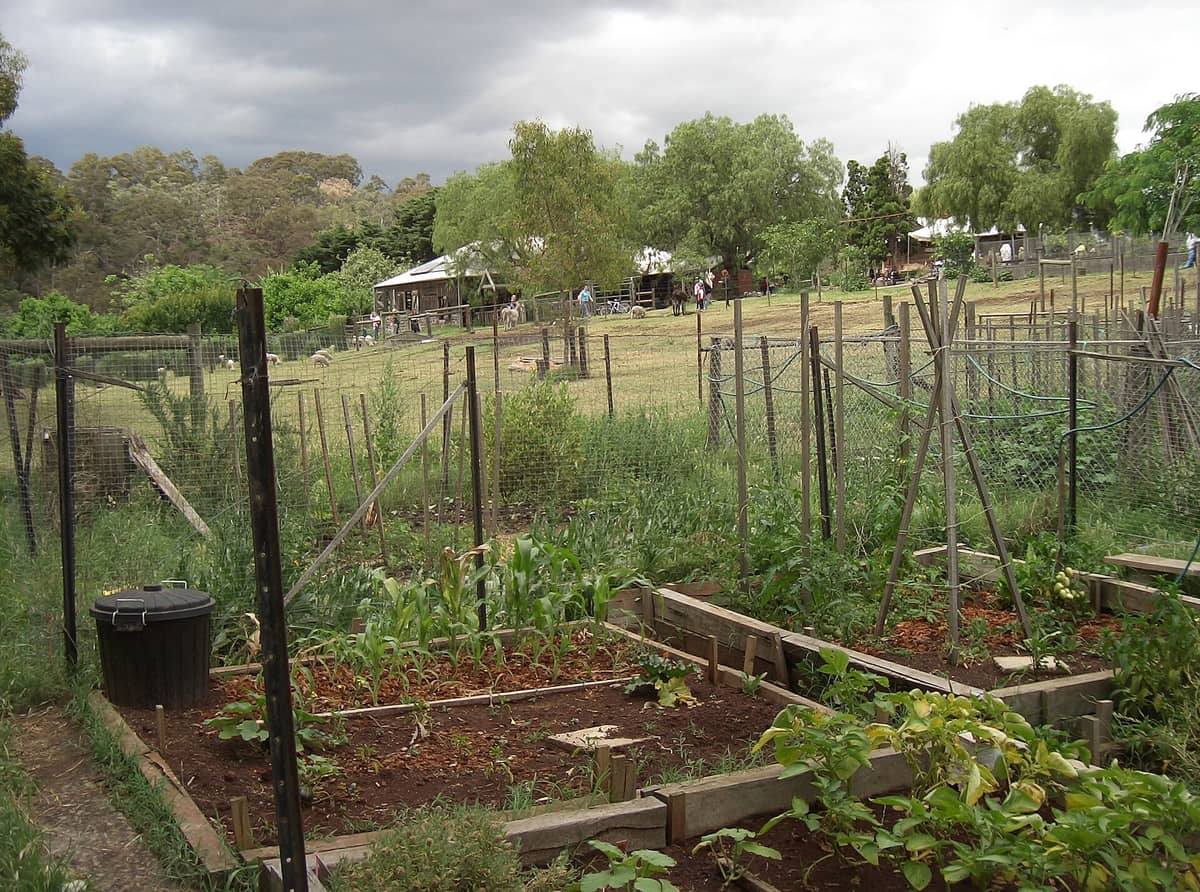
For a city as densely built as inner Melbourne, the farm occupies an unlikely pocket of countryside. Sheep graze in paddocks within earshot of trams. Chickens wander between vegetable beds while the skyline of Collingwood sits just beyond the treeline. That contrast is part of what makes a visit here feel genuinely different from any other green space in the area.
ℹ️ Good to know
Opening hours vary by season. Winter hours (20 April–18 September) are weekdays on school days 9:30 am–3:30 pm and weekends 9:30 am–4:30 pm. Last entry is 3:00 pm on weekdays and 4:00 pm on weekends. Always check farm.org.au before visiting, as hours can change.
The Experience on the Ground
Arriving through the farm gate, the first thing most visitors notice is the smell: earth, hay, and something unmistakably animal. It is not unpleasant, but it is real, and it immediately signals that you are somewhere different. The sounds shift too — birdsong from the river corridor, the low of cattle, the creak of a gate. Within about sixty seconds of entering, the city recedes.
The grounds are laid out informally. There is no fixed route, no turnstile directing you from exhibit to exhibit. Families spread out across the paddocks, and the pace is naturally slow. Children gravitate toward the smaller animals first — rabbits, guinea pigs, and chickens are housed in areas where they can be approached closely. Larger animals including cows, horses, sheep, and pigs occupy the paddocks that open toward the river.
The kitchen garden is worth more attention than most visitors give it. The beds are productive and seasonally planted, and there are often signs explaining what is growing and why. It models a kind of urban food literacy that children absorb quickly and adults find genuinely interesting. If you visit during warmer months, the garden is at its most abundant.
Tickets & tours
Live prices and dates from our booking partner. If you book, we may earn a commission at no extra cost to you.
Phillip Island Penguin Parade and Churchill Island farm tour
From 94 €Instant confirmationFree cancellationGreat Ocean Road reverse itinerary tour from Melbourne
From 77 €Instant confirmationFree cancellationGreat Ocean Road bus tour with a forest walk
From 90 €Instant confirmationFree cancellationYarra Valley Bus Wine Tour including lunch with a glass of wine and chocolate
From 107 €Instant confirmationFree cancellation
How the Experience Changes by Time of Day
Morning visits, particularly on weekends, are calmer and more rewarding. Animals are active, staff are conducting feeding rounds, and the light on the river flats is soft and clear. The farm opens at 9:30 am, and arriving within the first hour gives you the run of the place before school holiday crowds or weekend groups arrive.
By mid-morning on weekends the picnic areas fill steadily, and the paths through the main animal enclosures become more congested. This is not unmanageable — the grounds are generous — but if you want unhurried time with the animals, earlier is better. Weekday visits, outside of school holidays, are quieter still and give a more authentic sense of the farm going about its business.
In the afternoon, particularly in summer, the heat on the open paddocks can be significant. Shade is available near the river corridor and around the barn areas, but the exposed fields offer little shelter. Bring water, a hat, and sunscreen regardless of the season — Melbourne's UV index can be high even on mild days.
💡 Local tip
Aim for a weekday morning visit outside of Victorian school holidays for the quietest, most relaxed experience. Check the Victorian school holiday calendar before booking — the farm is a popular excursion destination.
History and Community Context
The farm was established in 1979 on land adjacent to the Yarra River, and it has operated as a community farm ever since. Its founding preceded the wave of urban farm projects that became fashionable in later decades — Collingwood Children's Farm was doing this before it was a trend. It sits on Wurundjeri Woi-wurrung Country, part of the broader Kulin Nation, whose people have a deep and long-standing connection to the Birrarung and its surrounding land.
The farm's mission has always been to connect people, especially children, with where food comes from and how animals live. That mission has kept it community-oriented rather than commercially scaled. It is managed as a not-for-profit, and the admission fees and market events support its ongoing operations. Walking around, you get the sense that this is a place people feel invested in — the upkeep is practical rather than polished, and volunteers are often visible.
The farm sits at the edge of the Yarra Bend Park corridor, and the Birrarung (Yarra River) trail runs close by, making it easy to combine a farm visit with a walk or cycle along the river. This connection to Melbourne's broader green network is one of the farm's underappreciated assets.
Getting There and Getting Around
The farm is at 18 St Heliers Street, Abbotsford. Victoria Park station on the Hurstbridge and Mernda lines is the closest train stop, roughly a ten-minute walk. From the CBD, the Capital City cycling and walking trail provides a riverside approach by foot or bicycle. On weekends, cycling is a practical option.
If you are building a day around the area, the farm pairs naturally with the Abbotsford Convent, which is a short walk away and has its own cafes and gallery spaces. The two together make for a full and easy half-day in Abbotsford without needing a car.
Parking is limited on St Heliers Street, and the surrounding residential streets fill quickly on weekends. Public transport or cycling is the practical choice for most visitors. If driving, arrive early or expect to walk several blocks.
💡 Local tip
The Capital City cycling and walking trail offers an enjoyable riverside approach toward Abbotsford. Check a current map for distance and route conditions before setting out.
What to Bring and Practical Notes
Wear shoes that can get muddy. This is not a hypothetical suggestion — the paths around the animal enclosures are working farm paths, and after rain they will have mud on them. Children in sandals or white shoes will present their parents with a problem by mid-morning. Closed-toe shoes with grip are the right choice.
The farm has a cafe on site, so you do not need to bring your own food, but the picnic areas are generous and many families bring a spread. There are toilets near the main entry area. Accessibility varies across the grounds — the main paths are manageable for prams and wheelchairs, but some of the paddock areas and uneven terrain near the river are less so. Companion Card and Carer Card concessions are available; check the official tickets page for current rates before visiting.
Photography is naturally enjoyable here. The animal enclosures offer close-up portraits with natural light, and the wider paddock views with the river trees behind them have a genuinely pastoral quality that is unusual for an inner-city venue. Early morning light on weekend visits is best for both composition and animal activity.
Who Should Think Twice
Collingwood Children's Farm is excellent at what it does, but it is not suited to every traveller. Visitors expecting a zoo-style experience with guaranteed animal encounters will be disappointed — this is a farm, not a performance venue. If an animal is not in the mood to be patted, it is not in the mood. The absence of staged activities is a feature for some and a drawback for others.
International visitors with limited time in Melbourne who are weighing up options should consider whether a working farm aligns with their priorities. The city has significant cultural institutions, including the Melbourne Museum and the NGV International, that cover more ground in a shorter visit. The farm rewards a slow pace and a relaxed schedule — it does not work as a quick stop.
Visitors who are uncomfortable around animals or allergic to animal dander will also find the farm challenging. The enclosures are open-air and the contact with animals is relatively close. This is part of the appeal for most visitors, but it is worth knowing in advance.
The Farm Market
On the second Saturday of each month, Collingwood Children's Farm hosts a farmers market that draws a loyal local following. Producers sell vegetables, eggs, bread, cheese, and other seasonal goods. The market has a different atmosphere from the larger Queen Victoria Market — smaller, quieter, and firmly neighbourhood-scale. If your visit coincides with market day, it is worth arriving for both. Check the official website to confirm current market dates before planning around it.
Insider Tips
- Cow milking demonstrations take place in the mornings — check the farm's website or ask at the gate for the current schedule on the day you visit. It is one of the more memorable things to watch with children.
- The river-side edge of the property is noticeably quieter than the central animal areas. Walk toward the Yarra for a calmer spot and good views through the willows along the bank.
- Bringing a picnic and settling in for two or more hours produces a much better experience than rushing through. The farm rewards visitors who stop moving.
- Check the farm’s official website for current farmers market dates and opening times; if your visit coincides with one, arrive early for the best produce.
- The farm sits at the start of the Yarra River trail network. Combining entry with a bike hire from the CBD and a riverside ride home turns the visit into a full half-day itinerary at a reasonable cost.
Who Is Collingwood Children's Farm For?
- Families with children under 10 who want hands-on animal contact in a low-pressure setting
- Melbourne locals looking for a slow weekend morning that feels genuinely different from the usual cafe circuit
- Visitors interested in urban food systems, community agriculture, or sustainable land use
- Cyclists and walkers using the Yarra River trail who want a midpoint destination with substance
- Travellers with older children or teenagers on an extended Melbourne stay who have already covered the main cultural institutions
Nearby Attractions
Other things to see while in Fitzroy & Collingwood:
- Abbotsford Convent
A vast 19th-century convent complex transformed into a living arts and community precinct, Abbotsford Convent offers free grounds access, working artists' studios, multiple cafes, and riverside gardens on the edge of Fitzroy. It rewards slow exploration and repays a return visit.
Planning a trip? Discover personalized activities with the Nomado app.