Bizkaia Bridge (Puente Colgante): The World's First Transporter Bridge
Opened in 1893 and a UNESCO World Heritage Site since 2006, the Bizkaia Bridge connects Getxo and Portugalete across the Nervión estuary with a suspended gondola that still runs 24 hours a day. Walk the upper footbridge 45 metres above the water for sweeping estuary views, or simply ride across as locals have done for over a century.
Quick Facts
- Location
- Between Getxo (Las Arenas) and Portugalete, Greater Bilbao, Bizkaia
- Getting There
- Metro Bilbao Line 1 to Areeta; walk along Mayor Street toward the bridge
- Time Needed
- 1.5–2 min for the gondola crossing (departures roughly every ~8 min); 1.5–2 hrs if including the upper walkway
- Cost
- Gondola crossing: €0.55 for pedestrians (verify current fare). Upper walkway: €11 adult round trip (verify current price at puente-colgante.com)
- Best for
- Architecture lovers, history enthusiasts, estuary views, day trips from Bilbao
- Official website
- puente-colgante.com/en
What the Bizkaia Bridge Actually Is
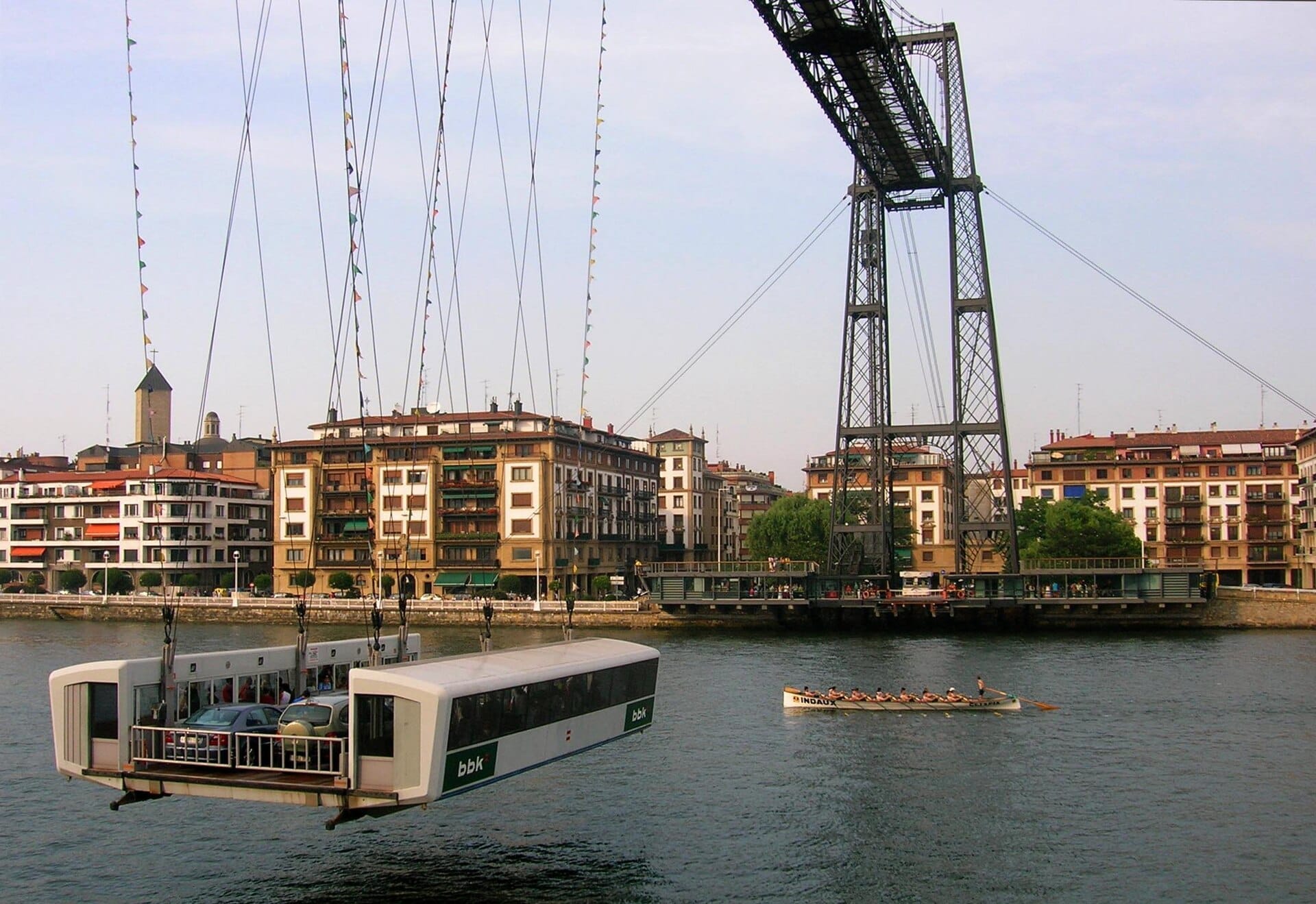
The Bizkaia Bridge, known officially in Basque as Bizkaia Zubia and in Spanish as Puente de Vizcaya, is not a conventional bridge. It does not ask you to walk or drive across on a flat deck. Instead, a gondola, suspended from a high iron gantry by steel cables, carries pedestrians and vehicles across the mouth of the Nervión estuary between the towns of Getxo (on the Las Arenas side) and Portugalete. The gondola crossing itself takes around 1.5 to 2 minutes; departures typically run about every eight minutes.
Opened in 1893, it was designed by Alberto de Palacio, a collaborator of Gustave Eiffel, and is widely recognised as the world's first transporter bridge. The engineering logic was practical: the estuary at this point was wide and heavily used by shipping traffic, so a high fixed bridge would have been expensive, and a low bridge would have blocked the vessels. A transporter bridge solved both problems by keeping the main structure far above the water while the gondola skims just above the surface.
UNESCO inscribed the Bizkaia Bridge as a World Heritage Site on 13 July 2006, recognising it as an outstanding example of iron bridge construction from the late Industrial Revolution. Today it is one of only a small number of transporter bridges still operating anywhere in the world, and it remains a working piece of public infrastructure, not a museum piece.
ℹ️ Good to know
The gondola runs 24 hours a day, every day of the year. The upper walkway has more restricted hours: open seasonally, typically from 10:00 to sunset in the current public-facing tourism info. Ticket prices for both the gondola and the walkway are subject to change; always verify current fares at puente-colgante.com before your visit.
Two Ways to Experience the Bridge
The Gondola: A Two-Minute Crossing Locals Still Use Daily
The gondola is the heart of the experience. It hangs beneath the upper walkway on steel cables and is wide enough to carry both pedestrians and vehicles simultaneously. When it moves, you feel a faint sway rather than any mechanical jolt, and the smell of the estuary, salt, diesel, and something older that is harder to name, comes in through the open sides. The crossing is brief, but standing on the platform as the Getxo bank slides toward you and the Portugalete waterfront opens up gives a perspective on the estuary that you cannot get from any road.
For locals on both banks, this is ordinary transport. Commuters, cyclists, and delivery vans use it without ceremony. That ordinariness is part of what makes it remarkable: a UNESCO-listed engineering monument from 1893 that still functions as everyday infrastructure. Riding the gondola alongside a woman with a grocery bag and a teenager on a bike is a more honest encounter with the place than any purely touristic experience.
The Upper Walkway: 45 Metres Above the Estuary
A separate ticket gives access to a lift and then to the upper walkway, the iron footbridge that runs along the top of the structure at approximately 45 metres above the water. The walkway is 160 metres long, and the towers rise to 61 metres. Looking straight down through the grating underfoot is not for everyone, but those who do look are rewarded with a clear view of the gondola working below them and the full width of the estuary spreading in both directions.
From up here, the estuary makes geographic sense in a way it does not from street level. To the north, the water opens toward the Bay of Biscay. Inland to the south, you can trace the line of the Nervión back toward Bilbao. The industrial history of the estuary is visible in the bones of the shoreline: the warehouses, the old cranes, the gradual softening into residential streets. On a clear morning, the light off the water is sharp and photogenic. On an overcast afternoon, which is more typical given the climate, the scene turns grey-green and considerably more atmospheric.
💡 Local tip
Bring a windproof layer for the upper walkway regardless of the season. The estuary funnels wind from the Bay of Biscay, and even on mild days the exposed walkway can feel significantly colder than street level.
Tickets & tours
Live prices and dates from our booking partner. If you book, we may earn a commission at no extra cost to you.
Biscay Bridge, Gaztelugatxe and txakoli tasting small group tour
From 40 €Instant confirmationFree cancellationBiscay Bridge, Gaztelugatxe and txakoli wine tasting from Bilbao
From 50 €Instant confirmationFree cancellationSan Juan de Gaztelugatxe guided tour from Bilbao
From 65 €Instant confirmationFree cancellationSan Sebastian, Hondarribia, Hendaye, and Getaria from Bilbao
From 54 €Instant confirmationFree cancellation
Getting There from Bilbao
The most straightforward route from central Bilbao is Metro Bilbao Line 1 to the Areeta stop. From the station exit at Plaza Geltokia, walk along Mayor Street toward the riverfront and the bridge comes into view within a few minutes. The metro journey from central Bilbao takes around 15–20 minutes and is the most reliable option. For full metro route planning, see the guide to getting around Bilbao.
The bridge sits in the municipality of Getxo on one side and Portugalete on the other. If you are planning a wider day trip to the area, the Getxo waterfront has its own character worth exploring before or after the bridge: the marina, the old quarter of Algorta, and the beach at Las Arenas are all within walking distance.
When to Go and What to Expect
The bridge operates regardless of weather, but your experience changes considerably depending on conditions and the time of day. Early mornings on weekdays bring the most local, least touristic version of the gondola: commuters, tradespeople, and the occasional cyclist. By mid-morning on weekends, groups with cameras arrive for the walkway, and the atmosphere shifts toward something more self-consciously sightseeing.
Late afternoon light, when it exists, is the best moment for photography from both the walkway and the Getxo bank. The towers catch the low sun well, and the gondola moving across the frame gives the structure a sense of scale that static shots miss. That said, this being the Atlantic coast of the Basque Country, overcast skies are the norm for much of the year. Rain does not prevent a visit; the gondola has a covered section and the walkway railings keep the structure safe in most conditions. Strong winds occasionally close the upper walkway, so check before committing to the walkway ticket if the weather looks severe.
The months between May and September offer the most reliably pleasant conditions for the outdoor experience, though this is a working attraction year-round. For more on timing a visit to the wider region, the best time to visit Bilbao covers seasonal patterns in detail.
⚠️ What to skip
The upper walkway can close temporarily in high winds. If the walkway is your main reason for visiting, check conditions on the day and have a backup plan.
Historical and Architectural Context
The late 19th century was a period of rapid industrial growth along the Nervión estuary. Iron and steel production, shipbuilding, and port activity were transforming the towns on both banks. The Bizkaia Bridge was a direct product of that era: a solution to a practical problem, engineered with the structural vocabulary of the time, the same language of wrought iron and cable tension that shaped the Eiffel Tower and the great railway bridges of the period.
Alberto de Palacio's design was radical because it inverted the usual logic of a bridge. Instead of building a structure that people walk across, he built a structure that carries a platform, and then suspended that platform from above. The result was a bridge that could be 45 metres clear of the water without requiring a long approach ramp on either bank, preserving the flat waterfront access that the industrial towns needed. The design was copied in cities from Rochefort to Newport in Wales, but Bizkaia came first.
Understanding this bridge is helped by understanding the estuary it crosses. The Nervión was the industrial artery of the Basque Country, connecting the steel works and mines of the interior to international shipping. Today the river has been extensively cleaned and its banks transformed, a process you can trace in the Itsas Memoria maritime museum in Bilbao, which documents the estuary's history in depth.
Accessibility and Practical Notes
The gondola is accessible for pedestrians and carries vehicles, including bicycles. However, the upper walkway involves a lift followed by exposed iron grating at height and should be considered carefully by anyone with a fear of heights or limited mobility. The official website lists current accessibility information and it is worth checking before arrival if step-free access is a requirement.
There are cafes and restaurants on both the Getxo and Portugalete sides of the crossing. The Getxo side, specifically the Las Arenas waterfront, has several places to sit after the visit. If you are combining this trip with a beach day, the Las Arenas beach is a short walk from the bridge on the Getxo bank.
For those building a fuller itinerary around Bilbao's architecture and engineering landmarks, the Bilbao architecture guide covers the key sites across the city and metro area, from the Guggenheim to the Zubizuri bridge.
Is the Bizkaia Bridge Worth the Journey?
The bridge is about 15–20 minutes from central Bilbao by metro, and for most visitors it makes sense as part of a half-day trip to Getxo rather than a standalone destination. The gondola crossing alone takes minutes, and while it is genuinely memorable, arriving by metro only to cross a river and return would feel thin. The upper walkway adds substance to the visit, both in terms of time and experience, and makes the journey worthwhile on its own terms.
People who care about engineering history, industrial architecture, or UNESCO heritage sites will find this deeply satisfying. The structure is still elegant after more than 130 years, and the fact that it remains functional rather than decorative gives it an authenticity that many preserved monuments lack. Travelers expecting dramatic scale comparable to the Guggenheim Museum or an obvious visual spectacle from street level may find it underwhelming on arrival. The bridge is not huge by modern standards. Its power is in its precision, its age, and the peculiar quiet pleasure of crossing a river in 1893 technology in the 21st century.
Insider Tips
- Buy the walkway ticket before joining the gondola queue: you can ride the gondola first, then use the lift to the upper level, which gives you the full sequence of experiences without backtracking.
- The Getxo (Las Arenas) side of the bridge has a slightly more pleasant waterfront for a post-crossing coffee than the Portugalete side, which is busier with commuter traffic.
- For the clearest estuary views from the top, position yourself on the seaward (north-facing) side of the walkway. The inland view has more industrial clutter.
- The gondola operates at night, and crossing it after dark when the towers are lit and the estuary is quiet is a genuinely different experience from the daytime visit. It takes the same two minutes but feels much more atmospheric.
- If you are visiting on a weekday morning before 9:00, you will share the gondola with local commuters rather than tourists. It costs the same but gives a completely different sense of the place.
Who Is Bizkaia Bridge (Puente Colgante) For?
- Architecture and engineering enthusiasts who want to see a functioning 19th-century transporter bridge
- UNESCO World Heritage site collectors
- Travelers planning a half-day trip combining Getxo's waterfront with the Las Arenas beach
- Photographers looking for an unusual industrial subject with strong estuary light
- Families with older children who can manage the exposed upper walkway
Nearby Attractions
Other things to see while in Getxo:
- Ereaga Beach (Getxo)
Ereaga Beach is Getxo's flagship stretch of golden sand, sitting between the charming Algorta Old Port and the Arriluze breakwater. Around 880 metres long and well-served by Metro Bilbao, it offers a genuine seaside experience without requiring a car or a long journey from the city.
- Las Arenas Beach (Getxo)
A compact golden-sand beach in Getxo's Areeta district, Las Arenas sits directly beside the UNESCO-listed Bizkaia Bridge and is reachable from central Bilbao in under 20 minutes by metro. Free to enter, well-serviced in summer, and framed by maritime heritage, it offers a genuine seaside break without leaving the metropolitan area.
Planning a trip? Discover personalized activities with the Nomado app.