Biosphère Montreal: Inside Buckminster Fuller's Geodesic Dome
Originally built as the United States Pavilion for Expo 67, the Biosphère is one of Montreal's most architecturally striking landmarks. Today it operates as an environmental museum within Parc Jean-Drapeau, combining a genuinely fascinating building with exhibits on climate, ecosystems, and water.
Quick Facts
- Location
- 160, chemin du Tour-de-l'Isle, Île Sainte-Hélène, Parc Jean-Drapeau, Montreal
- Getting There
- Jean-Drapeau metro station (Yellow Line), short walk
- Time Needed
- 1.5 to 2.5 hours
- Cost
- Paid admission in CAD; verify current prices at espacepourlavie.ca before visiting
- Best for
- Architecture enthusiasts, families, eco-conscious travelers, Expo 67 history
- Official website
- espacepourlavie.ca/en/biosphere
What the Biosphère Actually Is
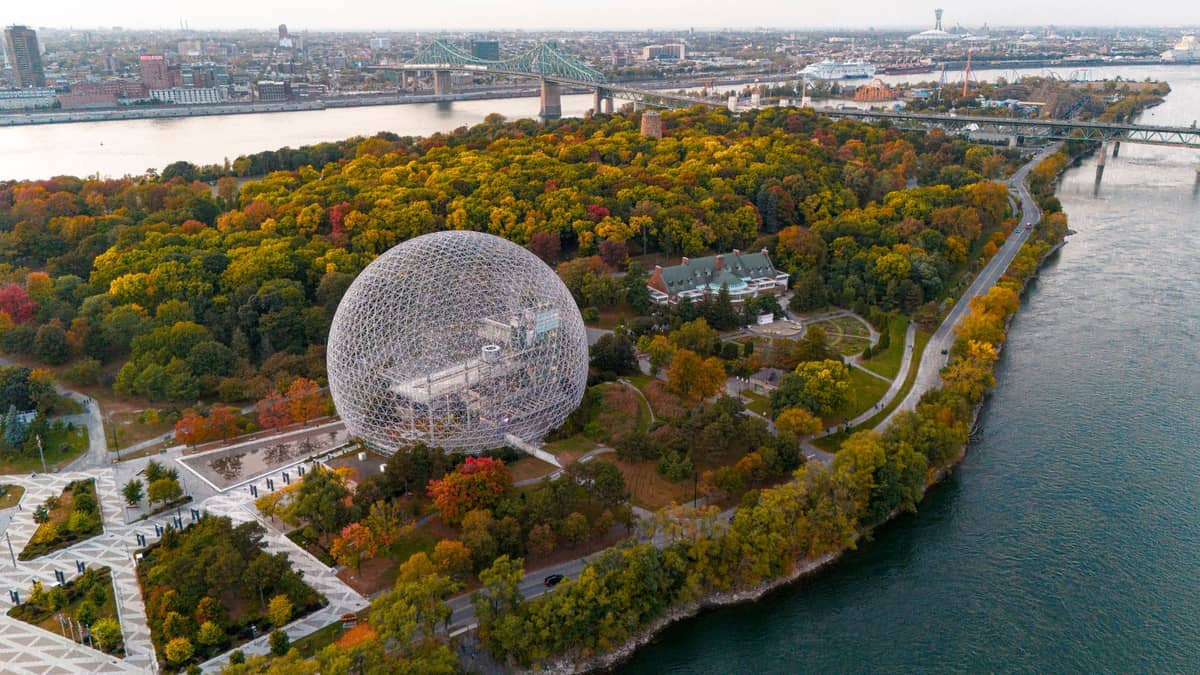
The Biosphère is an environmental museum housed inside one of the most recognizable structures in Canadian architectural history: a geodesic dome approximately 76 metres in diameter and 62 metres tall, sitting on Île Sainte-Hélène in the Saint Lawrence River. The dome was designed by American architect and inventor Richard Buckminster Fuller as the United States Pavilion for Expo 67, the world's fair that transformed Montreal's international profile in the summer of 1967. More than 50 million visitors attended Expo 67, and Fuller's transparent steel-and-acrylic dome was among its most photographed structures.
The acrylic panels that once filled the steel lattice burned off in a 1976 fire, leaving the bare skeleton that visitors see today. That skeleton has a visual quality the closed dome never had: the geometric steel triangles frame the sky, clouds, and surrounding park differently at every hour. In the morning, the dome is backlit and graphic against the pale sky. In the late afternoon, the low sun punches through the lattice and throws long triangular shadows across the ground. The building is never quite the same twice.
Since 2021, the structure has operated as an environmental museum focused on ecosystems, climate change, and the Saint Lawrence River watershed. It is part of the Espace pour la vie network, which also includes the Montreal Botanical Garden, the Biodome, and several other science institutions. Together they form one of the largest natural science museum complexes in North America.
The Architecture: Why This Building Matters
Buckminster Fuller had been developing the geodesic dome concept since the late 1940s. The principle is structural efficiency: triangular elements distribute load so evenly that the dome encloses more space per unit of material than any other form. At 76 metres wide, the Montreal dome was one of the largest ever built at the time of Expo 67, and it remains a landmark demonstration of the form at scale.
Standing close to the base and looking up, the geometry is almost disorienting. The triangular lattice repeats and subdivides at several scales, creating a visual rhythm that appears both mathematical and organic. The steel members are painted a deep rust-red, which reads differently against winter snow than against summer green. If you are interested in 20th-century architecture and design, this is a genuinely significant structure, not just a scenic backdrop.
For broader context on how this building fits into Montreal's architectural heritage, the Montreal architecture guide covers everything from Old Montreal's stone warehouses to the experimental housing of the same era.
💡 Local tip
The exterior of the dome is freely visible from the park at any time, even when the museum is closed. If your schedule is tight, the architectural experience alone is worth the short walk from the metro.
Tickets & tours
Hand-picked options from our booking partner. Prices are indicative; availability and final rates are confirmed when you complete your booking.
Montreal evening cruise on the St. Lawrence River
From 54 €Instant confirmationFree cancellation3-hour e-bike guided tour in Montreal
From 68 €Instant confirmationFree cancellationWalking tour of Old Montreal
From 20 €Instant confirmationFree cancellationMontreal helicopter tour
From 156 €Instant confirmationFree cancellation
Inside the Museum: What the Exhibits Cover
The museum's interior is built around environmental themes: water cycles, climate systems, biodiversity, and the specific ecology of the Great Lakes and Saint Lawrence River basin. The presentation tends toward hands-on and interactive rather than object-based, which makes it more accessible to families with children but occasionally thin on depth for adult visitors who already follow environmental issues closely.
The permanent installation on the Saint Lawrence River is the most regionally specific and the most interesting for visitors who want to understand the ecological context of the city. The river that runs alongside Montreal is not just scenery: it is a freshwater system of continental scale, and the museum does a reasonable job of explaining the pressures on it without being hectoring about it.
Temporary exhibitions rotate and can shift the experience considerably. Some have focused on specific climate topics; others have addressed urban planning or food systems. It is worth checking the current program on the official site before your visit, especially if you are traveling with older children or teenagers who want more than the permanent galleries.
ℹ️ Good to know
Opening hours vary by season. Opening hours vary by season and date. The museum’s current schedule should be checked on the official Parc Jean-Drapeau or Espace pour la vie website before visiting, as opening days and hours may change, including on public holidays. Hours may change on public holidays. Verify before visiting at espacepourlavie.ca.
Getting There and Moving Around the Park
The Jean-Drapeau metro station, on the Yellow Line, deposits you directly inside Parc Jean-Drapeau with a short walk to the Biosphère. The Yellow Line runs from Berri-UQAM through Longueuil, and the Jean-Drapeau stop is directly on Île Sainte-Hélène. The walk from the station to the dome takes roughly 10 minutes on foot through the park.
Parc Jean-Drapeau is large enough to turn a museum visit into a half-day outing. The Casino de Montreal is on the adjacent Île Notre-Dame, and the Formula 1 track, the Circuit Gilles Villeneuve, loops around the island. On summer weekends the park has food trucks, cyclists, and significant foot traffic near the beach areas. In winter it is significantly quieter, and the dome reads starkly against bare trees and grey water.
Cycling to the Biosphère is a practical option in warmer months. The Lachine Canal cycling path connects to the park's network, and bike-share stations are available. If you are driving, paid parking is available in the park, but traffic during major events at the Casino or during the Grand Prix weekend can create significant delays. Using the metro is consistently faster.
Visiting at Different Times of Year
Summer visits, particularly in June and July, coincide with the most active period in the park. The surrounding grass and waterfront paths fill with picnickers and joggers, and the dome picks up warm gold light in the late afternoon. Line-ups at the museum entrance are typically short even in peak season, which separates this attraction from the more heavily visited sites in Old Montreal.
Autumn is arguably the strongest season for the combination of the dome and the park. October light is low and sharp, the surrounding trees turn, and the steel lattice of the dome against a clear October sky has a graphic quality that photographers in particular will find compelling. The museum is also less crowded from September onward.
Winter visits require warm layers: temperatures on Île Sainte-Hélène can feel several degrees colder than downtown due to wind off the river. The outdoor walk from the metro is exposed. That said, the dome in winter, surrounded by snow and stripped tree branches, has a stark beauty that is completely different from any other season. The museum's interior is heated, and the lower-season opening hours give you from Tuesday to Sunday to visit.
⚠️ What to skip
In winter, factor in wind chill on the walk from the Jean-Drapeau metro to the entrance. The path across the park is exposed. Dress for several degrees colder than the forecast temperature.
Accessibility, Photography, and Practical Notes
The Biosphère accepts the Companion Leisure Card and offers wheelchair rentals. The main museum spaces are on accessible levels, though visitors should confirm specific access arrangements directly with the museum before visiting, as conditions can change.
Photography of the exterior is unrestricted and the dome is one of the most photogenic structures in Montreal. For the best shots of the full dome, move back toward the lawn on the riverside side of the building, where you can get the full diameter in frame. Wide-angle lenses reward patience here: the geometry multiplies as you include more of the structure. For interior photography, check the museum's current policy on arrival.
The museum is not one that rewards rushing. The interactive exhibits work better at a relaxed pace, and the building itself is worth spending time in. Plan on at least 90 minutes if you intend to see the full permanent collection; two hours if there is a temporary exhibition running. The small café on site is adequate for a break but not a destination in itself.
Who This Attraction Is For — and Who Might Want to Skip It
Visitors with a serious interest in 20th-century design, architectural history, or Expo 67 will find the Biosphère genuinely rewarding. Families with children in the 6 to 14 range typically respond well to the interactive environmental exhibits. Eco-tourism travelers and those interested in freshwater ecosystems will get the most out of the permanent galleries.
Visitors who are primarily museum-focused and want a dense collection of objects or art should look elsewhere. The Biosphère is an experiential science museum, not a conventional collection-based institution. For that kind of experience in Montreal, the Pointe-à-Callière archaeological museum or the Montreal Museum of Fine Arts would be stronger choices.
Anyone who is traveling without much interest in environmental science but wants to see the dome can do so for free from outside the building at any time. The architectural experience is fully available from the park, which makes the paid admission a choice rather than a requirement for appreciating the landmark.
Insider Tips
- The dome exterior can be photographed from the lawn on the river-facing side at no cost, even when the museum is closed. This is the best angle for capturing the full geometry of the structure.
- If you are visiting between May and October, combine the Biosphère with a walk around Île Sainte-Hélène's waterfront path. The views of downtown Montreal and the Saint Lawrence from the island's eastern edge are among the least-visited good viewpoints in the city.
- Tuesday mornings in the shoulder seasons (September, October, March, April) are the quietest time inside the museum. Crowds are thin, staff have more time to engage, and the temporary exhibitions are unhurried.
- The Expo 67 historical context of the dome is barely covered inside the museum, which focuses on environmental themes rather than heritage. If the 1967 world's fair is what draws you, research the history before you visit rather than expecting the exhibits to deliver it.
- Ticket prices are in Canadian dollars and change periodically. Always verify the current rate on the official Espace pour la vie website before visiting rather than relying on any third-party source.
Who Is Biosphère For?
- Architecture and design enthusiasts interested in Buckminster Fuller and mid-century engineering
- Families with children who engage well with hands-on, interactive science exhibits
- Travelers combining a Jean-Drapeau Park half-day with the Casino, Circuit Gilles Villeneuve, or the waterfront path
- Photographers looking for geometric and structural subjects with strong seasonal light
- Visitors interested in the ecology of the Saint Lawrence River and Great Lakes watershed
Nearby Attractions
Other things to see while in Jean-Drapeau Park:
- Casino de Montréal
Housed in the former French Pavilion from Expo 67, Casino de Montréal is the largest casino in Canada by floor space. This guide covers the gaming floors, restaurants, the ARcade experience, getting there by metro, and who will enjoy it most.
- Circuit Gilles-Villeneuve
Circuit Gilles-Villeneuve is Montreal's legendary Formula 1 track, threading 4.361 km around Île Notre-Dame in Parc Jean-Drapeau. Free to walk or cycle most of the year, it transforms into one of North America's great motorsport spectacles each June for the Canadian Grand Prix.
- La Ronde
Perched on Île Sainte-Hélène with sweeping views of the St. Lawrence River, La Ronde is Montreal's largest amusement park. Originally built for Expo 67, it packs over 50 years of thrill-ride history into 59 hectares of riverside terrain. Here's what to realistically expect before you go.
- Plage Jean-Doré
Plage Jean-Doré is Montreal's best-known supervised public beach, set within Parc Jean-Drapeau on Île Notre-Dame. A 600-metre stretch of sand, a 15,000 m² swimming area, and genuine skyline views make it a legitimate summer escape from the city grid, all for the price of a coffee.