Circuit Gilles-Villeneuve: Montreal's Formula 1 Track on Île Notre-Dame
Circuit Gilles-Villeneuve is Montreal's legendary Formula 1 track, threading 4.361 km around Île Notre-Dame in Parc Jean-Drapeau. Free to walk or cycle most of the year, it transforms into one of North America's great motorsport spectacles each June for the Canadian Grand Prix.
Quick Facts
- Location
- Parc Jean-Drapeau, Île Notre-Dame, Montreal, QC H3C 1A9
- Getting There
- Jean-Drapeau metro station (Yellow Line), then walk or shuttle to circuit
- Time Needed
- 1–2 hours for a casual visit; full Grand Prix weekend is 3 days
- Cost
- Free outside events; Grand Prix tickets vary (children 11 and under free with proof of age for general admission)
- Best for
- Motorsport fans, cyclists, walkers, F1 Grand Prix visitors
What Circuit Gilles-Villeneuve Actually Is
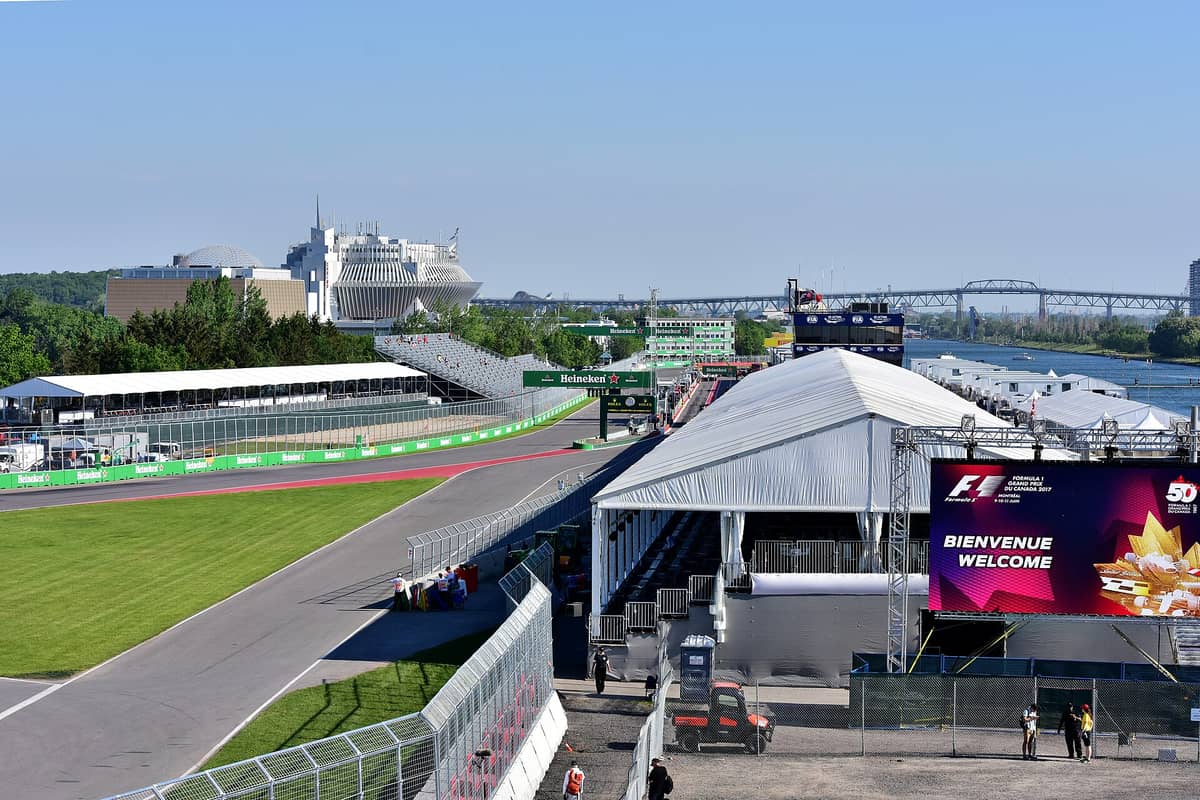
Most visitors expect a stadium you buy a ticket to enter. Circuit Gilles-Villeneuve is different. For much of the spring, summer, and autumn, it is a public road circuit on Île Notre-Dame, integrated into the landscape of Parc Jean-Drapeau, and open to anyone who walks, jogs, or cycles across the bridge from Jean-Drapeau metro station. The barriers come down, the grandstands sit empty, and the track becomes a 4.361 km loop that ordinary Montrealers use as a recreational path., integrated into the landscape of Parc Jean-Drapeau, and open to anyone who walks, jogs, or cycles across the bridge from Jean-Drapeau metro station. The barriers come down, the grandstands sit empty, and the track becomes a 4.361 km loop that ordinary Montrealers use as a recreational path.
Then, for one weekend every June, it becomes the venue for the Canadian Grand Prix, one of the most anticipated stops on the Formula 1 calendar. The contrast between these two modes is striking enough to be part of the circuit's character: the same stretch of tarmac that hosted Gilles Villeneuve, Ayrton Senna, and Michael Schumacher is, on a Tuesday in September, shared with cyclists in lycra and couples walking their dogs.
ℹ️ Good to know
Access to the circuit perimeter varies by season and event preparation. In the weeks before and during the Canadian Grand Prix, track access is restricted to ticketed holders only. During Grand Prix weekend, spectator gates open at 8:00 a.m. on Friday, 8:30 a.m. on Saturday, and 9:30 a.m. on Sunday. Always check current access conditions before making a trip specifically to walk the track.
The Circuit's History and Why the Name Matters
The circuit first hosted the Canadian Grand Prix in 1978, four years before the death of Gilles Villeneuve, the French-Canadian driver who had already become a national hero through his combination of raw speed and fearlessness. Villeneuve died during qualifying at the 1982 Belgian Grand Prix, and the Montreal circuit was renamed in his honour shortly after. That naming is more than ceremonial. In Quebec, and particularly in Montreal, Villeneuve occupies a space in public affection that is difficult to overstate for a person who never won a world championship.
The circuit measures 4.361 km in length and winds through 14 turns, mixing slow chicanes with long straights that allow cars to exceed 300 km/h approaching the famous Wall of Champions at the final chicane. That wall earned its nickname after three consecutive world champions, including Damon Hill, Michael Schumacher, and Jacques Villeneuve (Gilles's son), all crashed into it in separate incidents during the late 1990s. It remains a defining feature of the layout and a popular stopping point for walking visitors who know what they are looking at.
The circuit sits within Parc Jean-Drapeau, the island park that also contains the Biosphere, the Casino de Montreal, and extensive green space left over from Expo 67. The racing infrastructure, including grandstands, pit buildings, and marshal posts, is distributed around the perimeter of Île Notre-Dame.
Tickets & tours
Hand-picked options from our booking partner. Prices are indicative; availability and final rates are confirmed when you complete your booking.
Montreal Saint-Laurent Circuit helicopter tour
From 118 €Instant confirmationFree cancellationMontreal evening cruise on the St. Lawrence River
From 54 €Instant confirmationFree cancellation3-hour e-bike guided tour in Montreal
From 68 €Instant confirmationFree cancellationWalking tour of Old Montreal
From 20 €Instant confirmationFree cancellation
Visiting Outside Grand Prix Weekend
An off-season visit to Circuit Gilles-Villeneuve has a specific, quiet appeal that is hard to replicate elsewhere. Walking or cycling the circuit when the barriers are retracted gives you a sense of the layout that TV coverage never captures: the width of the track through the slow hairpin, the way the long straight toward the pits feels genuinely vast on foot, the closeness of the grandstands to the racing surface. The asphalt smells faintly of rubber in warm weather, a residue of past racing seasons.
The best time for an off-season visit is mid-morning on a weekday, when cyclists and joggers are few and the island has an almost contemplative stillness. On weekend afternoons, particularly in summer, the park draws larger crowds for cycling and picnicking, and the circuit path gets busier. Early mornings in spring and autumn offer the most atmospheric light across the water and the least foot traffic.
Bring a bicycle if you can. The circuit path is smooth and well-maintained during its normal operating season, and a full lap on a bike takes roughly 15 minutes at a relaxed pace. The surrounding park has flat, accessible cycling routes that extend well beyond the circuit itself. Rentals are not available on the island, so you would need to bring your own or pick up a Montreal BIXI bike-share at the metro station or nearby docking points, checking availability before your visit., and a full lap on a bike takes roughly 15 minutes at a relaxed pace. The surrounding park has flat, accessible cycling routes that extend well beyond the circuit itself. Rentals are not available on the island, so you would need to bring your own or pick up a Montreal BIXI bike-share at the metro station or nearby docking points, checking availability before your visit.
💡 Local tip
Photography tip: the elevated walkway at the Pont du Cosmos bridge entrance gives an excellent overhead angle on the main straight. In summer, the tree line on the southern section of the circuit creates natural framing for shots without barriers or signage in frame.
Visiting During the Canadian Grand Prix
The Canadian Grand Prix typically takes place in June, subject to the official Formula 1 calendar. It draws well over 300,000 spectators across the full weekend and consistently ranks among the most attended motorsport events in North America. If you are planning a trip specifically for the race, read the dedicated Montreal Grand Prix guide for detailed logistics, ticket types, and what to expect across the three days.
General-admission tickets allow access to most of the circuit perimeter and are the most affordable entry point. Grandstand tickets give reserved seating at specific corners and straights, with the Senna and Pont de la Concorde grandstands offering particularly good sightlines at different parts of the lap. Children aged 11 and under have free general-admission access with valid proof of age, which makes it a more accessible event for families than the ticket prices alone might suggest.
On race weekend, Jean-Drapeau metro station becomes extraordinarily crowded, particularly in the hour before and after each session. Trains run with increased frequency, but platforms fill quickly. Arriving 30 to 45 minutes earlier than you think necessary is not overcautious. The walk from the metro to the circuit entrance takes around 10 to 15 minutes depending on which gate you are heading for. Food and drink are available inside the circuit at race prices; bringing your own sealed snacks is allowed depending on the year's rules, but verify the current policy before packing.
⚠️ What to skip
During Grand Prix weekend, accommodation across Montreal books out months in advance and prices rise sharply. If you are visiting primarily for the race, plan accommodation at least three to four months ahead. Even outlying neighborhoods see limited availability in peak Grand Prix week.
Getting There and Getting Around
Jean-Drapeau metro station on the Yellow Line is the standard approach for most visitors. From downtown, take the Yellow Line south toward Longueuil and exit at Jean-Drapeau, which sits directly on Île Sainte-Hélène, the larger of the two islands that make up Parc Jean-Drapeau. From the station, Île Notre-Dame and the circuit are reached by walking across the park’s connecting paths and bridges.
Driving to the circuit is possible, but parking on the island is limited and fills quickly on Grand Prix weekend. Outside of events, parking at Jean-Drapeau is available but unnecessary if you are comfortable on the metro. Cycling from Old Montreal via the Lachine Canal bike path network and across the Pont de la Concorde is a practical and scenic option in summer.
The circuit sits within easy reach of other major Parc Jean-Drapeau attractions, including the Biosphere Montreal and the Casino de Montreal, making the island viable as a half-day or full-day outing rather than a standalone stop.
Who Should Adjust Their Expectations
If you are visiting outside Grand Prix season expecting a museum, a visitor experience, or guided access to pit facilities, you will be disappointed. The circuit does not function as a dedicated tourist attraction for most of the year. There are no exhibits, no pit lane tours open to casual visitors, and no on-site interpretation of the circuit's history beyond the signage you might encounter at the park.
Those with limited mobility should note that the circuit is outdoors and covers significant distances. The path around the track is flat but long, and the island's infrastructure during non-event periods is minimal in terms of rest facilities. During Grand Prix weekend, accessibility provisions are in place, but visitors requiring specific assistance should contact the Grand Prix du Canada organizers in advance to confirm arrangements.
Visitors who are indifferent to motorsport but are exploring Parc Jean-Drapeau will find the circuit's perimeter a pleasant route through a green, quiet environment. The appeal shifts entirely when you know the context. Without it, it is a road through a park. With it, it is one of the few places in North America where Formula 1 history has left a tangible physical mark on a publicly accessible landscape.
Insider Tips
- The Wall of Champions at the final chicane is not marked with any official signage. It is the concrete barrier on the inside of the tight left-right-left sequence before the pit straight. Photograph it from the outside of the corner for context.
- The pit building exterior is visible from the public path during off-season visits. The structure itself is closed, but the scale of the facility becomes clear when you walk past it on foot rather than seeing it compressed by TV cameras.
- If you are visiting during Grand Prix weekend and want a full lap of the circuit on foot, aim for Friday practice sessions. Saturday qualifying draws larger crowds and Sunday race day makes a full perimeter walk impractical due to congestion.
- In the weeks immediately before Grand Prix weekend, access to the island can be disrupted by setup operations even before ticketed access begins. Check the official Grand Prix du Canada site for the current exclusion zone schedule each year.
- Combining a circuit visit with the Biosphere on the same day works well logistically. Both are in the park, the Biosphere has an admission fee, and the contrast between the two experiences, one about speed and the other about ecology, is part of what makes Parc Jean-Drapeau an unusual place.
Who Is Circuit Gilles-Villeneuve For?
- Formula 1 fans who want to walk the track surface before or after the Grand Prix
- Cyclists looking for a smooth, flat loop in a car-free environment outside event season
- Families attending the Canadian Grand Prix on a budget, using children's free general admission
- Motorsport history enthusiasts who know the circuit's specific corners and their stories
- Visitors spending a full day in Parc Jean-Drapeau combining multiple attractions
Nearby Attractions
Other things to see while in Jean-Drapeau Park:
- Biosphère
Originally built as the United States Pavilion for Expo 67, the Biosphère is one of Montreal's most architecturally striking landmarks. Today it operates as an environmental museum within Parc Jean-Drapeau, combining a genuinely fascinating building with exhibits on climate, ecosystems, and water.
- Casino de Montréal
Housed in the former French Pavilion from Expo 67, Casino de Montréal is the largest casino in Canada by floor space. This guide covers the gaming floors, restaurants, the ARcade experience, getting there by metro, and who will enjoy it most.
- La Ronde
Perched on Île Sainte-Hélène with sweeping views of the St. Lawrence River, La Ronde is Montreal's largest amusement park. Originally built for Expo 67, it packs over 50 years of thrill-ride history into 59 hectares of riverside terrain. Here's what to realistically expect before you go.
- Plage Jean-Doré
Plage Jean-Doré is Montreal's best-known supervised public beach, set within Parc Jean-Drapeau on Île Notre-Dame. A 600-metre stretch of sand, a 15,000 m² swimming area, and genuine skyline views make it a legitimate summer escape from the city grid, all for the price of a coffee.