Barrenjoey Lighthouse: Sydney's Northern Beacon Worth the Climb
Barrenjoey Lighthouse crowns the northern tip of Palm Beach on a sandstone headland above Pittwater and the Pacific Ocean. The 1881 sandstone tower rewards the 1km climb with some of the most far-reaching coastal views in greater Sydney, and a Sunday guided tour opens the historic interior for a deeper look.
Quick Facts
- Location
- Barrenjoey Head, Palm Beach, NSW — within Ku-ring-gai Chase National Park
- Getting There
- L90 bus from Sydney CBD to Barrenjoey Head; approx. 1.5 hours
- Time Needed
- 2–3 hours including the climb, views, and optional guided tour
- Cost
- Free to walk the headland; guided tours A$15 adult, A$13 concession, A$11 child (confirm current prices)
- Best for
- Coastal views, heritage architecture, unhurried Sunday outings, photography
What Barrenjoey Lighthouse Actually Is
Barrenjoey Lighthouse is a working heritage lighthouse completed in 1881, built from sandstone quarried on the headland itself. The tower stands 19.5 metres tall and the lighthouse is 91 metres above sea level at the very tip of Palm Beach peninsula, where the Tasman Sea meets the broad estuary of Pittwater. It sits inside Ku-ring-gai Chase National Park, roughly 50 kilometres north of central Sydney, and is managed by NSW National Parks and Wildlife Service.
There is no vehicle access to the lighthouse. Reaching it requires a roughly 1-kilometre walk from the Governor Phillip car park, crossing the beach sand at the base of the headland before ascending a track that rises steeply in places. That physical effort is part of the deal, and it filters the crowd in a way that a cable-car attraction simply would not.
ℹ️ Good to know
The lighthouse headland and exterior are free to visit any day. The interior is accessible only on guided tours, which generally run on Sundays at 11am, 12pm, 1pm, 2pm, and 3pm. Confirm current tour availability on the NSW National Parks website before travelling this far north.
The Climb: What the Track Actually Feels Like
From the car park at Governor Phillip Park, the route crosses a strip of beach before picking up the headland track. The sand underfoot gives way quickly to compacted sandstone and exposed tree roots as the gradient steepens. There are two tracks: the Barrenjoey Track, which is the easier route, and the shorter, steeper Smugglers Track. Most fit adults take about 30 minutes to reach the top.
The track passes through low coastal scrub, with banksias and she-oaks brushing the path on either side. On warm mornings the air has a particular quality here: salt from the sea below mixing with the dry eucalyptus smell of the scrub. You hear the wind off the water before you see the view. Near the top, a few stone steps cut into the sandstone signal that the lighthouse is close.
The headland itself offers open, grassy terracing around the lighthouse keeper's quarters and the tower. There are no barriers to rush you through. People spread out on the grass, eat lunch, and sit with the view for as long as they like. That unstructured quality is one of the better things about Barrenjoey.
⚠️ What to skip
The route includes a beach crossing, steps, and steep sections. It is not suitable for wheelchairs, prams, or visitors with reduced mobility. The guided tour inside the lighthouse is also not wheelchair-accessible. Plan accordingly.
Tickets & tours
Live prices and dates from our booking partner. If you book, we may earn a commission at no extra cost to you.
The Rocks historic walking tour
From 20 €Instant confirmationFree cancellationBeginner surf lesson at Bondi Beach
From 79 €Instant confirmationFree cancellationSydney whale-watching cruise with breakfast or lunch
From 62 €Instant confirmationFree cancellationBlue Mountains Waterfalls Full-Day Tour with Lunch and Dinner
From 171 €Instant confirmationFree cancellation
The View: What You're Looking At and Why It Matters
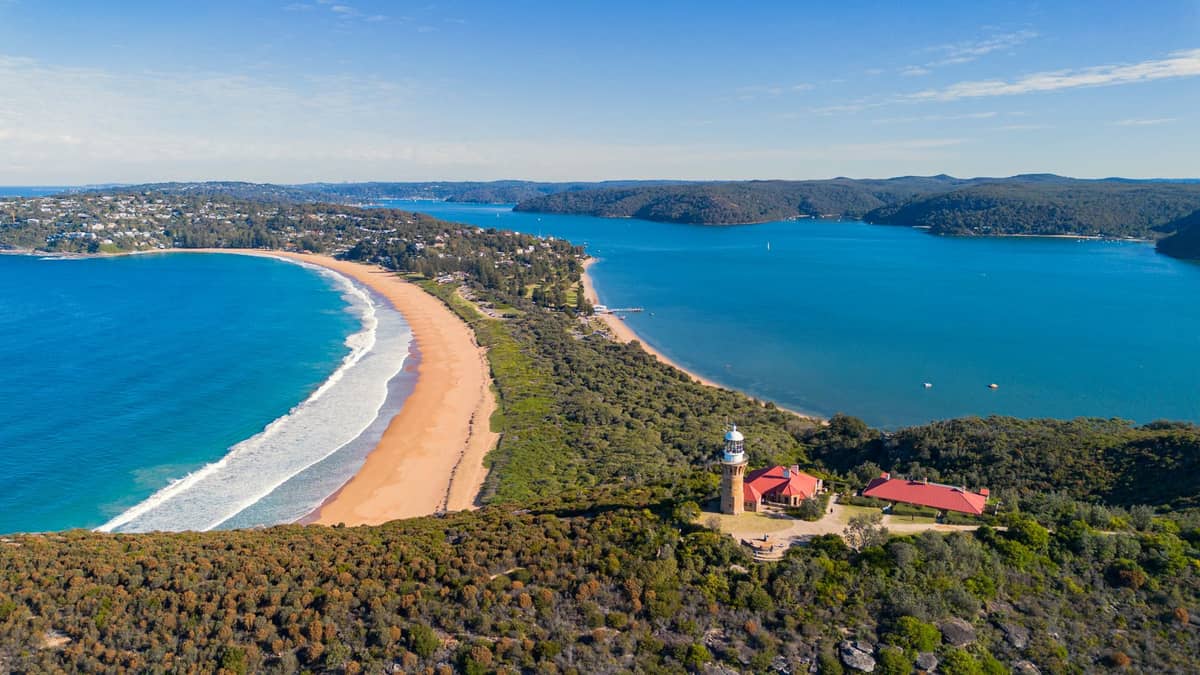
From the lighthouse summit, the panorama splits cleanly into two contrasting landscapes. To the east, the Pacific stretches to the horizon with no interruption, its surface colour shifting between deep blue and grey-green depending on the weather. The long white strip of Palm Beach runs south beneath you, one of Sydney's most photographed beaches, though the view from above reduces its famous width to a narrow ribbon.
To the west and south-west, Pittwater opens out: a sheltered estuary studded with moored yachts, bush-covered ridgelines and the scattered buildings of Ku-ring-gai Chase National Park's fringes. On clear days you can trace the waterway's meandering shape far to the south. The contrast between the exposed ocean face and the calm, enclosed waterway on the other side gives this headland an almost theatrical quality — like standing on the edge of two different worlds.
For visitors building a longer day out on the Northern Beaches, the lighthouse fits naturally alongside Palm Beach and works well combined with a walk or swim before or after the climb. The broader Northern Beaches coastline is explored in depth in the Sydney coastal walks guide.
The History: Why This Lighthouse Was Built Here
Barrenjoey Headland controlled the entrance to Broken Bay and Pittwater, a strategically important waterway even in colonial times. A customs station had operated on the headland from 1843, and temporary timber lighthouse towers were established in 1868, but a permanent lighthouse was seen as essential as maritime traffic grew. Construction of the current sandstone tower was completed in 1881, with the stone cut from the headland's own geology. That decision gives the building a visual coherence with the landscape that imported materials would not have achieved.
The 19.5-metre tower and the adjacent keeper's quarters represent a well-preserved example of Victorian-era lighthouse construction in New South Wales. The building is heritage-listed, and the site sits within Ku-ring-gai Chase National Park, giving it an extra layer of protection. The guided tour provides access to the interior of the tower and keeper's quarters, with rangers providing historical context about both the construction and the lives of the keepers who lived on this exposed headland for decades.
The broader landscape around the lighthouse sits within country of the Guringai people, and the headland itself carries deep cultural significance. Visitors interested in the Aboriginal history of the Sydney region will find broader context in the Sydney Aboriginal culture guide.
Timing Your Visit: How the Experience Changes by Hour and Season
Early morning on a weekday is the clearest possible version of Barrenjoey. The light from the east is low and direct, hitting the sandstone tower and turning it a warm ochre. The track is quiet, the picnic area near the top is empty, and the view over Pittwater has a stillness that disappears once tour groups arrive mid-morning.
Weekends are busier, particularly Sunday mornings when the guided tours run and families combine the walk with a day at Palm Beach. The headland can absorb a reasonable crowd without feeling overwhelming, but the car park at Governor Phillip Park fills quickly on sunny Sunday mornings. Arriving before 9am resolves this. Parking at Governor Phillip car park is paid; confirm current arrangements locally.
Spring and autumn offer the most comfortable walking temperatures: roughly 21–24°C in spring and 20–26°C in autumn, based on Bureau of Meteorology figures for the Sydney region. Summer days can push well above 28°C on the exposed upper track, where there is almost no shade. A morning start and a hat become non-negotiable in December through February. Winter visits are underrated: cold enough for a light jacket at the summit but often crystal-clear, and the headland is notably emptier.
💡 Local tip
Photography works best in the hour after sunrise (eastern face) or the hour before sunset (western face over Pittwater). Midday light is harsh on the pale sandstone and flattens the water below. If you can only visit once, a late-afternoon summer visit gives the best combination of warm light and a long walk back in the cool.
Getting There: The L90 Bus and What to Know
The L90 bus runs from Sydney CBD to Barrenjoey Head and takes approximately 1.5 hours. This is a long trip, and it is worth framing it as part of the day rather than a nuisance. Check Transport for NSW for current timetables before travelling.
Parking at Governor Phillip car park is paid. Check current parking and public transport payment information before travelling.
For visitors combining this with a broader Northern Beaches day, Manly Scenic Walkway and Shelly Beach are reasonable stops further south on the same bus corridor. The getting around Sydney guide covers transport logistics across the city.
Who May Want to Skip This
The distance from central Sydney is real. From the CBD, getting here and back by public transport takes the better part of a day. Visitors with only two or three days in Sydney who have not yet seen the harbour, the Opera House, or the eastern beaches will likely find better use of that time closer in. This is not an attraction that delivers a quick hit of spectacle; it rewards a slow, deliberate pace.
Anyone expecting a polished, staffed tourist attraction will also be mildly surprised. Outside of Sunday tour hours, the headland is essentially an unattended natural site. There are no cafes, no visitor centre at the top, and no signage beyond the trail markers. That openness is, for the right visitor, precisely the point.
Insider Tips
- Book Sunday guided tours in advance on the NSW National Parks website. Bookings are required, so secure a place before making the 1.5-hour bus journey.
- Wear shoes with grip. The steep track has loose sandstone gravel in dry weather and can be slick after rain. Thongs or sandals are not suitable for the upper sections.
- There are no food or drink facilities at the lighthouse. Bring water and a snack; toilets and drinking water are available at Governor Phillip parking area.
- The western lookout near the top, which faces Pittwater, is less visited than the main lighthouse platform and often clearer of other visitors for photography. Walk past the tower to find it.
- Combining this with a swim at Palm Beach before the climb works well in summer. The beach is directly below the headland and the return walk after the lighthouse is a short, flat stroll back to the waterline.
Who Is Barrenjoey Lighthouse For?
- Photographers wanting expansive coastal panoramas in good morning light
- History and heritage enthusiasts interested in colonial-era infrastructure
- Walkers looking for a structured half-day route with a clear destination
- Families with older children (8+) comfortable on an uneven, steep track
- Sydney visitors on a longer stay who have already covered the inner-city highlights
Nearby Attractions
Other things to see while in Manly & the Northern Beaches:
- Manly Beach
Manly Beach stretches along Sydney's Northern Beaches, backed by Norfolk Island pines and connected to the city by one of the world's great ferry rides. Free to enter, patrolled year-round, and far more relaxed than Bondi, it rewards visitors who make the short trip north.
- Manly Scenic Walkway
The Manly Scenic Walkway traces 10 kilometres of undeveloped Sydney Harbour foreshore between Spit Bridge and Manly Wharf. Free to walk, rich in Aboriginal heritage and colonial history, and genuinely quieter than its reputation suggests, this is one of Sydney's most rewarding half-day outings for anyone who can handle a moderate trail.
- North Head Sanctuary
North Head Sanctuary sits at the northern jaw of Sydney Harbour, where military history, ancient heathland, and sweeping ocean views converge on a single dramatic headland. Free to enter and refreshingly quiet by Sydney standards, it rewards those willing to make the short trip out from Manly.
- Palm Beach
Palm Beach sits at the northern tip of Sydney's coastline, where a long arc of sand separates the open Pacific from the sheltered waters of Pittwater. Add a working 1881 lighthouse on the headland above, and it's easy to understand why this stretch of NSW coast has become an enduring benchmark for what a Sydney beach can be.
Planning a trip? Discover personalized activities with the Nomado app.