Manly Beach: Sydney's Great Ocean Escape
Manly Beach stretches along Sydney's Northern Beaches, backed by Norfolk Island pines and connected to the city by one of the world's great ferry rides. Free to enter, patrolled year-round, and far more relaxed than Bondi, it rewards visitors who make the short trip north.
Quick Facts
- Location
- North Steyne, Manly NSW 2095
- Getting There
- Ferry from Circular Quay to Manly Wharf (~30 min), then walk The Corso to the beach. Buses also serve Manly.
- Time Needed
- 2–4 hours for the beach; allow a full day if combining with the Manly Scenic Walkway or Shelly Beach
- Cost
- Free entry. Ferry fare applies (Opal card or contactless). Paid parking available at beachfront.
- Best for
- Swimmers, surfers, families, those combining a harbour ferry with an ocean swim
What Manly Beach Actually Is
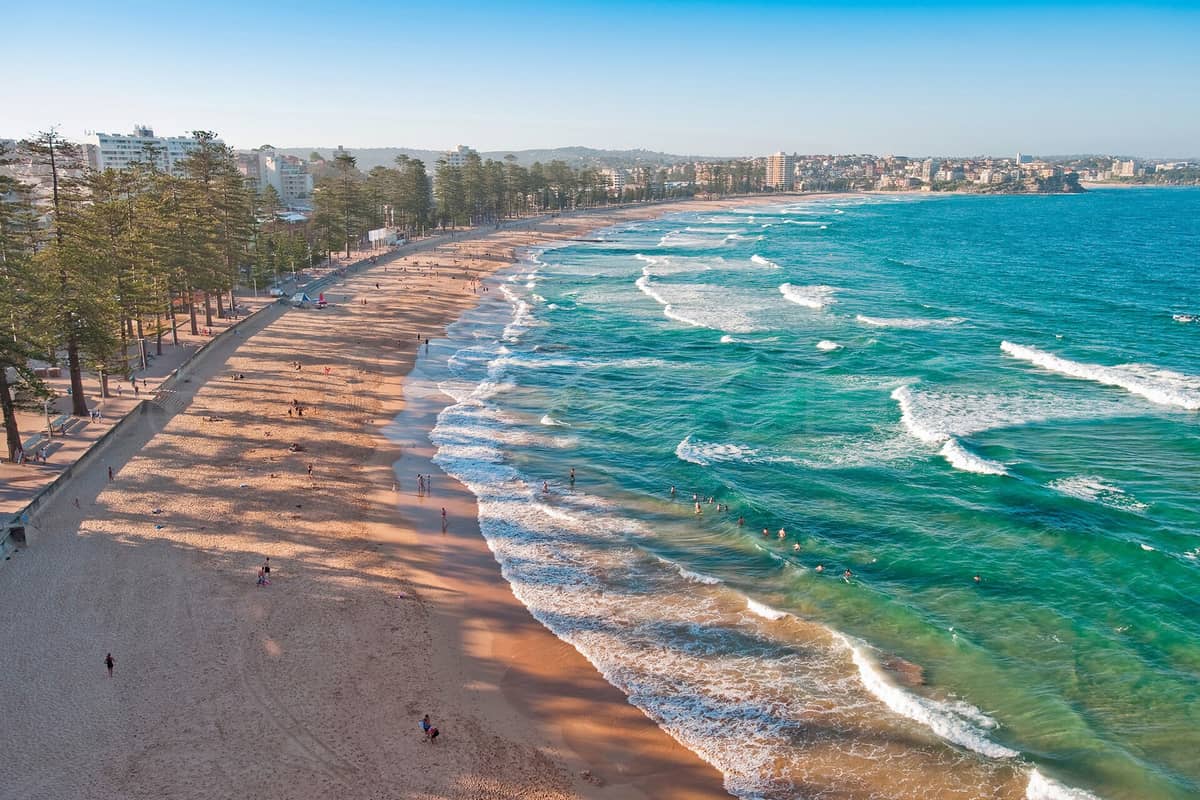
Manly Beach is a patrolled ocean beach, with South Steyne in the south, North Steyne in between, and Queenscliff at its northern end. Three names, one continuous strip of sand. The beach faces the Pacific directly, which means proper surf breaks year-round and water that turns a genuine deep blue on clear days. Behind the sand stand rows of Norfolk Island pines, which have become so associated with the Manly foreshore that locals treat them as a landmark in their own right. Three names, one continuous strip of sand. The beach faces the Pacific directly, which means proper surf breaks year-round and water that turns a genuine deep blue on clear days. Behind the sand stand rows of Norfolk Island pines, which have become so associated with the Manly foreshore that locals treat them as a landmark in their own right.
The suburb of Manly sits on a narrow peninsula with Sydney Harbour on one side and the open ocean on the other. This geography is part of why the place feels different from other Sydney beaches: the ferry arrives on the harbour side, you cross the precinct on foot via The Corso, and suddenly the Pacific opens in front of you. That transition, from sheltered harbour to open ocean in under ten minutes of walking, is part of the experience.
ℹ️ Good to know
Lifeguards patrol Manly Beach year-round, not just in summer. Always swim between the red and yellow flags, which mark the safest zone and shift position depending on daily surf and rip conditions.
How to Get There: The Ferry Is Part of the Point
The standard route is the Manly Ferry from Circular Quay. The crossing takes approximately 30 minutes and runs east from Circular Quay past the Opera House, staying inside the harbour to Manly Wharf. Transport for NSW ferries accept Opal cards and contactless bank cards; check current fares with Transport for NSW before travel, as prices are subject to change.
From Manly Wharf, The Corso is a pedestrian-only strip of cafes, surf shops, and takeaway restaurants that connects the harbour to the beach in about a 10-minute walk. Buses also serve the area for those who prefer not to take the ferry. For a full account of navigating Sydney's ferry network, the Sydney ferry guide covers routes, fares, and timing in detail.
If you are driving, paid parking is available in the beachfront area. Vehicles displaying a valid Northern Beaches Council parking permit can park free for four hours in designated beachfront spots; verify current conditions on arrival. Parking near Manly fills quickly on summer weekends from mid-morning onward, which is one practical reason the ferry option tends to work better.
Tickets & tours
Live prices and dates from our booking partner. If you book, we may earn a commission at no extra cost to you.
The Rocks historic walking tour
From 20 €Instant confirmationFree cancellationBeginner surf lesson at Bondi Beach
From 79 €Instant confirmationFree cancellationSydney whale-watching cruise with breakfast or lunch
From 62 €Instant confirmationFree cancellationBlue Mountains Waterfalls Full-Day Tour with Lunch and Dinner
From 171 €Instant confirmationFree cancellation
A Brief History: Where Daylight Swimming Began
Manly's connection to surf culture is not incidental. Northern Beaches Council attributes the name 'Manly Cove' to Captain Arthur Phillip, who noted the 'manly' bearing of the Aboriginal people he encountered here in 1788. The land had been inhabited for thousands of years before European settlement.
By the early twentieth century, Manly had become a seaside resort, and in 1903 it allowed daylight ocean swimming and surfing. That decision, which went against prevailing colonial attitudes that treated ocean bathing in daylight as indecent, helped unlock what became a defining part of Australian coastal culture. The surf lifesaving movement grew partly from the volunteer patrols that formed at beaches like Manly in the years that followed. That decision, which went against prevailing colonial attitudes that treated ocean bathing in daylight as indecent, helped unlock what became a defining part of Australian coastal culture. The surf lifesaving movement grew partly from the volunteer patrols that formed at beaches like Manly in the years that followed.
Today that history sits quietly beneath a very ordinary-looking beach town. There are no plaques announcing it at every corner. But the culture of open, free access to a patrolled ocean beach, which now seems entirely natural to Australians, had to start somewhere.
What the Beach Is Like at Different Times of Day
Early morning at Manly, before 8am, is a different place. Swimmers move steadily along the shore doing their laps. Surfers are out in the breaks at South Steyne, reading the sets quietly. The sand is cool and damp, the light is low and golden from the east, and the Norfolk Island pines cast long shadows across the promenade. The smell is salt and seaweed. You can hear the break of each wave cleanly, without the background noise that builds later in the day.
By late morning on a warm weekend, the character shifts. Families arrive with beach tents and children. The flags are set, the lifeguard tower is staffed, and the water between the flags gets progressively busier. The surf school sets up near the South Steyne end. Cafes along the beachfront fill up. The smell of sunscreen mixes with the salt air. This is Manly at full volume, and for most visitors it is exactly what they came for.
Late afternoon, from around 4pm, the summer crowd starts to thin as families pack up. The light turns amber. Locals who work in the city start arriving after the evening ferry. The water is often at its calmest in the late afternoon, and the beach takes on a more companionable, unhurried quality. Sunset from the beach itself is not dramatic since Manly faces east, but the sky behind the pines changes colour in a way that rewards sticking around.
💡 Local tip
For photography: the best light on the beach face is in the morning, when the sun rises over the water. Afternoon light is better for the foreshore, the pines, and shots looking south toward South Steyne.
Swimming, Surfing, and What to Expect in the Water
Manly Beach faces the open Pacific with no significant barrier, which means the surf is real and changeable. The waves at South Steyne tend to be more consistent for surfing; the central and northern parts of the beach are generally safer for recreational swimming and attract families and casual bathers. The flagged zones are adjusted daily by lifeguards based on where rips are running and where the safest swimming is.
Rips are a genuine risk at Manly, particularly after storms or on days with strong swells. The beach is patrolled year-round, which is worth noting: many Sydney beaches reduce or eliminate patrols in winter. If you are not a confident ocean swimmer, staying inside the flags and in the central zones is the right call.
Surf schools operate at the beach and offer lessons for beginners on a regular basis. If you are a more experienced surfer, Manly has a long history with the sport, and the conditions here have produced serious competitive surfers over the decades. For a broader look at the Northern Beaches coastline, the Manly Scenic Walkway gives an excellent perspective on how Manly Beach fits into the wider headland landscape.
Beyond the Sand: What Else Is Around
Manly is not just a beach. The foreshore promenade runs the length of the beach and continues around to Queenscliff. The streets behind the beach have a denser concentration of independent cafes, surf shops, and restaurants than you might expect given the suburb's tourist traffic, because a large part of the customer base is locals who live and work here.
A short walk south around the headland from the beach leads to Shelly Beach, a sheltered cove that is calmer and often clearer than the main beach. Shelly is particularly popular for snorkelling, and the protected marine area around the headland means fish populations are notably healthy. It is a ten-minute walk from the south end of Manly Beach and feels like a completely different environment.
To the north, the North Head Sanctuary sits at the outer headland above the beach. The views from North Head look back over the full sweep of the Northern Beaches and out through the Harbour entrance to the Pacific. It takes more effort to reach than the beach itself, but it adds genuine depth to a Manly visit for those with time.
If a longer coastal experience appeals, the wider Sydney coastal walks guide covers how Manly connects to routes stretching further along the Northern Beaches and back toward the harbour.
Practical Details: What to Know Before You Go
Manly Beach is free to enter. There are public toilets, accessible showers, and beach wheelchairs available at the beach. The council lists accessible parking and accessible facilities as available; the promenade is flat and paved, making it navigable with a pram or wheelchair, though the sand itself is not accessible in the same way.
Water temperature at Manly follows a typical Sydney pattern: warmest from January through March, when the ocean sits around 22 to 24 degrees Celsius, and coolest in winter, when it drops to around 17 to 18 degrees. Most locals swim year-round. Wetsuits appear in winter but are not universal.
Sunburn is a serious and underestimated risk on Australian beaches. UV levels in Sydney regularly reach extreme or very high even on overcast days, particularly in spring and summer. Bring SPF 50+ sunscreen, reapply after swimming, and treat shade as a practical necessity rather than a preference.
⚠️ What to skip
On summer weekends, Manly fills quickly. The ferry from Circular Quay can have queues by mid-morning. Arriving before 10am or after 3pm significantly changes the experience.
Who Should Reconsider
Manly Beach is sometimes described as Sydney's answer to Bondi, and in some ways that comparison holds. But if you are drawn specifically to the concentrated social scene, beachside restaurants, and tightly urban energy of Bondi, Manly is more relaxed and somewhat more suburban in character. It rewards visitors who want a genuine beach day rather than a scene.
Anyone with limited mobility should note that the beach itself, like all sandy beaches, is not fully accessible, though the foreshore promenade and facilities are. Those who are uncomfortable in open ocean surf conditions should stick closely to the flagged zones and exercise caution after any significant swell.
Insider Tips
- Take the ferry from Circular Quay rather than the bus: the harbour crossing is genuinely part of the experience and gives you a perspective on Sydney Harbour that no road journey replicates.
- The section of beach near South Steyne at the southern end is where the more serious surf breaks occur. If you want quieter water for swimming, move toward the northern end near Queenscliff.
- Shelly Beach, a ten-minute walk around the southern headland, is sheltered, calmer, and far less crowded than Manly on any given weekend. It is one of the better snorkelling spots in the Sydney area.
- The Manly Farmers Market runs on Saturday mornings at Manly Oval, a short walk from the beach. It is a practical spot for breakfast before the beach fills up.
- Winter mornings at Manly are genuinely peaceful. The ocean is cooler but still swimmable for those acclimatised to it, and the beach from June to August has a completely different atmosphere: fewer tourists, more regulars, and long clear mornings.
Who Is Manly Beach For?
- Swimmers and surfers looking for a patrolled ocean beach with reliable conditions
- Visitors combining a harbour ferry crossing with a full beach day
- Families who want accessible facilities and a flat foreshore promenade
- Those who want a coastal day with lunch options and enough to explore without needing a car
- Travellers seeking a less frenetic alternative to the Bondi Beach experience
Nearby Attractions
Other things to see while in Manly & the Northern Beaches:
- Barrenjoey Lighthouse
Barrenjoey Lighthouse crowns the northern tip of Palm Beach on a sandstone headland above Pittwater and the Pacific Ocean. The 1881 sandstone tower rewards the 1km climb with some of the most far-reaching coastal views in greater Sydney, and a Sunday guided tour opens the historic interior for a deeper look.
- Manly Scenic Walkway
The Manly Scenic Walkway traces 10 kilometres of undeveloped Sydney Harbour foreshore between Spit Bridge and Manly Wharf. Free to walk, rich in Aboriginal heritage and colonial history, and genuinely quieter than its reputation suggests, this is one of Sydney's most rewarding half-day outings for anyone who can handle a moderate trail.
- North Head Sanctuary
North Head Sanctuary sits at the northern jaw of Sydney Harbour, where military history, ancient heathland, and sweeping ocean views converge on a single dramatic headland. Free to enter and refreshingly quiet by Sydney standards, it rewards those willing to make the short trip out from Manly.
- Palm Beach
Palm Beach sits at the northern tip of Sydney's coastline, where a long arc of sand separates the open Pacific from the sheltered waters of Pittwater. Add a working 1881 lighthouse on the headland above, and it's easy to understand why this stretch of NSW coast has become an enduring benchmark for what a Sydney beach can be.
Planning a trip? Discover personalized activities with the Nomado app.