Yongkang Street: Taipei's Best Food Street, Block by Block
Yongkang Street in Da'an District is the address that put Taipei's food scene on the global map. Home to the original Din Tai Fung, a cluster of serious bubble tea shops, Japanese-era architecture, and a low-key residential calm that most tourist corridors lack, it rewards slow walking and repeat visits.
Quick Facts
- Location
- Yongkang St., Da'an District, Taipei City, Taiwan
- Getting There
- Dongmen Station (Red & Orange MRT Lines), Exit 4 or Exit 5
- Time Needed
- 1.5 to 3 hours for a thorough walk with stops
- Cost
- Free to enter; food and drinks priced individually in TWD
- Best for
- Food lovers, solo explorers, families, afternoon wanderers
- Official website
- www.travel.taipei/en/attraction/details/1696
What Is Yongkang Street?
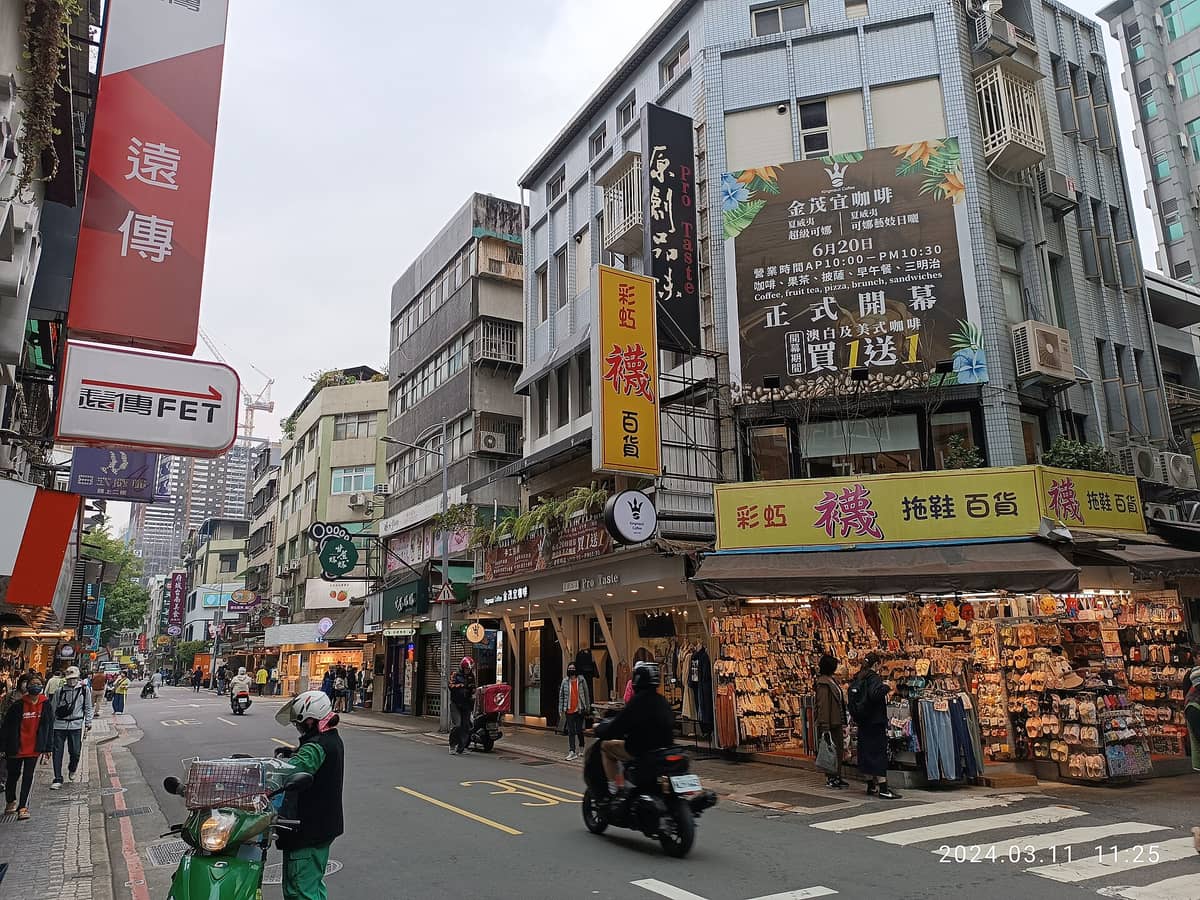
Yongkang Street (永康街) is a short north-south street in Da'an District, running from Section 2 of Xinyi Road down toward the lanes around Lishui Street, roughly between Jinshan South Road and Xinsheng South Road. On a map, it looks minor. On the ground, it is one of the most concentrated stretches of good food, decent coffee, and unpretentious retail in Taipei.
This is not a night market. There are no flashing signs, no rows of skewered meat over open flames, and no loudspeakers. Yongkang Street operates closer to a neighborhood main street: low-rise shophouses, trees that shade the sidewalk in summer, and the kind of foot traffic that includes university students, older locals, and tourists in roughly equal measure. The atmosphere is unhurried, even during lunch rushes, which makes it genuinely pleasant to walk at almost any hour.
💡 Local tip
Most shops along Yongkang Street open around 10:30 and many stay open until around 21:30. The street itself is accessible at all hours, but arrive before 11:30 if you want a queue-free experience at the more popular restaurants.
A Street With History Behind the Noodles
During the Japanese colonial period, this part of Da'an was a residential quarter for Japanese academics and government staff. The street grid and the modest scale of the surrounding buildings still reflect that era. When the Republic of China government relocated to Taiwan in 1949, the area gradually absorbed a new layer of residents, including mainlanders and their descendants, which helped shape the range of cuisines you find here today: Shanghainese dumplings, Sichuan noodles, Taiwanese beef noodle soup, and Japanese-inflected desserts all share the same few blocks.
The restaurant that made Yongkang Street internationally legible is Din Tai Fung. The original Taipei branch, which opened as an oil shop on Xinyi Road near the street's north end and later became a dumpling restaurant, turned a regional style of xiaolongbao (soup dumplings) into a global phenomenon. The line outside most mornings is a direct consequence of that reputation. Whether or not you join it, understanding that this is where that story started gives the street a different weight.
For deeper context on Taipei's food culture and how neighborhoods like this one developed, the Taipei food guide covers the broader landscape across the city's districts.
How the Street Changes Through the Day
In the morning, before 10:00, Yongkang Street is quiet. A few breakfast spots run on their own earlier schedule, and locals walk dogs or collect groceries from the small park at the street's mid-section. The light is soft and the temperature, outside of summer, is the most comfortable it will be all day. This window is underrated for photography: the street's low-rise streetscape and the plane trees above the central park section look best without crowd interference.
By midday, things sharpen. Lunch queues form at several restaurants simultaneously, and the narrow sidewalks require some patience to navigate. The smells at this hour are specific: the faint sweetness of sesame from a nearby noodle shop, the tang of black vinegar dipping sauce, warm soy milk from a corner stall. If you are eating lunch here, a weekday is noticeably calmer than a weekend.
Late afternoon is the sweet spot for browsing the boutiques and tea shops. Foot traffic eases slightly after 14:00, cafes fill up with students, and the street transitions into a slower, cooler rhythm. By evening, dessert shops selling shaved ice, taro balls, and grass jelly see their second peak. The street does not have a hard close: many food stalls wrap up by around 21:30, but some dessert and tea shops push toward 22:00 or later.
ℹ️ Good to know
Yongkang Street's official business district hours are listed as 10:30 to 21:30 daily, but individual shops set their own schedules. A handful of dessert and drink places stay open slightly later on weekends.
Walking the Street: What to Expect
Exit Dongmen MRT Station at Exit 4 or Exit 5. You are already at the edge of the Yongkang zone. Turn south and within a block you are on the main stretch. The street is short enough that walking its full length takes under ten minutes at a tourist pace, but that number is meaningless because you will stop constantly.
The central section includes a small pocket park, which is one of the area's quieter features. It provides benches, shade, and a moment to rest between courses if you are eating your way through the block. On weekday mornings, older residents do light exercise here. On weekend afternoons, it fills with people sharing takeaway cups from one of the many bubble tea shops nearby.
The side streets off Yongkang, particularly toward Lishui Street and the lanes branching toward Jinshan South Road, hold some of the area's best smaller finds: independent bookshops, Japanese antique dealers, specialty tea importers, and the kind of single-dish lunch spots that don't appear on any tourism map. These lanes are worth exploring once you have covered the main street.
Yongkang Street sits in Da'an District, which is one of Taipei's most walkable residential areas. The Da'an neighborhood guide explains how the wider district connects to transport, parks, and nearby food corridors.
Food: The Actual Reason Most People Come
The food on Yongkang Street covers a range that most single blocks cannot. Din Tai Fung's original location (on Xinyi Road at Yongkang Street's northern approach) is the headline act, and the xiaolongbao there are technically consistent and worth the wait at least once. Expect a queue of 30 to 60 minutes on weekends. The interior is efficient and fast-moving once you are seated.
Beyond Din Tai Fung, the street earns its reputation through depth rather than a single star. Cold noodle shops with Sichuan-style sesame sauce, beef noodle soup restaurants that simmer their broth for hours, Taiwanese shaved ice with fresh fruit and condensed milk, and shops selling freshly made mochi are all within a five-minute walk of each other. For bubble tea, several well-regarded shops have locations here, including some that have been on the street long enough to predate the format's global popularity.
One honest note: the highest-traffic spots on the street have become progressively more expensive over the past decade as international tourism grew. Budget travelers will find better value a few blocks away in the surrounding lanes, where the food is often just as good without the queue or the premium.
If you plan to eat your way through multiple neighborhoods in a single day, the Taipei night markets guide offers useful context for comparing different types of food streets across the city.
Shopping and What Else Is Here
The retail along Yongkang Street leans toward lifestyle goods, tea, and food-related items rather than fashion or electronics. Specialty tea vendors stock single-origin oolongs, aged puer, and high-mountain teas from Taiwan's central ranges. Several shops sell quality ceramicware, wooden kitchenware, and locally produced goods that make practical, non-touristy souvenirs.
Independent cafes occupy many of the renovated shophouses. Some are minimal and precise about their brewing methods; others are older, plant-filled spaces with slow jazz and cats on the counter. Neither type advertises aggressively. You find them by walking slowly and looking through doorways.
Taiwan's tea culture has deep roots in how streets like Yongkang developed. The Taipei tea culture guide explains the varieties, the rituals, and where to buy well across the city.
Practical Details: Getting There and Getting Around
The easiest access is Dongmen MRT Station, served by both the Red Line (Tamsui-Xinyi) and the Orange Line (Zhonghe-Xinlu). It is a clean transfer point, and Exits 4 and 5 deposit you within one short block of the street's main action. Total travel time from Taipei Main Station via the Red Line is under ten minutes, including the short walk from the platform.
The street itself is flat and entirely walkable. Sidewalks are standard Taipei width, meaning they can feel narrow during peak hours when outdoor seating from cafes reduces the pedestrian lane. People with strollers or mobility aids will find the surface manageable, though interior shop access varies by individual business. Dongmen Station has elevator access in compliance with Taipei Metro accessibility standards.
Weather affects the experience more than most guides admit. Taipei's summers (June to September) are genuinely hot and humid, and Yongkang Street has limited shade outside the central park section. A midday visit in August requires tolerance for heat and occasional rain. The October-to-April window is more comfortable for slow walking. Carry an umbrella year-round; Taipei's rain is unpredictable.
⚠️ What to skip
Weekend afternoons between 13:00 and 16:00 see the highest crowd density on Yongkang Street. If you dislike navigating around stationary groups or queue-side crowds, visit on a weekday morning instead.
Who Should Skip This Street
Yongkang Street is not the right destination for travelers seeking Taipei's louder, more theatrical night market energy. There are no carnival games, no metre-long sausages, no dramatic cooking shows. If that is what you want, Shilin or Raohe Street markets will serve you better.
Travelers on very tight schedules who can only visit one food area in Taipei should weigh whether the street's more intimate scale justifies the trip over a larger market. And those who specifically want to experience old Taipei's temple district character should head to Wanhua instead. Yongkang Street is a neighborhood food street, good at what it does, but not a substitute for the city's other distinct areas.
For a broader view of how Yongkang Street fits into a multi-day itinerary, the 3-day Taipei itinerary positions it alongside the city's other essential stops.
Insider Tips
- The alley running parallel to Yongkang Street on its east side (toward Jinshan South Road) contains several low-profile lunch spots with no English signage and noticeably lower prices than the main street. Worth a slow look between 11:30 and 13:30.
- Din Tai Fung queues move faster than they look. The restaurant operates a numbered ticket system, and staff estimate wait times accurately. If the number is under 30 minutes, it is usually worth it; longer waits are better spent eating elsewhere first.
- The small park in the middle of Yongkang Street has benches that are almost always available, even on busy weekends. It is a good place to eat takeaway items, recover between stops, or simply sit for a few minutes in genuine shade.
- Several tea shops on and around Yongkang Street offer tastings without purchase obligation, particularly in the late afternoon when foot traffic slows. Asking to smell or taste before buying is completely normal and expected.
- If you are visiting on a weekday, the surrounding residential lanes are almost empty before noon. This is the best window for street photography: morning light, clean backgrounds, and none of the queue-crowd compression that defines weekend visits.
Who Is Yongkang Street For?
- Food travelers who want to eat seriously across one afternoon without covering large distances
- Solo visitors who prefer a neighborhood street to a managed tourist attraction
- Families with children, particularly for the shaved ice and mochi shops that operate throughout the day
- Shoppers looking for quality Taiwanese tea, ceramics, and kitchen goods rather than mass-produced souvenirs
- Anyone building a Da'an District afternoon that combines food, coffee, and a walk through a genuinely residential part of Taipei
Nearby Attractions
Other things to see while in Da’an District:
- Da'an Forest Park
Spanning roughly 26 hectares in the heart of Taipei's Da'an District, Da'an Forest Park is one of the city's largest public green spaces. Free to enter and generally open day and night, it draws everyone from dawn joggers to evening picnickers, offering a rare patch of calm in a dense urban landscape.
- Taipei Grand Mosque
The Taipei Grand Mosque stands as Taiwan's largest and most significant Islamic place of worship, a quiet pocket of Middle Eastern-influenced architecture tucked into a tree-lined residential stretch of Da'an District. Free to visit and open daily, it offers a genuinely different perspective on Taipei's religious and cultural landscape.
- Tonghua (Linjiang) Night Market
Officially named Linjiang Street Tourist Night Market, Tonghua Night Market in Da'an District is where Taipei residents actually eat on weekday evenings. Free to enter, open nightly from 6PM to 12AM, and a short walk from Xinyi Anhe MRT Station, it offers a more relaxed alternative to the tourist-heavy Shilin Night Market.