Viimsi Open Air Museum: A Living Coastal Village Frozen in Time
Viimsi Open Air Museum preserves a genuine 150-year-old beach farm complex in the coastal village of Pringi, about 30 minutes from central Tallinn. It is one of Estonia's few nationally protected open-air sites dedicated specifically to the seafaring culture of the coastal folk, offering a quieter, more intimate alternative to the country's larger outdoor museums.
Quick Facts
- Location
- Rohuneeme tee 53a, Pringi village, Viimsi Parish, Harju County — approx. 30 min drive from central Tallinn
- Getting There
- Bus line 114 from central Tallinn (Hobujaama stop) toward the Rannarahva/Tamme area, then a short walk to the museum (journey approx. 30–40 minutes from the city center)
- Time Needed
- 1.5 to 2.5 hours
- Cost
- Paid admission; exact prices vary — check the official site before visiting
- Best for
- History lovers, families, Estonian culture enthusiasts, photographers
- Official website
- rannarahvamuuseum.ee/en/viimsi-open-air-museum
What Is the Viimsi Open Air Museum?
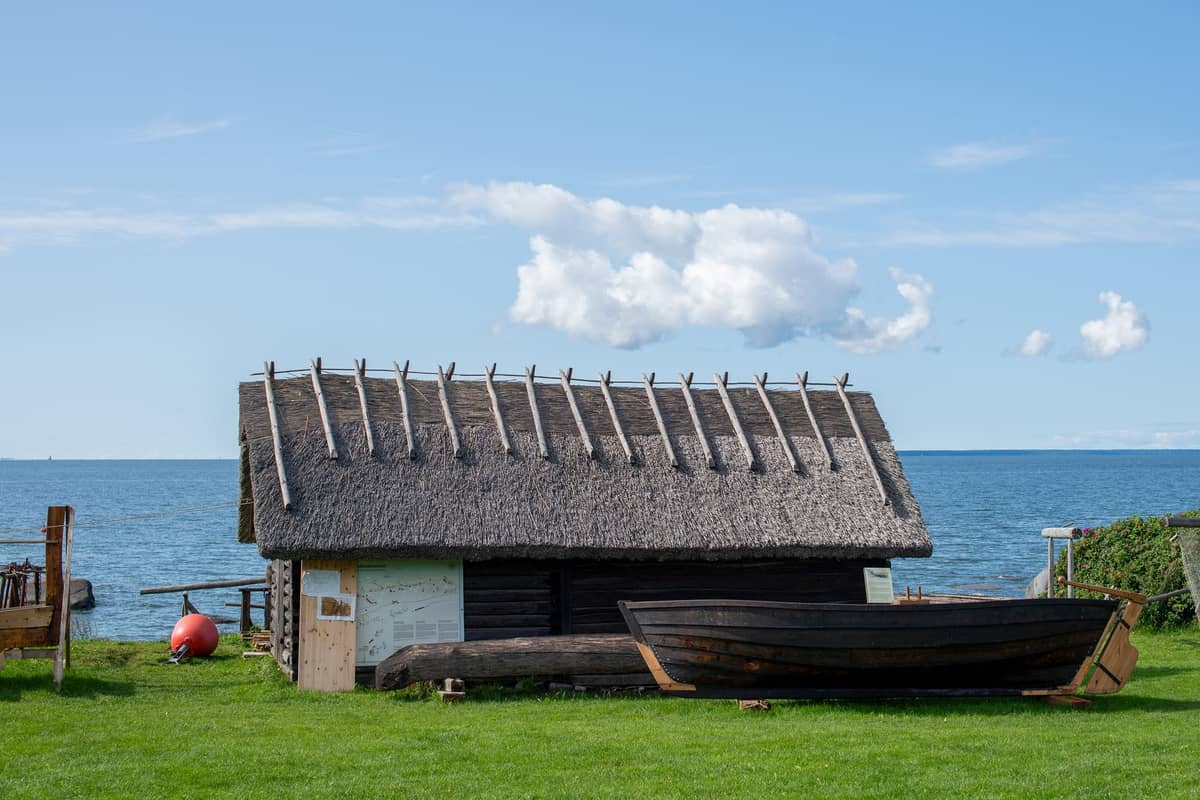
The Viimsi Open Air Museum is an outdoor heritage site in the coastal village of Pringi, on the Viimsi Peninsula northeast of Tallinn. It preserves a complex of beach houses and farm buildings that are more than 150 years old, all arranged along the seashore in roughly the same layout they occupied when fishing families lived and worked here. The site is a nationally designated Cultural Monument of Estonia, managed by the Museum of Coastal Folk Foundation (Sihtasutus Rannarahva Muuseum).
The village was restored in 1979 to reflect traditional coastal life as it existed around 150 years ago. What distinguishes this place from a reconstructed heritage village is that the buildings are largely authentic, not transplanted from elsewhere. You are standing in an actual historic settlement, not a curated collection of relocated structures. That distinction changes the atmosphere considerably: the proportions feel real, the sightlines to the sea are where they always were, and the weathered timber of the boathouses carries genuine age.
ℹ️ Good to know
Opening hours vary and published information is inconsistent. Visit Estonia lists summer hours (1 May to 30 September) as 10:00 to 19:00 daily and winter hours (1 October to 30 April) as Wednesday through Sunday, 11:00 to 17:00, while the museum’s own site currently gives year‑round hours as Tuesday to Friday 12:00 to 17:00 and Saturday to Sunday 10:00 to 17:00; verify directly at rannarahvamuuseum.ee before visiting.
The Coastal Folk: Who Lived Here and Why It Matters
The Estonian coastal folk, known in Estonian as rannarahvas, were a distinct cultural group who inhabited the northern and western coastlines of Estonia for centuries. They spoke their own dialects, maintained maritime traditions separate from inland farming communities, and organized their entire material world around the sea: fishing, sealing, piloting ships through the shallow Gulf of Finland, and trading with Finnish and Swedish ports across the water.
The Viimsi Peninsula was one of the most densely settled coastal folk territories in northern Estonia, positioned at the edge of Tallinn Bay with direct sightlines toward Helsinki. The farm complexes here reflect that dual identity: agricultural enough to survive winter, maritime enough to launch boats from the beach at low tide. Understanding this context transforms a walk through Pringi village from a pleasant stroll into something with real narrative weight.
For travelers already interested in Estonian ethnographic history, the Viimsi museum pairs well with a visit to the Estonian Open Air Museum at Rocca al Mare on the western edge of Tallinn. That site covers a broader sweep of rural Estonian life, while Viimsi focuses specifically on the coastal folk tradition.
Tickets & tours
Hand-picked options from our booking partner. Prices are indicative; availability and final rates are confirmed when you complete your booking.
Self-guided Discovery Walk of Tallinn city contrasts beyond the medieval walls
From 26 €Instant confirmationFree cancellationTallinn's art and culture tour with a local
From 62 €Instant confirmationFree cancellationHistorical walking tour of Tallinn with a local
From 599 €Instant confirmationFree cancellationIntroductory walking tour of Tallinn with a local guide
From 109 €Instant confirmationFree cancellation
Walking Through the Site: What You Actually See
The physical layout of Viimsi Open Air Museum follows the original village footprint. Farm buildings cluster close together as they would have in a working coastal settlement, with the shore providing both the practical exit point for boats and the visual anchor for the whole complex. The boathouses are among the most atmospheric structures: long, low timber buildings with heavy doors facing the water, built to shelter the flat-bottomed craft used in the Gulf of Finland's shallow bays.
Inside the main dwelling buildings, exhibits show domestic objects, fishing equipment, navigation tools, and textiles specific to the coastal folk tradition. The scale is modest compared to Tallinn's larger museums, which works in the site's favor: nothing feels rushed or overwhelming. You can spend genuine time in each structure. The smell of old timber is present throughout, particularly on warm summer days when the sun heats the wood, releasing decades of accumulated resin and salt air.
The grounds between buildings give views toward the water, and on clear days the Gulf of Finland is visible beyond the tree line. In summer, the low angle of the late evening sun transforms the weathered grey timber into something closer to silver, and the light on the water behind the boathouses makes for excellent photography with minimal effort.
💡 Local tip
Photography tip: arrive in the late afternoon on sunny days. The western light hits the boathouse facades directly, and the contrast between the dark interior shadows and bright exterior timber is sharp and clean. Overcast days produce softer, more even light that works better for interior shots.
How the Experience Changes by Time of Day and Season
Morning visits during summer tend to be very quiet. The museum does not draw the volume of tourists that Tallinn's Old Town receives, and on weekday mornings you may have significant stretches of the site to yourself. The air in the early hours carries more coastal humidity, and if the wind is coming off the Gulf, you hear it moving through the trees at the perimeter before you see the water. This is when the place feels most like an actual village rather than a museum.
Weekend afternoons in summer bring more families, particularly Estonian visitors from Tallinn and the Viimsi area. The atmosphere remains relaxed rather than crowded. There is no equivalent of the summer tourist pressure found at the Old Town's central squares. Children do well here: the open grounds, the boats, and the tangible physical objects in the farm buildings hold attention in ways that purely text-based exhibits often do not.
Winter visits are a very different proposition. With reduced hours and a grey northern light, the site takes on a harsher, starker quality that is historically accurate in its own way. The coastal folk spent their winters in close quarters, maintaining equipment and preparing for the spring fishing season. If you visit in snow, the farm complex looks striking, but check current conditions before traveling as paths between buildings may be uneven underfoot.
⚠️ What to skip
Weather matters here more than at indoor museums. The outdoor paths between buildings are not always paved, and after rain the ground can be soft. Wear shoes with grip. In winter, some outdoor areas may be icy.
Getting There from Tallinn
The museum sits in Pringi village in Viimsi Parish, roughly 30 minutes by car from central Tallinn. Driving is the most convenient option and the most common approach for visitors. Parking is available at the site, with accessible parking spaces noted for visitors with mobility needs.
By public transport, the most practical route involves taking regional bus line 114 from Tallinn (for example from Hobujaama stop) toward the Rannarahva/Tamme area, then walking the remaining few hundred metres to the museum. The journey from central Tallinn takes roughly 30–40 minutes. Check current timetables at transport.tallinn.ee or the regional operator before traveling, as bus frequency on the Viimsi Peninsula is lower than in the city center and missing a connection will significantly extend your wait.
If you are planning a day that combines the Viimsi museum with coastal scenery, the Viimsi Peninsula road also passes close to the Pirita beach area on the way out of Tallinn, which makes a logical pairing in summer.
Accessibility and Practical Details
The museum is listed as wheelchair accessible with accessible parking available. That said, open-air museum sites by their nature include historic buildings with original floors, doorways, and thresholds not designed for modern accessibility standards. If mobility is a specific concern, contact the museum directly before visiting to confirm which buildings and areas are fully accessible versus which may have limited access.
Admission fees are paid on site; exact current prices are not consistently published across tourism listings, so check the museum's official page at rannarahvamuuseum.ee for up-to-date rates. If you hold a Tallinn Card, check the Tallinn Card guide to see whether the Viimsi museum is included in your pass benefits, as coverage can change between card versions.
The museum's on-site facilities are modest, appropriate for a small heritage site. There is no large cafe or shop comparable to what you would find at major urban museums. Bring water and snacks if you plan an extended visit, particularly with children.
Is It Worth the Trip from Tallinn?
That depends entirely on what you are looking for. Viimsi Open Air Museum is not a blockbuster attraction. It does not have the scale of the Estonian Open Air Museum or the architectural drama of Tallinn's medieval towers. What it offers is specificity: a focused, well-preserved record of one particular community's way of life, in the exact place where that life was lived, with the sea still visible in the background.
Travelers who have already covered Tallinn's main sights and want to understand more of the country's rural and maritime heritage will find this worthwhile. Those on a short city break with only one or two days in Estonia should prioritize Tallinn's Old Town and consider Viimsi a worthwhile addition only if time genuinely allows. A practical 2-day Tallinn itinerary would likely not include it, but a 3-day visit with flexibility for a half-day excursion could easily accommodate the trip.
People who prefer urban experiences, contemporary culture, or simply dislike the conditions of outdoor museums (uneven ground, variable weather, limited dining options) may find the effort-to-reward ratio lower than other Tallinn attractions. That is an honest assessment, not a reason to dismiss the place, but a useful one for time-constrained travelers.
Insider Tips
- If you are driving, combine Viimsi with a stop at Pirita on the return route: the coastal road back toward Tallinn passes near the beach and the ruins of the Pirita Convent, which adds almost no extra travel time.
- Late May and early September offer the best balance of good light, minimal crowds, and reasonable weather for an outdoor site. Midsummer weekends in July bring more visitors than any other time of year.
- The boathouses at the water's edge are the most photogenic structures. Position yourself with the shore behind them rather than in front, and you get the timber facades with open sky rather than sea clutter in the background.
- The museum is part of the Museum of Coastal Folk Foundation, which also manages a larger main museum in Viimsi. If you are specifically interested in the rannarahvas culture, the foundation's other collections may be worth researching before your visit.
- Check the museum's events calendar before visiting. Seasonal craft demonstrations and traditional activities are occasionally held on site, and these significantly enrich a visit that might otherwise feel like a quiet self-guided walk.
Who Is Viimsi Open Air Museum For?
- History and ethnography enthusiasts who want context beyond Tallinn's medieval Old Town
- Families with children who engage better with physical, outdoor environments than gallery-style museums
- Photographers looking for authentic timber architecture and coastal light without crowds
- Travelers on a longer Estonia trip who want to understand rural and maritime culture alongside city history
- Visitors interested in the specific heritage of the Estonian coastal folk (rannarahvas) tradition
Nearby Attractions
Combine your visit with:
- Aegna Island
Aegna Island sits 14 km off the Tallinn coast in the Bay of Tallinn, reachable in about 30 minutes by boat. The entire island is a protected landscape conservation area, covered in dense forest, glacial boulders, and coastal meadows. Entry to the island is free, making it one of the most rewarding half-day escapes from the city.
- Estonian Open Air Museum
Spread across 72 hectares of coastal forest in Tallinn's Haabersti district, the Estonian Open Air Museum (Eesti Vabaõhumuuseum) reconstructs rural and fishing life from the 18th and 19th centuries. Twelve farmyards, a working tavern, a church, mills, a schoolhouse, a fire station, and net sheds make this Estonia's largest and most immersive open-air history experience.
- Glehn Park
Glehn Park is a free, forested public park in Tallinn's suburban Nõmme district, built around a 19th-century castle by the eccentric Baron Nikolai von Glehn. With natural woodland trails, stone carvings, and a refreshing distance from the Old Town crowds, it rewards visitors who want something genuinely different from the medieval core.
- Jägala Waterfall
Standing 8 metres tall and stretching over 50 metres wide, Jägala Waterfall is Estonia's largest natural waterfall. Located just 25 kilometres east of Tallinn on the Jägala River, it is free to visit year-round and rewards visitors differently in every season, from frozen curtains of ice in winter to a thundering torrent in spring snowmelt.