Sunshine City Ikebukuro: What to Expect Inside Tokyo's Mega-Complex
Sunshine City is a sprawling multi-building urban complex in Ikebukuro, Tokyo, combining an aquarium, rooftop observatory, planetarium, shopping floors, restaurants, and event spaces under one roof. It rewards visitors who know what they're looking for, but can overwhelm those who go in without a plan.
Quick Facts
- Location
- 3-1 Higashi-Ikebukuro, Toshima City, Tokyo 170-8630
- Getting There
- Ikebukuro Station (JR, Tokyo Metro, Seibu, Tobu lines), approx. 8 min walk to main entrance
- Time Needed
- 2–5 hours depending on attractions visited
- Cost
- Complex entry is free; individual attractions charge separately (verify current prices before visiting)
- Best for
- Families, rainy-day outings, anime and pop culture fans, travelers based in Ikebukuro
- Official website
- sunshinecity.jp/en
What Is Sunshine City, Exactly?
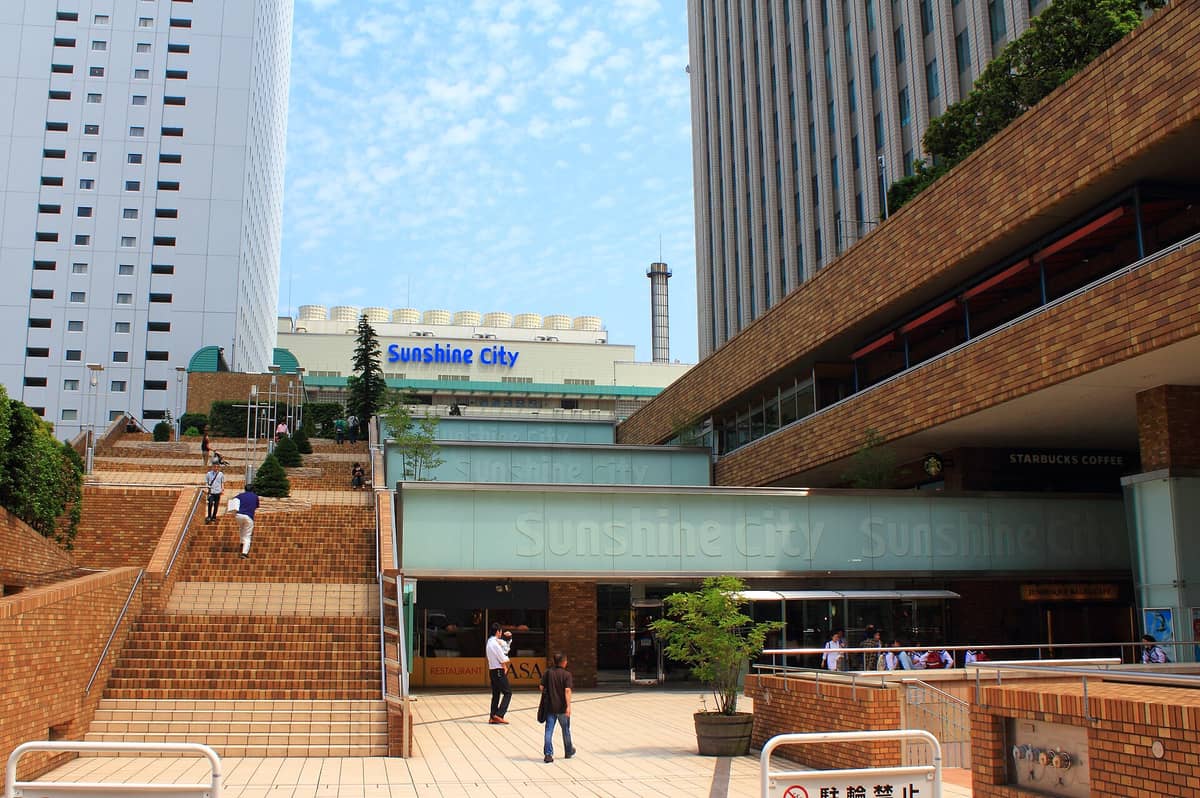
Sunshine City is a large-scale urban complex in the Higashi-Ikebukuro area of Toshima City, Tokyo. Built around the iconic Sunshine 60 Building — once the tallest skyscraper in Asia when it opened in 1978 — the complex has grown into a self-contained vertical city with shopping centers, office towers, hotels, an aquarium, an observatory, a planetarium, event halls, and dozens of restaurants. It draws a broad mix of visitors: Tokyo residents doing weekend errands, families with young children, anime fans hunting pop culture merchandise, and tourists looking for something to do on a rainy afternoon.
The scale can be disorienting on a first visit. Sunshine City is not a single building but a cluster of interconnected structures, including Sunshine 60, the World Import Mart Building, Bunka Kaikan, and the Alpa shopping center. Floors and buildings are linked by interior walkways, but the signage in English is not always consistent. Budget a few minutes on arrival to orient yourself at one of the floor maps near the main entrances, especially if you have specific attractions in mind.
💡 Local tip
The multilingual information desk operates 9:00–20:00 and is the most reliable way to get current floor maps and operating hours for individual facilities. Individual attractions within the complex often have their own hours and occasional closure days — always check the relevant facility page on the official site before visiting.
The Sunshine 60 Observatory: Views Over Northwest Tokyo
The observatory sits near the top of the Sunshine 60 Building and offers panoramic views across northwest Tokyo toward Shinjuku and beyond. On clear days, particularly in late autumn and winter when the air is dry, you can see distant ridgelines and the faint outline of mountains to the west. The viewing experience is quieter and less crowded than better-known observation decks in the city, which is part of its appeal.
Admission is approximately ¥700 for adults at time of writing, making this one of the more affordable observation points in Tokyo. If high-altitude panoramas are a priority on your trip, you may want to compare it with the Shibuya Sky observatory or the Tokyo Metropolitan Government Building, which offers free views from Shinjuku. The Sunshine 60 observatory suits visitors who are already spending time in Ikebukuro and want a skyline perspective without a dedicated trip across the city.
Late afternoon visits, roughly an hour before sunset, tend to offer the most dramatic light. The building faces west across the city, and the shifting colors over the urban sprawl can be genuinely striking. Clear winter mornings are the best bet for long-distance visibility, while summer haze and rainy-season overcast significantly reduce the view. Check the weather carefully before making the observatory a priority on any given day.
⚠️ What to skip
Sunshine City's individual attractions — including the observatory — have varying and sometimes seasonal hours that differ from the general complex hours. Verify operating times on the official site before your visit, especially on weekdays or during holiday periods.
Tickets & tours
Hand-picked options from our booking partner. Prices are indicative; availability and final rates are confirmed when you complete your booking.
Tsukiji Fish Market Walking Food Tour
From 40 €Instant confirmationFree cancellationMt.Fuji,Owakudani, Hakone Cruise & Ropeway, Oshino Hakkai 1-Day Trip
From 54 €Instant confirmationFree cancellationTour to Mt. Fuji Area, Oshino Hakkai and Kawaguchi Lake from Tokyo
From 57 €Instant confirmationFree cancellationNikko UNESCO Shrine and Nature View 1-Day Tour from Tokyo
From 78 €Instant confirmationFree cancellation
Sunshine Aquarium: Surprisingly Good, and Worth the Price
The Sunshine Aquarium occupies the upper levels of the World Import Mart Building and consistently surprises visitors who expect a generic urban aquarium. The rooftop section, which houses an open-air marine exhibit with seals and other marine animals, is genuinely unusual for a city-center facility at this altitude. On sunny days, natural light floods the outdoor area, and the contrast of marine life against the Ikebukuro skyline behind it is one of those small, memorable moments that Tokyo occasionally produces.
The indoor sections cover jellyfish, tropical fish, penguins, and various freshwater and marine species across multiple well-designed tanks. The jellyfish display in particular is frequently cited by visitors for its calm, almost meditative quality — low light, slowly drifting translucent forms, and minimal crowd noise in that section. Weekend afternoons get busy, particularly with families and school groups. If you have flexibility, weekday mornings are noticeably calmer.
Adult admission is approximately ¥2,400, which is in line with mid-tier aquariums across Japan. Children's tickets are lower; verify the current pricing structure on the official site. Allow at least 90 minutes to move through all sections without feeling rushed, or two hours if you plan to linger at exhibits or catch scheduled presentations.
Shopping, Food, and Pop Culture: The Everyday Sunshine City
For the majority of people walking through Sunshine City on any given day, the draw is practical: shopping, eating, and browsing. The Alpa shopping center contains a wide range of retail across fashion, household goods, accessories, and specialty stores. The mix skews toward mid-range Japanese brands and leans into youth and pop culture — there are floors with clear appeal to anime and manga fans, including character merchandise stores and themed cafes that rotate with current franchises.
Ikebukuro has developed a strong identity within Tokyo's pop culture geography, and Sunshine City is central to that. If you're interested in exploring this side of the neighborhood more broadly, the Ikebukuro neighborhood guide covers the full picture, including what distinguishes it from nearby Akihabara in terms of audience and character.
The restaurant floors offer considerable variety, from Japanese comfort food (ramen, tonkatsu, soba) to international options and specialty dessert and cafe concepts. Lunch hours on weekdays between noon and 13:30 see long queues at popular spots. If you're eating here, arriving just before noon or after 14:00 on weekdays typically means shorter waits. Weekend evenings are the busiest period across the food floors.
General shopping hours run approximately 10:00–20:00, though this varies by store and floor. Some food outlets open later and close later than the retail sections. The complex as a whole does not close uniformly — different zones wind down at different times, so confirm hours for specific areas if you're visiting in the evening.
How Sunshine City Changes Through the Day
Arriving between 10:00 and 11:00 on a weekday puts you in a noticeably calmer version of the complex. The observatory and aquarium are quieter, shopping floors have breathing room, and the food halls are not yet running at capacity. The atmosphere is almost functional — local shoppers, office workers passing through, and a handful of tourists. It is the most pleasant time to explore if sensory overload is a concern.
By early afternoon on weekends, the complex fills significantly. The corridors between buildings develop a slow, dense flow of people, escalators queue, and the noise level rises. This is when Sunshine City feels most like what it is: a major urban entertainment and retail hub drawing thousands of visitors simultaneously. Energy is high, and the character goods and anime merchandise sections in particular see concentrated activity. If you enjoy that kind of atmosphere, weekend afternoons deliver it.
Evening visits after 18:00, particularly on weekdays, see the shopping population thin while the restaurant floors stay active. The exterior plaza near the complex entrance changes character at night — the Sunshine 60 building illuminated against the sky, smaller groups of people moving between nearby restaurants and entertainment venues in the surrounding Higashi-Ikebukuro streets.
Getting There and Getting Around Inside
Ikebukuro Station is the main gateway. It connects JR lines (including the Yamanote Line, which circles central Tokyo), Tokyo Metro Marunouchi and Yurakucho lines, the Tobu Tojo Line, and Seibu Ikebukuro Line. From the station's east exit, Sunshine City is roughly an 8 to 10 minute walk through the Higashi-Ikebukuro shopping streets. Follow signs for Sunshine City or Higashi-Ikebukuro — they are present but require attention at a few intersections.
For visitors building a full day in the area, Sunshine City pairs naturally with the broader Ikebukuro neighborhood. The guide to getting around Tokyo has practical detail on IC card use and navigating the rail network, which is useful if Ikebukuro is one stop among several on your itinerary.
Inside the complex, elevator banks are the most reliable way to move between floors, particularly if you have luggage, a stroller, or mobility considerations. The official site's Barrier Free page details accessible routes through the buildings and is worth reviewing in advance if accessibility is a factor. The complex is generally well-equipped with lifts and level pathways between connected buildings, but the sheer size means distances between specific facilities can be longer than expected.
ℹ️ Good to know
If you are visiting with a stroller or wheelchair, check the Barrier Free route information on the official Sunshine City access page before your visit. The complex is largely accessible, but the most direct routes between buildings vary by floor level.
Is Sunshine City Worth It for International Visitors?
The honest answer depends on what you are looking for. As a standalone tourist destination, Sunshine City is not in the same tier as Tokyo's most distinctive attractions. It is a large, competent urban mall-and-entertainment complex — impressive in scale, with a few genuinely good individual facilities, but not a place that delivers the kind of singular experience Tokyo can offer elsewhere.
Where it earns its place is in specific contexts. Families with children who need an all-weather option will find the aquarium and planetarium genuinely useful and high-quality. Travelers interested in Tokyo's pop culture landscape — and who have already visited or plan to visit Akihabara — will find the Ikebukuro angle distinct enough to merit the detour. And anyone staying in Ikebukuro and facing a rainy afternoon will find it a solid default with enough variety to fill several hours.
Visitors with only two or three days in Tokyo who are optimizing for iconic or unique experiences may find their time better spent elsewhere. The complex does not offer anything that can only be found here — but it does offer several good things in one place, with minimal logistical friction.
For a broader sense of how Ikebukuro fits into Tokyo's neighborhood geography and what else the area offers, the Tokyo neighborhoods guide is a useful reference before planning your day.
Insider Tips
- The Sunshine Aquarium's rooftop section is the most photogenic part of the complex, but it is weather-dependent. On overcast or rainy days, the outdoor marine exhibits lose much of their appeal — save the aquarium visit for a clear day if you have flexibility.
- The planetarium inside Sunshine City uses a digital projection system and offers shows in English at select times. Check the current schedule on the official site in advance, as English-language show slots are limited and timing varies by season.
- If you are shopping for character merchandise or anime goods, the floors dedicated to pop culture retail in Sunshine City tend to stock different franchise tie-ins than Akihabara shops, with a bias toward titles and merchandise popular with a younger female audience. It is a different market segment, not a duplicate.
- The complex connects via underground passages from Ikebukuro Station, which can be useful in heavy rain. Ask at the information desk for the indoor routing options if the weather turns.
- The Sunshine City event halls regularly host ticketed fan conventions, gaming events, and pop culture expos that are not visible from general tourism listings. Checking the official event calendar before your visit can reveal something genuinely interesting that happens to coincide with your stay.
Who Is Sunshine City For?
- Families with children aged 4 and up, particularly for the aquarium and planetarium combination
- Rainy-day visitors in Ikebukuro who need a full afternoon of covered activity
- Anime, manga, and pop culture fans exploring Tokyo beyond Akihabara
- Travelers staying in Ikebukuro who want a convenient base for shopping and dining
- First-time visitors to Tokyo who want a low-effort introduction to the scale of Japanese urban retail