Sumida Park: Tokyo's Finest Cherry Blossom Riverside Walk
Sumida Park stretches along both banks of the Sumida River in Asakusa and Mukojima, offering some of Tokyo's most celebrated hanami scenery. With hundreds of cherry trees, unobstructed Tokyo Skytree views, and free admission year-round, it rewards visitors across every season.
Quick Facts
- Location
- Taitō and Sumida wards, Tokyo (Asakusa area)
- Getting There
- Asakusa Station (Tokyo Metro Ginza Line, Toei Asakusa Line, Tobu Isesaki Line) – 5 min walk
- Time Needed
- 45 minutes to 2 hours depending on season and pace
- Cost
- Free admission to the park, open 24 hours year-round (some facilities have limited hours)
- Best for
- Cherry blossom viewing, riverside walks, Tokyo Skytree photography
- Official website
- http://visit-sumida.jp/spot/6133
What Sumida Park Actually Is
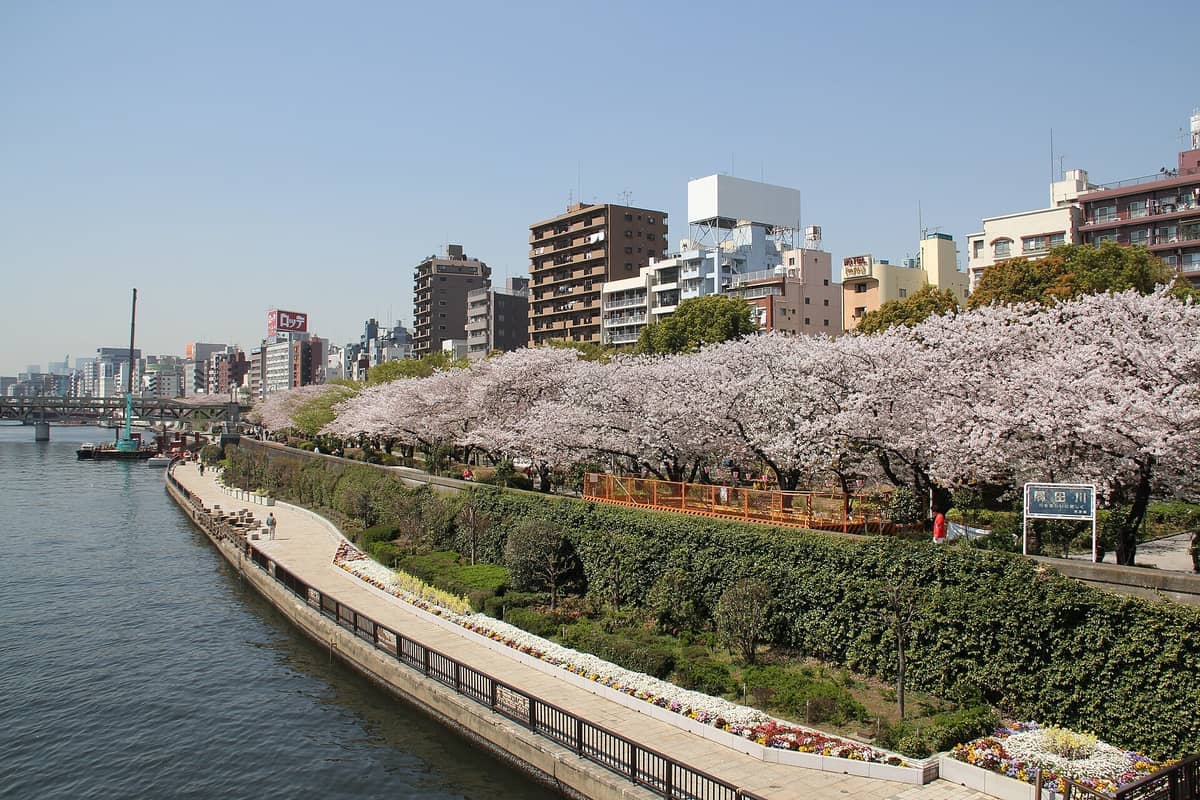
Sumida Park (隅田公園, Sumida Kōen) is a public riverside park split across two Tokyo wards: Taitō on the west bank, near Asakusa, and Sumida on the east bank near Mukojima. The Sumida River runs between them, crossed by several bridges within easy walking distance. The park is roughly one kilometer long on each side, following the natural arc of the river, and the combined area gives it a generous, unhurried quality that few central Tokyo green spaces can match.
The site has deep historical roots. The land along this stretch of the Sumida River was once occupied by the residential gardens of Edo-period feudal lords, and later served as one of the city's first public parks after the Meiji-era transformation of Japan. That history still shapes the atmosphere: the park feels deliberate and ceremonial in a way that newer green spaces do not, with wide promenades, stone lanterns, and planted rows of trees that follow a clear spatial logic.
The park sits directly adjacent to the Asakusa neighborhood, one of Tokyo's most historically layered districts, which means it can be combined with a visit to Senso-ji Temple and Nakamise shopping street in a single outing without any additional transit.
💡 Local tip
The Taitō (west bank) side is easier to reach from Asakusa Station and more polished underfoot. The Sumida (east bank) side near Mukojima tends to be quieter on regular days and offers cleaner angles for Tokyo Skytree photography.
Cherry Blossom Season: The Park at Its Peak
Sumida Park is one of Tokyo's most storied hanami locations, with hundreds of cherry trees planted along both riverbanks. The trees are predominantly Somei Yoshino, the pale-pink variety that defines Japanese spring, and during peak bloom, usually in late March to early April depending on the year, the branches arch over the promenade and drop petals into the river below. The combination of blossom canopy, moving water, and the vertical silhouette of Tokyo Skytree in the background is genuinely difficult to find elsewhere in the city.
Morning visits between 7 and 9 am during cherry season offer a noticeably different experience than afternoons. The light is soft and low, the petals still hold dew, and the crowd is manageable: joggers, elderly residents, and early-rising photographers rather than the dense hanami parties that materialize by midday. By late afternoon, particularly on weekends, the riverbanks fill with groups eating and drinking beneath the trees. Blue tarps appear, convenience store bags pile up, and the energy shifts from contemplative to festive. Neither is wrong; they are simply different parks.
For timing advice calibrated to Tokyo's specific bloom windows, the Tokyo in spring guide covers what to expect week by week and which neighborhoods offer complementary blossom walks.
⚠️ What to skip
During cherry blossom season, particularly on weekend afternoons, the Taitō bank promenade becomes very congested. If you have mobility limitations or are pushing a stroller, aim for a weekday morning, when conditions are significantly easier to navigate.
Tickets & tours
Hand-picked options from our booking partner. Prices are indicative; availability and final rates are confirmed when you complete your booking.
Tsukiji Fish Market Walking Food Tour
From 40 €Instant confirmationFree cancellationMt.Fuji,Owakudani, Hakone Cruise & Ropeway, Oshino Hakkai 1-Day Trip
From 54 €Instant confirmationFree cancellationTour to Mt. Fuji Area, Oshino Hakkai and Kawaguchi Lake from Tokyo
From 57 €Instant confirmationFree cancellationNikko UNESCO Shrine and Nature View 1-Day Tour from Tokyo
From 78 €Instant confirmationFree cancellation
The Park Through the Rest of the Year
Visitors who come outside cherry season often find Sumida Park more pleasant than expected. Summer brings deep green foliage that shades the riverside paths, and the Sumida River generates a faint breeze that takes a degree or two off the heat. Lantern-lit events and summer festivals, including the famous Sumida River Fireworks Festival held in late July, draw large crowds to this stretch of the riverbank, though the fireworks viewing from the park itself can be obstructed. Checking the festival schedule before a July visit is worthwhile.
Autumn is underrated here. The zelkova and ginkgo trees along the pathways turn amber and yellow from late October into November, and the crowds are far smaller than spring. The light quality in October and November is excellent for photography, with clear skies and sharp shadows, and the Tokyo Skytree reflects the season in the coppery tones of the surrounding trees. Winter strips the trees back but gives the park a spare, clean atmosphere. On clear winter days, particularly after cold fronts pass through in January and February, the view north toward Tokyo Skytree is as sharp as it gets.
What You See: A Practical Walkthrough
From Asakusa Station, the west bank entrance is reached in about five minutes on foot heading northeast, crossing the Komagata Bridge approach and following the river's edge. The promenade here is paved and wide, with benches positioned to face the water. Closer to the Azumabashi Bridge, the view opens up significantly: the bright orange Azumabashi spans the river in the foreground, and Tokyo Skytree rises directly behind it on the east bank. This particular framing, bridge plus tower plus water, is one of the most photographed views in the Asakusa area.
Cross the Azumabashi on foot to reach the Sumida (east bank) side, where the atmosphere changes. The promenade is slightly less manicured, there are more small gardens and planted sections, and the Skytree is now closer and looms more dramatically overhead. The Mukojima side has a neighborhood feel that the Asakusa bank lacks; local residents use it as a daily route rather than a destination, which gives it a more lived-in quality.
If Tokyo Skytree is on your itinerary, the observation deck is accessible from Oshiage Station, about 15 minutes on foot from the east bank of the park. Details on what to expect are in our Tokyo Skytree guide.
Getting There and Getting Around
The simplest approach is Asakusa Station, served by the Tokyo Metro Ginza Line, the Toei Asakusa Line, and the Tobu Isesaki Line. From any of the station exits, the riverbank is visible within a short walk northeast. For the east bank, Honjo-Azumabashi Station on the Toei Asakusa Line deposits you about eight minutes from the Mukojima entrance. If you are arriving from central Tokyo, the Ginza Line from Shibuya or Ueno is typically the fastest route.
The main promenades on both banks are flat, paved, and stroller-friendly. Some sections include small steps or uneven surfaces where the path transitions to the riverbank or connects to bridge approaches, so wheelchair users should stick to the main promenade and check conditions on the Sumida side in advance. The park is open around the clock with no gates or entry barriers, which makes it equally useful for an early morning run or a late evening walk under the lanterns.
ℹ️ Good to know
Tokyo's IC cards (Suica, Pasmo) work on all transit lines serving Asakusa Station. Tap in and out with the same card across metro, Toei, and Tobu lines without buying separate tickets.
Photography and Practical Considerations
The Azumabashi Bridge framing the Skytree works best in the hour after sunrise, when the sky behind the tower is gradient and the bridge is lit orange by the early light. Midday flattens everything and produces harsh shadows. The west bank promenade faces east across the river, so afternoon sun backlights the Skytree and creates a silhouette effect that can be striking in clear conditions. For cherry blossoms, overcast days often produce better petal saturation than direct sun, which can wash out the pale pink of Somei Yoshino.
If your interest in Tokyo's riverside and rooftop views extends beyond Sumida Park, the best views in Tokyo guide maps out the city's standout vantage points across different heights and neighborhoods.
There are no coin lockers within the park itself. The nearest convenience stores are at the Asakusa Station area, roughly five minutes away. Restrooms are located within the park and around Asakusa; food and drink stalls appear during cherry blossom season and festival periods, so outside these times, bring water if you plan a longer walk.
Who Might Want to Skip This
Visitors with very limited time who are focused on Asakusa's Senso-ji Temple may find that the park competes for attention without adding dramatically different content unless cherry blossoms are in bloom. Outside spring, the park is pleasant but not the kind of destination worth crossing the city for on its own. It works best as an extension of an Asakusa visit or as a deliberate riverside walk, not as a primary attraction on a tight itinerary.
Travelers looking for immersive traditional gardens with landscape design, teahouses, and curated scenery should compare Sumida Park against options like Hamarikyu Gardens or Rikugien Garden, which offer more architectural garden experiences for a modest admission fee.
Insider Tips
- The clearest Tokyo Skytree reflections appear on the east bank (Mukojima side) of the river after rain, when the pavement holds a thin film of water and the tower reflects almost perfectly. Arrive within an hour of rainfall ending for the best conditions.
- During cherry blossom season, boat landings near Sumida Park and Azumabashi in the Asakusa area run river cruise tours that give you blossom-framed views from the water. Tickets sell out quickly on weekends; check availability at the Asakusa tourist information center near the station.
- The lanterns along the promenade are lit from dusk to around 10 pm. An evening walk during cherry season, when the lit blossoms glow against a dark sky, is one of the least-crowded and most atmospheric ways to experience the park.
- The Sumida Park Iris Garden on the Sumida ward side peaks in late May to mid-June, just after cherry blossom season ends. It is easy to miss if you only visit in spring, but the irises in bloom against the river backdrop offer excellent color for photography at no extra cost.
- Combine the park with Senso-ji Temple and Nakamise shopping street in a single morning loop: enter Senso-ji from Kaminarimon, walk through to the back of the temple grounds, then head northeast to the riverbank. The whole circuit takes about two hours at a relaxed pace.
Who Is Sumida Park For?
- Cherry blossom (hanami) viewing in late March to early April
- Photographers seeking Tokyo Skytree compositions with water and seasonal foliage
- Families wanting a free, flat outdoor space in central Tokyo
- Visitors combining a morning walk with the broader Asakusa sightseeing circuit
- Travelers seeking a calm riverside route away from Asakusa's shopping crowds
Nearby Attractions
Other things to see while in Asakusa:
- Kappabashi Kitchen Town
Kappabashi Dōgu-gai is a 800-metre stretch of over 170 specialist shops selling everything from hand-forged knives and lacquerware to industrial woks and the famous plastic food models you see in restaurant windows across Japan. Free to enter, easy to walk, and unlike anywhere else in Tokyo.
- Senso-ji Temple
Senso-ji in Asakusa is Tokyo's oldest Buddhist temple, founded in 628 CE and dedicated to Kannon, the Bodhisattva of Compassion. Senso-ji in Asakusa is Tokyo's oldest Buddhist temple, founded in 628 CE and dedicated to Kannon, the Bodhisattva of Compassion. Entry to the grounds is free, and the experience changes dramatically depending on when you arrive.
- Tokyo Skytree
At 634 meters, Tokyo Skytree is one of the tallest structures in the world and the city's dominant broadcasting tower. It offers two observation levels, a large shopping complex at its base, and some of the clearest long-range views in Tokyo on a good day. This guide covers what the experience actually feels like, when to go, how much it costs, and whether it is worth your time.