Steppenwolf Theatre Company: Chicago's Landmark Stage
Founded in 1974 by three young actors in a church basement, Steppenwolf Theatre Company grew into one of the most respected ensemble theatres in the United States. Its home at 1650 N. Halsted in Lincoln Park is where raw, actor-driven storytelling has defined American theatre for five decades.
Quick Facts
- Location
- 1650 N. Halsted St., Lincoln Park, Chicago, IL 60614
- Getting There
- CTA Red Line to North/Clybourn; CTA Bus #8 (Halsted) stops nearby
- Time Needed
- 2.5–3 hours for a full performance; allow 30 min before curtain
- Cost
- Ticket prices vary by production and seat; check steppenwolf.org for current pricing
- Best for
- Theatre lovers, fans of American ensemble acting, cultural travellers
- Official website
- www.steppenwolf.org
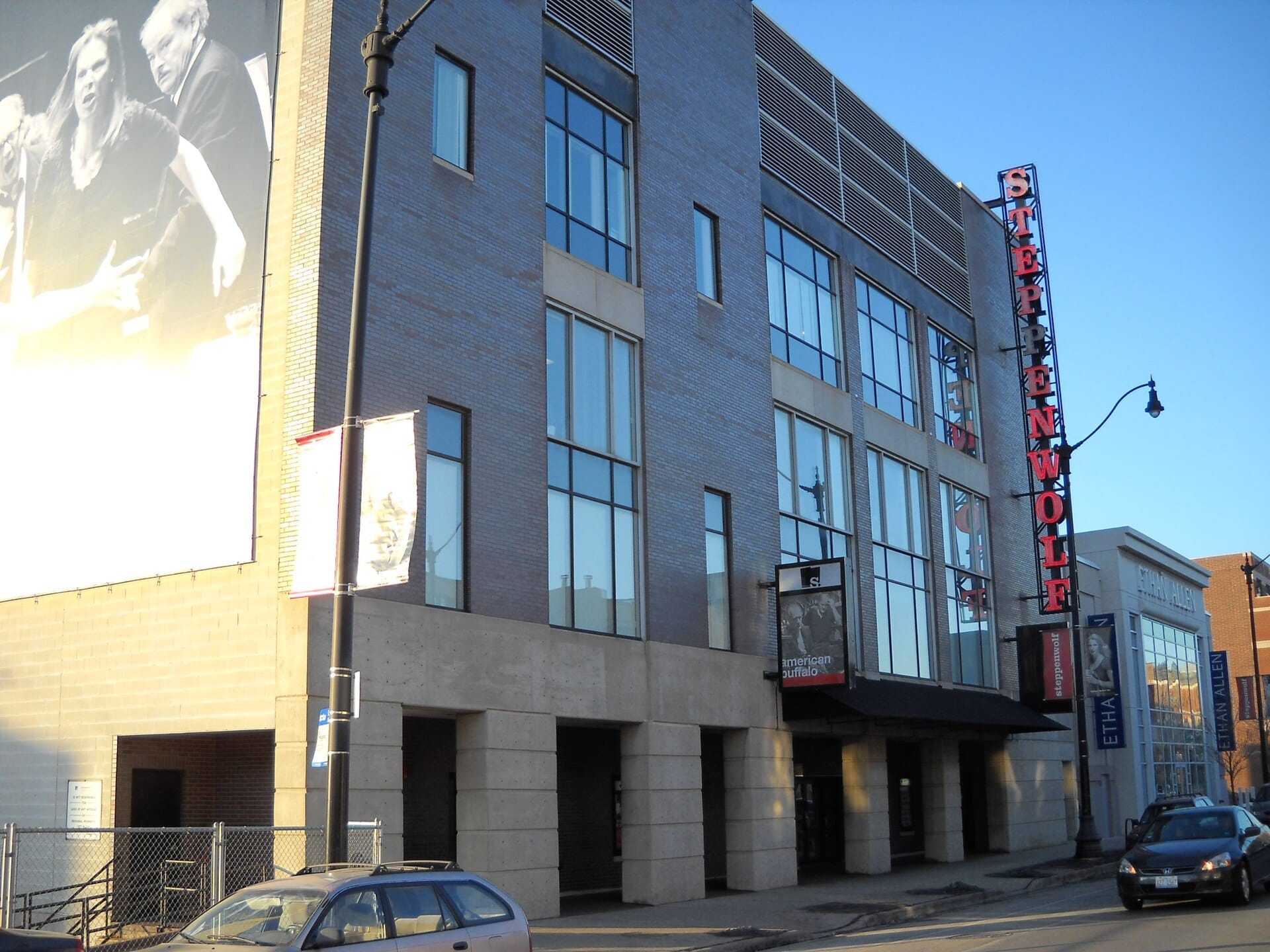
What Steppenwolf Is, and Why It Matters
Steppenwolf Theatre Company is not simply a venue where plays are staged. It is an ensemble, a philosophy, and an institution that changed how American theatre thinks about acting. Founded in 1974 by Terry Kinney, Jeff Perry, and Gary Sinise, the company began life in the basement of a Highland Park church with no budget and a conviction that the actor is the engine of the story. That conviction has never wavered.
The ensemble model, which means a permanent company of artists who develop work together over years rather than casting each production separately, produces a specific kind of chemistry on stage. Audiences who come expecting a polished West End production will find something rawer and more kinetic. Steppenwolf shows tend to crackle. The acting is physical, internally honest, and occasionally uncomfortable in the best possible way.
For visitors building a broader picture of Chicago's cultural life, Steppenwolf sits at the serious end of a rich theatre ecosystem. The city supports an extraordinary number of stages, and a guide to Chicago theatre will help you calibrate what kind of experience you are looking for before booking.
The Building and Its Three Spaces
In 1991, after years of nomadic staging in various North Side venues, Steppenwolf moved into a purpose-built complex on North Halsted Street. The building is a deliberate statement: serious architecture for a company that had outgrown borrowed rooms. The facility contains three performing spaces, the largest of which seats 515. The mid-size and intimate spaces seat considerably fewer, and the experience in each is meaningfully different.
The main stage has a proscenium configuration that can feel surprisingly close even from the back rows. Sound design at Steppenwolf has a habit of using the full depth of the room, so you hear the stage rather than just watch it. The smaller spaces push that intimacy further; in the most compact configuration, the fourth wall is not just broken, it was never constructed in the first place.
The lobby is open before performances and during intermission, with a bar that draws patrons spilling onto the sidewalk on warmer evenings. The Halsted Street frontage has a low-key, neighborhood quality that contrasts with the intensity of what happens inside. You might not immediately recognize it as a major cultural institution from the street, which is part of the point.
Tickets & tours
Hand-picked options from our booking partner. Prices are indicative; availability and final rates are confirmed when you complete your booking.
Go City | Chicago All-Inclusive Pass
From 127 €Instant confirmationFree cancellationiFLY Chicago Lincoln Park indoor skydiving experience
From 126 €Instant confirmationFree cancellationiFLY Chicago Rosemont indoor skydiving tickets
From 117 €Instant confirmationFree cancellationChicago lakefront neighbourhood bike tour
From 18 €Instant confirmationFree cancellation
A Night at Steppenwolf: What to Expect
💡 Local tip
Arrive at least 30 minutes before curtain. The bar fills quickly, parking on Halsted is limited, and the box office handles will-call best when it is not rushed. Late arrivals may be held in the lobby until a suitable break in the action.
The pre-show atmosphere is specific to Lincoln Park. The crowd skews knowledgeable and local rather than tourist-heavy. You will hear people discussing the director, arguing about an earlier production of the same play, or recognizing ensemble members from past work. It has the texture of a community gathering rather than a commercial outing.
Once inside the house, the lights do not fade gradually. Steppenwolf tends toward abrupt beginnings. One moment there is ambient noise and shuffling; the next, the actors are already in motion, already mid-scene, and you catch up. It is a deliberate technique, pulling the audience into the world rather than guiding them gently. This is not a company interested in easing you into anything.
Intermission in the lobby is its own social event. The bar is efficient, the conversations are engaged, and the staff will often post running times on boards near the entrances so you can plan around post-show dining without anxiety.
History and Cultural Weight
The founding in 1975 was less a launch than a scrappy beginning, three actors in their early twenties with a shared aesthetic and no institutional support. What separated Steppenwolf from dozens of similar small companies that formed and dissolved in the same decade was the staying power of the ensemble idea: the same people, returning season after season, deepening their collaborative vocabulary.
The company's national reputation accelerated through the 1980s as productions transferred to Broadway and its ensemble roster expanded to include actors who would become significant names in film and television. That crossover brought attention, but Steppenwolf consistently redirected that attention back to Chicago, investing in new work and the permanent home that opened in 1991 at 1650 N. Halsted Street.
Steppenwolf's position in Lincoln Park is no accident. The neighborhood has long supported a concentration of arts institutions, live music, and serious dining that make it possible to build an evening around a performance. The Lincoln Park and Old Town area rewards a longer visit rather than a quick in-and-out trip to the theatre.
Getting There and Practical Navigation
The CTA Red Line stop at North/Clybourn is the most reliable option for most visitors. From there, the walk to 1650 N. Halsted is straightforward and well-lit at performance times. CTA Bus Route 8 runs along Halsted and deposits you closer to the door, which matters in January when temperatures drop below freezing and the wind off the lake adds a physical edge to any wait.
If you are driving, street parking on and around Halsted is contested on performance nights, particularly on Fridays and Saturdays. Arrive early or plan to walk several blocks. Rideshare pickup after a show can take longer than expected because Halsted is a busy one-way corridor; the pickup point shifts depending on traffic management on a given evening, so check the app rather than assuming.
⚠️ What to skip
Chicago winters are serious. If you are attending a November through March performance, dress for cold well below freezing and factor in wind chill. The walk from the Red Line is exposed. A coat check is available inside the theatre.
For visitors combining the theatre with a full day, the Lincoln Park Zoo and the Chicago History Museum are both within easy reach for an afternoon before an evening curtain. The neighborhood also has strong restaurant options within walking distance of the theatre for pre-show dining.
Booking, Pricing, and What to Know Before You Go
Ticket prices vary by production, seat location, and time of season. The official steppenwolf.org site is the most reliable source for current pricing and availability, as the company runs its own box office without a major third-party markup. Popular productions in the main stage space sell out well in advance, particularly on weekends, so booking several weeks ahead is sensible if you have a specific show in mind.
Steppenwolf offers a range of reduced-price ticket programs, including options for students, young adults, and lower-income audiences. The company has historically taken access seriously, so it is worth checking the site for current programs rather than assuming the only available tickets are at full price.
ℹ️ Good to know
Steppenwolf regularly produces world premieres and develops new work. If the production running during your visit is unfamiliar to you, that is often a reason to attend rather than a reason for hesitation. New plays here tend to be substantive.
If your interest in Chicago theatre extends beyond a single show, the city supports a remarkable number of independent stages ranging from intimate storefront productions to major houses. A full Chicago theatre guide will give you context for what each venue offers and how Steppenwolf fits into the wider picture.
Who Should Skip Steppenwolf
Visitors looking for Broadway-style spectacle, large-scale musical theatre, or shows built primarily around visual production design may find Steppenwolf's stripped-down, actor-focused approach less immediately satisfying. The company is not producing escapist entertainment in the conventional sense. Plays here often engage with difficult material, unresolved endings, and morally complicated characters.
Families with young children will find that most Steppenwolf productions are programmed for adult audiences, both in content and in the patience required to sit through two-plus hours of serious drama. The company does offer some programming aimed at younger audiences, but the main season is not designed with children in mind.
Insider Tips
- The box office staff know the productions well. If you are undecided between two shows, call rather than relying only on the website synopsis. They can tell you which running production is getting the strongest audience response.
- The smallest performing space at Steppenwolf offers one of the most intense live theatre experiences in the city. If a production in that space is available when you visit, prioritize it over the main stage, even if the main stage show is the higher-profile production.
- Post-show, the bar area stays open briefly and actors occasionally appear. It is not a meet-and-greet, but the informality of the building means the boundary between stage and lobby can be thin.
- If you are visiting Chicago in late autumn or winter, check whether Steppenwolf's season includes any productions specifically in those months. The company's programming often intensifies in the darker months, and a January performance in a warm theatre is a particular kind of Chicago experience.
- Subscriptions and multi-show packages frequently offer better value than single-ticket purchases and give priority access during subscription windows before general sale. Even if you plan to attend only one show, it is worth checking whether a two-show package makes financial sense for your trip.
Who Is Steppenwolf Theatre Company For?
- Theatre enthusiasts who want to see American ensemble acting at its most developed
- Cultural travellers building a serious itinerary around Chicago's arts institutions
- Solo travellers comfortable attending evening performances independently in a neighbourhood setting
- Anyone interested in new American playwriting and world premieres
- Visitors returning to Chicago who have already covered the major museums and attractions
Nearby Attractions
Other things to see while in Lincoln Park & Old Town:
- Alfred Caldwell Lily Pool
Tucked inside Lincoln Park, the Alfred Caldwell Lily Pool is a 3-acre National Historic Landmark redesigned in 1936–1938 in the Prairie School style. Admission is free, crowds are thin, and the experience is unlike anything else on Chicago's standard tourist circuit.
- Chicago History Museum
Founded in 1856 as the Chicago Historical Society, the Chicago History Museum is the city's oldest cultural institution. Located at the edge of Lincoln Park, it traces the full arc of Chicago's story, from its earliest Indigenous inhabitants to the Great Fire, the labor movement, and beyond. It rewards curious visitors who want more than skyline photos.
- Green City Market
Green City Market is Chicago's only year-round sustainable farmers' market, drawing top chefs, local farmers, and serious food lovers to Lincoln Park on Wednesdays and Saturdays during the outdoor season. Free to enter at both its outdoor Lincoln Park and indoor winter locations and rich with seasonal produce, artisan goods, and chef demos, it's one of the most authentic food experiences the city offers.
- Kingston Mines
Founded in 1968, Kingston Mines on North Halsted Street is the largest and oldest continuously operating blues club in Chicago. Two stages run simultaneously on weekends, keeping the music going until 4 a.m. This is where the city's blues tradition stays alive on a weekend night.