Smart Museum of Art: The University of Chicago's World-Class Free Gallery
Tucked into the north edge of the University of Chicago campus in Hyde Park, the Smart Museum of Art offers free admission to a thoughtfully curated permanent collection and rotating exhibitions spanning ancient to contemporary art. Understated from the outside, it rewards anyone willing to make the trip south from the Loop.
Quick Facts
- Location
- 5550 S. Greenwood Avenue, Hyde Park, Chicago, IL 60637
- Getting There
- Metra Electric Line to 55th–56th–57th Street station; CTA Bus 6 (Jackson Park Express) or Bus 171/172
- Time Needed
- 1.5–2.5 hours
- Cost
- Always free
- Best for
- Art lovers, university culture seekers, Hyde Park explorers
- Official website
- smartmuseum.uchicago.edu
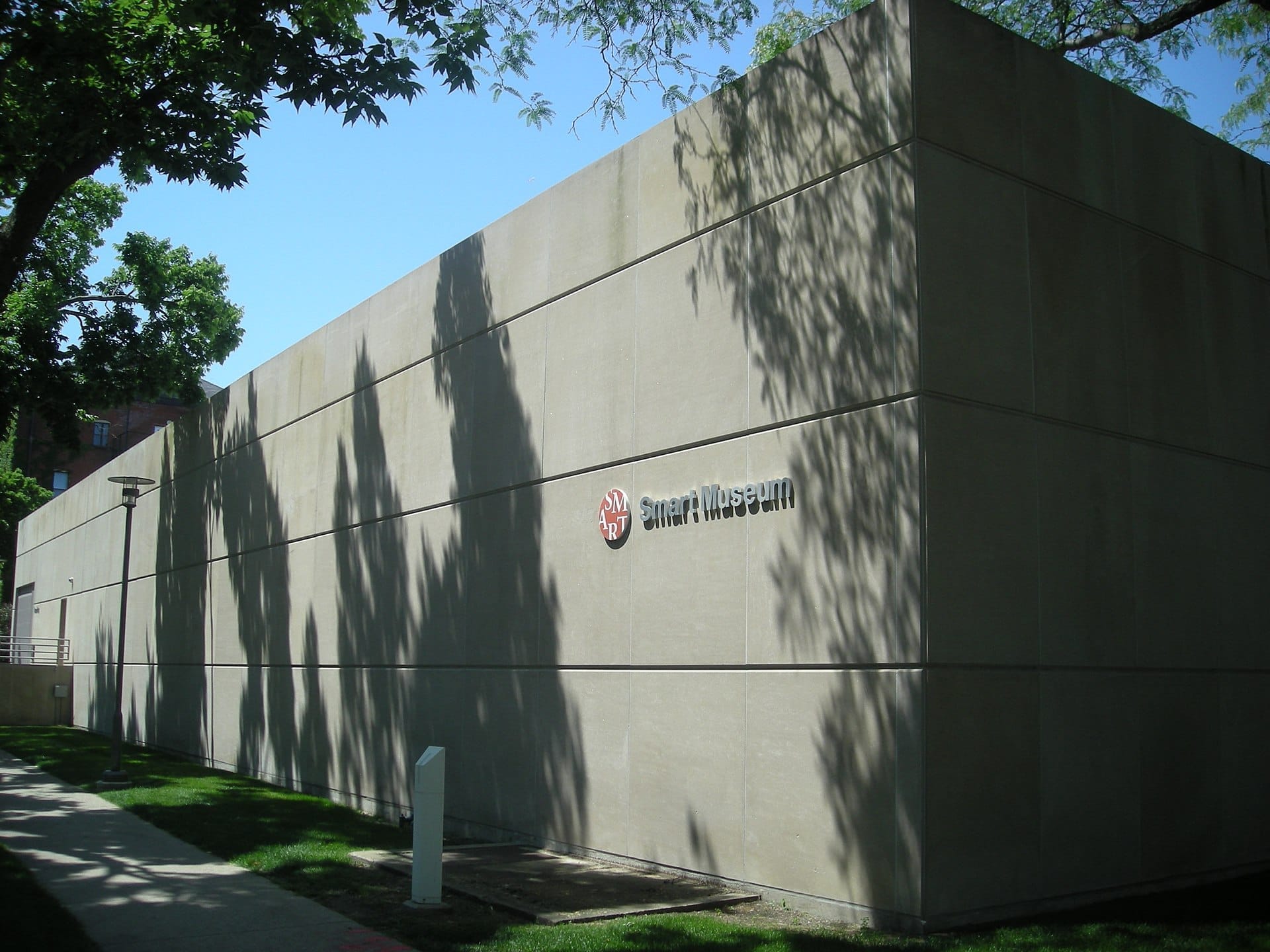
What the Smart Museum of Art Actually Is
The Smart Museum of Art is the University of Chicago's primary fine art museum, located on the north edge of one of America's most architecturally serious academic campuses. It celebrated its 50th anniversary in 2025, which means five decades of collecting, exhibiting, and engaging with art across a genuinely broad range: ancient Chinese bronzes, European old masters, postwar American painting, contemporary photography, and much more. This is not a children's discovery center or a pop-up experience designed for Instagram. It is a real scholarly institution with a permanent collection of over 17,000 objects.
Admission is free, always, with no ticketing required. That fact alone makes it one of the most accessible serious art institutions in Chicago, and one that many visitors outside Hyde Park simply never discover.
ℹ️ Good to know
Hours: Wednesday through Sunday, 11:00 am to 5:00 pm. Closed Mondays and on university-recognized holidays, as well as during exhibition installation periods and winter recess. Always check the museum's website before traveling, especially in December and January.
The Feel of the Place: Morning vs. Afternoon
On a weekday morning, the Smart Museum is extraordinarily quiet. You may share a gallery with one or two graduate students sketching in notebooks, and the only sound is the soft mechanical hum of the climate control systems that protect the works. Natural light enters through high windows in certain galleries, and the effect is calm, almost contemplative. There is none of the shoulder-to-shoulder movement you experience at the Art Institute of Chicago on a Saturday afternoon.
By early afternoon on weekends, the museum picks up slightly, particularly when the university is in session. Students arrive in groups, sometimes with faculty, and you may catch fragments of conversations about specific works that add unexpected texture to your own visit. Still, crowding is never a real issue here. The scale of the building keeps the experience intimate by design.
The outdoor courtyard between the museum and adjacent campus buildings is a pleasant place to pause between galleries, particularly in late spring when the surrounding Hyde Park campus is at its greenest. In winter, the galleries feel warm and insulated against the Chicago cold, making this a genuinely good destination even on days when spending time outdoors is not appealing.
Tickets & tours
Hand-picked options from our booking partner. Prices are indicative; availability and final rates are confirmed when you complete your booking.
Go City | Chicago All-Inclusive Pass
From 127 €Instant confirmationFree cancellationArt Institute of Chicago tickets and self-guided audio tour
From 49 €Instant confirmationArt Institute of Chicago Guided Tour with Skip-the-Line Tickets
From 63 €Instant confirmationFree cancellationThe Art Institute of Chicago: private skip-the-line tour
From 124 €Instant confirmationFree cancellation
The Collection: What You'll Actually See
The permanent collection at the Smart Museum spans an unusual range. Ancient Greek and Roman ceramics sit in proximity to Tang dynasty Chinese ceramics. There are works by Pablo Picasso, Henri Matisse, and Auguste Rodin alongside American modernists and a growing body of contemporary art with particular depth in work by artists of the African diaspora and Asian-American artists. The breadth is a direct consequence of the university's academic focus: the collection exists to teach, not simply to impress.
Rotating temporary exhibitions at the Smart tend to be thematically ambitious. Past shows have tied works from multiple time periods and cultures around a single intellectual argument, which reflects the institution's scholarly DNA. The result is that exhibitions here sometimes feel more intellectually demanding than those at larger institutions designed for wider general audiences. That is a feature, not a bug, if you enjoy being challenged.
Wall text throughout the galleries is well-written and informative without being condescending. The museum produces thorough exhibition catalogues that are available in the small museum shop near the entrance, and staff members are notably knowledgeable if you ask questions.
If you are planning a broader Chicago museum trip, the Smart pairs extremely well with the Institute for the Study of Ancient Cultures, which is also on the University of Chicago campus a short walk away and is also free. Together, they make for a full and unhurried museum day in Hyde Park.
Getting There from Downtown Chicago
Hyde Park sits roughly 7.5 miles south of the Loop, which is far enough that most tourists never make it here. That distance is part of what keeps the Smart Museum peaceful. The most reliable transit option is the Metra Electric Line from Millennium Station (underground at 151 E. Randolph Street) to the 55th-56th-57th Street station, which drops you about a 10-minute walk from the museum. Trains run regularly throughout the day, and the ride takes around 20 minutes.
CTA buses also serve Hyde Park. The 6 Jackson Park Express runs down Lake Shore Drive and stops near the campus. Bus routes 171 and 172 operate within Hyde Park itself. If you are driving, the museum notes that close public parking is available. Street parking on Greenwood Avenue and adjacent streets is often available outside peak university hours.
💡 Local tip
The Metra Electric Line is the fastest and most straightforward option from downtown. Buy a one-way ticket at Millennium Station before boarding. The ride is smooth, comfortable, and dramatically quicker than any bus route during peak traffic hours.
For a broader sense of how public transit works across the city before your trip, the getting around Chicago guide covers CTA, Metra, and rideshare options in practical detail.
Hyde Park as Context: Why the Neighborhood Matters
The Smart Museum does not exist in isolation. It sits within one of the most intellectually dense square miles in American urban life. The University of Chicago campus surrounding it was designed in a neo-Gothic style that deliberately evokes Oxford and Cambridge, with limestone quadrangles, gargoyles, and interior courtyards that feel entirely removed from Chicago's grid. Walking from the Metra station to the museum takes you past Regenstein Library, the main quadrangles, and Rockefeller Memorial Chapel, a 1928 structure with a carillon and soaring interior that is worth a few minutes of your time.
Hyde Park is also home to the Robie House, Frank Lloyd Wright's 1910 Prairie Style masterpiece, which sits just a few blocks from the Smart Museum. If architecture interests you at all, combining the museum with a Robie House tour makes for a deeply rewarding half-day on the South Side.
The broader Hyde Park neighborhood has its own particular energy worth understanding before you visit. Our Hyde Park neighborhood guide covers what to eat, where to walk, and how the area fits into Chicago's South Side.
Photography and Practical Logistics
Personal, non-commercial photography of the permanent collection is generally permitted at the Smart Museum, though flash photography is not allowed and restrictions may apply to certain temporary exhibitions. Check posted signage at each gallery entrance, and if in doubt, ask a staff member rather than assume. The museum's architecture itself, including the courtyard facade and the interior gallery proportions, photographs well in the soft midday light that comes through its upper windows.
The museum has a single entrance off Greenwood Avenue. There are coat check facilities, which matter in Chicago winters when heavy coats become cumbersome in warm gallery spaces. Restrooms are clean and well-maintained. The small museum shop near the entrance carries art books, exhibition catalogues, and a curated selection of design objects, and is worth browsing even if you don't buy anything.
⚠️ What to skip
The museum closes during university holiday periods and exhibition changeovers. Winter recess in late December and early January can mean multi-week closures. Always verify current hours at smartmuseum.uchicago.edu before making the trip.
Who Should Skip the Smart Museum
Visitors with very limited time in Chicago, say one or two days, may find the 7.5-mile journey south difficult to justify unless they have a specific interest in Hyde Park or the University of Chicago. The museum is serious in tone and scholarly in its exhibition programming; travelers primarily seeking spectacle, blockbuster-scale shows, or highly interactive experiences will find the Art Institute of Chicago or the Museum of Science and Industry better suited to their expectations. Young children without existing interest in art may also find the quiet galleries difficult to engage with, given the absence of hands-on components.
If you are weighing multiple Chicago museum visits against a tighter schedule, the guide to the best museums in Chicago helps set priorities across the city's full range of institutions.
Insider Tips
- Combine your visit with the Institute for the Study of Ancient Cultures Museum (formerly the Institute for the Study of Ancient Cultures), located a few minutes' walk away on the same campus. Both are free, and together they cover ancient world civilizations and fine art without a dollar of admission between them.
- The Metra Electric Line from Millennium Station is the most reliable way to reach Hyde Park. Trains run roughly every 30 minutes on weekdays and hourly on weekends; check the schedule before you leave to avoid a long platform wait.
- The museum's café or seating areas are modest, so eat before you arrive or plan lunch on 57th Street, where small independent restaurants and the Seminary Co-op Bookstore anchor a walkable stretch close to campus.
- If you are visiting during an exhibition changeover period, the permanent collection galleries remain accessible and are genuinely worth the trip on their own. Ask at the front desk which galleries are open that day.
- Rockefeller Memorial Chapel, a few minutes' walk from the museum entrance, is one of Chicago's most striking interior spaces and is often open to visitors at no charge. It adds almost no time to your visit and is architecturally extraordinary.
Who Is Smart Museum of Art For?
- Art enthusiasts who want serious collections without tourist crowds
- Architecture and academic campus explorers
- Budget-conscious travelers looking for free, high-quality cultural experiences
- Anyone already visiting Hyde Park for the Robie House or Institute for the Study of Ancient Cultures
- Slow travelers who prefer depth over volume in a single afternoon
Nearby Attractions
Other things to see while in Hyde Park:
- DuSable Black History Museum and Education Center
Founded in 1961, the DuSable Black History Museum and Education Center is the nation's oldest independent African American museum. Set inside Washington Park on Chicago's South Side, it holds more than 15,000 works spanning art, history, and cultural memory — and rewards anyone willing to spend a full afternoon.
- Wooded Island & Jackson Park
Jackson Park is a 551-acre lakefront park on Chicago's South Side, designed by Frederick Law Olmsted and transformed into the grounds of the 1893 World's Columbian Exposition. Today it holds Wooded Island, the Osaka Garden, the Museum of Science and Industry, and one of the city's best birding spots — all free to enter.
- Museum of Science and Industry
The Griffin Museum of Science and Industry occupies one of only two surviving buildings from the 1893 World's Columbian Exposition, sitting at the edge of Jackson Park in Hyde Park. With hundreds of interactive exhibits across floors of Beaux-Arts grandeur, it rewards a full day and suits visitors of almost every age.
- Institute for the Study of Ancient Cultures
The Institute for the Study of Ancient Cultures Museum (ISAC) on the University of Chicago campus in Hyde Park houses one of North America's most significant collections of ancient Near Eastern and North African artifacts. With more than 350,000 objects spanning Egypt, Mesopotamia, Persia, and beyond, this is a serious museum for curious travelers who want depth over spectacle.