Serpentine Falls: Perth's Best Waterfall Day Trip
A tiered granite waterfall spilling into a natural swimming hole, Serpentine Falls sits within a national park proclaimed in 1957, about 55 km southeast of Perth. It draws swimmers, picnickers, and photographers, but the experience depends heavily on when you visit and how much water is flowing.
Quick Facts
- Location
- Falls Road, Serpentine, WA — approx. 55 km southeast of Perth CBD
- Getting There
- Car only (no public transit). Take Kwinana Freeway south, then Mundijong Road to South Western Highway, then Falls Road to the park entrance.
- Time Needed
- 2–4 hours including the walk, swimming, and a picnic
- Cost
- National park entry fee applies. Check current rates at Parks WA before visiting.
- Best for
- Families, swimmers, nature photographers, and anyone wanting a half-day escape from the city
- Official website
- parks.dpaw.wa.gov.au/park/serpentine
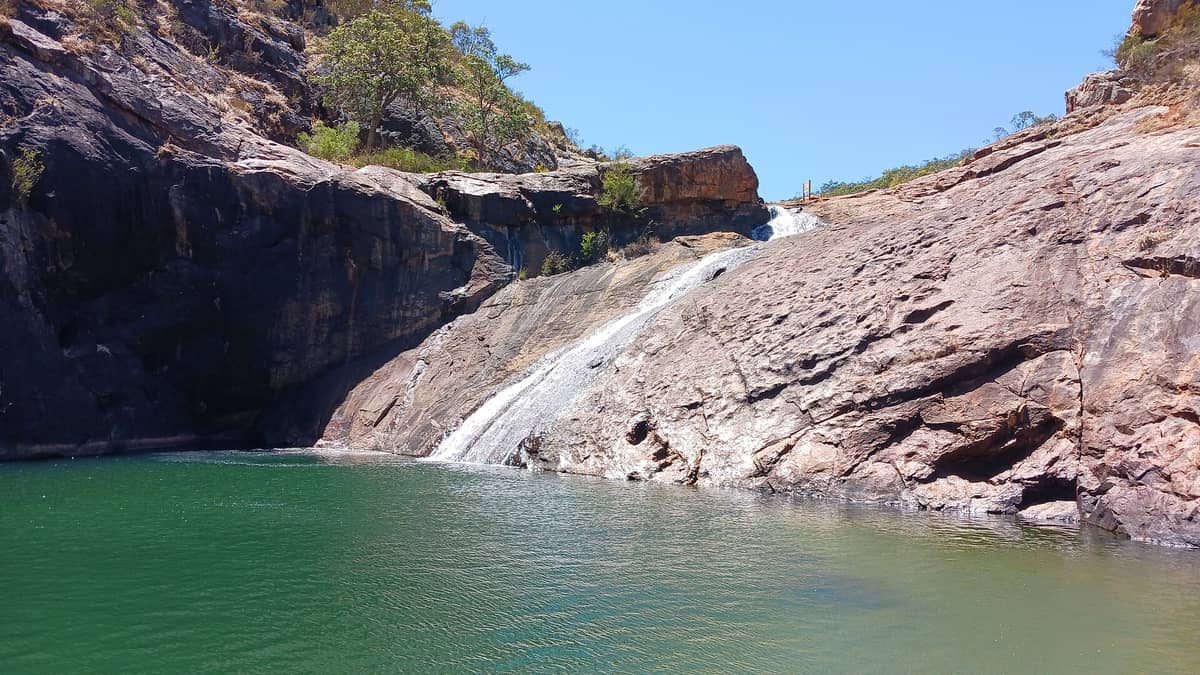
What Serpentine Falls Actually Is
Serpentine Falls is a tiered waterfall where Serpentine River drops over a granite shelf into a broad, shallow pool framed by jarrah and marri woodland. The fall itself is modest in height, but the wide cascade and the rock formation beneath it give the place its character. Below the drop, the river widens into a natural swimming hole cool enough to feel genuinely refreshing on a hot Perth summer day.
The park surrounding the falls was proclaimed in 1957, making it one of Western Australia's earlier protected areas. The woodland here is part of the jarrah forest belt that stretches across the Darling Scarp, and it feels noticeably different from the coastal scrubland closer to the city: taller trees, denser canopy, and a cooler microclimate even at the height of summer.
The main car park sits close to the falls, connected by a short gravel trail of about 400 metres return to a viewing platform. That proximity makes this accessible for a wide range of visitors, but it also means the best spots fill up fast on weekends and school holidays.
⚠️ What to skip
Park gates open at 8:30 a.m. and close at 5:00 p.m. On summer weekends and public holidays, the park can reach capacity quickly. The Shire of Serpentine Jarrahdale recommends arriving early and checking current park alerts before you travel.
The Walk and the Water
From the car park, a flat gravel path leads through a corridor of jarrah to the viewing platform, which looks directly across at the falls. The walk takes no more than ten minutes each way, which means almost everyone who makes the drive will see the falls themselves. The platform offers the clearest view of the cascade and is the right spot for photos when you first arrive and the light is still clean.
Below the platform, a rocky scramble leads down to the pool. This is informal access, not a maintained trail, so footwear with grip matters. The rocks can be slippery near the waterline, especially when the falls are running strongly. Once you're at water level, the pool is surprisingly wide and the sound of the falls is considerably louder than it appears from above.
Swimming is the main activity for most visitors. The water is clean and cold, drawn from the Serpentine River catchment upstream. On a 35-degree Perth summer day, that cold water is exactly what makes the trip worthwhile. However, swimming conditions depend entirely on flow: after a dry winter, the falls can reduce to a trickle and the pool becomes shallow and less inviting. Always check recent conditions before planning a dedicated swimming visit.
💡 Local tip
Wear water shoes or old trainers if you plan to swim. The granite shelf is beautiful but rough underfoot, and the approach to the pool involves uneven rock. Sandals provide insufficient grip.
Tickets & tours
Live prices and dates from our booking partner. If you book, we may earn a commission at no extra cost to you.
The Bell Tower chiming experience
From 11 €Instant confirmationFree cancellationPinnacles and Swan Valley Full-day Guided Tour
From 201 €Instant confirmationFree cancellationPerth and Fremantle Guided Tour and Swan River Cruise
From 110 €Instant confirmationFree cancellationPerth and Fremantle Tour in German with Hotel Pickup
From 84 €Instant confirmationFree cancellation
How the Experience Changes by Time of Day
Early morning arrivals, between 8:30 and 9:30 a.m., get the falls almost to themselves. The light at that hour falls softly through the jarrah canopy, the air carries a eucalyptus sharpness, and the sound of the water is uninterrupted by crowd noise. Photographers working with a tripod and a slow shutter speed will find these conditions ideal for capturing silky water movement.
By 11 a.m. on a summer weekend, the park may be crowded and could have reached capacity. and the pool area is crowded with families. The energy shifts: children on the rocks, towels spread across every flat surface, the smell of sunscreen mixing with eucalyptus. It becomes a lively, social scene rather than a quiet nature visit. Neither version is wrong, but they are very different experiences.
Weekday visits in spring or early autumn hit a middle ground: enough water still running from winter rains, temperatures warm enough to swim, and crowds thin enough to claim a quiet section of riverbank. If your schedule allows flexibility, a Tuesday or Wednesday morning in October is close to optimal.
Seasonal Considerations: When the Falls Are Worth the Drive
Perth's Mediterranean climate means rain falls almost exclusively between May and September. The falls are at their most dramatic in winter and spring, when the river runs full and the cascade is wide and powerful. By December, flow drops significantly, and by late summer the falls can be reduced to little more than a seep over the granite.
October and November tend to offer the best combination of conditions: water still flowing from winter rains, temperatures warm enough for a comfortable swim, and the jarrah woodland looking green rather than dry and stressed. Spring wildflowers also appear on the hillsides around the park during this window, which adds something to the broader drive through the Darling Scarp.
If you're visiting in mid-summer specifically for the swimming hole, check recent flow reports through the Parks WA website or social media channels before committing to the drive. For more context on seasonal timing across the region, thebest time to visit Perth guide covers how Perth's rainfall pattern affects outdoor attractions throughout the year.
Picnic Area and Facilities
The park has dedicated picnic tables and barbecues near the car park, which makes this a logical spot for a half-day outing that includes lunch. The facilities are maintained by the park authority, and on busy weekends the barbecue stations see heavy use. Arriving early secures a table; arriving after midday on a public holiday may mean waiting.
Toilets are available at the car park. There is no food or drink vendor within the park, so bring everything you need. Water should be carried regardless of season: the trail is short, but the car park area gets full sun, and the drive back to the nearest town takes time.
The Shire lists car parking as an available facility, but does not confirm step-free access to the falls or pool area. The 400 m gravel path to the viewing platform is relatively flat, but verify current accessibility conditions with Parks WA before visiting if this is a key requirement.
Getting There and the Drive
Serpentine Falls is not served by public transport. A car is the only practical way to reach the park. From Perth CBD, the drive takes roughly 50 to 60 minutes depending on traffic: south on Kwinana Freeway, then via Mundijong Road to South Western Highway, continuing south to Falls Road and east to the park entrance. to the park entrance. The last stretch of Falls Road is sealed and straightforward; no four-wheel drive is required.
The drive south from Perth through the Darling Scarp is pleasant in its own right, particularly in spring. It passes through terrain quite different from the flat coastal strip, with the scarp rising quickly from the Swan Coastal Plain. If you're building a broader day trip, the area around theJohn Forrest National Park to the north offers additional walking trails through similar jarrah-marri woodland and is often paired with a Serpentine visit on longer Perth day trips.
ℹ️ Good to know
A national park entry fee applies at the gate. Parks WA offers a Holiday Pass and an Annual Pass, which can be cost-effective if you plan to visit multiple national parks during your trip. Check current pricing at parks.dpaw.wa.gov.au before visiting, as fees are subject to change.
Photography at Serpentine Falls
The falls photograph best in diffused light: an overcast morning in winter or spring, or the early hour just after gates open in summer. Direct midday sun bleaches the granite white and creates harsh contrast between the bright rock and the shadowed water. A polarising filter helps cut glare from the pool surface and brings out the olive and amber tones of the granite.
For long-exposure shots, the viewing platform provides a stable position above the cascade. The surrounding woodland also rewards wide-angle compositions: the jarrah canopy, the textured bark, and the occasional Western Grey Kangaroo spotted in clearings near the car park all add context to the location's character.
Who Should Skip This
Visitors without a car cannot reach Serpentine Falls without booking a tour. If you're relying entirely on public transport, Perth has other nature options closer to the city:Bold Park and Kings Park Botanic Garden are both accessible by Transperth services and offer genuine bushland experiences without a car.
Anyone visiting in late summer (February to March) hoping specifically for an impressive waterfall may be disappointed. The falls can run very low in dry years, and the pool can shrink considerably. The scenery remains pleasant, but the main attraction loses impact.
Finally, if you're looking for extended hiking rather than a short walk and a swim, Serpentine National Park has limited trail options compared to the Perth Hills more broadly. ThePerth hiking guide covers longer routes in the region, including trails in the Darling Range that offer more substantial walking than the falls circuit.
Insider Tips
- Arrive at gate opening (8:30 a.m.) on summer weekends. Arrive near gate opening (8:30 a.m.) on summer weekends. The park can reach capacity quickly on busy days.
- Check the Parks WA website for current fire weather and park alerts before you travel. During high fire danger periods, parks in this region may close with short notice.
- The rocks immediately below the falls are slippery with algae where water mists constantly. Approach the water's edge slowly and test footing before committing weight to any step.
- Bring cash or confirm your payment method before arrival. Entry fee payment arrangements at national park gates can vary; having cash avoids complications.
- If the pool looks crowded, walk a short distance downstream along the riverbank. The water continues through shaded sections with flat rocks for sitting, often completely uncrowded even when the main pool is full.
Who Is Serpentine Falls For?
- Families with young children who want a manageable nature outing with swimming and a picnic
- Perth locals looking for a half-day escape from the coast in spring or early summer
- Nature photographers seeking jarrah woodland and moving water in soft morning light
- Travellers on a Perth itinerary who want at least one national park experience without a full day commitment
- Couples wanting a quieter outdoor alternative to the city's beaches
Nearby Attractions
Combine your visit with:
- AQWA – The Aquarium of Western Australia
AQWA – The Aquarium of Western Australia at Hillarys Boat Harbour is the state's largest aquarium, built around a 98-metre underwater tunnel that replicates five distinct West Australian marine zones. It draws families, ocean enthusiasts, and travellers curious about the marine life that makes this coastline one of the most biodiverse in the Southern Hemisphere.
- Bold Park
Bold Park is a 437-hectare A-class nature reserve on Whadjuk Noongar Country, protecting some of the last intact coastal heath near central Perth. Free to enter and open daily, it offers walking trails, a panoramic hilltop lookout, and some of the richest concentrations of native wildflowers in the metropolitan area.
- City Beach
City Beach is a well-maintained stretch of Indian Ocean coastline about 12 kilometres from Perth's city centre. With patrolled swimming, solid amenities, and genuine surf, it draws a wide range of visitors without the commercial noise of some of Perth's busier coastal strips.
- Crown Perth
Crown Perth is Western Australia's largest integrated entertainment complex, sitting on the south bank of the Swan River in Burswood. From a 24-hour casino and three hotels to dozens of restaurants, bars and live event venues, it covers an enormous amount of ground — and rewards some planning before you arrive.
Planning a trip? Discover personalized activities with the Nomado app.