Sa Talaia: Climbing Ibiza's Highest Peak
Sa Talaia (Sa Talaiassa) rises 475 metres above the Sant Josep countryside, making it the highest point on the island of Ibiza. A well-marked trail from the village square takes around 75 minutes to climb and rewards with unobstructed views stretching from Formentera across much of the island. Access is free, open year-round, and requires no special equipment beyond decent footwear.
Quick Facts
- Location
- Sant Josep de sa Talaia, southwest Ibiza (approx. 15 km from Ibiza Town)
- Getting There
- Drive or bus to Sant Josep village; trail begins at the church plaza, following the signed Sa Talaia route uphill past the Can Jeroni cultural centre
- Time Needed
- 2.5–3.5 hours round trip (2.4 km each way; ~1h 15min ascent)
- Cost
- Free — no ticket or entrance fee
- Best for
- Hikers, photographers, sunrise seekers, and anyone wanting the widest possible view of Ibiza
What Sa Talaia Actually Is
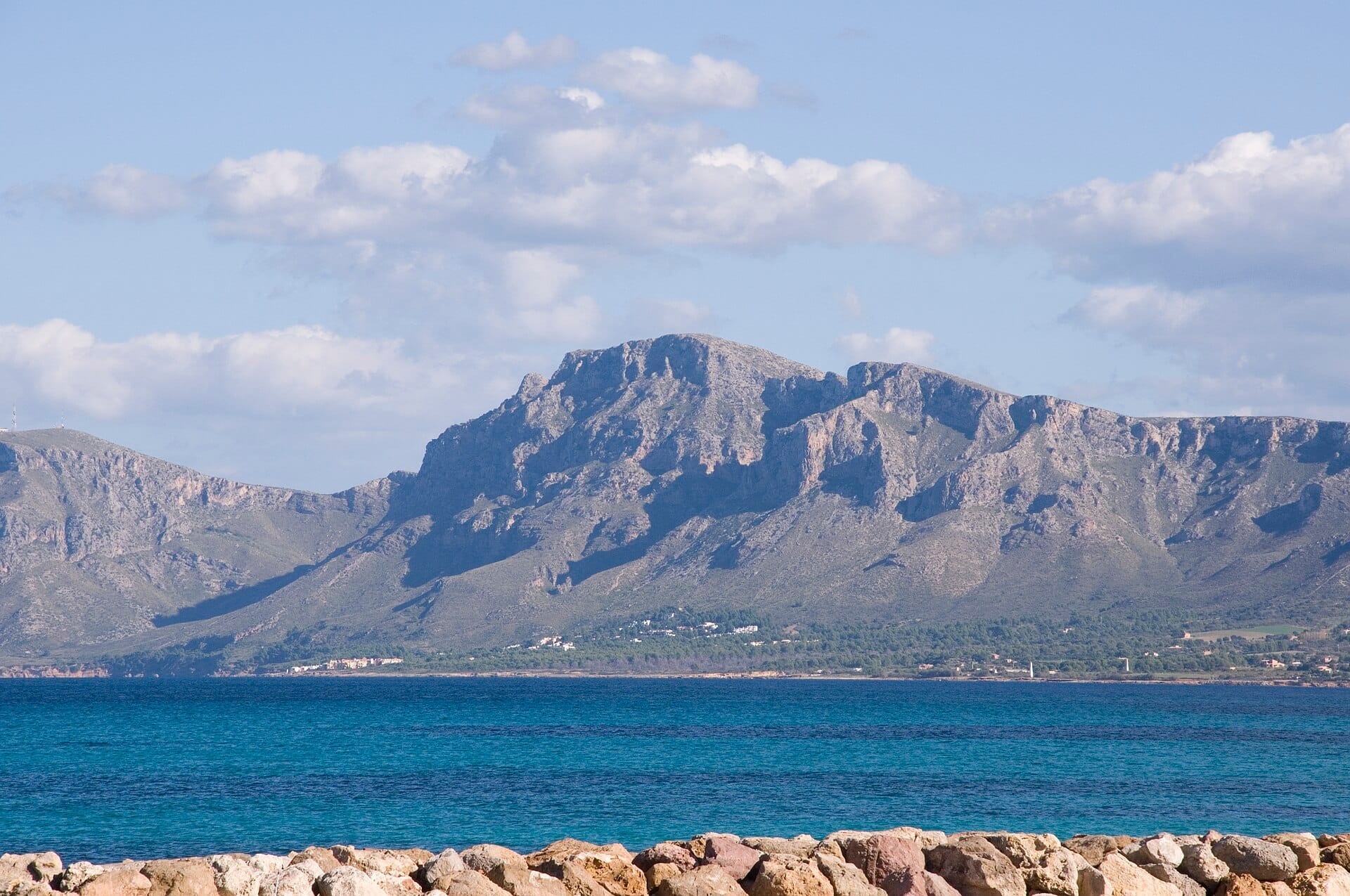
Sa Talaia, also written Sa Talaiassa and formally known as Sa Talaia de Sant Josep, is the highest mountain on Ibiza, reaching 475 metres (around 1,560 feet) above sea level. The municipality of Sant Josep de sa Talaia takes its name directly from this peak, which tells you how central the mountain is to the identity of the southwestern corner of the island.
This is not a developed tourist attraction. There is no cable car, no entrance gate, no café at the top. It is a marked hiking route across pine-covered hillside that ends at a rocky summit with telecommunications masts and views that, on a clear day, are genuinely extraordinary. The contrast between what you climb through and what you see from the top is part of the appeal.
Sa Talaia sits within the San José municipality, a part of Ibiza that rewards slower exploration. If you want broader context for the area, the San José area guide covers the surrounding villages, beaches, and countryside worth combining with a summit hike.
The Trail: What to Expect on the Way Up
The official route begins at the plaza in front of the whitewashed church in Sant Josep village. From there, follow Sa Talaia street uphill, passing the Can Jeroni cultural centre on your left. The path is signposted and relatively straightforward to follow, though a quick look at the municipal tourism map before you set off is worth five minutes of your time.
The total trail distance is 2.4 kilometres one way, with the ascent rated as low-to-average difficulty by the Ajuntament de Sant Josep. The official estimate for the climb is around 1 hour 15 minutes at a comfortable pace. The descent is quicker but demands more attention on loose stones.
The lower section passes through terraced farmland and scrub, smelling of wild rosemary and dry earth for most of the year. Higher up, Aleppo pines provide intermittent shade and the path narrows to a single-file track between rock faces. The last stretch before the summit opens up suddenly, and you are hit with wind and light in roughly equal measure.
💡 Local tip
Wear proper hiking or trail shoes. The upper section involves uneven stone, and regular trainers or sandals make it noticeably harder. Bring at least one litre of water per person — there is nothing available on the mountain.
The path is not wheelchair accessible and is unsuitable for pushchairs. Those with significant mobility limitations will find the upper section particularly challenging due to the rocky, uneven surface. Children who are comfortable walking for 90 minutes without breaks can manage it, though you should account for a slower pace and more frequent rest stops.
Tickets & tours
Hand-picked options from our booking partner. Prices are indicative; availability and final rates are confirmed when you complete your booking.
Sunset boat tour with tapas, open bar and water sports in Ibiza
From 70 €Instant confirmationFree cancellationEscape Tour self-guided, interactive city challenge in Ibiza
From 30 €Instant confirmationPrivate Sunset Cruise on a Maritime Classic in Ibiza
From 750 €Instant confirmationFree cancellationIbiza to Formentera boat trip with open bar and water sports
From 69 €Instant confirmationFree cancellation
The View from the Top
The summit view is the reason to come. At 475 metres, Sa Talaia is high enough to see a vast sweep of the island spread below in a single glance: the flat saltpans of Ses Salines to the southeast, the clustered white buildings of Ibiza Town and its harbour, the sharp silhouette of Es Vedrà rising from the sea to the west, and on clear days, the low outline of Formentera to the south.
The view toward Es Vedrà is particularly striking from up here, giving you a sense of scale that is impossible to appreciate at sea level. If the island's most famous rock has already caught your attention, the Es Vedrà guide explains what makes it significant and how to get close to it.
The telecommunications infrastructure at the summit is unavoidable and does reduce the sense of wilderness slightly. Two large mast structures occupy the highest point. They do not block the panorama, but they are part of the summit composition in any photograph. Work around them by moving to the rocky edges of the summit plateau, where the foreground drops away cleanly.
Wind at the top can be strong even when conditions feel calm lower down. In spring and autumn especially, bring a light layer regardless of the temperature at the trailhead. On gusty days, the summit ridge is genuinely exposed.
Best Time to Visit: Light, Crowds, and Season
Early morning is the most rewarding time to climb Sa Talaia. Starting from the village plaza around 7am in summer puts you at the summit before the heat builds and before the handful of other hikers who attempt it on the same day. The light from the east is soft and warm at that hour, and the air is clear enough to see Formentera with little haze.
Midday ascents in July and August are genuinely uncomfortable. The upper section of the trail has limited shade, and temperatures on exposed rock can feel significantly higher than the ambient air temperature. If you are visiting during peak summer and cannot manage an early start, aim for late afternoon instead, keeping in mind you will want to be off the mountain before dark.
⚠️ What to skip
During summer, fire risk restrictions may temporarily close hiking paths across the Balearic Islands. Check with the Sant Josep municipal office or local news before heading out between June and September, particularly during dry or windy periods.
May, June, and September are the optimal months for this hike: temperatures are manageable, the island is green from spring rain or not yet completely parched, and trail crowds are minimal. For a broader look at how the island's calendar shapes any visit, the best time to visit Ibiza guide offers a month-by-month breakdown.
Winter hiking on Sa Talaia is possible and occasionally spectacular, particularly after rainfall when the air is washed clear and the visibility extends further than in summer. The trail can be slippery after rain, so footwear choice matters even more in the colder months. Expect the summit to be cold and windy from December through February.
Getting to Sant Josep and the Trailhead
Sant Josep de sa Talaia is around 15 kilometres from Ibiza Town, accessible by car in roughly 20 minutes via the PM-803 road. The village has parking near the church plaza, which is also the trailhead. Parking fills up on weekend mornings in summer, so arriving early solves two problems at once.
Public buses connect Ibiza Town with Sant Antoni de Portmany and stop at or near Sant Josep, though bus frequency and routes vary seasonally. Check the current timetable from the official Balearic Islands transport authority before relying on this option, particularly for early morning departures. Taxis and ride-hailing services operating on the island can also reach the village directly.
If you are planning to drive across the island more broadly during your stay, the guide to getting around Ibiza covers the practical realities of roads, car hire, and local transport.
Photography and Practical Notes
For photography, the blue hour before sunrise and the golden hour immediately after produce the most usable light. The eastern orientation of the view from the summit means that dawn light falls directly on Ibiza Town and the saltpans, creating warm tones and long shadows across the landscape below. Sunset photography from Sa Talaia is less dramatic because you are looking west into the light source rather than with it.
If sunset views are your primary goal, the dedicated vantage points along the western coast are better suited to that purpose. The Ibiza sunsets guide lists the top spots by location and how to reach them.
A wide-angle lens makes the most of the summit panorama, though a standard 24–35mm equivalent captures the view without distortion. The telecommunications masts require careful framing to exclude or minimise, which is easier with a focal length above 50mm if you are focusing on a specific section of the view rather than the full sweep.
ℹ️ Good to know
Sa Talaia is an open natural area with no formal opening hours, no entrance fee, and no on-site services. There are no toilets, no refreshment points, and no staff. Plan accordingly.
Who Should Skip Sa Talaia
If you are looking for a casual stroll with a view at the end, Sa Talaia is not quite that. The 1 hour 15 minute ascent on uneven ground requires more than a passing level of fitness and the right footwear. Visitors who are not comfortable hiking on rocky terrain should consider one of Ibiza's coastal viewpoints instead, which offer significant views with far less physical commitment.
Those visiting Ibiza exclusively for beach and nightlife will find this hike out of character with the rest of their trip. Sa Talaia is a quiet, nature-focused experience with no facilities and no social scene. It suits a different pace entirely. If that sounds like what you need between club nights, it can be the perfect counterpoint. If you are already stretched for time between beaches and evenings out, it is probably not the priority.
For a broader look at how to balance active and leisure options across the island, the Ibiza hiking guide covers other routes that may suit different fitness levels or available time.
Insider Tips
- The trail starts directly from the church plaza in Sant Josep, but if you arrive by car, parking spots on the streets just below the plaza tend to stay free longer than the plaza itself on busy weekend mornings.
- The summit antenna masts are unavoidable in wide shots. Walk 15–20 metres northwest of the highest point onto the rocky ridge and you can find compositions looking southwest toward Es Vedrà that exclude the structures entirely.
- Carry more water than you think you need. The climb back down is warmer than expected in summer because you are moving into sun rather than away from it, and there is nothing on the trail or at the summit to refill from.
- On mornings when cloud sits low over the island, Sa Talaia can rise above it. What looks like a grey overcast day in Sant Antoni or Ibiza Town may turn into a summit experience above cloud level with blue sky overhead — worth checking the forecast specifically for altitude rather than coastal conditions.
- The village of Sant Josep itself has a handful of good cafés near the church. A coffee and breakfast before the climb, and a cold drink when you return, turns the outing into a more complete half-day without adding much time or cost.
Who Is Sa Talaia For?
- Hikers and active travellers wanting the definitive bird's-eye perspective on Ibiza's geography
- Photographers chasing the widest panoramic view of the island, particularly at dawn
- Visitors looking for a quiet, cost-free half-day away from beaches and crowds
- Families with older children (8+) who are comfortable with a 2.5–3 hour round-trip hike on uneven ground
- Repeat visitors to Ibiza who have covered the beaches and want to see the island from a completely different angle
Nearby Attractions
Other things to see while in San José (Sant Josep de sa Talaia):
- Cala d'Hort
Cala d'Hort is a compact beach on Ibiza's southwest coast, in a formerly protected natural area and facing the sheer, mythologised rock of Es Vedrà. The scenery is unlike anywhere else on the island, but getting here takes effort, and the limited parking fills fast in summer.
- Cala Jondal
Cala Jondal is a sheltered south-coast bay in Sant Josep de sa Talaia, known for its remarkably clear turquoise water, white pebble shore, and high-end beach clubs. Access is free, but the scene here leans decidedly upscale. It rewards visitors who arrive early and leave before the midday sun turns the stones underfoot into a barefoot obstacle course.
- Cala Tarida
Cala Tarida is a large cove on Ibiza's western coast, stretching roughly 900 metres of fine white sand in the municipality of Sant Josep de sa Talaia. Calm, clear water and reliable afternoon light make it one of the most rewarding beaches on the island for a full day out.
- Cala Vadella
Cala Vadella is a 200-metre arc of fine white sand on Ibiza's southwest coast, tucked inside a deep natural inlet that keeps the water calm and the atmosphere unhurried. It currently holds a Blue Flag rating and is one of the few beaches on the island genuinely suited to families, swimmers, and anyone who prefers scenery over scene.