Porvoo Old Town: Finland's Most Photogenic Medieval Quarter
Vanha Porvoo (Old Porvoo) is a rare example of a near-intact Finnish medieval town centre, with cobblestone lanes, ochre-painted 18th-century wooden houses, and a riverside setting that has changed little in centuries. Entry to the public streets and squares is free, and the town sits just 50 km east of Helsinki, making it the most popular day trip from the Finnish capital.
Quick Facts
- Location
- Vanha Porvoo, 06100 Porvoo, Finland — approx. 50 km east of Helsinki
- Getting There
- Bus from Helsinki city centre (approx. 1 hr) or seasonal river cruise from Market Square; no direct train
- Time Needed
- 3–5 hours for the Old Town; pair with lunch to fill a full day
- Cost
- Free to enter the historic district; individual museums and cafés charge separately
- Best for
- History lovers, architecture, photography, leisurely day trips, Scandinavian craft shopping
- Official website
- www.visitporvoo.fi/en/sights
What Porvoo Old Town Actually Is
Porvoo Old Town, known in Finnish as Vanha Porvoo and in Swedish as Gamla Borgå, is the medieval historic core of Porvoo city. It is not a reconstructed open-air museum or a theme park version of the past. It is a living neighbourhood where the streets are still cobblestone, the wooden buildings still carry their original muted reds, yellows, and greys, and the church on the hill still sits above the roofline as it has for centuries.
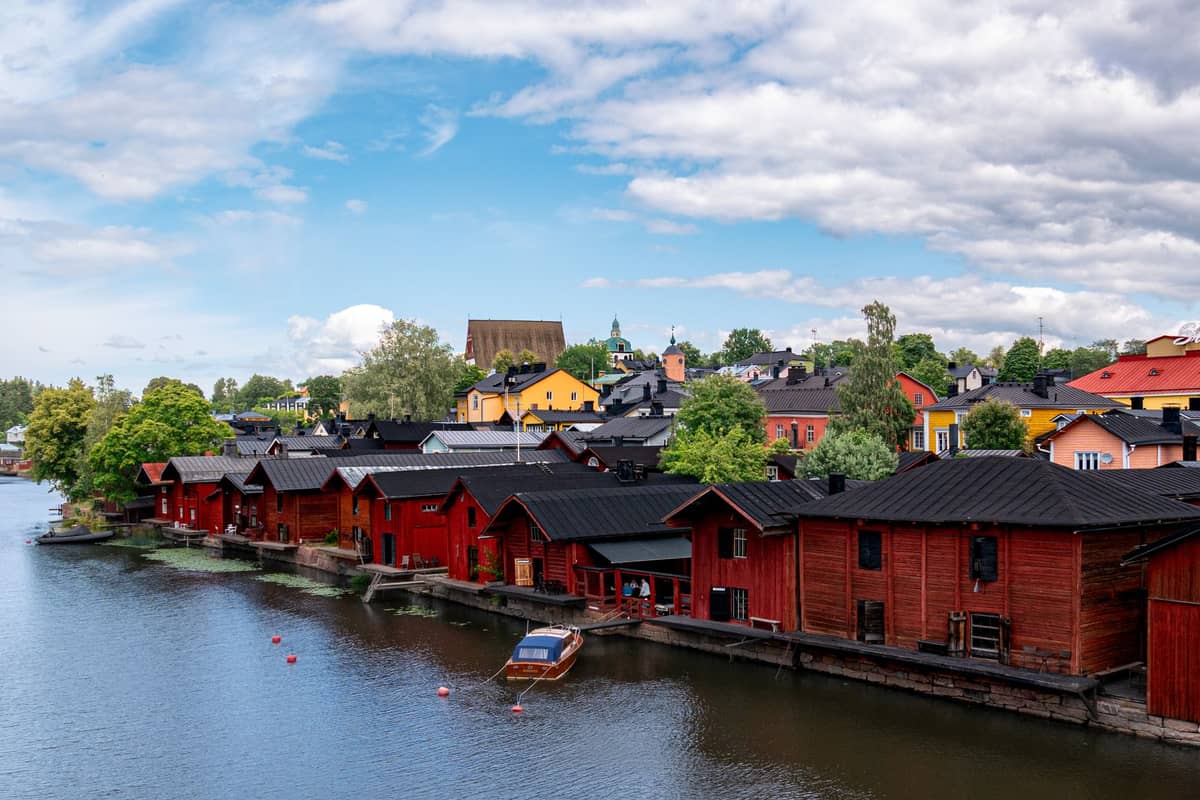
The district centres around Raatihuoneentori, the old Town Hall Square, and spreads down to the riverbank where a row of red riverside storehouses has become one of the most recognisable images in all of Finnish tourism. Those red warehouses along the riverbank near Jokikatu are worth seeing in person, but they represent only one corner of a much larger and more rewarding area to explore.
The buildings in the Old Town date predominantly from the 1700s, though the town itself has medieval origins. Unlike many European old towns that were heavily rebuilt or restored in the 20th century, Vanha Porvoo retained much of its original wooden architecture through a combination of geography and circumstance. For context on how this fits into Helsinki's broader day-trip landscape, see the day trips from Helsinki guide.
ℹ️ Good to know
The Old Town streets and public squares are free to enter at any time. There is no gate, ticket booth, or designated entry point. You simply walk in from any direction.
The Walk Through Town: What You Will Actually See
Most visitors arrive by bus at Porvoo's main bus terminal and walk roughly ten minutes downhill toward the river. The transition from the modern town to the Old Town is abrupt and immediately obvious: the road surface changes underfoot, the buildings drop to two storeys, and the noise level drops with them.
The first main landmark is the Porvoo Cathedral, a grey stone church with a distinctive red brick tower that crowns the ridge above the Old Town. The current building dates to the 15th century with later modifications, and the interior is plain and Lutheran in character. The cathedral is most striking from below, viewed from the riverbank or the bridge, where it frames the rooftops of the Old Town in a layered composition.
From the cathedral, narrow lanes lead downhill through a dense grid of wooden houses. Streets like Välikatu and the lanes surrounding Raatihuoneentori reward slow walking. The wooden facades are painted in soft heritage tones, some worn and textured, others freshly maintained. Ground floors often house small shops selling Finnish ceramics, chocolates, textiles, and handmade jewellery. The smell of freshly baked goods drifts out from several small bakeries, particularly in the morning hours.
The riverside storehouses on Jokikatu are best viewed from the opposite bank, reached by a short footbridge. These ochre-red wooden warehouse buildings once served the town's trading economy. They are now primarily used for storage and are not open to visitors, but the exterior view across the river, with the cathedral visible above and small boats moored nearby, is the classic Porvoo image. Morning light, especially in spring and summer, hits this scene from the east and makes it particularly good for photography.
Tickets & tours
Hand-picked options from our booking partner. Prices are indicative; availability and final rates are confirmed when you complete your booking.
The best of Porvoo walking tour
From 564 €Instant confirmationFree cancellationHelsinki Beautiful Canal Route, archipelago cruise
From 26 €Instant confirmationFree cancellationHelsinki Panorama Sightseeing Bus Tour With Audio Guide
From 35 €Instant confirmationFree cancellationHelsinki Pasila Street art district tour with a local
From 99 €Instant confirmationFree cancellation
How the Experience Changes by Time of Day
Arriving before 10:00 means you will have the cobblestone lanes largely to yourself. The shops are closed or just opening, the cafés are setting out their first pastries, and the light in summer is already strong enough for photography without the midday flatness. This is the quietest and most atmospheric window.
Between roughly 11:00 and 14:00 on weekends and throughout July, the Old Town fills steadily with day-trippers, particularly large tour groups that arrive by bus and congregate around the riverside. The Town Hall Square can feel genuinely crowded during this peak window. If you want to browse the craft shops without being jostled, arrive early or plan to stay into the late afternoon.
By 15:00 to 16:00 on weekdays, much of the midday crowd has left, shops remain open, and the town settles into a relaxed rhythm. Cafés that were full at lunch now have tables free. This late-afternoon period is arguably the best combination of access and atmosphere. In autumn, the low sun turns the wooden facades a deep warm gold around 16:00 to 17:00, which is one of the best natural lighting effects the town offers.
💡 Local tip
If you are visiting on a summer weekend, aim to arrive on the first morning bus from Helsinki rather than the midday service. The difference in crowd levels between 9:30 and 12:00 is significant.
Historical and Cultural Context
Porvoo is one of the oldest towns in Finland, and its Old Town reflects several centuries of commercial and civic history. The medieval street plan remains largely intact, and the wooden building stock dates predominantly to the 18th century, following earlier fires that destroyed parts of the town as was common across Nordic wooden-built settlements.
The town holds particular significance in Finnish political history. In 1809, the Diet of Porvoo was convened here, at which point Finland transitioned from Swedish to Russian rule, gaining the status of an autonomous Grand Duchy under the Russian Emperor. That event is part of why Porvoo appears in Finnish history textbooks, and the Porvoo Museum at Välikatu 11 covers this period in detail.
Porvoo is also a bilingual town. Finnish and Swedish are both used in street signage and official contexts, reflecting the historically significant Swedish-speaking community in this part of southern Finland. The Swedish name Gamla Borgå is not merely ceremonial: a meaningful proportion of the town's residents are Swedish-speaking Finns.
The town has long attracted Finnish artists and writers, partly because of its visual character and partly because of its manageable distance from Helsinki. It sits within a broader southern coastal landscape of islands, rivers, and archipelago terrain. Travellers interested in this wider coastal context may find the Helsinki islands guide useful for understanding the geography of the region.
Practical Walkthrough: Getting There and Around
There is no direct train service between Helsinki and Porvoo. The most straightforward option is the bus from Helsinki's Kamppi bus terminal, operated by Pohjolan Liikenne and other carriers. Journey time is approximately one hour depending on traffic, and buses run regularly throughout the day. Verify current timetables and fares on the official operator or journey planner websites before travel, as schedules and prices change seasonally.
In summer, a seasonal river cruise operates between Helsinki's Market Square and Porvoo. The cruise takes approximately three hours one way and is more of an experience in itself than a practical transport option. It works well as a one-way journey: cruise to Porvoo in the morning, explore the Old Town, then return by bus in the afternoon.
Once in Porvoo, the Old Town is entirely walkable. Distances are short: from the bus terminal to the riverside storehouses is under 15 minutes on foot. The only real navigation challenge is the cobblestone surface, which becomes slippery in wet or icy conditions. Flat, rubber-soled shoes are the practical choice over anything with a narrow heel.
⚠️ What to skip
Many of the cobblestone streets and historic museum buildings in the Old Town are challenging for wheelchairs or those with significant mobility limitations, and the Porvoo Museum notes that its buildings have no elevator and have limited accessibility. Visitors with mobility needs should check the official accessibility information at visitporvoo.fi before planning their visit.
For travellers considering this as part of a broader Helsinki itinerary, it pairs naturally with a morning in Helsinki's city centre before an afternoon departure. The 2-day Helsinki itinerary includes suggestions for how to sequence a Porvoo day trip alongside central Helsinki attractions.
What to Eat and Where to Stop
Porvoo has a well-established reputation for quality cafés and artisan food shops. The most famous local product is the Brunberg chocolate, produced in Porvoo since 1871. The Brunberg shop in the Old Town sells boxed chocolates, individual pieces, and seasonal varieties. Whether or not you are a chocolate enthusiast, it is worth a brief visit for the sheer density of Finnish confectionery in one place.
Several traditional Finnish-style cafés occupy the ground floors of Old Town wooden houses. These tend to serve open-faced sandwiches, cinnamon buns, and coffee in straightforward settings. Prices are broadly in line with Helsinki café standards. The quality varies, but the combination of old wooden interiors and a window view onto a cobblestone lane is consistently pleasant regardless of which café you choose.
For a sit-down lunch, the riverside area around Jokikatu has several restaurant options that lean toward Finnish and Scandinavian cooking. Booking ahead on summer weekends is sensible if you have a specific restaurant in mind, as the limited seating in these historic buildings fills quickly.
Who Should Reconsider the Trip
Porvoo Old Town is frequently presented in Helsinki travel content as an essential excursion, but that framing can mislead certain travellers. If your interest in Helsinki runs primarily toward contemporary design, modern architecture, or urban food culture, the Old Town may feel like a detour from what actually interests you.
The Old Town is also a small area. At a brisk walking pace, you can cover the core in under an hour. Visitors expecting the scale and complexity of a major European old town will find it pleasantly compact but not extensive. If your time in Helsinki is limited to two or three days, you might get more value from exploring central Helsinki more deeply. Attractions like Suomenlinna Fortress offer a similarly historic half-day experience without leaving Helsinki, and the Seurasaari Open-Air Museum covers traditional Finnish wooden architecture in a more curated format.
Visitors with significant mobility limitations will find the experience genuinely restricted. The cobblestone surfaces are uneven and become hazardous when wet. Museum interiors are not accessible. This is not an attraction where accessibility has been retrofitted; the historic fabric is the product, and the product is physically demanding to navigate.
Insider Tips
- The view of the red storehouses is photographed from both banks, but the less obvious angle is from the bridge itself, looking upstream at dawn in summer when the water is calm and the light comes in low from the east.
- Porvoo's Old Town shops are mostly closed on Mondays, even in summer. If you are planning a shopping-focused visit for ceramics, textiles, or local craft goods, Tuesday through Sunday is the practical window.
- The bus back to Helsinki can fill up quickly on summer Sunday afternoons. If you are travelling without a fixed return ticket, check return departure times before you arrive so you are not stranded waiting for a later service.
- Walking uphill to the cathedral and then descending through the back lanes toward the river, rather than the more obvious reverse route, gives you the downhill gradient while carrying anything you have bought, and the views open up gradually in a more rewarding sequence.
- The Porvoo Museum at Välikatu 11 covers the town's history including the 1809 Diet of Porvoo, which is one of the most significant political events in Finnish history. It is small but well-presented and worth an hour if the historical context interests you.
Who Is Porvoo Old Town For?
- Travellers with an interest in Nordic history and the transition period of Finnish autonomy under Russia
- Architecture and photography enthusiasts drawn to intact 18th-century wooden townscapes
- Those wanting a slower-paced complement to urban Helsinki, particularly on a second or third day
- Families looking for an easy half-day excursion with a manageable walking distance and good café options
- Visitors who want to experience a Finnish town outside the capital without a lengthy journey
Nearby Attractions
Combine your visit with:
- Aurinkolahti Beach
Aurinkolahti Beach is Helsinki's most expansive public sandy beach, located in the Vuosaari district in eastern Helsinki. Free to enter year-round, it draws swimmers and sunbathers in summer and winter walkers when the ice rolls in. A café, outdoor gym, SUP rentals, and lifeguard supervision from June through early August make it the city's most complete beach destination.
- Nuuksio National Park
Nuuksio National Park sits just 30 kilometres west of Helsinki in Espoo, offering 53 square kilometres of old-growth boreal forest, lichen-draped granite outcrops, and clear glacial lakes. Entry is free, trails range from flat boardwalks to demanding ridge hikes, and the park is genuinely accessible by public transport. It is one of the few places in Europe where you can step off a city commuter train and be surrounded by undisturbed nature within the hour.
- Puu-Käpylä Wooden House Area
Puu-Käpylä is a protected residential district in northern Helsinki built in the early 1920s to house the city's working class. Its low-rise wooden villas, colorful painted facades, and shared garden courtyards make it one of the most visually distinctive neighborhoods in Finland. Entry is free, and the streets are open at all hours.