Nuuksio National Park: Helsinki's Ancient Forest Escape
Nuuksio National Park sits just 30 kilometres west of Helsinki in Espoo, offering 53 square kilometres of old-growth boreal forest, lichen-draped granite outcrops, and clear glacial lakes. Entry is free, trails range from flat boardwalks to demanding ridge hikes, and the park is genuinely accessible by public transport. It is one of the few places in Europe where you can step off a city commuter train and be surrounded by undisturbed nature within the hour.
Quick Facts
- Location
- Espoo, Uusimaa — approx. 30 km west of Helsinki city centre
- Getting There
- Commuter train (E, L, U, X or Y line) to Espoo Station, then bus 245 or 245A to Haltia stop on Nuuksiontie
- Time Needed
- 3–6 hours for a day trip; full day for longer trail combinations
- Cost
- Free entry. Paid parking at Haukkalampi; check current on-site rates. Public transport ticket required.
- Best for
- Hikers, families, wildlife watchers, anyone needing quiet forest time
- Official website
- www.nationalparks.fi/nuuksionp
What Nuuksio National Park Actually Is
Nuuksio National Park (Finnish: Nuuksion kansallispuisto) was established in 1994 and is managed by Metsähallitus, Parks and Wildlife Finland. It covers about 50 square kilometres of the Uusimaa region's characteristic southern Finnish landscape: exposed bedrock smoothed by glaciers, shallow boggy depressions, and dense stands of spruce and pine broken by roughly 80 small lakes and ponds. The park turned 30 years old in 2024, a milestone that underlines how deliberately it was created as a green buffer for one of Europe's fastest-growing capital regions.
The park does not have dramatic vertical relief or headline-grabbing scenery in the conventional sense. What it offers instead is an almost complete shift in sensory register from the city. The forest floor is soft with decades of accumulated moss. The lakes reflect sky and treeline without a building in sight. In the right season, the silence is interrupted only by the call of a common crane or the knock of a black woodpecker on a dead spruce trunk. For visitors coming from Helsinki, that contrast alone justifies the journey.
💡 Local tip
The park itself is open 24 hours a day, every day of the year, with no entry gates and no admission fee for access to the nature area. You do not need to book anything to visit.
Getting There: Public Transport and Driving
The most practical public transport route from Helsinki runs on commuter rail lines E, U, or Y to Espoo Station (Espoon keskus), followed by a transfer to bus 245 (operating in autumn through spring) or bus 245A (summer schedule) towards Haltia and Kattila. The bus stops directly at the Finnish Nature Centre Haltia on Nuuksiontie, the main visitor hub at the park's eastern edge. Total journey time from Helsinki city centre is roughly 45 to 60 minutes depending on train frequency and connections. Standard HSL zone tickets cover the entire journey; check current fares directly with HSL before travel, as prices change.
If you are driving, the main access points include Haukkalampi (Haukkalammentie 32, Espoo), which is the most popular trailhead, and Kattila (Kattilantie 424, Vihti) on the park's western side. Parking at Haukkalampi costs approximately €5 per day, though you should verify the current fee on-site. For a complete overview of how to combine this trip with other Espoo-area destinations, the day trips from Helsinki guide covers Nuuksio alongside other options.
⚠️ What to skip
Bus 245A operates on the summer schedule only. If you visit between September and May, confirm the current bus 245 schedule with HSL before making plans, as rural bus frequencies can be limited.
Tickets & tours
Hand-picked options from our booking partner. Prices are indicative; availability and final rates are confirmed when you complete your booking.
Helsinki Beautiful Canal Route, archipelago cruise
From 26 €Instant confirmationFree cancellationHelsinki Panorama Sightseeing Bus Tour With Audio Guide
From 35 €Instant confirmationFree cancellationHelsinki Pasila Street art district tour with a local
From 99 €Instant confirmationFree cancellationSurvival suit floating experience
From 125 €Instant confirmationFree cancellation
The Landscape: What You Will Actually See
The defining visual quality of Nuuksio is its texture. The Scandinavian bedrock here — granite and gneiss shaped by the last ice age — pushes through the forest floor in grey, rounded humps draped with reindeer lichen and patches of heather. In wet areas between rock ridges, the ground turns to sphagnum bog, coloured rust-orange in autumn and vivid lime-green after spring snowmelt. The trees are predominantly Norway spruce and Scots pine, with silver birch colonising cleared and disturbed ground. In the older stands, dead standing trunks support a food chain that includes several species of woodpecker, making the park a genuine destination for birdwatchers.
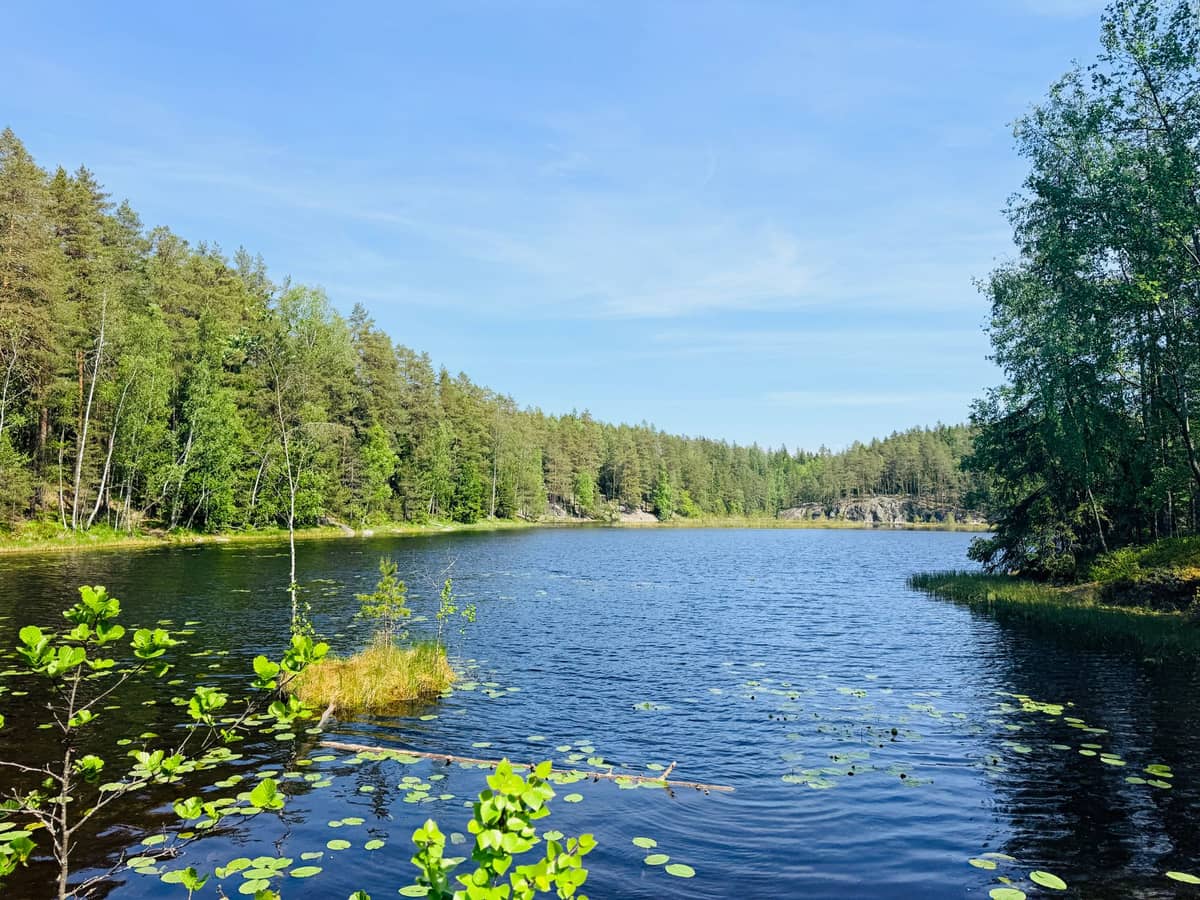
The lakes are the park's most photographed feature. Lake Haukkalampi, directly accessible from the main trailhead of the same name, is small and dark-watered, ringed with reeds and forest. It is calm enough to mirror the treeline most mornings. Further into the park, the larger Saarijärvi lake sits at the heart of a network of longer trails and is a common destination for overnight campers using the park's designated fire sites. Swimming is permitted at several marked spots, and the water is genuinely clean.
Trails and How to Structure Your Visit
The park has dozens of kilometres of marked trails, ranging from short accessible loops of under two kilometres to full-day routes exceeding 15 kilometres. Most visitors arriving by public transport start at the Haltia Nature Centre trailhead and follow the Haukkalampi loop, which takes roughly 1.5 to 2 hours at an easy pace and circles the lake through varied terrain including rocky ridges and old-growth spruce. This route is the park's most trafficked and is well maintained throughout the year.
For a longer day, combining the Haukkalampi loop with the trail toward Saarijärvi adds several kilometres and significantly more solitude. The terrain becomes hillier and the paths narrower. Trail signage uses colour coding and numbered waypoints; pick up a free trail map at the Haltia Nature Centre or download it from the Nationalparks.fi website before you leave the city.
Overnight stays are possible at designated lean-to shelters and camping sites. Open fires are only permitted at marked fire sites, and during dry periods Metsähallitus may impose fire bans across the park — check the official website before any visit involving cooking or campfire use.
ℹ️ Good to know
The Finnish principle of Everyman's Right (jokamiehenoikeus) applies in Nuuksio. You can roam freely through the forest, pick berries and mushrooms, and camp for a night or two in unmarked terrain — but fires outside designated sites are prohibited, and you must not disturb wildlife or damage vegetation.
Season by Season: When to Go and What to Expect
Summer, from late June through August, is the most popular window. Temperatures typically reach 18 to 25°C, the days are extremely long, and the park is at its most accessible. Lakes are warm enough to swim in from July. The downside is that Haukkalampi trailhead fills up on sunny weekends: arrive before 10am or after 4pm to avoid the car park queuing and crowded trail openings. Weekdays in July are noticeably quieter than weekends.
Early autumn, September through mid-October, may be the most rewarding time for photography and solitude. The birch canopy turns yellow and the bog cotton catches low-angle light. Temperatures drop to around 5 to 12°C, and the crowds thin significantly. Boots with ankle support are useful as wet leaves make roots and rock surfaces slippery. For more on timing your Helsinki trip around seasonal conditions, see the best time to visit Helsinki guide.
Winter brings snow cover that typically arrives in December and can remain until March or early April. Cross-country ski tracks are maintained on some trail sections when snow depth allows, and snowshoe rental is available near the park. The forest under snow is genuinely striking — the spruce branches accumulate heavy white loads, and animal tracks in the snow (fox, hare, deer) are easy to read. Dress in waterproof layers; temperatures can drop to minus 15°C. Daylight is limited to around 6 hours in midwinter, so morning starts matter.
Spring, from late April through May, offers mud-heavy paths but also the best birdlife of the year: cranes, whooper swans, and warblers return in numbers. The forest floor produces wood anemone and hepatica before the canopy closes. Snow may still be present in shaded gullies in April. Helsinki in late spring is covered in more detail in the Helsinki in summer guide, which covers the transition from May through August.
The Finnish Nature Centre Haltia
The Finnish Nature Centre Haltia at Nuuksiontie 84, Espoo, sits at the edge of the park and serves as the official gateway facility. It houses permanent and temporary exhibitions about Finnish nature and national parks, a cafe, equipment rental (including snowshoes in winter), and staff who can advise on current trail and weather conditions. The building itself is architecturally notable, designed using Finnish timber construction methods and awarded for its environmental credentials. Admission to the exhibitions is priced separately from park entry; check Haltia's website for current hours and ticket costs before visiting, as they vary by season.
Even if you skip the exhibitions, the Haltia building is a useful practical stop: toilets, a warm space to adjust gear, and reliable parking. On cold or wet days, starting here to check conditions and pick up a trail map before heading into the forest is a sensible approach.
Wildlife and Ecology
Nuuksio is one of the most important old-growth forest reserves in southern Finland. The park protects habitats for several species of concern in the region, including the Siberian flying squirrel (Pteromys volans), which is a particular focus of conservation efforts in Uusimaa. The flying squirrel is nocturnal and rarely seen, but its distinctive figure-8 tracks in snow and the gnawed cones left in spruce stands are evidence of its presence.
More commonly encountered wildlife includes roe deer, which are frequently seen at forest edges in the early morning, red squirrels, and a range of waterfowl on the lakes. The black woodpecker is a signature species: its resonant drumming carries far through the quiet forest and is one of the characteristic sounds of the park in late winter and spring when pairs are establishing territories. Several species of orchid flower in the meadow edges and rocky clearings in June.
Practical Details: What to Bring
Year-round, the single most important item to bring is footwear with grip. The exposed granite rocks become extremely slippery when wet, and the bog sections hold water long after rain. Trail running shoes or hiking boots with waterproofing will serve you well in all seasons except deep winter, when insulated waterproof boots are necessary.
- Water and food: there are no shops or vending machines inside the park. Bring enough for your planned duration.
- A downloaded or printed trail map: phone signal is unreliable in parts of the park interior.
- Insect repellent: mosquitoes and horseflies are significant from late June through August, particularly near lake edges and boggy ground.
- Layers: weather in southern Finland changes quickly. A packable waterproof shell is useful even on forecast-clear days.
- A reusable bag: if you plan to pick berries (lingonberries ripen in August, bilberries in July), bring a container.
Nuuksio is entirely free of charge to enter, which makes it a natural fit for budget-focused travel in the Helsinki region. For more cost-free options, the free things to do in Helsinki guide lists complementary activities in and around the city.
Accessibility
The park has designated accessible areas, particularly around the Haukkalampi trailhead, the Kattila area, and at the Haltia Nature Centre. Boardwalk sections near lake shores and at boggy trail segments reduce the barrier for visitors using wheelchairs or prams. The Haltia facility itself is fully accessible. The interior trails, however, involve uneven rock surfaces, tree roots, and significant elevation change on some sections, and are not suitable for most mobility devices. If accessibility is a primary concern, the Haltia grounds and the flat boardwalk section at Haukkalampi offer the most reliable experience.
Insider Tips
- The Haukkalampi trailhead car park fills completely by mid-morning on summer weekends. If you are driving, arrive before 9am or plan for an alternative entry point such as Kattila on the western side, which sees far less traffic.
- If you want near-guaranteed solitude, take the bus to Haltia but then walk deeper into the park toward Saarijärvi rather than following the Haukkalampi loop. The majority of day-trippers stay within 2 kilometres of the trailhead.
- Berry picking transforms the visit in late summer: bilberries (mustikka) are ripe from mid-July, lingonberries (puolukka) from mid-August. Bring a plastic container. Everyman's Right covers picking for personal use at no cost anywhere in the park.
- The park's lean-to shelters can be used for free on a first-come basis. If you want a campfire experience without carrying gear, arriving at a shelter with dry firewood already stacked (which is usually maintained by Metsähallitus) is simpler than many visitors expect.
- Mobile phone coverage drops significantly once you are a few kilometres from the Haltia or Haukkalampi entry points. Download the trail map from Nationalparks.fi before leaving the city, or pick up a printed version at the Haltia centre.
Who Is Nuuksio National Park For?
- Day-trippers from Helsinki wanting undisturbed forest and swimming lakes without a car
- Families with children: the Haukkalampi loop is manageable for children aged 5 and up, with a lake at the end as a reward
- Birdwatchers, particularly in spring (April to May) when migrant species are present
- Budget travellers: free entry, accessible by public transport, and berry-picking replaces the need to buy snacks
- Photographers working in natural light: the low-angle sun of early morning in autumn on moss-covered granite is particularly striking
Nearby Attractions
Combine your visit with:
- Aurinkolahti Beach
Aurinkolahti Beach is Helsinki's most expansive public sandy beach, located in the Vuosaari district in eastern Helsinki. Free to enter year-round, it draws swimmers and sunbathers in summer and winter walkers when the ice rolls in. A café, outdoor gym, SUP rentals, and lifeguard supervision from June through early August make it the city's most complete beach destination.
- Porvoo Old Town
Vanha Porvoo (Old Porvoo) is a rare example of a near-intact Finnish medieval town centre, with cobblestone lanes, ochre-painted 18th-century wooden houses, and a riverside setting that has changed little in centuries. Entry to the public streets and squares is free, and the town sits just 50 km east of Helsinki, making it the most popular day trip from the Finnish capital.
- Puu-Käpylä Wooden House Area
Puu-Käpylä is a protected residential district in northern Helsinki built in the early 1920s to house the city's working class. Its low-rise wooden villas, colorful painted facades, and shared garden courtyards make it one of the most visually distinctive neighborhoods in Finland. Entry is free, and the streets are open at all hours.