Playa Carrasco: Montevideo's Quietest, Most Elegant Beach
Playa Carrasco sits at the eastern edge of Montevideo, where the coastal rambla meets the Arroyo Carrasco stream. Free to enter and open at all hours, it offers a calmer, less crowded alternative to the city's central beaches, backed by one of Montevideo's most distinctive residential neighborhoods.
Quick Facts
- Location
- Ramblas México y Tomás Berreta hasta Arroyo Carrasco, Carrasco, Montevideo
- Getting There
- Several municipal bus lines run along the coastal rambla to Carrasco; the beach is walkable from the bus stops on the rambla
- Time Needed
- 1 to 3 hours, or longer if you combine with a walk through the Carrasco neighborhood
- Cost
- Free. No admission fee, no timed entry, open access at all hours
- Best for
- Families, joggers, couples, and anyone who finds Pocitos too crowded
What Playa Carrasco Actually Is
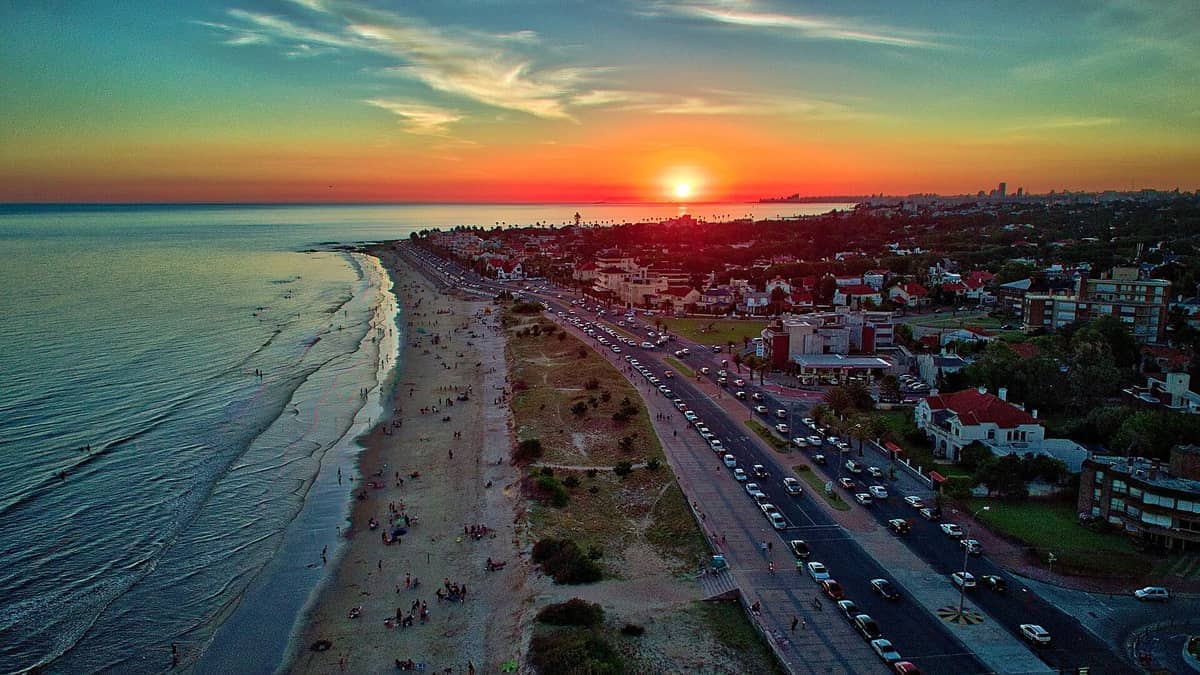
Playa Carrasco is a public beach at the far eastern end of Montevideo's coastal strip, running along the rambla between Rambla México and Rambla Tomás Berreta until it meets the Arroyo Carrasco, the stream that marks the boundary between Montevideo proper and the Canelones department. It sits in the Carrasco neighborhood, historically the city's most upscale residential enclave, characterized by wide tree-lined streets, early 20th-century villas, and a noticeably slower pace than the rest of the city.
The beach is part of what the Montevideo city government groups together as Playas de Carrasco y Miramar. The sand here is light and relatively fine, the water is the same brackish Río de la Plata mix found along all of Montevideo's coast, and the backdrop is low vegetation and the rambla's concrete promenade rather than high-rise towers. That last detail matters: without apartment buildings looming overhead, the beach feels open and genuinely coastal rather than urban.
ℹ️ Good to know
The Río de la Plata is an estuary, not the open ocean. Water color tends toward brownish-gray, and waves are gentle. If you are expecting clear turquoise Atlantic water, this is not that beach — and neither is any other Montevideo beach. Manage expectations and you will appreciate the setting on its own terms.
The Experience by Time of Day
Early mornings at Playa Carrasco belong to joggers and dog walkers. The rambla at that hour is quiet enough that you can hear the water lapping against the sand. The light from the east, coming off the river, tends to be soft and diffuse rather than dramatic, which makes this a good time for photography if you want muted, atmospheric shots rather than sharp contrasts. A few people will be swimming even at 7am in summer.
Midday in December through February brings families, particularly on weekends. Children play in the shallow water while adults set up chairs in the shade near the rambla wall. The beach never gets as packed as Playa Pocitos or Playa Ramírez during peak summer, partly because it is farther from the city center and requires a deliberate trip rather than a spontaneous walk from a central hotel. That distance is essentially the beach's best feature.
Late afternoons in autumn, when the summer crowds have gone, may be the best time of all. Temperatures between March and May sit comfortably in the low twenties Celsius, the light turns golden toward 5pm, and the rambla fills with cyclists and people out for evening walks. The beach itself is nearly empty, and the combination of cool air off the water and warm light makes for a genuinely pleasant hour or two.
Tickets & tours
Live prices and dates from our booking partner. If you book, we may earn a commission at no extra cost to you.
Guided Tour with Wine Tasting Experience at Bouza Winery
From 68 €Instant confirmationFree cancellationAirport to Hotel or Hotel to Airport Transfer in Montevideo
From 47 €Instant confirmationFree cancellationTasting and Lunch at Bodega Pizzorno in Montevideo
From 115 €Instant confirmationFree cancellationPunta del Este full-day guided tour from Montevideo
From 47 €Instant confirmationFree cancellation
The Carrasco Neighborhood: Why the Surroundings Matter
Understanding Playa Carrasco means understanding where it sits. The Carrasco neighborhood developed in the early 20th century as a garden suburb for Montevideo's wealthy families, influenced by European urban planning ideas of the time. The streets away from the rambla are lined with mature trees and detached houses, many in French and Italian eclectic styles. The neighborhood has retained much of that character and remains one of the more expensive areas to live in Montevideo.
Walking ten minutes inland from the beach puts you in a residential district unlike anything near the city's other beaches. There are no souvenir shops and very few tourist-facing businesses. What you will find are local cafés, a few restaurants, and the kind of neighborhood commerce that exists for residents rather than visitors. If you have time, the walk from the beach into the interior streets of Carrasco is worth doing for the architecture alone.
💡 Local tip
The historic Carrasco Hotel, a grand early 20th-century building near the beach, has been restored and repurposed. Even if you are not staying there, the exterior is worth a look as an example of the neighborhood's architectural character.
Practical Walkthrough: Getting There and What to Bring
Playa Carrasco is accessible by public bus along the rambla. Montevideo's bus network covers the coastal route, and several lines connect the Carrasco area with central neighborhoods. Check current routes with the Montevideo municipal transit information before you go, as line numbers and stops are subject to change. The beach itself is at street level along the rambla, with foot access and car access both noted in official listings. Disability access is also documented, making it more inclusive than some sections of the rambla elsewhere in the city. For context on moving around Montevideo more broadly, the guide to getting around Montevideo covers bus network basics.
If you are coming from central Montevideo or Pocitos by car or taxi, the drive along the rambla is scenic and adds context to the full sweep of the coastline. Ride-hailing apps including Uber operate in Montevideo, making the return trip straightforward even if bus timing is uncertain at night.
Bring sunscreen regardless of season, as UV levels along the Río de la Plata can be deceptive on overcast days. In summer, a hat and water are essential. The beach has no permanent commercial infrastructure, so do not count on buying food or drinks at the sand itself. There are a handful of businesses within a short walk along the rambla or on nearby streets. If you want a full beach day with convenience, this is worth planning for in advance.
⚠️ What to skip
Water quality at Montevideo's beaches is monitored by the city government and can fluctuate, particularly after heavy rainfall. Check current water quality advisories on the Intendencia de Montevideo website before swimming, especially in the days following significant rain.
Photography and Sensory Details
The smell at Playa Carrasco is that slightly saline, slightly muddy scent characteristic of estuary beaches rather than ocean ones. It is subtle and not unpleasant, but it is different from what you might expect if you have only experienced Atlantic or Pacific coastal beaches. The sound environment is dominated by wind off the water and the occasional call of seabirds, with traffic noise from the rambla present but not intrusive.
For photography, the rambla wall and the low vegetation behind the beach provide good foreground framing for river-level shots. The absence of high-rises means wide-angle compositions work well here. In summer, the late afternoon light hitting the water from the west produces warm reflective tones. In winter, fog can roll in off the Río de la Plata in the mornings, creating atmospheric low-visibility shots that are genuinely interesting if you are there at the right moment.
Combining Playa Carrasco with Other Stops
Because Carrasco sits at the far eastern edge of Montevideo, most visitors combine a beach visit with a wider exploration of the coast. The full Rambla de Montevideo stretches westward from here along the entire southern coast of the city, and a long walk or bike ride along it connects Playa Carrasco with Playa Pocitos, Playa Ramírez, and eventually the neighborhoods of Parque Rodó and Punta Carretas. That full coastal route gives you a comprehensive picture of how Montevideo relates to its waterfront.
If you are interested in the wider context of Montevideo's beaches and when each one is at its best, the Montevideo beaches guide covers the full coastal strip and helps you decide which sections suit your schedule and interests. Playa Carrasco and the nearby Miramar section of the beach are consistently noted for being among the quieter options on the city's coastline.
The Carrasco International Airport (IATA: MVD) is only a short distance east of Playa Carrasco, which makes the beach a surprisingly convenient option for travelers with an afternoon to spare before a departure or after an early arrival. It also means the neighborhood is easy to reach even if you are not based in central Montevideo. For broader itinerary planning, the things to do in Montevideo guide can help you slot Playa Carrasco into a realistic day.
Who Should Skip Playa Carrasco
If you are visiting Montevideo specifically for lively beach culture, beach bars, and a social scene around the water, Playa Carrasco is not the right choice. Playa Pocitos and Playa Ramírez serve that purpose better, with more activity in the immediate vicinity and a younger, more social crowd. Playa Carrasco rewards people who want quiet over scene.
If you are on a very tight itinerary focused on the city's historic and cultural sites in Ciudad Vieja and Centro, the travel time out to Carrasco may not justify a dedicated trip. The beach is at the opposite end of the city from the main heritage attractions, and combining it with sightseeing requires significant time in transit.
Insider Tips
- Visit on a weekday morning in shoulder season (March to May or September to November) and you may have long stretches of the beach essentially to yourself. The water is calmer in autumn than in summer.
- The area around the Arroyo Carrasco, where the stream meets the river, is particularly photogenic at low light. The narrow channel creates a different visual texture from the open beach.
- If you are arriving from or departing to the airport, the taxi or ride-hailing fare between Carrasco Airport and Playa Carrasco is one of the shortest and cheapest airport-to-beach trips you will find in any South American capital city.
- Bring your own food and drinks. The rambla in this section has far fewer kiosks and beach vendors than the Pocitos or Ramírez areas. A picnic on the rambla wall overlooking the water is a perfectly acceptable local practice.
- In winter (June to August), the beach is almost entirely empty, but the rambla itself remains well-used by locals for walking. Daytime temperatures average around 14 to 15 degrees Celsius, which is mild enough for a coastal walk if you dress appropriately.
Who Is Playa Carrasco For?
- Families looking for calmer water and fewer crowds than the central beaches
- Joggers and cyclists using the rambla as a training route
- Travelers with airport layovers or early arrivals who want a quiet coastal hour
- Architecture enthusiasts interested in combining a beach visit with a walk through early 20th-century residential streets
- Anyone who finds Pocitos too urban and wants a beach that actually feels like a retreat
Planning a trip? Discover personalized activities with the Nomado app.