Pingxi Old Street: Where Sky Lanterns Rise Above an Old Coal Town
Pingxi Old Street is a narrow, railway-hugging lane in New Taipei City where Taiwan's sky lantern tradition comes to life. Built on the bones of a coal mining community, this free-admission street rewards visitors with lantern shops, traditional snacks, and mountain valley scenery that feels genuinely removed from the capital.
Quick Facts
- Location
- Pingxi District, New Taipei City, Taiwan (approx. 90 min from central Taipei)
- Getting There
- Taiwan Railways to Ruifang or Badu, then Pingxi Branch Line to Pingxi Station (opens directly onto the street). Alternatively, MRT to Taipei Zoo then Taipei Bus 795.
- Time Needed
- 2–4 hours on the street itself; allow a full day if combining with Shifen or Jingtong
- Cost
- Free entry. Sky lanterns typically cost between TWD 150–250 per lantern at street stalls.
- Best for
- Cultural experiences, sky lantern releases, day-trippers from Taipei, photographers
- Official website
- newtaipei.travel/en/attractions/detail/111603
What Is Pingxi Old Street?
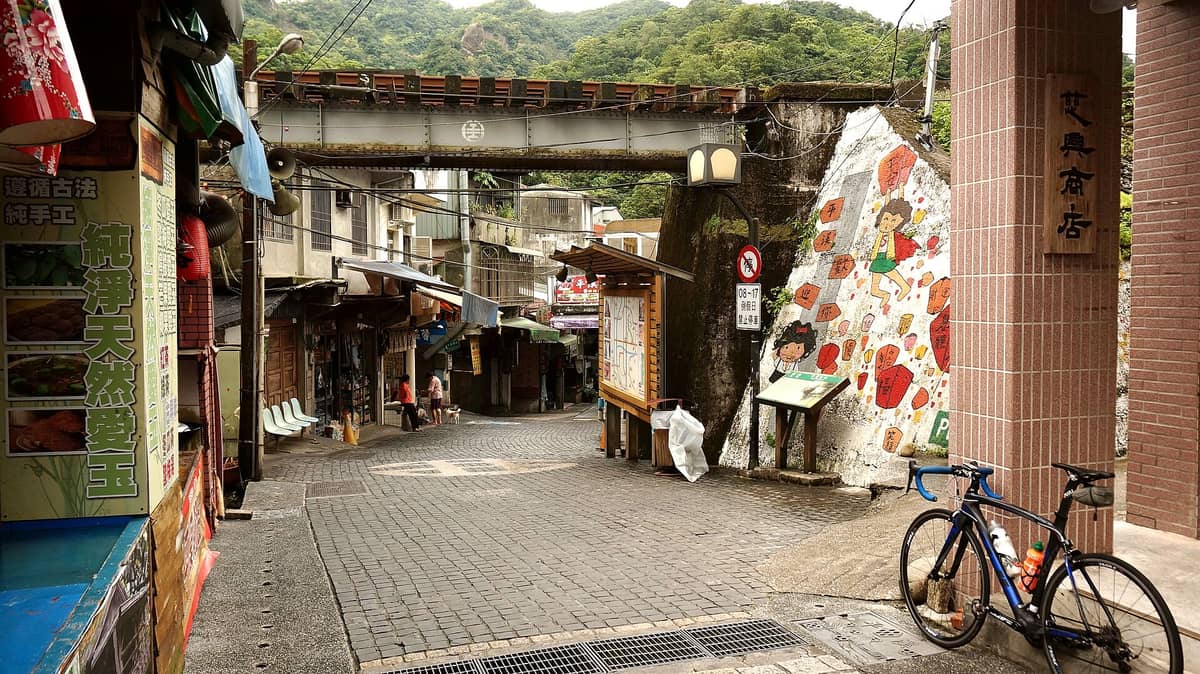
Pingxi Old Street (平溪老街) is the commercial and cultural heart of Pingxi District, a narrow valley township in New Taipei City roughly 90 minutes northeast of central Taipei. The street runs parallel to the Pingxi Branch Line railway, so close in places that a passing train feels within arm's reach of the shop fronts. It is one of the most recognizable sky lantern launching sites in Taiwan and a genuine piece of post-industrial heritage, built on the decline of the local coal mining economy that once sustained the entire valley.
Unlike some heritage streets in northern Taiwan that have been heavily reconstructed, Pingxi retains a worn, lived-in character. The buildings are old rather than decorative-old. Shopkeepers actually live here. The train still runs on schedule. That combination of authenticity and accessibility is what keeps drawing visitors, despite the crowds that gather on weekends and during lantern festival season.
ℹ️ Good to know
Access is free and the street is technically open at all hours, though most shops operate from around 09:00 to 22:00. The railway station exit opens almost directly onto the street, so arrival by train is by far the most straightforward approach.
The Coal Mining Roots: Why This Street Exists
The Pingxi Branch Line was originally constructed in 1921 to transport coal from the mountain mines down to the coast at Ruifang. The mining industry brought workers, workers brought families, and families built a town. By the mid-20th century, Pingxi and the adjoining settlements of Shifen and Jingtong formed a coherent coal-producing valley community.
When coal mining collapsed across northern Taiwan in the 1980s and 1990s, most valley towns hollowed out. Pingxi survived partly because the railway was never dismantled and partly because the sky lantern tradition gave the area a new identity. What was once industrial infrastructure became a scenic slow-train route, now listed as a tourist shuttle line. The old stone and timber shophouses that line Pingxi Street are direct survivors of that mining-era commercial district, not replicas.
This heritage context matters when you walk the street. The narrow lanes, low ceiling shopfronts, and tight spacing between buildings reflect how a mountain-valley working town was built, not how a tourism planner would design it. For deeper context on Taiwan's historic streetscapes, it helps to compare Pingxi with sites like Jiufen Old Street or Yingge Ceramics Old Street, which each represent different chapters of northern Taiwan's industrial past.
Sky Lanterns: The Ritual That Defines the Experience
The sky lantern (天燈, tiāndēng) tradition in Pingxi is the reason most first-time visitors make the trip. The practice of writing wishes on paper lanterns and releasing them skyward is centuries old in Chinese culture, but Pingxi became its most famous living venue in Taiwan. Lantern stalls line the street selling paper lanterns in multiple colors, each color traditionally associated with a different wish: red for good luck, yellow for wealth, green for health, and so on.
The process is simple. You buy a lantern, write your wishes on the paper in ink provided by the vendor, fill it with hot air from a small burner beneath, and release it. The lantern rises quickly, especially on a clear day with calm upper winds, climbing hundreds of meters before drifting over the valley ridgeline. Most stalls will photograph the release for you using your phone. The whole ritual takes about 10 minutes and costs roughly TWD 150–250 per lantern.
Individual lantern releases happen throughout the day whenever visitors arrive. The large-scale communal launches, involving dozens or hundreds of lanterns rising simultaneously, occur during the Pingxi Sky Lantern Festival, held annually around the Lantern Festival date (15th day of the Lunar New Year, typically in February). On ordinary weekends, the street is busy but manageable. During festival season, Pingxi becomes extremely congested and requires advance planning.
💡 Local tip
Release lanterns from the open area near the train tracks, not from inside the covered lane. The open sky gives the lantern room to rise cleanly without catching on shopfront overhangs, and the backdrop of the valley makes for far better photographs.
If you plan your visit around the Lantern Festival period, read the Taipei Lantern Festival guide for crowd management advice, transportation notes, and what to expect at the event.
Walking the Street: What You Actually Encounter
Pingxi Old Street is short enough to walk end to end in under 15 minutes, which means the experience is less about distance and more about pace. The main lane runs from the station area through the core commercial block, flanked by a mix of snack stalls, lantern shops, souvenir stores, and a handful of local restaurants. Side alleys lead up the hillside to quieter residential sections and small temple courtyards.
Smells define the first impression: coal-smoke absence replaced by the sweet-savory combination of grilled sausages, scallion pancakes, and sesame-coated glutinous rice balls. These are working street-food stalls, not curated food halls, so prices are low and queues move fast. The sound of the Pingxi Branch Line train passing through, its horn sounding about 30 seconds before arrival, interrupts conversation every 20–30 minutes and draws everyone to the edge of the tracks.
The train itself passes at low speed through the pedestrian zone. This is not a separated rail corridor: the tracks run through the heart of the street, and visitors simply step aside when the train approaches. Children find this extraordinary. Adults accustomed to safety barriers find it briefly unnerving, then charming.
The surface underfoot is uneven in places, with older stone paving, raised rail ties crossing the path, and occasional steps up toward the hillside shrines. Visitors with limited mobility should note that there is no formal step-free route through the full area. The section directly adjacent to the station is the most level. Strollers and wheelchairs can navigate the main lane but may need to avoid some of the side paths.
Time of Day: How Pingxi Changes by the Hour
Early morning, before 10:00, Pingxi is quiet enough to feel like a different place entirely. The light comes in low over the valley ridge, the food stalls are still setting up, and the few visitors present are usually hikers heading to trailheads or photographers who made the effort to arrive before the tour groups. This is the best window for photographing the shophouse facades and the railway-side lantern stalls without crowds obscuring the composition.
Between 11:00 and 15:00 on weekends, the street reaches peak density. Weekend visitors arrive in waves coordinated with the train schedule from Ruifang. The main lane becomes genuinely crowded during these hours, which limits the quality of the experience for anyone hoping to linger. Weekday visits during this same window are markedly calmer.
Late afternoon, from around 16:00 onward, the light turns golden across the valley and the day-tripping crowd begins to thin. This is arguably the most photogenic window for sky lantern releases, as the lanterns glow visibly against a dimming sky. By 18:00, many stalls are closing, but the remaining open shops and the quieter atmosphere reward those who stay.
⚠️ What to skip
Pingxi is in a valley that collects cloud and rain quickly. The Pingxi area receives significant rainfall year-round, more so in winter and early spring. Bring a compact rain jacket regardless of the morning forecast. Wet weather makes the stone paving slippery and visibility for lantern photography poor.
Getting There and Practical Logistics
The Pingxi Branch Line is the defining transport link. From Taipei Main Station, take a Taiwan Railways train east to Ruifang or Badu station, then transfer to the Pingxi Branch Line and ride to Pingxi Station. The total journey from central Taipei takes roughly 90 minutes depending on train connections. A one-day Pingxi Line pass is available and makes economic sense if you plan to stop at multiple stations along the line, including Shifen and Jingtong.
An alternative route operates via MRT to Muzha (Wenhu Line terminus), then Taipei Bus 795 — the Taiwan Tourist Shuttle Muzha-Pingxi line — to the Pingxi stop. This option suits travelers staying in the southern or eastern districts of Taipei, as it avoids a trip to Taipei Main Station.
There is no dedicated parking infrastructure at Pingxi Old Street. The roads approaching the valley are narrow, and weekend traffic on the mountain roads leading into Pingxi District can be severe. Arriving by rail eliminates this problem entirely and is the recommended approach for the large majority of visitors.
Pingxi pairs naturally with a stop at nearby Shifen Waterfall, which is two stations before Pingxi on the branch line and worth an hour of your time. Planning the stops in the right order (Shifen first in the morning, Pingxi in the afternoon) takes advantage of the light and avoids arriving at both places at peak crowd hours simultaneously. For a broader overview of how to structure a day out of the city, the day trips from Taipei guide covers the full Pingxi Line itinerary alongside other options.
Honest Assessment: Who This Is For and Who It Is Not
Pingxi Old Street is a genuinely worthwhile excursion from Taipei for travelers interested in the sky lantern ritual, Taiwan's industrial heritage, and mountain valley scenery. The train journey through the gorge alone justifies the trip for many visitors. The food is good, the prices are fair, and the atmosphere on a quiet weekday morning is legitimately memorable.
That said, visitors expecting a polished heritage district will find Pingxi scrappy and commercial by comparison. The sky lantern stalls dominate the street-level experience, and the souvenir shops are repetitive. Anyone who has already seen a sky lantern festival in a different context, or who has limited patience for tourist-oriented street commerce, may find the payoff modest relative to the 90-minute journey from Taipei.
Travelers specifically interested in Taiwan's old street culture may find greater depth at Dihua Street in Dadaocheng, which is directly accessible from central Taipei and carries richer architectural and commercial heritage. Pingxi's strongest selling point is the combination of the lantern experience, the railway setting, and the mountain landscape — not the old street itself in isolation.
Insider Tips
- Buy your lantern from a stall slightly away from the main cluster near the station. The vendors further down the street often have more time to help first-timers, and the launching spot tends to be less crowded for photographs.
- The Pingxi Branch Line one-day pass covers unlimited rides between Sandiaoling, Lingjiao, Shifen, and Pingxi stations. Pick it up at Ruifang Station and plan stops in sequence to avoid backtracking.
- Weekday mornings in autumn (October to November) offer the clearest skies for lantern photography and the lowest crowd density of any period that is not a typhoon or holiday blackout.
- The small Jingtong Mining Industry Museum near the main street provides free or low-cost context on the coal mining history of the valley. It is consistently overlooked by visitors moving straight to the lantern stalls, but it takes only 20 minutes and significantly changes how the street reads.
- If rain catches you, duck into one of the covered alley sections near the older shophouses uphill from the tracks. These covered lanes retain original timber overhangs and are among the most photogenic parts of Pingxi even in flat light.
Who Is Pingxi Old Street For?
- First-time visitors to Taiwan wanting a single iconic cultural experience outside the capital
- Photographers and content creators seeking the sky lantern aesthetic in a valley landscape setting
- Families with children who will be captivated by the train-through-the-street experience and the lantern ritual
- Travelers combining a Pingxi Line day trip with Shifen Waterfall and Jiufen
- Anyone planning a visit around the Lantern Festival period who wants to experience the event at its source location
Nearby Attractions
Combine your visit with:
- Bitou Cape Trail
The Bitou Cape Trail (鼻頭角步道) traces a narrow coastal ridge above the Pacific Ocean in Ruifang District, New Taipei City. Free to enter and roughly 3.5 km long, it rewards hikers with some of the most dramatic ocean scenery within striking distance of Taipei. Note that sections have been under reconstruction since 2020, so checking current trail status before visiting is essential.
- Houtong Cat Village
Houtong Cat Village is a retired mining settlement in New Taipei City's Ruifang District where a large resident cat population transformed a fading industrial town into one of Taiwan's most photographed day trips. The village is free to enter, reached by a scenic Taiwan Railways train ride from Taipei, and pairs well with the adjacent Houtong Coal Mine Ecological Park.
- Jinguashi Gold Museum Area
Set high in the mountains of Ruifang District, the Gold Museum in Jinguashi preserves an entire Japanese-era gold and copper mining complex. Expect underground tunnel walks, colonial architecture, a POW camp memorial, and sweeping Pacific coastline views, all within a single open-air park.
- Jiufen Old Street
Jiufen Old Street (Jishan Street) is a narrow, lantern-lit lane winding through a former gold-mining town above Taiwan's northeast coast. Free to enter and accessible by train and bus from Taipei, it rewards visitors who arrive early or stay for dusk, when the red lanterns glow against the mountain fog.