Mundaring Weir: The Historic Dam in Perth's Hills Worth the Drive
Mundaring Weir is a century-old engineering landmark set deep in the forested Perth Hills, about 45 minutes from the city centre. The reservoir, walking trails, and heritage infrastructure make it a rewarding half-day escape for nature lovers, history enthusiasts, and families alike.
Quick Facts
- Location
- Darling Scarp, Perth Hills, Western Australia (approx. 45 km east of Perth CBD)
- Getting There
- Car recommended: via Great Eastern Highway to Midland, then approx. 16 km toward Mundaring via Nichol Street. Check Transperth for current connections to Mundaring township and onward travel to the weir.
- Time Needed
- 2–3 hours for a comfortable visit including a walk and picnic
- Cost
- No admission fee listed (confirm with Water Corporation before visiting)
- Best for
- History enthusiasts, families, day-trippers, photography, bushwalking
What Is Mundaring Weir?
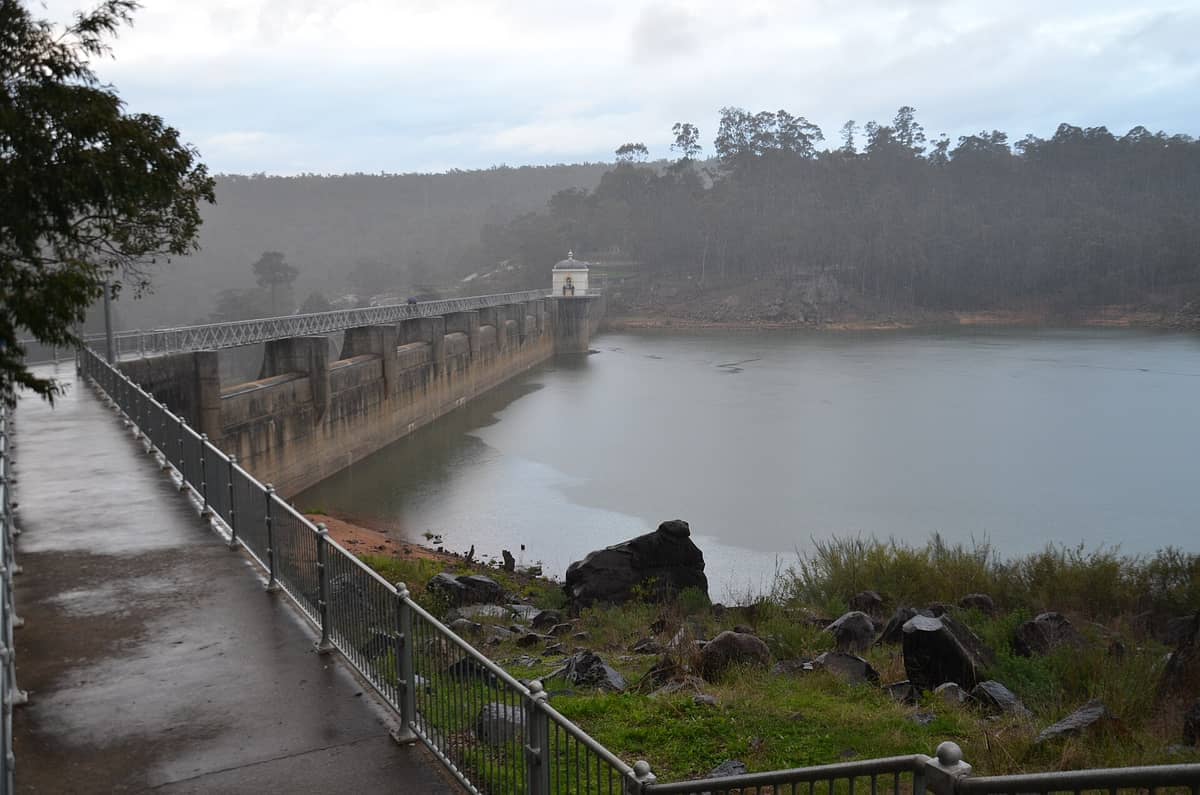
Mundaring Weir is a large dam and reservoir on the Helena River, sitting on the edge of the Darling Scarp in the Perth Hills. Opened in 1903, it was built to supply water to the goldfields towns of Kalgoorlie and Coolgardie, more than 500 kilometres to the east. The dam wall was subsequently raised, with that work completed in 1951, creating the substantial reservoir visible today.
The weir is managed by the Water Corporation of Western Australia and sits within a forested recreation area that also contains the No. 1 Pump Station, a heritage building now operating as a museum. For visitors arriving from the city, it functions as a practical gateway into thePerth Hills, with the reservoir and surrounding jarrah forest providing a markedly different environment from the flat coastal plain most Perth residents call home.
ℹ️ Good to know
Opening hours vary by season: the site closes at 6 pm from November to April, and at 5 pm from May to October. Opening hours can change due to maintenance or extreme weather. Confirm current hours with Water Corporation before you travel. Confirm current hours at watercorporation.com.au before you travel.
The View from the Dam Wall and Lookouts
The most immediately striking feature of Mundaring Weir is the dam wall itself, which you can approach and view from designated areas. From above, the reservoir stretches back through a fold in the scarp, with jarrah and marri trees pressing to the waterline on both sides. On calm mornings, the water reflects the surrounding forest with unusual clarity. By midday, the light flattens and the colours lose some depth, which makes early morning the better window for photography.
C. Y. O'Connor Lake Lookout provides an elevated perspective over the reservoir. The lookout is named after Charles Yelverton O'Connor, the engineer behind the Goldfields Water Supply Scheme — a figure whose story is, frankly, one of the more compelling in Western Australian history.
For visitors who enjoy elevated viewpoints, the Perth Hills area has several worth combining with a weir visit. The broaderguide to Perth's best viewpoints covers what to expect at each one and how to plan a half-day that takes in more than one.
Tickets & tours
Live prices and dates from our booking partner. If you book, we may earn a commission at no extra cost to you.
The Bell Tower chiming experience
From 11 €Instant confirmationFree cancellationPinnacles and Swan Valley Full-day Guided Tour
From 201 €Instant confirmationFree cancellationPerth and Fremantle Guided Tour and Swan River Cruise
From 110 €Instant confirmationFree cancellationPerth and Fremantle Tour in German with Hotel Pickup
From 84 €Instant confirmationFree cancellation
The No. 1 Pump Station Museum
The heritage building immediately below the dam wall houses the No. 1 Pump Station, which once drove water into the pipeline toward the goldfields. Today it operates as a museum focused on the engineering and human history of the Goldfields Water Supply Scheme. The heritage building immediately below the dam wall houses the No. 1 Pump Station, which once drove water into the pipeline toward the goldfields. Today it operates as a museum focused on the engineering and human history of the Goldfields Water Supply Scheme.
Inside, the original pump machinery has been preserved, giving visitors a sense of the scale of the infrastructure required. Information panels cover the construction process, the workers who built the pipeline through difficult terrain, and O'Connor's own contested legacy — he died by suicide in 1902, before the scheme was completed. The museum is worth an hour if you have any interest in engineering history or colonial-era infrastructure.
💡 Local tip
Confirm the No. 1 Pump Station Museum's opening days and times directly before visiting, as they may differ from the general site hours. Accessible toilets are available at the pump station and near the Rose Garden.
Walking Trails and the Surrounding Forest
Several walking tracks depart from the weir area, ranging from short paths around the recreation precinct to longer routes into the Helena River valley. The terrain is typical of the Darling Scarp: jarrah and marri forest on rocky laterite soil, with granite outcrops and seasonal creek lines. In winter and early spring, wildflowers appear in the understorey, and the forest carries a particular smell after rain — eucalyptus resin and damp leaf litter — that is absent on summer visits.
If you are planning a longer walk or want more technical trail information, the Perth hiking guidecovers trails in the Hills region with difficulty ratings and access notes. Some tracks connect to the broader Bibbulmun Track network, which passes through this part of the scarp.
Summer visits require preparation. Temperatures in the hills can reach 35°C or above in January and February, and the forested trails offer intermittent shade at best. Carry more water than you think you need, wear a hat, and check fire danger ratings before you go. On total fire ban days or during extreme heat events, conditions in the bush can deteriorate rapidly. Winter visits are generally cooler and the water levels in the reservoir are typically higher, making for more dramatic scenery at the dam wall.
The Picnic Areas and How the Site Works in Practice
There are picnic facilities and open grassy areas near the dam precinct, and these fill up on weekend mornings from around 9 am onward during the cooler months, particularly in spring when the hills are at their most attractive. By late morning, the better shaded spots are usually taken. Weekday visits are noticeably quieter, and early weekday mornings in winter can feel remarkably still — just the sound of water and birdsong.
The Rose Garden adjacent to the site is a smaller, softer counterpoint to the industrial heritage nearby — a formal garden tucked into the bush setting that some visitors overlook entirely. It is at its best in late spring. Accessible toilets are located nearby.
There is no cafe or food service at the weir itself, so bring your own food and water. The township of Mundaring, a few kilometres back along the main road, has cafes and a small supermarket if you need supplies before heading in.
Getting There and What to Know Before You Go
The weir is not accessible by direct public transport from the city centre. The standard approach is by car: head east on Great Eastern Highway to Midland, continue approximately 16 kilometres toward Mundaring, then turn into Nichol Street and follow the Water Corporation signs. The road through the hills is winding in sections but well-maintained. GPS is reliable on this route.
If you are planning a full day in the area, Mundaring Weir pairs naturally with John Forrest National Park, which lies a short drive to the north and offers swimming in natural pools, more walking tracks, and different terrain. The two together make for a satisfying day out without retracing your route back to the city.
Visitors combining the weir with a broader Perth Hills itinerary sometimes include Lesmurdie Falls — particularly in winter when the falls are running strongly — and the historic town of Kalamundafor lunch. Check your timing carefully: the weir closes at 5 pm in winter months.
⚠️ What to skip
Check fire danger ratings and any site closure notices before visiting, particularly between November and April. The Water Corporation can close the site without advance notice during maintenance periods or extreme weather events.
Is Mundaring Weir Worth Your Time?
For most visitors, the honest answer depends on what you are after. If you are primarily interested in engineering history and want to understand one of Western Australia's defining infrastructure projects, this is genuinely worthwhile and not something you will find replicated elsewhere in the region. If you want dramatic dam scenery along the lines of a large hydroelectric lake, you may find the scale modest.
Travellers who simply want a half-day in the bush within easy reach of the city will find the combination of forest walking, reservoir views, and heritage buildings satisfying. Those with no particular interest in history or walking, and no children to entertain, may find it underwhelming compared to the beaches and inner-city attractions closer to Perth.
For context on how to structure a broader Perth itinerary that includes day trips like this one, the day trips from Perth guide lays out realistic timing and logistics for the major options within a two-hour drive of the city.
Insider Tips
- Visit on a weekday morning in late autumn or early winter (May to July) for the best combination of full water levels, cooler temperatures, and near-empty picnic areas. Spring weekends can be crowded by 10 am.
- The C. Y. O'Connor Lake Lookout is often overlooked by visitors who head straight to the dam wall. Walk up to the lookout first for orientation, then descend to the water level — it gives you a better sense of the reservoir's scale.
- There is no on-site food or drink; Mundaring township has a small main street with cafes. Stock up before entering the site, especially if you plan to walk.
- Photography is best in the hour after sunrise on still mornings, when the reservoir surface is glassy and the low light brings out the colour contrast between the red dam wall and the grey-green forest. Midday light is flat and uninteresting for most shots.
- Check the Water Corporation's website for any scheduled closures before you travel — the site can close with limited public notice, and there is no point driving 45 minutes to find a locked gate.
Who Is Mundaring Weir For?
- History and heritage enthusiasts interested in colonial-era engineering
- Families wanting a free, outdoors half-day with picnic facilities
- Photographers seeking early morning reservoir reflections
- Walkers looking for a gentle-to-moderate bushwalk close to Perth
- Day-trippers combining multiple Perth Hills attractions in a single loop
Nearby Attractions
Other things to see while in Perth Hills:
- John Forrest National Park
Proclaimed in 1900, John Forrest National Park is Western Australia's oldest national park and the Perth Hills' most accessible wilderness escape. Jarrah and marri forest, seasonal waterfalls, and the atmospheric Swan View Tunnel sit just 26 kilometres from the city centre.
- Kalamunda
Kalamunda is a hill town on the Darling Scarp, about 24 kilometres east of Perth. The centre is walkable, the History Village sits on the old railway station site, and the Bibbulmun Track starts here. The Zig Zag Scenic Drive is a short hop away in Gooseberry Hill.
- Lesmurdie Falls
Lesmurdie Falls tumbles down the Darling Range escarpment in Mundy Regional Park, about 20 kilometres east of central Perth. Free to enter, it rewards visitors most generously between June and October when winter and spring rains keep the flow strong.
- Perth Observatory
Perched in the Bickley valley of the Perth Hills, Perth Observatory is one of Western Australia's oldest scientific institutions. Whether you visit on a Sunday afternoon to explore the heritage domes or book a night-sky tour to see the Southern Cross through a working telescope, this is a rare chance to connect with both history and the cosmos — without flying to a remote outback site.
Planning a trip? Discover personalized activities with the Nomado app.