Perth Observatory: Where the Perth Hills Meet the Night Sky
Perched in the Bickley valley of the Perth Hills, Perth Observatory is one of Western Australia's oldest scientific institutions. Whether you visit on a Sunday afternoon to explore the heritage domes or book a night-sky tour to see the Southern Cross through a working telescope, this is a rare chance to connect with both history and the cosmos — without flying to a remote outback site.
Quick Facts
- Location
- 337 Walnut Road, Bickley WA 6076 — approx. 25 km east of Perth CBD in the Perth Hills
- Getting There
- Private vehicle recommended; no confirmed public-transport route — check before visiting
- Time Needed
- 1 hour for a Sunday guided day tour; 1.5–2 hours for a night-sky tour
- Cost
- Grounds & museum free on Sundays. Guided day tour: A$20 adult / A$15 concession / A$10 ages 12–17 / free under 12. Night-sky tour: A$50 adult / A$40 concession / A$30 ages 5–17 (prices verified March 2025; confirm when booking)
- Best for
- Astronomy enthusiasts, families, couples, and anyone curious about WA's scientific heritage
- Official website
- www.perthobservatory.com.au
What Is Perth Observatory?
Perth Observatory is a working heritage astronomy site set on a hillside in Bickley, a quiet rural pocket of the Perth Hills roughly 25 kilometres east of the city centre. Founded in 1896 — its foundation stone was laid on 29 September of that year at a Mount Eliza site in the city — the observatory relocated to its current Bickley address in 1966. The surrounding valley remains dark enough to offer genuinely good sky views, and the site now functions as a public education and heritage venue.
The observatory is managed with volunteer involvement and runs a small but well-curated visitor programme. It is not a slick commercial attraction. What it offers instead is What it offers instead is access to real heritage telescopes, knowledgeable guides, and sky conditions that most people living in Perth proper will never experience from their own backyard. For a city of over two million people, having a serious stargazing facility this accessible is worth noting.
ℹ️ Good to know
Grounds entry and the small on-site museum are free during Sunday public hours (1–4 pm). The 60-minute guided tour costs extra. Night-sky tours require advance booking and sell out, especially in school holidays — reserve your spot on the official website well ahead.
The Sunday Day Experience: Heritage Domes in Daylight
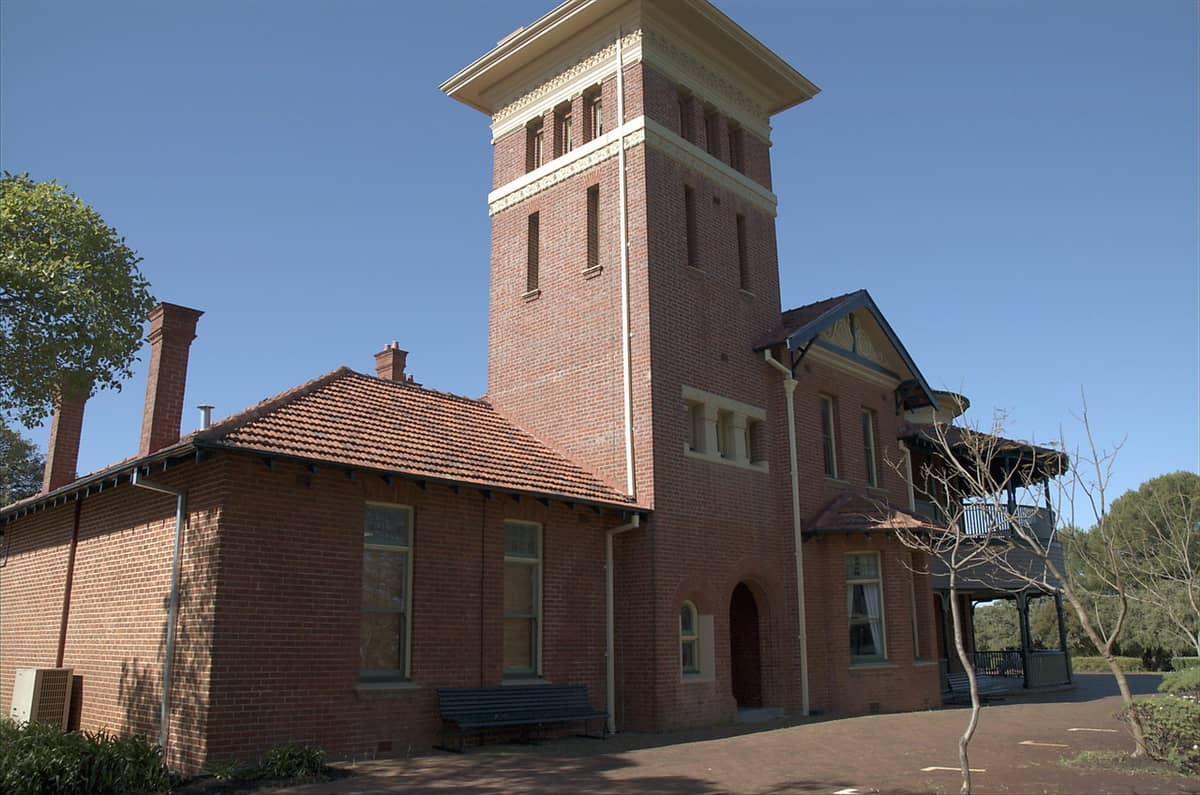
Sunday afternoons are the most accessible entry point for first-time visitors. Between 1 pm and 4 pm the grounds and museum are open to the public at no charge, with safe solar viewing and a solar astronomy talk included. The guided tour offers access inside heritage buildings and a look at the telescopes. Even without a guided tour ticket, it is worth arriving to walk the site — the observatory sits among eucalypts and low scrub on a gentle rise, and the views across the Bickley valley give a real sense of why this elevated, south-facing slope was chosen for astronomical work.
The guided Sunday day tour runs for approximately 60 minutes and takes small groups inside the heritage buildings, including a look at the telescopes. Guides here tend to be volunteers with genuine knowledge, which makes for more spontaneous and often more interesting conversations than a scripted museum audio guide. The pace is relaxed. Children are catered for — under-12s enter the guided tour free — but the heritage domes do involve stairs that may be difficult for some visitors. Contact the observatory ahead of time if you have mobility concerns; a paid, guided golf-cart tour is available around the site.
On a clear Sunday the light in the valley is soft and warm from about 2 pm onward. The sandstone and brick heritage structures photograph well in afternoon light, and the grounds are quiet enough that you can hear the birds. It rarely feels crowded on a standard Sunday, though school holiday periods bring more families. Arriving close to 1 pm gives you the best chance of a smaller tour group.
Tickets & tours
Live prices and dates from our booking partner. If you book, we may earn a commission at no extra cost to you.
Perth and Fremantle Guided Tour and Swan River Cruise
From 110 €Instant confirmationFree cancellationPerth and Fremantle Tour in German with Hotel Pickup
From 84 €Instant confirmationFree cancellationDay Trip Around Perth with Swan River Cruise and Rottnest Island Visit
From 172 €Instant confirmationFree cancellationPerth, Fremantle, Rottnest Island, and Swan River Guided Tour
From 166 €Instant confirmationFree cancellation
Night-Sky Tours: The Main Event
The night-sky tours are the reason most people make the drive to Bickley. On a clear night at this elevation, away from the ambient glow of suburban Perth, the difference in sky quality is immediately apparent. Southern hemisphere skies offer their own rewards — the Magellanic Clouds, the Southern Cross, the dense core of the Milky Way — and Perth Observatory's location provides reasonable access to all of these without needing to travel to genuinely remote locations.
Tours are led by knowledgeable guides who use a combination of laser pointers to orient visitors to constellations and working telescopes to zoom in on specific objects. What you see depends on the season and what is currently positioned well in the sky: planets, star clusters, nebulae, and galaxies are all possible targets. The guides adjust for the audience, so a group with children will get a different level of detail than a group of serious hobbyist astronomers — though both should find something of value.
Night-tour start times vary by month because they are scheduled after dark, which shifts significantly across the year in Western Australia. Check the current schedule on the official website before booking. Dress warmer than you think necessary: the Perth Hills can be noticeably cooler than the city at night, particularly in the winter months (June through August), when temperatures at this elevation can approach single figures.
⚠️ What to skip
Night tours are entirely dependent on clear skies. Perth Observatory does communicate cancellation or weather-related changes, but check their site or contact them directly if conditions look uncertain. Summer evenings (December–February) are generally more reliably clear; winter tours carry more cloud risk but offer darker, longer nights.
Historical and Scientific Context
The observatory's history stretches back to Western Australia's colonial scientific establishment. Founded in 1896, Founded in 1896, it was originally tasked with accurately determining Perth's longitude and latitude, providing time signals to Perth and 21 towns around Western Australia, and observing the southern sky — practical science for a growing port city. Over the following decades it contributed to international astronomical programmes, catalogue work, and the tracking of variable stars.
The 1966 relocation to Bickley marked a shift from civic utility toward research and public education. By that point, Perth's urban growth had compromised the Mount Eliza site's sky quality. The Bickley site, in a sheltered valley in the Darling Scarp, offered darker skies and better observing conditions. The heritage domes that visitors walk around today are genuine relics of a long observational tradition, not reconstructed props.
For broader context on the Perth Hills region that surrounds the observatory, the Perth Hills area offers a range of natural attractions within the same general landscape, making it possible to build a full day around the region before returning for a night tour.
Getting There and Practical Logistics
The observatory is at 337 Walnut Road, Bickley — a rural address that requires navigating winding hill roads. A private vehicle is strongly recommended. The official site does not specify a public-transport route; verify current Transperth options before assuming a connection exists.
If you are planning a full day in the region, combining the observatory with other Perth Hills stops makes sense. Attractions such asJohn Forrest National Park or Mundaring Weir are within reasonable driving distance and offer very different daytime experiences before a night-sky booking.
Parking on-site is available. The roads approaching the observatory can be narrow and unlit at night, so drive carefully on the return journey. GPS generally works but signal can be inconsistent on some of the local back roads — downloading an offline map is a sensible precaution.
💡 Local tip
For night tours, allow extra time for the drive in the dark. Roads around Bickley have minimal lighting and occasional wildlife crossing. Budget an extra 15 minutes over your expected GPS travel time.
Who Will Enjoy This — and Who Might Not
Perth Observatory rewards curiosity. The best visitors are those who come with genuine interest in either astronomy or the history of Western Australian science, or both. Families with children aged roughly five and above tend to get a lot from the night tours, particularly if the kids have any interest in space. The guided format keeps things structured enough that younger visitors stay engaged.
Visitors expecting a polished, high-production experience in the style of a major city museum should recalibrate. This is a heritage site run with real passion but modest resources. The displays are informative rather than immersive, and the facilities are functional rather than luxurious. Check current on-site food and drink options before you arrive, and bring water.
If you are building a broader itinerary around Perth's cultural institutions, the observatory pairs naturally with a visit to the WA Museum Boola Bardipin the city, which has natural history and science collections that complement what you learn at the observatory. See ourPerth museums guide for a full overview of the city's options.
Visitors with significant mobility limitations should contact the observatory ahead of their visit. The golf cart assistance helps with distances across the site, but some telescope domes have internal stairs that cannot be bypassed. Heritage buildings carry inherent limitations that modern venues do not.
Insider Tips
- Book night-sky tours as early as possible — the observatory operates with limited capacity and popular dates, especially during school holidays, fill weeks in advance. Weekday night tours, where offered, tend to have more availability than weekends.
- Bring a red-light torch (headlamp or handheld) if you have one. Red light preserves night vision far better than white light, and guides appreciate visitors who have made this effort. It also makes navigating the grounds between telescope stations much easier.
- The winter months offer the longest dark windows and the Milky Way core is well-positioned in the southern sky during the cooler months — but pack layered clothing. The cooler months can bring cold nights, so pack layered clothing.
- Arrive at Sunday day tours close to the 1 pm opening if you want a smaller group. Later arrivals in the 2–3 pm window tend to coincide with more visitors arriving together.
- If you are serious about astrophotography, contact the observatory before visiting to understand what equipment is permitted near the telescopes and whether any specific sessions accommodate camera setups.
Who Is Perth Observatory For?
- Astronomy enthusiasts and anyone curious about the Southern Hemisphere night sky
- Families with children aged 5 and above, particularly for night tours
- Couples looking for an unusual evening activity away from the city
- Visitors with an interest in WA's colonial scientific and heritage history
- Travellers spending time in the Perth Hills who want to combine daytime outdoor activities with an evening experience
Nearby Attractions
Other things to see while in Perth Hills:
- John Forrest National Park
Proclaimed in 1900, John Forrest National Park is Western Australia's oldest national park and the Perth Hills' most accessible wilderness escape. Jarrah and marri forest, seasonal waterfalls, and the atmospheric Swan View Tunnel sit just 26 kilometres from the city centre.
- Kalamunda
Kalamunda is a hill town on the Darling Scarp, about 24 kilometres east of Perth. The centre is walkable, the History Village sits on the old railway station site, and the Bibbulmun Track starts here. The Zig Zag Scenic Drive is a short hop away in Gooseberry Hill.
- Lesmurdie Falls
Lesmurdie Falls tumbles down the Darling Range escarpment in Mundy Regional Park, about 20 kilometres east of central Perth. Free to enter, it rewards visitors most generously between June and October when winter and spring rains keep the flow strong.
- Mundaring Weir
Mundaring Weir is a century-old engineering landmark set deep in the forested Perth Hills, about 45 minutes from the city centre. The reservoir, walking trails, and heritage infrastructure make it a rewarding half-day escape for nature lovers, history enthusiasts, and families alike.
Planning a trip? Discover personalized activities with the Nomado app.