Moreton Island Sandboarding: Racing the Tangalooma Desert Dunes
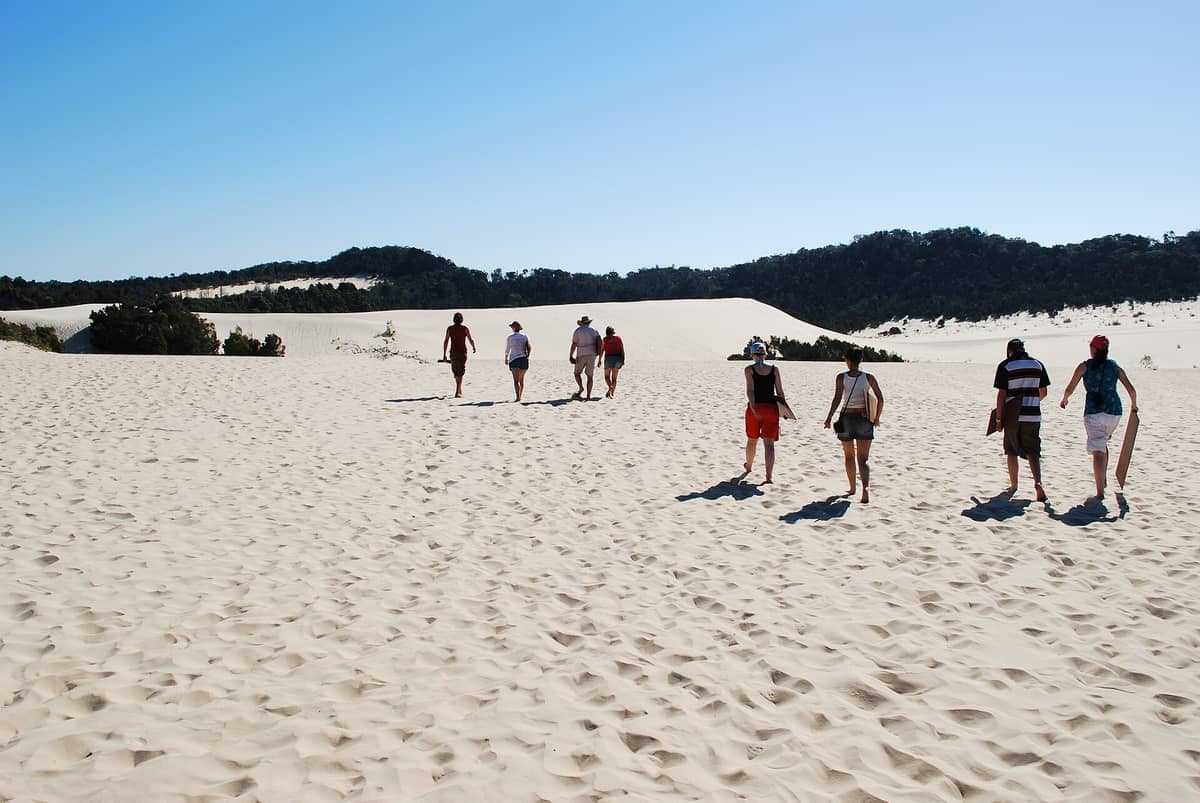
The Tangalooma Desert on Moreton Island is one of Queensland's most unexpected landscapes: a field of pale sand dunes rising sharply from coastal scrub, roughly 40 km from Brisbane. Sandboarding, or sand tobogganing as the operators call it, is the main draw. It is physical, sun-drenched, and genuinely exhilarating in a way that photographs don't fully capture.
Quick Facts
- Location
- Tangalooma Desert, Moreton Island (Mulgumpin), approx. 1 km southeast of Tangalooma Resort
- Getting There
- Passenger ferry from Brisbane (Holt St Wharf, Pinkenba) to Tangalooma; Tangalooma ferry is passenger-only. Desert accessed by 4WD bus on tour or independently via 4WD brought on a vehicle barge.
- Time Needed
- 2–4 hours on the dunes; allow a full day including ferry travel
- Cost
- Board hire from approx. A$9 (own transport); Sunset Safaris sandboard and transport from approx. A$50. Tangalooma Desert Safari from A$57 adult / A$41 child. Verify current prices with operators before booking.
- Best for
- Families with older kids, adventure seekers, day-trippers from Brisbane
- Official website
- www.tangalooma.com/moreton-island/tangalooma-desert
What Is the Tangalooma Desert?
Moreton Island, known by its traditional name Mulgumpin (meaning 'place of sandhills'), sits roughly 40 km northeast of central Brisbane in Moreton Bay. The island is approximately 37 km long and 10 km wide, and almost all of it is protected national park. Within that protected landscape, the Tangalooma Desert is a concentration of open sand dunes that feels entirely out of place on a subtropical island, in the best possible way. Mount Tempest, located on the island, reaches 280 metres and is considered by Queensland Parks to be among the world's highest stabilised coastal sand dunes. The dune field near Tangalooma Resort is lower and more accessible, making it the practical focus for sandboarding activities. You can read more about the island's broader landscape in our Tangalooma Island Resort guide.
The dunes are not a mirage or a novelty corner. They stretch wide enough that you can hike laterally along the ridgelines for several minutes, choosing your preferred drop. The sand is pale cream, fine, and warm underfoot by mid-morning. The surrounding scrub and the blue strip of ocean visible from the upper ridges give the place a visual drama that the word 'dunes' doesn't quite convey.
ℹ️ Good to know
The sandboarding activity is formally called sand tobogganing by Tangalooma Resort. You lie prone on a flat board and slide headfirst, or sit and use your feet to steer. There are no bindings, no skill requirements, and no height restrictions beyond basic safety guidelines from the operator.
The Experience: What It Actually Feels Like
Getting to the dunes is part of the experience. The ferry crossing from Holt Street Wharf in Pinkenba, near Brisbane Airport, takes approximately 75 minutes to reach Tangalooma. Once on the island, the dunes sit about 1 km southeast of the resort and are reached by 4WD bus if you're on a tour, or by 4WD vehicle if you've arranged your own island transport. There is no regular pedestrian path through the bush between the resort and the dune field, so self-guided access requires planning.
When you arrive at the dunes for the first time, the scale is slightly disorienting. You emerge from dense coastal vegetation and suddenly there's open sand in all directions, lit hard and bright. The main toboggan run is steep enough to generate real speed. Your board accelerates quickly once you commit, and the run-out at the base is a flat shelf of softer sand that brings you to a natural stop. The climb back up takes two to three minutes of calf-burning effort through loose sand, which is why most people do four or five runs rather than twenty.
The sounds shift depending on wind conditions. On a still morning, the dunes are almost silent except for the hiss of board on sand and the occasional shout from other riders. By early afternoon, southeast trade winds often pick up, sending fine sand skimming across the surface in thin ribbons. It's photogenic but means grit in your eyes if you're not wearing sunglasses.
Tickets & tours
Live prices and dates from our booking partner. If you book, we may earn a commission at no extra cost to you.
Luggage Storage in Brisbane
From 5 €Instant confirmationFree cancellationBrisbane's dark stories true crime tour
From 21 €Instant confirmationFree cancellationFull-day Mount Tamborine winery tour from Brisbane with lunch
From 140 €Instant confirmationFree cancellationNorth Stradbroke Island small groups day tour
From 79 €Instant confirmationFree cancellation
Morning vs. Afternoon: When the Dunes Change
The early morning is the quietest window on the dunes. Day-trippers on the first ferry can reach the dune field before the resort's own day-tour groups arrive, and the sand is cool and firm from the night, which actually slows the boards slightly. The quality of light before 10 am is good for photography, with long shadows defining the dune ridgelines against the pale sand.
Midday is the hottest and most crowded period. The sand surface reaches temperatures that make bare feet uncomfortable, and the flat overhead light flattens the visual drama. If you're visiting on a day-trip, this is usually when you're eating lunch near the resort rather than on the dunes, which is convenient timing.
Tangalooma's Sunset Safari tours are popular for good reason. The late-afternoon light turns the sand gold, the air cools, and the dunes empty out significantly. The views from the ridge at dusk, with the ocean on one side and the island interior on the other, are the most atmospheric the site offers. If you're staying overnight at the resort, a sunset session is worth prioritising over a midday one.
💡 Local tip
Wear clothes you don't mind getting sandy. Sand works into everything, including pockets, seams, and shoes. Closed shoes with socks are more comfortable than thongs or sandals for the dune climb. Sunscreen and sunglasses are non-negotiable by late morning.
Cultural and Ecological Context
Moreton Island is part of Gheebulum Kunungai (Moreton Bay) Marine Park and is protected under Queensland's national park system. The island's traditional custodians are the Ngugi people, and the name Mulgumpin reflects the island's identity as a landscape shaped by sand. Queensland Parks notes this cultural significance in its descriptions of the area. Visitors are on national park land, which means no vehicles off designated tracks, no removal of sand or vegetation, and adherence to the park's fire and waste rules. The wildlife around Moreton Island includes migratory shorebirds, loggerhead turtles, and dolphins that visit the shallows near the resort each evening.
The dunes themselves are a dynamic coastal landform. Moreton Island's inland dunes, including Mount Tempest, formed over thousands of years through wind action depositing and stabilising sand. The exposed dune field near Tangalooma is smaller and partially mobile, which is why the surface conditions change noticeably after periods of wind or rain. After rain, the sand becomes packed and firmer, which is actually better for tobogganing and easier on the knees when climbing.
How to Get There and Book
Access to Moreton Island requires a ferry. The Tangalooma Island Resort operates its own ferry service departing from Holt Street Wharf in Pinkenba. The crossing takes approximately 75 minutes. There are no vehicle ferries operated by Tangalooma for regular visitors; guests staying at the resort or on day tours reach the dunes via the resort's 4WD safari vehicles. A separate operator, Moreton Island Adventures, offers board hire from a price listed at approximately A$9 for visitors with their own island transport, and Sunset Safaris offers sandboard-and-transport packages from approximately A$50; Tangalooma's Desert Safari is currently listed at A$57 per adult and A$41 per child. Verify prices directly with operators before booking. See our full Tangalooma Island Resort overview for ferry schedules and booking details, or check the Moreton Island day trip guide for logistics on combining dunes with other island activities.
The Tangalooma Desert Safari is listed with departures at 9:15 am and 1:30 pm on available operating days; check the current schedule and availability before booking. There are no standalone opening hours published for the dune field itself, as it is open national park land, but the practical reality is that without the 4WD connection, most visitors cannot reach it independently. Book your tour in advance during school holidays and long weekends, when capacity fills quickly.
⚠️ What to skip
Moreton Island has no public transport, no paved roads, and no casual vehicle hire on the island. If you are not on a guided tour, you need your own 4WD brought over on a vehicle barge (separate operators, not Tangalooma ferry). Attempting to walk to the dunes from the resort through the bush without a guide is not recommended.
Photography Tips and Practical Notes
The dunes photograph best in the hour after sunrise or the hour before sunset, when raking light creates shadow definition across the ridgelines. Midday shots in full sun tend to look flat and overexposed. If you're shooting people on the toboggan, position yourself at the base of the run and shoot upward; this gives you the rider against a clean sky background rather than a busy sand-and-scrub backdrop.
Sand and cameras are a difficult combination. A dust-resistant camera bag or a simple zip-lock bag for your phone is worth having. The fine sand on the dunes gets airborne easily on windy afternoons. Lens filters won't save you if sand gets into the camera body, so keep lens caps on when not shooting.
Accessibility is limited. The 4WD bus reaches a staging area at the dune base, but the dune surface itself is loose sand with no path or handrail. People with mobility limitations will find the climb and descent genuinely difficult. The operator does not publish specific accessibility provisions; contact Tangalooma Resort directly to discuss individual requirements before booking.
Who This Experience Suits, and Who Might Skip It
Sandboarding on the Tangalooma Desert is genuinely suited to families with kids roughly 6 and older, active adults who don't mind physical effort, and anyone who wants a beach day with an activity component rather than passive sunbathing. It pairs well with the dolphin feeding experience at Tangalooma Resort in the evening, the snorkelling at the Tangalooma Wrecks, and a walk along the island's beaches.
It is less suited to travellers who want a contemplative or cultural day out, people with knee or back problems (the repeated dune climbs are taxing), and anyone with a strong aversion to heat and sun exposure. If you're visiting Brisbane in December or January, the midday dune experience in 30-plus-degree heat is genuinely uncomfortable and potentially risky without significant preparation. The May to September window, when temperatures are cooler and humidity is lower, is a far more comfortable time to be on the open sand.
Travellers looking for quiet nature experiences on the island should note that the dunes during tour hours are social and noisy. For a different pace, the island's interior walking tracks and the North Gorge Walk on nearby North Stradbroke Island offer a quieter contrast if you're planning a multi-island trip.
Insider Tips
- After rain, the sand firms up and boards run faster. If you're visiting within a day or two of rainfall, the dune session will be noticeably better than on hot, dry days when the surface is loose and slows quickly.
- The Sunset Safari tour is worth the slightly higher price over a midday visit. The dunes clear out significantly after 4 pm, the light is dramatic, and the temperature drops enough to make the climbs far less punishing.
- Bring a dry bag or a sealed plastic bag for your phone and camera. The fine dune sand at Tangalooma becomes airborne on windy afternoons and gets into everything. It's not camera-friendly.
- If you're a day-tripper, check the ferry return schedule before committing to a late afternoon tour. Missing the last ferry means an unplanned overnight stay on the island.
- Wear a rash shirt or long sleeves if you burn easily. The dune surface reflects UV light intensely, and you're exposed on all sides with no shade. Sunburn on the dunes happens faster than most people expect.
Who Is Moreton Island Desert & Sandboarding For?
- Families with children aged 6 and older looking for a memorable outdoor activity
- Brisbane day-trippers wanting beach plus adventure in a single trip
- Photographers chasing dramatic sand landscape shots, especially at golden hour
- Active travellers comfortable with physical effort in a natural setting
- Visitors combining sandboarding with Tangalooma's dolphin feeding or wreck snorkelling
Nearby Attractions
Other things to see while in Moreton Island:
- Cape Moreton Lighthouse
Standing on the northernmost tip of Moreton Island, Cape Moreton Lighthouse has guided ships since 1857, making it Queensland's oldest lighthouse. Reaching it requires a ferry crossing, a 4WD track, and a short uphill walk — which is exactly why the views feel earned.
- Tangalooma Island Resort
Tangalooma Island Resort sits on the western shore of Moreton Island, about 40 km from Brisbane. It combines wild dolphin feeding, snorkelling over a deliberate shipwreck reef, desert-style sandboarding, and calm bay swimming in one accessible package. Day trippers and overnight guests share the same stretch of sand, though the rhythm of each experience is very different.
- Tangalooma Wrecks
Fifteen vessels deliberately sunk by the Queensland Government between 1963 and 1984 now form an artificial reef teeming with marine life off the shores of Moreton Island. Accessible by snorkel or glass-bottom boat, the Tangalooma Wrecks are the centrepiece of a day trip that combines island beauty with underwater discovery.
Planning a trip? Discover personalized activities with the Nomado app.