Cape Moreton Lighthouse: Queensland's Oldest Beacon at the Edge of the World
Standing on the northernmost tip of Moreton Island, Cape Moreton Lighthouse has guided ships since 1857, making it Queensland's oldest lighthouse. Reaching it requires a ferry crossing, a 4WD track, and a short uphill walk — which is exactly why the views feel earned.
Quick Facts
- Location
- Cape Moreton, Mulgumpin (Moreton Island), QLD 4025 — approx. 40 km offshore from Brisbane
- Getting There
- Ferry or barge to Moreton Island, then 4WD to Cape Moreton car park; 100 m uphill walk to the lighthouse
- Time Needed
- 1–2 hours at the cape; allow a full day including ferry travel
- Cost
- No entry fee to view the lighthouse exterior; vehicle access permit required for 4WD use on the island (verify current fee with Queensland Parks)
- Best for
- Panoramic ocean views, whale watching (June–November), heritage architecture, photography
What Cape Moreton Actually Is
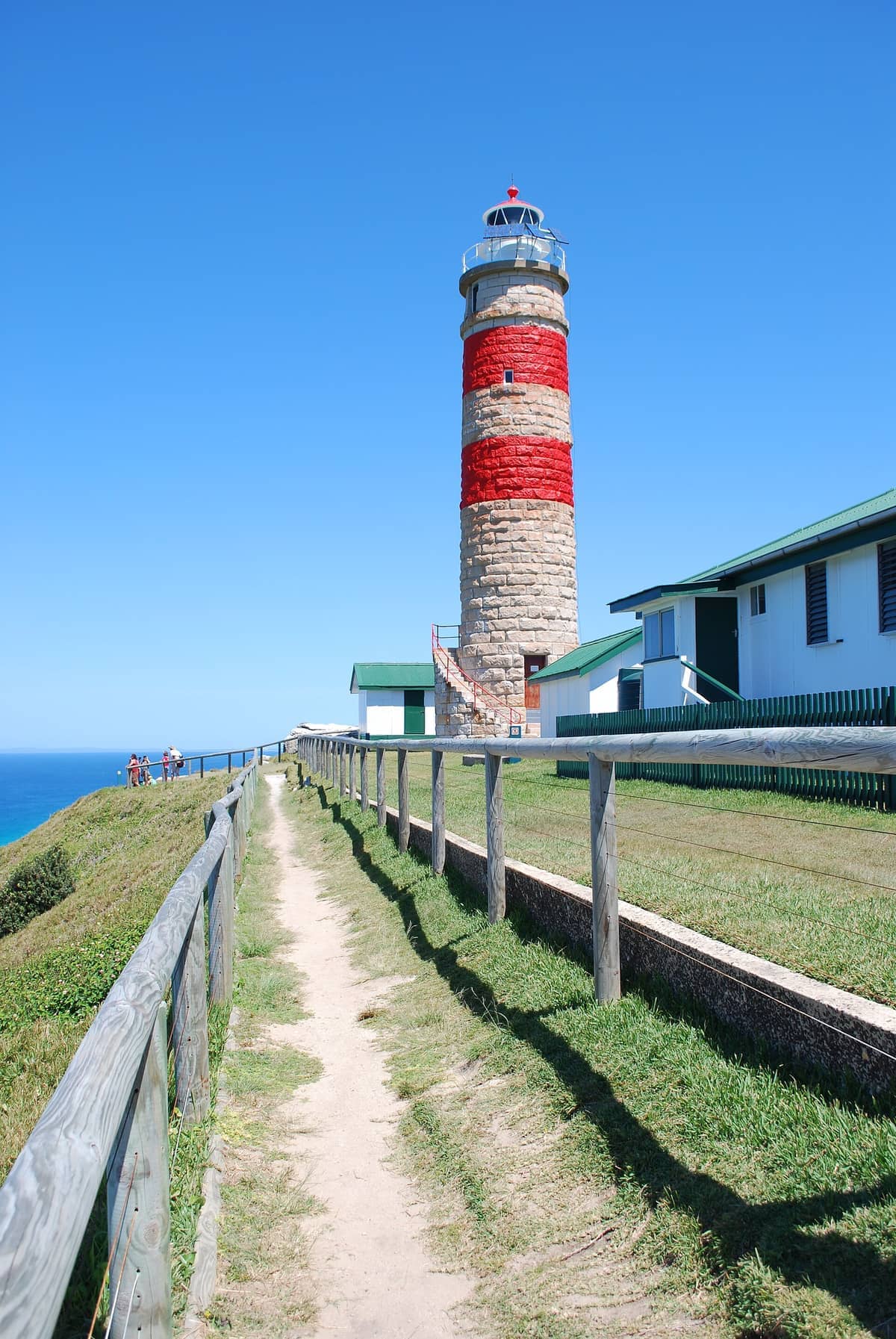
Cape Moreton Lighthouse sits at the north-eastern tip of Mulgumpin, the island also known as Moreton Island, within Gheebulum Kunungai (Moreton Island) National Park. Completed in 1857, it is Queensland's first lighthouse and one of the oldest surviving structures in the state. The 23-metre tower was constructed from sandstone quarried directly on the island, meaning the building material and the landscape it stands in are, quite literally, the same thing.
The lighthouse interior is not open to visitors, but nobody comes here primarily for the building. The headland offers expansive views across Moreton Bay, the Pacific Ocean, and the island stretching south. On a clear day, the Brisbane skyline is faintly visible across the water. The surrounding park landscape is low coastal heath, wind-shaped and spare, which amplifies the sense of exposure at the cape.
ℹ️ Good to know
The site is open 24 hours. Check Queensland Parks alerts before your trip for any temporary access changes or track closures.
Getting There: The Journey Is Part of the Experience
Reaching Cape Moreton is not complicated, but it does require genuine planning. Moreton Island is accessible only by ferry, barge, or private boat — there is no bridge. Several commercial ferry operators depart from the Brisbane region, and crossing times vary depending on departure point and vessel. For detailed logistics on getting to the island, the Moreton Island day trip guide covers ferry options, departure points, and what to book in advance.
Once on the island, a 4WD vehicle is essential. The island has no sealed roads, and the sandy tracks to the northern tip require proper off-road clearance and deflated tyres. A vehicle access permit is required; verify the current fee and booking process through Queensland Parks before you go. If you do not have a 4WD, some island tour operators run guided trips to the cape — this is a practical alternative worth investigating, particularly for day visitors arriving by passenger ferry.
From the Cape Moreton car park, a short track of approximately 100 metres leads uphill through coastal scrub to the lighthouse precinct. The gradient is gentle but uneven underfoot. There are no wheelchair-accessible facilities at this site, and the terrain from the car park onward is not suitable for mobility aids or prams.
⚠️ What to skip
Do not attempt to drive to Cape Moreton in a standard two-wheel-drive vehicle. The sandy island tracks will leave you stranded. Check your tyre pressure and carry a recovery kit or join a guided tour if you are unfamiliar with sand driving.
Tickets & tours
Live prices and dates from our booking partner. If you book, we may earn a commission at no extra cost to you.
Escape Tour self-guided, interactive city challenge in Brisbane
From 30 €Instant confirmationEscape Tour self-guided, interactive city challenge in Brisbane
From 30 €Instant confirmationLuggage Storage in Brisbane
From 5 €Instant confirmationFree cancellationBrisbane's dark stories true crime tour
From 21 €Instant confirmationFree cancellation
The Lighthouse and Its History
When the Cape Moreton Lighthouse was lit for the first time in 1857, Queensland would not become a separate colony from New South Wales until 1859. The light was critical: Moreton Bay is the gateway shipping lane into what would become one of Australia's major port cities, and the cape's rocky headland had already claimed vessels in the colonial era. Building here was a logistical challenge solved by using the island's own sandstone, giving the tower a warm ochre colour that reads differently in morning and afternoon light.
The tower now stands 23 metres tall, and its light is automated today, as with virtually all Australian lighthouses. The keeper's cottages and associated heritage structures remain on the site, lending the headland a coherent colonial-era character rather than a single isolated tower. These buildings are part of a protected heritage complex; their quiet, functional architecture reads as deliberate understatement against the drama of the surrounding coastline.
For those interested in Queensland's broader heritage landscape, the Brisbane heritage and history guide provides useful context for understanding how this lighthouse fits into the region's colonial-era infrastructure.
What to Expect at Different Times of Day
Early morning is objectively the best time to be at the cape. The light is low and golden, the sandstone tower glows, and the ocean surface catches the sun at an angle that makes the colour variations in the water exceptionally clear. Wind is typically calmer in the morning hours, which also matters for photographs and for simply standing on the exposed headland without being buffeted.
Midday brings stronger light that flattens the landscape and makes photography harder. It is also when the site is at its busiest, particularly on weekends and during school holidays when guided 4WD tours arrive in clusters. The exposed headland offers minimal shade, so the combination of full sun and wind can be uncomfortable in summer months — bring sun protection, a hat, and more water than you think you need.
Late afternoon offers a second quality light window, and the drive back through the island's interior tracks in the golden hour has its own appeal. Sunset from the cape can be exceptional, but factor in how long it takes to navigate the sand tracks back to your accommodation or the ferry departure point in fading light.
Whale Watching and Wildlife
Between June and November, humpback whales migrate north and then south through the waters off Cape Moreton. The headland is one of the most reliable land-based whale-watching points in South East Queensland. The height advantage of the cape allows you to spot spouts and breaches at considerable distance, and on active days multiple whales may be visible simultaneously. Bring binoculars — they are not optional if whale watching is your primary reason for the trip.
Outside whale season, the waters below the cape are still active. Dolphins are commonly sighted, and loggerhead turtles are known to feed in these waters. The coastal heath surrounding the lighthouse supports small bird species typical of Queensland's sandy island ecosystems. The overall wildlife density is not high, but the setting gives sightings real weight — there is no background noise, no crowds pressing in, and the ocean stretches uninterrupted to the horizon.
Moreton Island's broader wildlife and marine environment is covered in the Brisbane wildlife guide, which includes context on seasonal migration patterns and marine life in the bay.
Photography and Practical Considerations
The lighthouse exterior is the primary photographic subject, and it rewards patience with composition. The ochre sandstone against blue sky is the obvious frame, but the structure from the eastern side, with ocean background and low coastal scrub in the foreground, tends to produce stronger images than the straightforward front-on shot most visitors take first.
For wide landscape photography, the views north and east from the headland are unobstructed and substantial. A polarising filter is useful for managing ocean glare at midday. The site has picnic tables and non-flush toilets, but no power, so charge all devices before leaving the mainland.
💡 Local tip
Bring binoculars, a full water bottle, sunscreen, and a hat regardless of season. The cape is completely exposed. In summer (December to February), heat and UV intensity at this latitude are serious considerations, not minor inconveniences.
Cape Moreton is part of a wider island experience. Many visitors combine it with the island's other drawcards, including the Tangalooma Wrecks for snorkelling, the island's sandboarding slopes, and time at Blue Lagoon, the island's main freshwater perched lake.
Who This Attraction Suits — and Who It Does Not
The journey to Cape Moreton filters its own visitors. Anyone willing to take a ferry, arrange 4WD transport, and walk an uneven track will find a heritage site with genuine atmosphere and views that feel proportionate to the effort involved. The sense of remoteness is real even on a busy day, because the island itself absorbs visitors across a large area.
Travellers expecting a polished heritage attraction with interpretive signage, guided tours of the interior, café facilities, or easy accessibility will find the site underwhelming. The lighthouse cannot be entered. The Cape Moreton Information Centre offers displays and exhibits, but there is no café. The only thing the cape offers is a historic structure in a dramatic natural setting, with excellent views in good conditions and exposed, uncomfortable conditions when the weather is poor.
Visitors with limited mobility should be aware that the site has no wheelchair-accessible infrastructure, and the terrain from the car park to the lighthouse precinct is uneven and uphill. The broader Moreton Island experience also involves significant physical access challenges from the ferry transfer onward.
Insider Tips
- Time your arrival at the cape for the first light of morning, particularly in winter (June to August) when conditions are clearer and whale activity off the headland is at its peak. The journey from Tangalooma or the northern beach camp can vary with track conditions and route; allow time for the drive and the walk.
- If you are visiting without a 4WD, contact island tour operators directly before booking a passenger ferry. Some operators run half-day or full-day 4WD tours that include the cape as a stop — this is often more practical than arranging your own vehicle.
- The sandstone tower photographs most interestingly from the eastern side with ocean in the background, not from the entry path where most visitors stop. Walk the full perimeter of the precinct before committing to your composition.
- Check Queensland Parks alerts the day before you travel. Seasonal conditions, particularly after heavy rain, can close island tracks temporarily — and there are no refunds on ferry bookings if you cannot reach the site.
- Whale season runs roughly June to November; check local conditions and allow time to watch from the headland.
Who Is Cape Moreton Lighthouse For?
- History and heritage travellers interested in Queensland's colonial-era infrastructure
- Wildlife and nature photographers seeking unobstructed ocean vantage points
- Whale watchers during the June to November migration season
- Adventurous day-trippers with 4WD access or guided tour arrangements
- Couples and solo travellers seeking a remote, uncrowded coastal experience
Nearby Attractions
Other things to see while in Moreton Island:
- Moreton Island Desert & Sandboarding
The Tangalooma Desert on Moreton Island is one of Queensland's most unexpected landscapes: a field of pale sand dunes rising sharply from coastal scrub, roughly 40 km from Brisbane. Sandboarding, or sand tobogganing as the operators call it, is the main draw. It is physical, sun-drenched, and genuinely exhilarating in a way that photographs don't fully capture.
- Tangalooma Island Resort
Tangalooma Island Resort sits on the western shore of Moreton Island, about 40 km from Brisbane. It combines wild dolphin feeding, snorkelling over a deliberate shipwreck reef, desert-style sandboarding, and calm bay swimming in one accessible package. Day trippers and overnight guests share the same stretch of sand, though the rhythm of each experience is very different.
- Tangalooma Wrecks
Fifteen vessels deliberately sunk by the Queensland Government between 1963 and 1984 now form an artificial reef teeming with marine life off the shores of Moreton Island. Accessible by snorkel or glass-bottom boat, the Tangalooma Wrecks are the centrepiece of a day trip that combines island beauty with underwater discovery.
Planning a trip? Discover personalized activities with the Nomado app.