Tangalooma Island Resort: Everything You Need to Know Before You Go
Tangalooma Island Resort sits on the western shore of Moreton Island, about 40 km from Brisbane. It combines wild dolphin feeding, snorkelling over a deliberate shipwreck reef, desert-style sandboarding, and calm bay swimming in one accessible package. Day trippers and overnight guests share the same stretch of sand, though the rhythm of each experience is very different.
Quick Facts
- Location
- Moreton Island, Queensland, approx. 40 km from Brisbane
- Getting There
- Resort ferry from 220 Holt Street Wharf, Pinkenba, Brisbane; approx. 75-minute crossing
- Time Needed
- Full day minimum; overnight or multi-night stays unlock more of the island
- Cost
- Day cruise fares from A$109 adult / A$79 child (ages 3–14); verify current pricing directly with the resort or cruise operator; verify current pricing directly with the resort or cruise operator
- Best for
- Families, snorkellers, wildlife lovers, and anyone wanting a beach escape without flying
- Official website
- www.tangalooma.com/resort
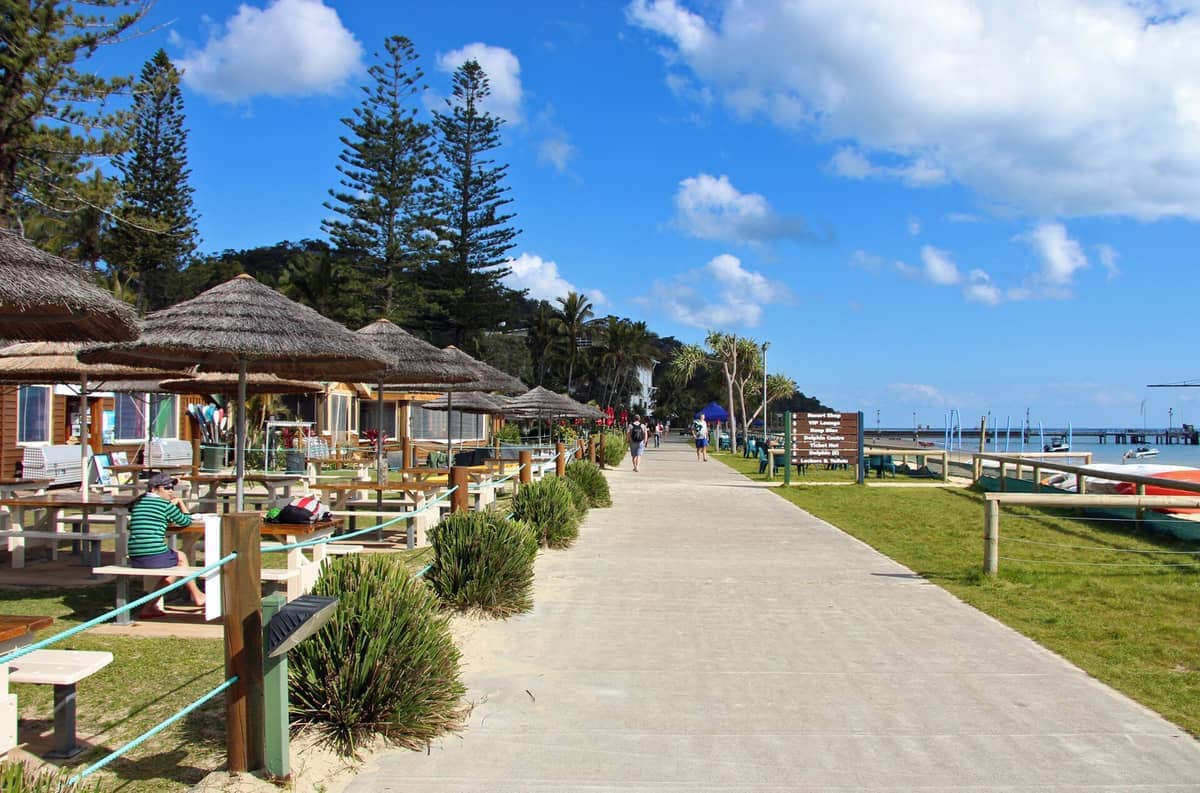
What Tangalooma Island Resort Actually Is
Tangalooma Island Resort is a private resort and day-visit destination on the western shore of Moreton Island, a large sand island that sits roughly 40 km north-east of Brisbane across Moreton Bay. The resort is not a theme park or a single attraction: it is a collection of experiences spread across beach, water, and the island's dramatic interior dunes, packaged together for guests and day visitors.
The site has a longer history than most visitors realise. A whaling station operated here through the 1950s, processing humpback whales from Moreton Bay until commercial whaling in the area wound down. The station closed in 1962 and was sold in 1963 to a syndicate of Gold Coast businessmen for resort development. In 1980 the Osborne family purchased the resort. The decommissioned hulks that once served the whaling operation were later sunk deliberately offshore to create the artificial reef now known as the Tangalooma Wrecks, one of the most accessible snorkel sites in South East Queensland.
The full context of the island is worth understanding before you visit. Moreton Island is largely protected as a national park, and Tangalooma sits within it as a permitted enclave. For more on the broader island environment, see the Moreton Island destination guide.
💡 Local tip
Access to Tangalooma is by boat. There is no public ferry. You can book the resort's own passenger vessel or travel by private boat; the island is also served by a vehicular barge, which does not provide access directly to the resort. The departure point for the resort ferry is 220 Holt Street Wharf in Pinkenba, a short drive or rideshare from Brisbane CBD.
The Crossing and First Impressions
The ferry crossing takes approximately 75 minutes and runs across open Moreton Bay, which means conditions can vary. On calm mornings the water is flat enough to spot dolphins from the bow. On windier afternoons the bay chops up, and passengers without sea legs may want to sit midship and keep their eyes on the horizon. The crossing itself is part of the experience: as the Brisbane skyline recedes and the sand island fills the view, the shift in atmosphere is noticeable.
Arriving at the resort jetty, the first thing most visitors register is the scale of the beach. The bay-facing shore at Tangalooma is sheltered and shallow, with calm water that stays warm for much of the year. The wrecks are visible from the beach at low tide, their rusting superstructures breaking the surface about 150 metres offshore. The resort's buildings sit low against the dunes, and the overall effect is less resort-complex and more beach camp with facilities.
⚠️ What to skip
Morning departures tend to book out weeks in advance during Queensland school holidays (roughly January, April, July, and September-October). If you are visiting in those windows, book the ferry as early as possible. Last-minute spots are rare.
Tickets & tours
Live prices and dates from our booking partner. If you book, we may earn a commission at no extra cost to you.
Luggage Storage in Brisbane
From 5 €Instant confirmationFree cancellationBrisbane's dark stories true crime tour
From 21 €Instant confirmationFree cancellationFull-day Mount Tamborine winery tour from Brisbane with lunch
From 140 €Instant confirmationFree cancellationNorth Stradbroke Island small groups day tour
From 79 €Instant confirmationFree cancellation
The Tangalooma Wrecks: Snorkelling the Artificial Reef
The Tangalooma Wrecks are fifteen vessels that were deliberately sunk between the 1960s and 1980s to create a breakwater. They rest in relatively shallow water, making them accessible to snorkellers without scuba training. The wrecks now support significant marine life: schools of small reef fish, turtles, rays, and the occasional tuskfish move through the rusting structures year-round. They rest in relatively shallow water, making them accessible to snorkellers without scuba training. The wrecks now support significant marine life: schools of small reef fish, turtles, rays, and the occasional tuskfish move through the rusting structures year-round.
The clearest snorkelling conditions tend to be in the morning before wind and boat activity stirs up sediment. Visibility can drop noticeably in the afternoon, especially after a run of windy days. Water temperature peaks between December and March, when it sits around 24–26°C, making wetsuit rental optional for most swimmers. In winter months (June to August), the water drops to around 20°C and a thin wetsuit or rash vest becomes more comfortable than optional.
Snorkel gear can be hired through the resort. If you are combining the wrecks with a visit to the Tangalooma Wrecks as a standalone focus, some cruise packages include gear hire in the ticket price. Confirm what is included when booking.
ℹ️ Good to know
The wrecks are also a popular night dive site for certified divers staying at the resort. Night dive sessions reveal bioluminescent plankton and nocturnal species not visible during the day.
Wild Dolphin Feeding: What to Expect
Each evening at dusk, a pod of wild Indo-Pacific bottlenose dolphins approaches the resort's shallow beach in front of the jetty. Resort rangers supervise a feeding session where guests can enter the water in a supervised line and hand-feed individual dolphins. This has been happening at Tangalooma since 1992 and is one of the most-cited reasons families make the trip.
A few things are worth knowing before you arrive expecting a guaranteed close encounter. The dolphins are wild and come of their own choice. The number of dolphins that arrive on any given evening varies, as does how close they swim. Some nights the pod is active and curious; other nights the interaction is brief. The feeding queue can be long during peak periods, and not every guest in the queue will necessarily get to hand-feed a fish. Children need to be supervised and comfortable standing in shallow water in low light.
Day trippers who want to attend the feeding need to check that their cruise departs late enough to cover the evening session, as some day-cruise options bring guests back to Brisbane before dusk. Confirm the schedule explicitly when booking. Overnight guests have a significant advantage here: they can attend every evening and increase their chances of a meaningful interaction.
Desert Dunes and Sandboarding
Moreton Island's interior is largely composed of large sand dunes, some reaching over 280 metres above sea level. The resort offers guided sandboarding tours to the inland dunes, which sit in stark contrast to the tropical beach on the waterfront. The sensation of standing on a steep sand slope with nothing but blue sky and sand in every direction is genuinely disorienting in the best way. See also: Moreton Island sandboarding for a more detailed breakdown of the activity itself.
Sandboarding runs on modified snowboards and requires no prior experience. The dunes are steep enough to generate real speed but soft enough for a non-catastrophic wipeout. Morning tours avoid the peak heat of the day and offer better light for photography. The sand reflects heat intensely by midday, so sunscreen, sunglasses, and water are not optional items. Closed shoes protect feet from hot sand during the uphill walk between runs.
Time of Day and How the Resort Changes
Early morning at Tangalooma before the day-tripper crowd arrives is the quietest and most atmospheric window. Overnight guests who walk the beach before 8am will often see wading birds working the shoreline and can snorkel the wrecks with minimal company. The light at this hour is also the most useful for photography: low-angle sun picks out the wreck superstructures above the waterline in strong relief.
The middle of the day is the most crowded period, particularly on weekends and during school holidays. The beach fills, the snorkel zone becomes busy, and the resort facilities (dining, equipment hire) have queues. If you are a day tripper, this is when most of your time will fall, so manage expectations accordingly. The beach itself remains enjoyable, but the experience is more social than solitary.
Late afternoon is when the resort's character shifts again. Day trippers begin loading the return ferry, the beach quiets noticeably, and the light turns golden across the bay. Overnight guests get this transition for free. The dolphin feeding then anchors the evening, followed by a resort beach that is quiet enough to hear the water.
💡 Local tip
If your budget allows only one night, make it here rather than a day trip. The difference in experience between a day visitor and an overnight guest is substantial, not marginal.
Practical Information for Getting There and Getting Around
The resort's passenger ferry departs from 220 Holt Street Wharf in Pinkenba, which is not a central suburb. It is best reached by car or rideshare; check current public transport options before travelling. Allow extra time to find parking if driving, especially on busy weekend departures. The crossing is approximately 75 minutes each way and is not serviced by Translink.
The resort lists day cruise fares from A$109 for adults and A$79 for children aged 3 to 14, including a fuel surcharge until 31 January 2027. Prices vary by date and package inclusions. Always confirm current pricing directly with the resort or the cruise operator before booking, as rates and inclusions change.
Within the resort, the beach and main facilities are flat and generally accessible. The resort reports wheelchair-accessible toilets, paved paths, and ramps to most areas. Kookaburra Lodge has lift access and a limited number of accessible rooms. Boarding the ferry may be difficult for larger wheelchairs, and beach wheelchair availability is limited and subject to advance arrangement. Contact the resort directly to confirm arrangements before travelling.
For broader context on reaching Moreton Island and planning an extended visit beyond the resort, the Moreton Island day trip guide covers logistics and alternatives in more detail.
Who Should Skip This
Tangalooma is not the right choice for travellers who are uncomfortable on open-water ferries, particularly if Moreton Bay is running a swell. The crossing is not short, and conditions can be rough without notice. Travellers with significant mobility limitations should contact the resort before booking, as beach terrain and ferry boarding create real practical barriers despite the resort's general accessibility features.
If your primary interest is seeing wild dolphins in a less curated setting, or exploring Moreton Island beyond the resort boundary, a day trip on the vehicular barge with a 4WD is a completely different and more independent experience. The resort packages the island's highlights efficiently, but it does so within a defined footprint. Solo travellers seeking isolation or serious wildlife photography may find the group-tour rhythm limiting.
Budget-focused travellers should note that costs add up quickly once transport, activities, and food are combined. The Brisbane on a budget guide has alternatives for those watching spend closely.
Insider Tips
- Book the earliest possible morning ferry departure, especially if snorkelling the wrecks is a priority. Water clarity peaks in the first few hours after sunrise before afternoon wind stirs up sediment.
- Pack your own snacks and water for the crossing and the beach. Resort food and drink pricing reflects a captive audience. A small cooler is worth the effort on a full day trip.
- For the dolphin feeding, position yourself in the queue early in the evening. Rangers typically limit how many guests can enter the water at once, and late arrivals may be spectators rather than participants.
- Bring a rash vest or thin wetsuit top even in summer. The reef snorkel involves extended time in open water, and sun reflection off the surface causes burns faster than most visitors expect.
- If sandboarding is a priority, book a morning tour rather than afternoon. The sand compacts slightly in the cooler morning air, giving faster, more controlled runs, and the uphill walk between runs is far less punishing before the midday heat sets in.
Who Is Tangalooma Island Resort For?
- Families with children who want wildlife interaction (dolphin feeding) and outdoor adventure (sandboarding) in one location
- Snorkellers and beginner divers looking for an accessible reef experience within a day trip from Brisbane
- Couples or groups planning a weekend escape that feels genuinely different from a standard beach day
- Travellers on a multi-day Brisbane itinerary who want one day that sits completely outside the city
- Anyone who wants to experience Moreton Island without the logistics of a 4WD barge and self-sufficient camping
Nearby Attractions
Other things to see while in Moreton Island:
- Cape Moreton Lighthouse
Standing on the northernmost tip of Moreton Island, Cape Moreton Lighthouse has guided ships since 1857, making it Queensland's oldest lighthouse. Reaching it requires a ferry crossing, a 4WD track, and a short uphill walk — which is exactly why the views feel earned.
- Moreton Island Desert & Sandboarding
The Tangalooma Desert on Moreton Island is one of Queensland's most unexpected landscapes: a field of pale sand dunes rising sharply from coastal scrub, roughly 40 km from Brisbane. Sandboarding, or sand tobogganing as the operators call it, is the main draw. It is physical, sun-drenched, and genuinely exhilarating in a way that photographs don't fully capture.
- Tangalooma Wrecks
Fifteen vessels deliberately sunk by the Queensland Government between 1963 and 1984 now form an artificial reef teeming with marine life off the shores of Moreton Island. Accessible by snorkel or glass-bottom boat, the Tangalooma Wrecks are the centrepiece of a day trip that combines island beauty with underwater discovery.
Planning a trip? Discover personalized activities with the Nomado app.