Mae Ngat Dam: Northern Thailand's Most Unusual Overnight Stay
Mae Ngat Dam sits roughly 50–60 kilometres north of Chiang Mai in Mae Taeng District, forming a wide reservoir ringed by forested mountains. The attraction here is not the dam itself but the cluster of bamboo houseboats moored on the water, where visitors can sleep overnight, kayak at dawn, and eat fresh fish in near-total silence.
Quick Facts
- Location
- Mae Taeng District, Chiang Mai Province (approx. 50–60 km north of Chiang Mai city)
- Getting There
- Private car or songthaew from Mae Rim or Chiang Dao; no direct scheduled public bus service to the dam (songthaews only run part of the way)
- Time Needed
- Overnight stay recommended; day trips possible but miss the point
- Cost
- Houseboat packages (accommodation + meals + kayak) vary by operator; budget roughly 600–1,200 THB per person per night depending on group size and package
- Best for
- Couples, families, nature lovers, and anyone wanting a low-key escape from the city
What Mae Ngat Dam Actually Is
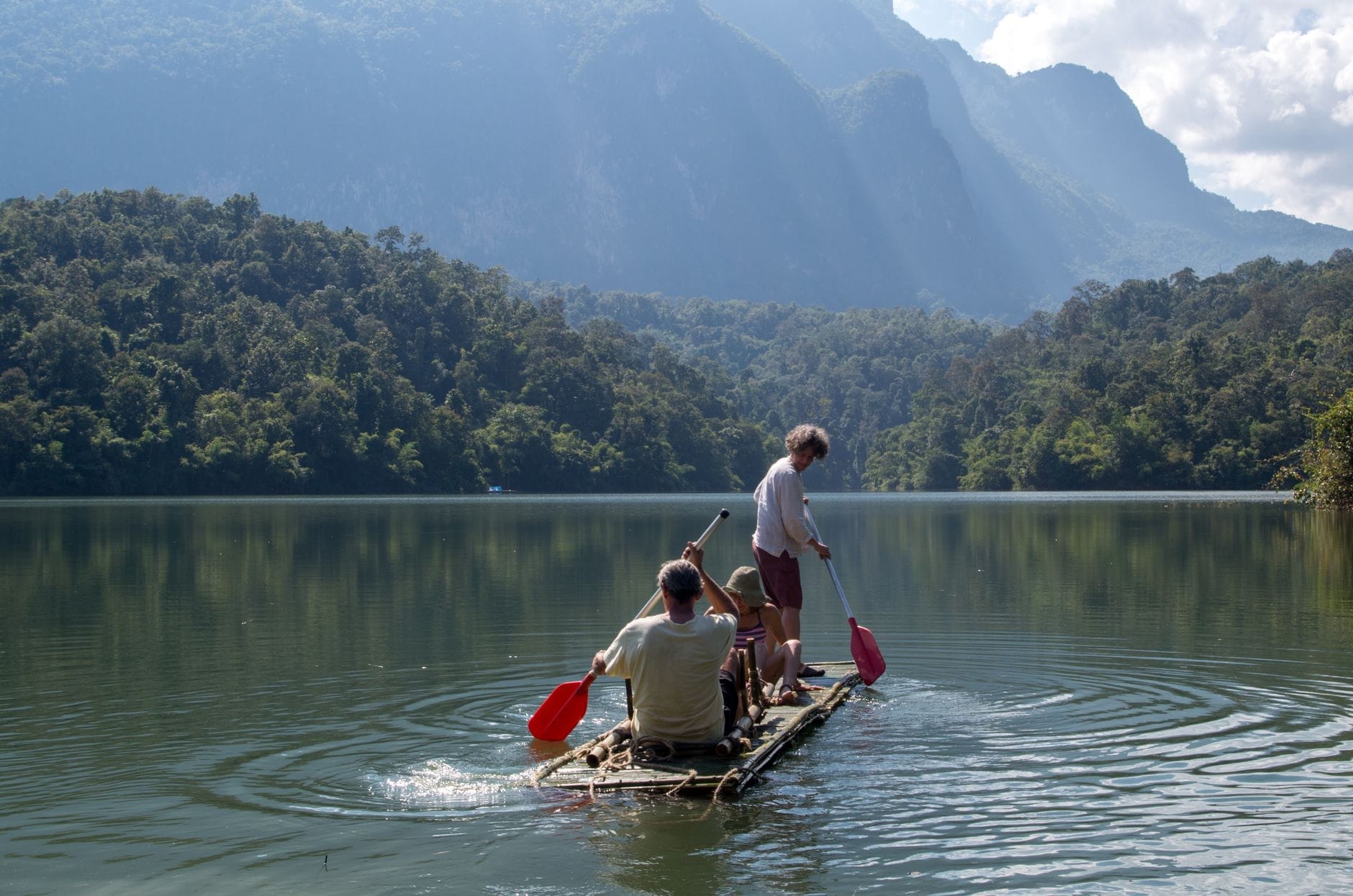
Mae Ngat Dam is an irrigation reservoir constructed on the Mae Ngat River in Mae Taeng District. The dam itself, completed in 1985, was built to support agricultural water supply across the region. When the valley flooded, the rising water swallowed the tops of trees, and those ghostly trunks still poke above the surface in the dry season, giving the reservoir a distinctive silhouette that sets it apart from any ordinary lake. The surrounding terrain is mountain forest, and on clear mornings the ridgeline reflects cleanly in the still water.
What most visitors come for is the string of floating bamboo houseboats operated by local families along the reservoir's edge. These are not luxury lodges. They are simple, low-slung platforms with thatched roofs, basic mattresses, mosquito nets, and shared bathroom facilities. The experience trades comfort for atmosphere, and for the right traveller that trade is entirely worth it.
ℹ️ Good to know
Mae Ngat Dam sits at roughly 350 metres elevation. Nights are noticeably cooler than Chiang Mai city, especially from November through February. Bring a light layer even if the city felt warm when you left.
The Houseboat Experience: What to Expect Hour by Hour
Arriving in the afternoon, the mood at the houseboat pier feels unhurried. Operators typically meet guests at a small embarkation point and ferry everyone out by longtail boat. The ride across open water, with the dam wall visible downstream and hills on every side, establishes immediately that you are somewhere genuinely remote. The sound of Chiang Mai traffic belongs to another world.
Late afternoon is when the reservoir looks its best. The light drops behind the western ridge around 5pm and the whole surface turns amber and then grey. Guests who arrive early enough can take a kayak out before sunset. The dead tree stumps that would look eerie in a photograph are, in person, perfectly ordinary landmarks, useful for navigation and frequently occupied by kingfishers and cormorants.
Dinner is usually served communally on the houseboat deck: grilled fish pulled from the reservoir, sticky rice, stir-fried vegetables, and simple Thai curries. The quality is home-style rather than restaurant-polished, but eating outside over flat water while the sky goes dark is an experience that outlasts any Michelin-rated meal in memory. After dinner, if the moon is weak, the stars are genuinely impressive. Light pollution from the valley below barely reaches this elevation.
Early morning is the reason to stay overnight rather than day-trip. By 6am, mist sits on the water in long flat layers, the hills are barely outlined in grey, and the silence is complete except for birds. Kayaking at this hour, when no other boats are moving, is the single best experience the reservoir offers. Guests who sleep in past 8am miss it entirely.
Tickets & tours
Live prices and dates from our booking partner. If you book, we may earn a commission at no extra cost to you.
Private Mae Hong Son highlights car tour from Pai
From 175 €Instant confirmationFree cancellationMae Kampong village full-day trip with private transfer
From 132 €Instant confirmationFree cancellationPrivate transfer from Chiang Mai City to to Mae Hong Son Town by van
From 225 €Instant confirmationFree cancellationDoi Inthanon National Park small group guided tour
From 34 €Instant confirmationFree cancellation
Getting There from Chiang Mai
There is no direct public transport to Mae Ngat Dam. The most straightforward approach is to rent a car or motorbike from Chiang Mai and drive north on Route 107 toward Chiang Dao, turning off toward Mae Taeng. The drive takes approximately 1 to 1.5 hours depending on traffic leaving the city. Navigation apps handle the route well, though the final few kilometres on smaller roads can be narrow.
Many houseboat operators offer pickup from Chiang Mai city as part of their package, which is worth asking about when booking. Alternatively, you can take a songthaew toward Mae Rim or Mae Taeng and arrange a local taxi for the final stretch, though this requires more coordination. If you are already exploring the area, Mae Ngat Dam pairs naturally with a stop at Mae Sa Waterfall on the way out or back.
💡 Local tip
Book your houseboat at least a few days ahead during Thai school holidays and from November through February. Operators are small family businesses with limited capacity, and the best spots fill up fast during cool season.
Historical and Ecological Context
The Mae Ngat Somboon Chon Dam, to use its full name, is part of a network of irrigation infrastructure developed across northern Thailand during the latter half of the 20th century. The project reshaped the valley hydrology and displaced some agricultural land, but it also created a water body that local families have turned into a modest but genuine ecotourism resource over the following decades. The houseboats are not a commercial development imposed from outside; they grew organically as local families recognised the reservoir's appeal.
The forest around the reservoir falls within the broader Mae Taeng watershed. The area supports a reasonable diversity of bird species, particularly waterbirds and raptors that use the reservoir edge. Serious birders with early mornings and patience will find the location rewarding, though it does not rival dedicated birding sites like Doi Inthanon. Fish from the reservoir, particularly tilapia, are a genuine local food source, not a tourist gimmick.
The wider Chiang Dao area to the north contains the remarkable Chiang Dao Cave, making it possible to combine both sites on a two-day trip north of Chiang Mai. The road between Mae Ngat and Chiang Dao runs through beautiful mountain scenery and takes around an hour.
Practical Details and What to Bring
Houseboat accommodation is basic by design. Mattresses are thin, bathrooms are shared, and electricity may be limited in the evenings. This is not a complaint so much as a description: the audience for Mae Ngat Dam is people who understand the trade-off and want it. Guests who need reliable air conditioning, private bathrooms, or fast WiFi will be miserable.
- Bring cash: most operators do not accept cards
- Insect repellent is essential, especially at dusk and dawn on the water
- A waterproof bag for kayaking protects your phone and camera
- Lightweight warm layer for evenings and early mornings, even in the hot season
- Torch or headlamp: lighting on the houseboat platforms can be dim after dark
- Reef-safe sunscreen if you plan to swim; the reservoir is a water supply
⚠️ What to skip
During the burning season, roughly February through April, smoke haze from agricultural fires can reduce visibility significantly and sit low over the water. The experience is less pleasant than in cool season. Check air quality before booking.
For broader context on when to plan your trip north, the best time to visit Chiang Mai guide covers seasonal patterns in detail, including how the burning season affects northern destinations like Mae Ngat.
Photography at Mae Ngat Reservoir
The dead trees rising from the water surface are the most photographed feature of Mae Ngat, and for good reason. In morning mist, with soft light and still water, they make for genuinely striking compositions. A wide-angle lens captures the scale of the reservoir and the mountain backdrop together. A telephoto picks out birds on the stumps or details of the opposite shoreline.
Shoot from the kayak for the lowest and most interesting perspective. Flat water in the first hour after sunrise doubles the sky and creates symmetry that is difficult to achieve from shore. If photography is a significant reason for your trip, read through the Chiang Mai photography guide for additional context on northern Thailand's most photogenic locations and seasonal light conditions.
💡 Local tip
Ask your houseboat operator if kayaks are available first thing in the morning before breakfast. Some operators reserve early-morning kayak use only for guests who specifically request it the night before.
Who Should Skip Mae Ngat Dam
This is not an attraction for everyone. If you have one or two days in Chiang Mai and want to tick off temples, markets, and key cultural sights, Mae Ngat requires too much travel time for too niche a payoff. The 60-kilometre drive and the overnight commitment mean it suits longer trips or specifically nature-focused itineraries.
Travellers with mobility limitations should know that the houseboat platforms involve stepping on and off longtail boats, walking on uneven bamboo decking, and managing at night with limited lighting. It is manageable for most people but requires reasonable sure-footedness. Very young children can enjoy the experience but need careful supervision around open water.
Day-trippers who simply want to see the reservoir can drive up, walk along the embankment, and take photos without booking a houseboat. The view from the dam wall across the reservoir is worth the drive on its own. But if you are in the area for more than a passing look, staying overnight is the version that makes the journey worthwhile. Pair it with a longer northern loop through Chiang Dao to make the most of the distance from the city.
Insider Tips
- Request the houseboat furthest from the pier if you want the quietest night and the best unobstructed view across open water. Units closer to shore pick up more noise and have more limited sightlines.
- The reservoir level drops noticeably in the dry season from January onward, exposing more dead tree stumps. This actually improves the photography but slightly shortens the effective kayaking range near the edges.
- Ask your operator about fishing. Some houseboat families will let guests try traditional bamboo-rod fishing off the deck in the evening, which is a genuine local activity rather than a staged tourist experience.
- If you are driving yourself, arriving before 3pm gives you enough time to settle in, kayak before sunset, and fully appreciate the evening on the water. Arriving after dark means missing the best of the atmosphere.
- A portable battery pack is useful. Some houseboats cut the generator by 10pm, and charging your devices overnight may not be possible.
Who Is Mae Ngat Dam (Houseboat Area) For?
- Couples looking for a low-key, atmospheric overnight escape within reach of Chiang Mai
- Families with older children who enjoy kayaking and being outdoors
- Photographers targeting misty water and dead-tree compositions at sunrise
- Travellers building a multi-day northern loop through Mae Rim, Mae Taeng, and Chiang Dao
- Nature-focused visitors who find city temples and markets less compelling than quiet water and forest air
Nearby Attractions
Other things to see while in Chiang Dao:
- Chiang Dao Cave (Tham Chiang Dao)
Tham Chiang Dao is a vast limestone cave complex near the base of Doi Chiang Dao mountain, roughly 70km north of Chiang Mai. Some sections are lit and walkable independently; others require a local guide with a lantern. The experience blends natural geology with active Buddhist devotion in a way few caves in Southeast Asia manage.
- Doi Ang Khang Royal Agricultural Station
Doi Ang Khang Royal Agricultural Station sits at roughly 1,400 metres on a ridge that edges the Myanmar border, where the air carries a genuine chill and the hillsides bloom with temperate flowers rarely seen elsewhere in Thailand. It is part royal garden, part agricultural research centre, and part window into the hill tribe communities that have called this plateau home for generations.
Planning a trip? Discover personalized activities with the Nomado app.