Love Circle: Nashville's Best Free Skyline Viewpoint
Love Circle is a hilltop overlook above the Hillsboro-West End neighborhood, offering one of Nashville's most complete panoramic views of the downtown skyline. Free, informal, and generally open from early morning until around 9 p.m., it rewards visitors who time their visit for golden hour or after dark.
Quick Facts
- Location
- 3436 Love Circle, Nashville, TN 37212 (above Vanderbilt University)
- Getting There
- No direct bus stop; best reached by car, rideshare (Uber/Lyft), or on foot from Vanderbilt area. Narrow one-way roads lead to the summit.
- Time Needed
- 20–45 minutes
- Cost
- Free, no admission
- Best for
- Sunset views, night skyline photography, quick scenic stops
What Is Love Circle?
Love Circle is a hilltop overlook sitting roughly 200 feet above the surrounding neighborhood, perched on a ridge just west of Vanderbilt University in Nashville, Tennessee. It is an informal public park with no gate, no ticket booth, and no attendant. What it does have is arguably the clearest unobstructed panorama of downtown Nashville available from any publicly accessible point in the city.
The site takes its name from Love Circle, the short loop road that traces the crown of the hill. A historical marker erected in 1994 by the Hillsboro-West End Neighborhood Association identifies the site formally as Love Circle Park and references both the property's earlier association with Martin R. Wetterau (1858–1939), linked to the reservoir and grounds, and the site's Civil War significance during the Battle of Nashville in December 1864.
💡 Local tip
Arrive 20 minutes before sunset to claim a good position along the low retaining wall. The circle is small, and on clear evenings in spring and fall it fills quickly with locals who know the timing well.
The View: What You Actually See
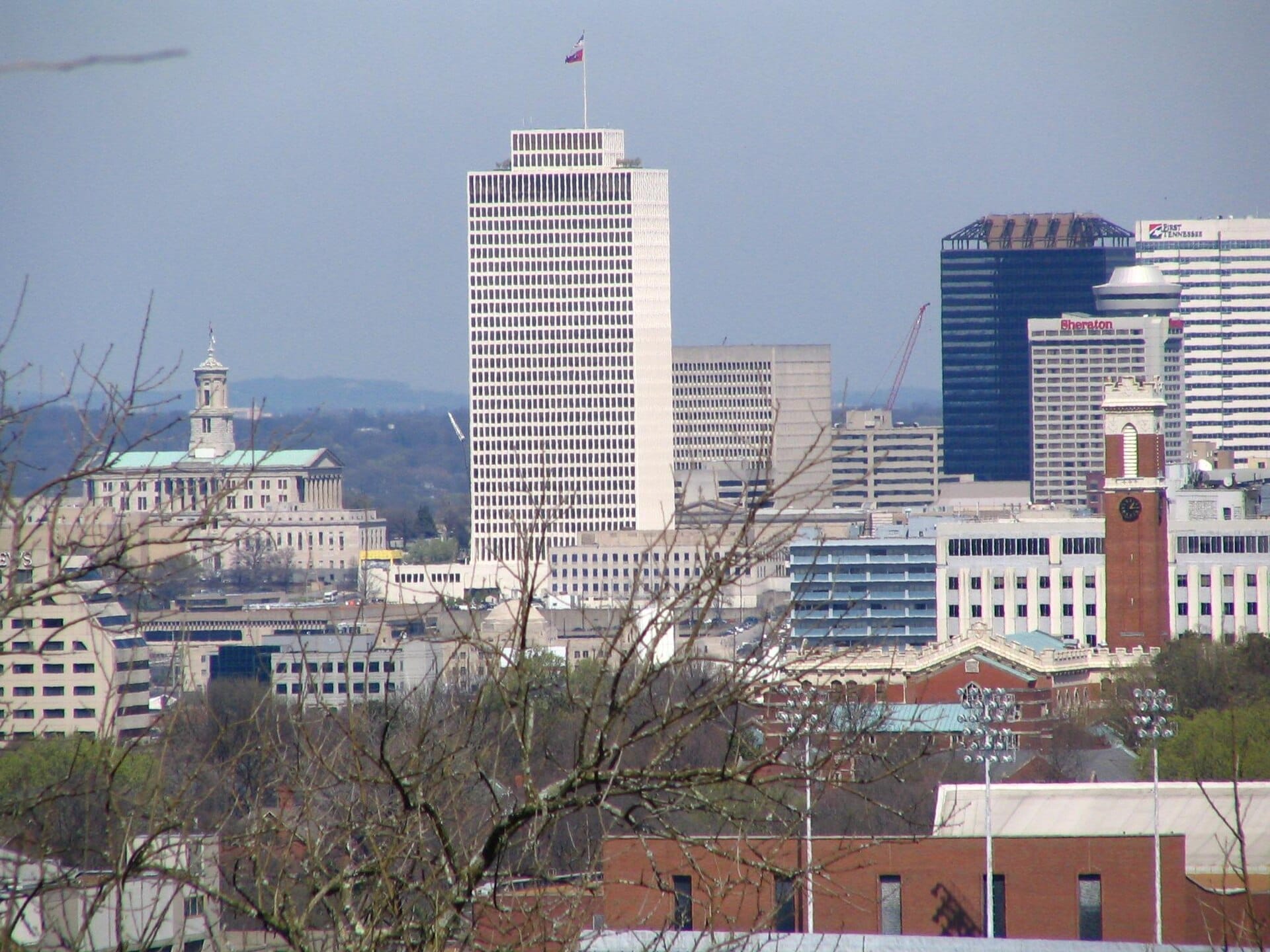
From the top, the downtown Nashville skyline spreads across the eastern horizon in a nearly 180-degree arc. On a clear day you can pick out the AT&T Building (locally nicknamed the Batman Building for its twin spires), the Cumberland River corridor, and the broader sweep of the city extending toward the hills of East Nashville. The foreground drops away sharply, which gives the skyline an almost theatrical quality, as though the city was arranged specifically for this vantage point.
The viewing area itself is simple: a narrow road loop, a low wall or ledge where visitors perch, and open sky. There are no benches, no telescopes, and no amenities. People bring their own blankets, lawn chairs, or simply stand. That informality is part of the appeal. This is a place locals actually use, not a curated observation deck.
If you want to understand how the skyline fits into the city's geography, Love Circle pairs well with a ground-level walk through Music Row and the Midtown corridor below, which gives you a sense of vertical scale you lose from street level.
Tickets & tours
Live prices and dates from our booking partner. If you book, we may earn a commission at no extra cost to you.
Old Town trolley tour of Nashville
From 54 €Instant confirmationFree cancellationHatch Show Print guided tour
From 21 €Instant confirmationFree cancellationDowntown walking tour of Nashville
From 21 €Instant confirmationFree cancellationNashville Downtown Underground Donut Tour
From 46 €Instant confirmationFree cancellation
How the Experience Changes by Time of Day
Daytime
Midday visits are fine for orientation but lack drama. The sun sits behind you to the south-west, and the skyline can look flat in direct overhead light. On hazy summer days, the city blurs into the heat shimmer. That said, daytime is quieter, and you can linger without company. The historical marker is easier to read, and the surrounding residential streets below the hill are pleasant to explore before or after.
Sunset and Golden Hour
This is when Love Circle earns its reputation. As the sun drops behind the observer and casts warm light across the downtown towers, the skyline turns amber and copper. The AT&T Building spires catch the last direct light a few minutes after the rest of the skyline falls into shadow, creating a brief window of particularly good photography. Locals arrive with cameras and wine, and small groups gather along the wall. The atmosphere is genuinely relaxed, conversational, and unpretentious.
After Dark
The city lights make a strong case for a night visit. Downtown Nashville illuminates well, and the Batman Building's lit spires are a clear focal point. Car headlights trace the interstate corridors in long streaks. The circle itself has minimal lighting, so bring a flashlight or rely on your phone screen if you need to navigate the low wall edges. Night visits attract a different crowd: couples, late-night walkers from the nearby Vanderbilt area, and photographers working on long exposures.
ℹ️ Good to know
Love Circle has no formal lighting. After dark the road surface and low walls are hard to see. Wear shoes with decent grip and step carefully near the edges of the overlook area.
Getting There: Practical Details
Love Circle sits above the Hillsboro-West End neighborhood, accessible via narrow one-way roads that climb the hill from below. The approach roads are genuinely narrow, with limited room for two cars to pass. Driving up is straightforward with GPS navigation set to 3436 Love Circle, Nashville, TN 37212, but parking at the summit is informal and limited to roadside spots along the loop. On busy evenings, cars park partway down the hill and visitors walk the final stretch.
Rideshare is a practical alternative, particularly for evening visits when you want to avoid juggling parking in the dark. Uber and Lyft both serve this area. Drop-off and pickup work without difficulty, though drivers unfamiliar with the hill roads may need a moment to orient. Nashville's WeGo bus network does not serve the hilltop directly, making rideshare or a car the most reliable options.
If you are staying near Vanderbilt University or Midtown, Love Circle is walkable, though the final approach is a steep uphill climb of about 10–15 minutes from the base of the hill. For a broader picture of how to get around Nashville, see the getting around Nashville guide.
Historical and Neighborhood Context
The hill on which Love Circle sits was a tactically significant position during the Battle of Nashville in December 1864, one of the final major engagements of the American Civil War. Union forces effectively destroyed Confederate General John Bell Hood's Army of Tennessee over two days of fighting across the ridges and hills south and west of the city. The Love Circle Park historical marker, placed in 1994, acknowledges this history and connects the site to the broader landscape of Nashville's Civil War geography.
For travelers with a serious interest in this history, the hilltop view makes a useful companion stop to Fort Negley, the largest inland masonry fortification built during the Civil War, located a few miles to the southeast. Together, they illustrate how Nashville's topography shaped both its defense and its subsequent development.
The surrounding Hillsboro-West End neighborhood is one of Nashville's older residential areas, with early-20th-century housing stock and tree-lined streets. The proximity to Vanderbilt University gives the area a quieter, more residential character than the dense entertainment corridors downtown. On weekend evenings, the walk back down from Love Circle through these streets offers a marked contrast to the Broadway honky-tonk scene a few miles to the east.
Photography Tips
For wide-angle shots of the full skyline, a standard smartphone lens captures the panorama well. The low wall provides a stable surface for propping a phone or small tripod during long exposures at night. Telephoto lenses compress the skyline nicely and bring the Batman Building spires into strong compositional focus. Keep in mind that the foreground at Love Circle is essentially road surface and concrete edging, so the strongest shots frame the view from below the horizon line rather than including much of the overlook itself.
On overcast days, the diffused light actually reduces glare off glass towers and can produce clean, even exposures. Rain is less compatible with the exposed hilltop: there is no shelter, and the road surface becomes slippery. A clear evening after afternoon rain often delivers unusually vivid city reflections and a washed skyline, making post-storm timing worth considering.
⚠️ What to skip
There is no shelter at Love Circle. If storms are in the forecast, check the weather before you go. The hilltop is exposed, and Nashville's weather can change quickly, particularly in spring.
Who Should Skip Love Circle
Travelers expecting a developed observation deck with seating, concessions, restrooms, or accessibility infrastructure will find Love Circle underwhelming. There are none of those things here. The site is also not wheelchair accessible in any meaningful way: the approach roads are steep and narrow, and the overlook itself has no paved accessible path or designated accessible viewing area.
If a skyline view is the goal but mobility or access is a concern, the John Seigenthaler Pedestrian Bridge offers a flat, accessible walkway with good downtown views from a different angle. Rooftop bars in The Gulch and SoBro neighborhoods provide skyline views with the added benefit of seating and service.
Visitors primarily interested in Nashville's music history or cultural venues will also find Love Circle is a detour rather than a centerpiece. It is a quick, rewarding stop rather than a half-day destination, and it works best when combined with nearby attractions rather than treated as a standalone outing.
Insider Tips
- Check the sunset time for the specific date of your visit and arrive 20 minutes early. The viewing space along the wall is limited, and latecomers end up behind early arrivals.
- The approach roads are one-way and narrow. If you are driving, enter from the correct direction using GPS rather than attempting to navigate by feel, especially in the dark.
- Spring and fall evenings in Nashville bring the clearest air and the most comfortable temperatures for lingering at the overlook. Summer heat and humidity can create haze that softens the skyline significantly.
- The historical marker near the summit is easy to walk past. It provides genuine context about both the Civil War battle history and the neighborhood's origins, and takes about two minutes to read.
- If parking is full at the top, spots open further down the hill. The uphill walk from those lower spots is short and gives you a better sense of the hill's elevation gain.
Who Is Love Circle For?
- Sunset and golden-hour photography of the Nashville skyline
- Couples and small groups looking for a free, low-key evening stop
- Travelers pairing a scenic stop with a visit to Vanderbilt University or the Midtown area
- Civil War history enthusiasts connecting the Battle of Nashville landscape
- Budget travelers seeking a free, genuinely rewarding experience away from the Broadway crowds
Nearby Attractions
Combine your visit with:
- Arrington Vineyards
Arrington Vineyards is a working winery set on 95 acres of rolling Tennessee countryside about 25 miles south of Nashville. With 16 acres of estate vines, five tasting rooms, and a calendar full of live music events, it offers a genuinely relaxed alternative to the city's usual attractions.
- Carnton
Built in 1826 and thrust into Civil War history on a single November night in 1864, Carnton in Franklin, Tennessee stands as one of the most significant and sobering historic sites near Nashville. The mansion served as the principal Confederate field hospital after the Battle of Franklin, and four Confederate generals killed in action were laid on its back porch. Today it operates as a museum alongside the McGavock Confederate Cemetery, one of the largest privately owned Confederate cemeteries in the United States.
- Downtown Franklin Historic District
About 21 miles south of Nashville, the Downtown Franklin Historic District packs genuine 19th-century architecture, Civil War history, and an independently owned Main Street into a walkable few blocks. Entry is free, the streets are open all day, and it rewards slower travelers who actually stop to look up.
- GEODIS Park
Opened in May 2022, GEODIS Park is one of the largest soccer-specific stadiums in the United States, seating over 30,000 fans. Home to Nashville SC and a growing concert calendar, it brings serious sports infrastructure to a city better known for music.
Planning a trip? Discover personalized activities with the Nomado app.