Lee Canyon Ski Resort: Las Vegas's Mountain Escape
Lee Canyon is a year-round mountain resort in the Spring Mountains, roughly 45 minutes northwest of the Las Vegas Strip. In winter it offers skiing and snowboarding on terrain suited to all skill levels. In summer, the cool alpine setting draws hikers, sightseers, and anyone who needs a break from desert heat.
Quick Facts
- Location
- 6725 Lee Canyon Rd, Las Vegas, NV 89124 — Spring Mountains National Recreation Area, ~45–50 miles northwest of downtown Las Vegas
- Getting There
- Private vehicle strongly recommended: take US-95 north from Las Vegas, then NV-156 (Lee Canyon Road) into the mountains. Allow 45–60 minutes from the Strip. Some seasonal shuttles and tour operators provide transport — confirm availability before your trip.
- Time Needed
- Half day to full day. Skiers and snowboarders typically spend 4–6 hours on the mountain; summer visitors often spend 2–4 hours.
- Cost
- Adult day lift tickets typically range from around US$79 to US$129 depending on date and demand (verify current pricing at leecanyonlv.com before purchasing — tickets must be bought online). Summer activities vary in cost.
- Best for
- Vegas visitors wanting a break from the Strip, families, beginner and intermediate skiers, summer hikers seeking cool mountain air
- Official website
- www.leecanyonlv.com
What Makes Lee Canyon Worth the Drive
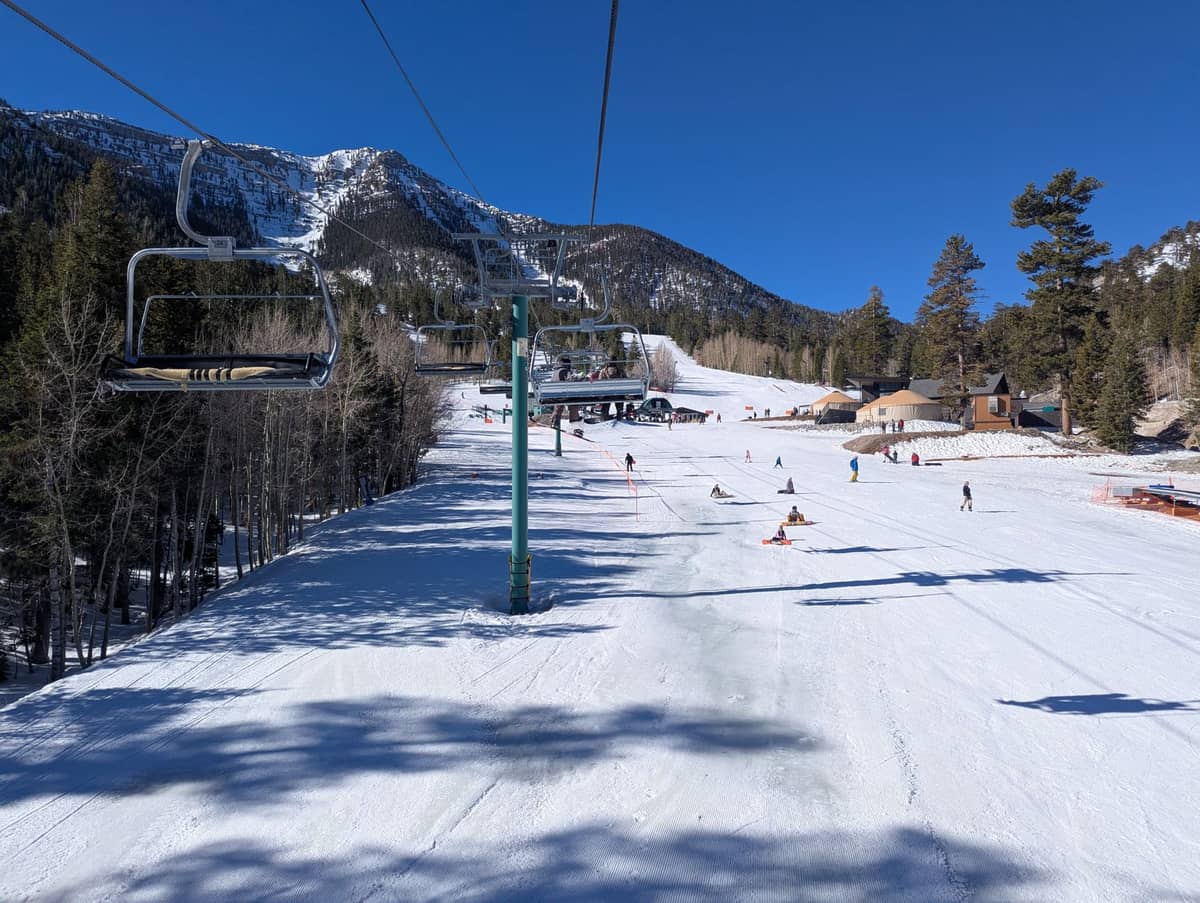
Most people picture Las Vegas as a flat desert basin of neon and asphalt. That makes Lee Canyon Ski Resort genuinely surprising. In under an hour, a straightforward highway drive deposits you at a functioning mountain resort sitting around 8,660 feet in the Spring Mountains, where snow accumulates reliably through winter and temperatures run 20 to 30 degrees cooler than the Strip below.
The resort began operating under a Forest Service winter sports permit in 1963 as Lee Canyon Ski Area, and was later marketed as the Las Vegas Ski and Snowboard Resort before rebranding back to Lee Canyon. It sits within the Spring Mountains National Recreation Area, a federally managed landscape of ponderosa pine, white fir, and exposed limestone ridgelines that bears no resemblance to the valley floor. The contrast is the point. For locals, it's a weekend ritual. For visitors, it's one of the more unexpected experiences you can have while based in Las Vegas.
💡 Local tip
Lift tickets must be purchased online through the official Lee Canyon website before you arrive. Walk-up window purchases are limited, and prices are date-specific. Buy early — popular weekend dates can sell out.
The Mountain: Terrain, Scale, and Conditions
Lee Canyon is a compact resort by the standards of major ski destinations in Utah or Colorado. That's an honest assessment, not a dismissal. Its size makes it approachable for beginners and families, and the drive-up accessibility means you're not committing to a multi-day mountain trip just to experience skiing. The terrain spans a range of difficulty levels, with beginner runs served by dedicated lifts near the base and more challenging intermediate and advanced runs on the upper sections of the mountain.
Snow conditions at Lee Canyon are genuine, not manufactured sentiment — the Spring Mountains receive real winter snowfall at altitude, though the resort does supplement with snowmaking. The season generally runs from late November through mid-April, though exact opening and closing dates shift with conditions each year. Check the resort's snow report before driving up: a poor snow week is noticeable on a smaller mountain.
If you're comparing it to larger resorts within driving range, Lee Canyon is best thought of as Las Vegas's local hill rather than a destination ski trip on its own. For more expansive winter landscapes, the Mount Charleston area surrounds the resort and offers additional context for the Spring Mountains as a whole.
⚠️ What to skip
Weather on the mountain changes quickly. Even if the Strip is sunny and 60°F, Lee Canyon can be cold, windy, and icy. Check the official weather and conditions page at leecanyonlv.com before departing and dress for genuine alpine conditions.
Tickets & tours
Hand-picked options from our booking partner. Prices are indicative; availability and final rates are confirmed when you complete your booking.
Go City | Las Vegas All-Inclusive Pass
From 140 €Instant confirmationFree cancellationGolden Eagle West Rim helicopter tour with Hoover Dam and Lake Mead
From 401 €Instant confirmationFree cancellationGrand Canyon 6-in-1 tour
From 417 €Instant confirmationFree cancellationHighlights Over the Grand Canyon air tour from Las Vegas
From 195 €Instant confirmationFree cancellation
Arriving at Lee Canyon: What the Experience Actually Feels Like
The drive itself is part of the experience. Leaving Las Vegas on US-95 north, the city thins out relatively quickly and the Spring Mountains rise visibly to the west. Turning onto NV-156, Lee Canyon Road, the elevation gain becomes physically noticeable — ears pop, air cools, and the scrubby desert gradually gives way to actual forest. By the time you reach the resort's base area after roughly 45–60 minutes on the road, the Las Vegas valley is far below and out of sight.
The base area is compact and functional. Parking is at the base on Lee Canyon Road. On busy weekend mornings in peak winter season, arrive early — the lot fills up and the access road can back up. The rental shop, ticket services, and a warming facility are all concentrated near the base, which means minimal hiking around before you get on snow.
On a clear weekday morning in January or February, the mountain has a genuinely quiet character. The sound of wind through the ponderosa pines, the crunch of snow underfoot, and the smell of cold air mixed with pine resin are a sharp sensory break from the recycled casino air most visitors spend their Las Vegas trip breathing. Weekends bring more crowds, more noise at the base, and longer lift lines — manageable, but worth factoring into timing.
Operating Hours and Seasonal Calendar
Winter lift operations generally run 9:00 to 16:00 daily through the ski season, with some variation on holidays and around special events. The ski season generally spans late November through mid-April, but opening day and closing day are weather-dependent each year.
Summer operations shift the resort's character entirely. During the warmer months, Lee Canyon operates daily with summer activities, typically running 10:00 to 16:00 Monday through Thursday and extended to 18:00 on Fridays through Sundays. The alpine setting is the draw in summer: cool temperatures, shaded trails, and elevation-cooled air that can be 25 to 30 degrees Fahrenheit below what's happening on the Strip. For Las Vegas visitors arriving in July or August, this is one of the few nearby escapes from extreme heat.
ℹ️ Good to know
Hours are updated throughout the season at leecanyonlv.com/hours. Always verify the current schedule before driving up — the mountain does not operate year-round without interruption, and off-season closures apply between winter and summer programming.
Summer at Lee Canyon: More Than Off-Season
The summer version of Lee Canyon draws a different crowd than the ski season. Hikers use the mountain access to explore the Spring Mountains terrain. Families come for the cooler air and the novelty of a mountain setting after days on the flat Strip. The surrounding Spring Mountains National Recreation Area offers trails and forest roads that extend well beyond the resort's footprint. If you're interested in hiking closer to Las Vegas, the hiking near Las Vegas guide covers options across the region, including trails accessible from the Lee Canyon area.
The pine forest smells particularly sharp on warm summer afternoons when the sun heats the resin in the bark. Temperatures in July at Lee Canyon elevation can sit in the mid-60s to low 70s Fahrenheit while the valley roasts above 105°F. That temperature difference is enough to make the drive feel like a genuine escape rather than a sidetrip.
Practical Details: What to Bring and What to Expect
In winter, dress for real mountain conditions. Layering is essential: a moisture-wicking base layer, insulating mid-layer, and a waterproof outer shell. Gloves, a hat or helmet, goggles, and waterproof boots matter more than they might at a well-heated indoor ski center. The resort has a rental shop for skis, boots, and snowboards if you're not traveling with gear — rentals should be factored into your budget on top of the lift ticket.
In summer, light layers still make sense: mornings can be cool, midday pleasant, and afternoon thunderstorms are a possibility in monsoon season (roughly July through September). Sun protection is important at altitude — UV exposure is meaningfully higher than at sea level, and the thin air doesn't filter it the same way.
Food and beverage options at the base are limited compared to a large resort, so bringing snacks is sensible for a full day. There are no on-mountain accommodations — Lee Canyon operates as a day resort only. If you're planning a broader Nevada mountain experience, consider pairing a Lee Canyon visit with other day trips from Las Vegas to maximize the drive time.
Photography and the View Factor
Lee Canyon offers a specific photographic appeal: snow-dusted ponderosa pines with blue desert sky, or the mountain framed against the stark limestone peaks of the Spring Mountains. On clear winter days, views from the upper runs extend toward the valley below, though the Strip itself isn't prominently visible from the ski area. Early morning light in winter gives the best contrast — the low sun angle catches the snow texture on untracked runs before the first lift crowd works through them.
If sweeping elevated views of Las Vegas are your primary goal, Lee Canyon doesn't deliver that in the same concentrated way as a dedicated vantage point. For that, the STRAT Tower or the High Roller Observation Wheel serve that purpose more directly. Lee Canyon's visual appeal is about the mountain itself, not the city below.
Who This Attraction Is and Isn't For
Lee Canyon works well for Las Vegas visitors who want a deliberate break from the Strip, families traveling with children who ski or snowboard, beginners looking for an accessible and non-intimidating first mountain experience, and summer visitors seeking relief from extreme heat. It's also genuinely useful for travelers with a full week in Vegas who have already covered the main city attractions.
It is not the right choice for experienced skiers expecting the vertical drop, terrain variety, or après-ski culture of a major resort. Advanced skiers will find the mountain limited. If your Las Vegas trip is short — two or three days — the two-hour round-trip drive and full-day commitment may not be the best use of time compared to the concentrated experiences available in the city. For how to structure a shorter trip, the Las Vegas weekend guide offers tighter itinerary options.
Insider Tips
- Buy lift tickets online well in advance, especially for weekend dates in January and February. The resort sells tickets in date-specific windows and popular days fill up. There is no guarantee of walk-up availability.
- Midweek visits in January or February offer the best combination of good snow and thin crowds. Friday afternoons and Saturdays are the busiest periods — lift lines and parking both become factors.
- The elevation change from Las Vegas (around 2,000 feet) to Lee Canyon (around 8,660 feet) is substantial. If you or anyone in your group is sensitive to altitude, take it easy on the first run and stay hydrated. Alcohol affects you faster at altitude than at sea level.
- In summer, afternoon thunderstorms are common during monsoon season (July through September). Plan to arrive by mid-morning and start descending by early afternoon to avoid being exposed on the mountain during lightning activity.
- Cell reception becomes unreliable on parts of Lee Canyon Road. Download offline maps and check conditions before you leave Las Vegas rather than relying on real-time navigation updates on the mountain.
Who Is Lee Canyon Ski Resort For?
- Las Vegas visitors wanting a genuine break from the Strip and casino environment
- Families with children who ski, snowboard, or simply want to see snow
- Summer travelers escaping extreme heat — temperatures run 25–30°F cooler than the valley
- Beginners and intermediate skiers looking for an accessible, non-intimidating mountain
- Longer-stay visitors (4+ days) who have already covered the main city attractions
Nearby Attractions
Combine your visit with:
- Antelope Canyon
Antelope Canyon is a series of sculpted slot canyons carved into Navajo Sandstone near Page, Arizona, and one of the most visually striking natural formations in the American Southwest. Accessible only on guided tours led by licensed Navajo guides, it requires advance planning but rewards visitors with an experience unlike anywhere else within day-trip range of Las Vegas.
- Area 51 & Extraterrestrial Highway
Nevada State Route 375, officially designated the Extraterrestrial Highway in 1996, is a 98-mile desert drive skirting the perimeter of the most famous restricted military installation on Earth. It costs nothing to drive, demands serious preparation, and delivers a genuinely remote American landscape that few Strip visitors ever see.
- AREA15 Immersive Entertainment Complex
AREA15 is a 35-acre immersive entertainment and events district just off the Las Vegas Strip, packed with art installations, bizarre interactive experiences, bars, and ticketed attractions like Omega Mart. Daytime entry is free, but the real substance costs extra — and it's worth understanding the pass tiers before you arrive.
- Death Valley National Park
Just two hours from the Las Vegas Strip, Death Valley National Park is the hottest, driest, and lowest national park in the United States. From the salt flats of Badwater Basin to the sculpted dunes of Mesquite Flat, it rewards early risers and well-prepared visitors with landscapes found nowhere else on Earth.