Kudi Chin: Bangkok's Portuguese Quarter on the Thonburi Riverbank
Kudi Chin is one of Bangkok's oldest and most atmospheric riverside neighborhoods, tucked into the Thonburi bank of the Chao Phraya. A Portuguese Catholic enclave dating back over 250 years, it layers colonial-era churches, Chinese shrines, and Thai temples into a compact quarter that rewards slow exploration on foot.
Quick Facts
- Location
- Thonburi side of the Chao Phraya, near Wat Kalayanamitr, Bangkok
- Getting There
- Chao Phraya Express Boat to Wat Kalayanamitr Pier (Pak Klong Talat area), or cross-river ferry from Tha Tien Pier
- Time Needed
- 1.5 to 3 hours for the full walking loop
- Cost
- Free to walk; small donations appreciated at churches and shrines
- Best for
- History enthusiasts, architecture lovers, photography walks, off-the-tourist-trail explorers
What Is Kudi Chin?
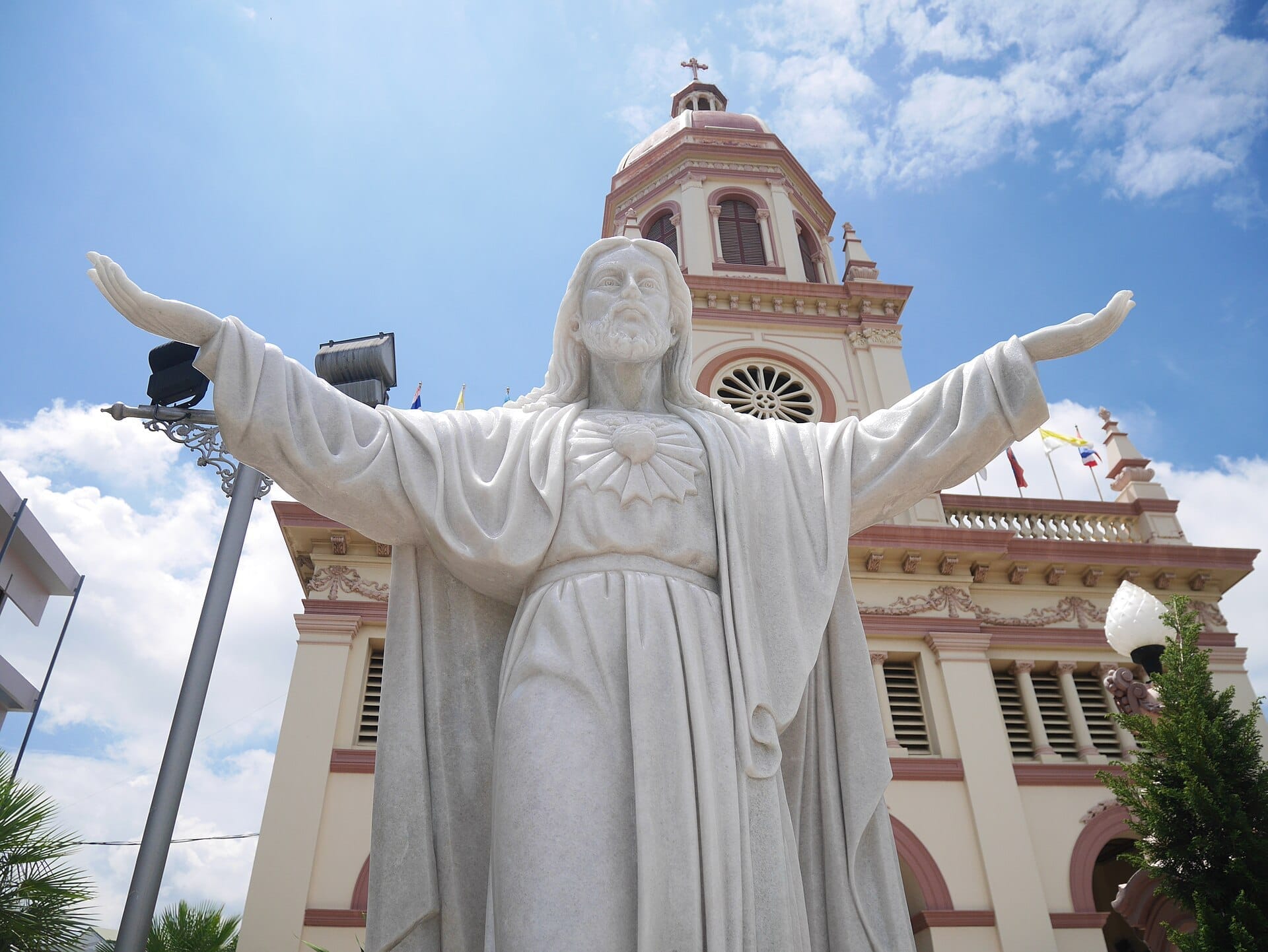
Kudi Chin is the informal name for a riverside neighborhood in Thonburi that formed around the Santa Cruz Church, one of the oldest Catholic churches in Thailand. The name combines 'Kudi' (a Thai word for a religious dwelling) and 'Chin', reflecting the area's large Chinese-Catholic population who settled here alongside Portuguese missionaries in the late 18th century. Together they built a community that was unlike anything else in Bangkok: Catholic by faith, Chinese by ancestry, and Thai by daily life.
The neighborhood sits on a bend of the Chao Phraya River, a short ferry ride from the better-known Rattanakosin island. While tourists crowd Wat Pho and the Grand Palace across the water, Kudi Chin absorbs a fraction of that foot traffic, which is precisely what makes it worth the detour.
ℹ️ Good to know
Kudi Chin is not a single attraction but a walkable neighborhood. Come with comfortable shoes, a charged phone for maps, and no rigid agenda. The best discoveries here happen in the lanes between the major sites.
Santa Cruz Church: The Anchor of the Quarter
The spiritual and architectural centerpiece of Kudi Chin is Santa Cruz Church, originally built by Portuguese traders and missionaries who were granted land by King Taksin after they supported the Siamese resistance against Burmese forces. The current structure dates from the early 20th century and presents a pastel yellow facade with a classical European dome that looks quietly incongruous against the surrounding Thai streetscape.
Inside, the church is cool and hushed even on the warmest afternoons. Light filters through stained glass windows in soft greens and golds, casting patterns on pale tile floors. The altar is ornate without being overwhelming. On Sunday mornings, the pews fill with a congregation that still includes descendants of the original Portuguese-Chinese community, and the mass is conducted in Thai. Hearing Catholic liturgy in Thai inside a building shaped by European architecture is one of those quietly surreal Bangkok experiences that doesn't appear in any highlight reel.
The church grounds are generally open to respectful visitors outside of active services. Photography inside is possible but keep it discreet. The surrounding courtyard offers a clear view of the dome and is the best spot for exterior shots in the late afternoon, when the facade catches warm directional light.
Tickets & tours
Hand-picked options from our booking partner. Prices are indicative; availability and final rates are confirmed when you complete your booking.
Bangkok tuk-tuk night tour with Chinatown street food meal
From 28 €Instant confirmationFree cancellationBangkok Chinatown culinary tour with local guide
From 46 €Instant confirmationFree cancellationChinatown Authentic Street Food Tour in Bangkok
From 34 €Instant confirmationFree cancellationBangkok Canal Wat Pak Nam, flower market, and Chinatown guided tour
From 159 €Instant confirmationFree cancellation
Walking the Lanes: What You'll Find Between the Landmarks
The real texture of Kudi Chin is in its alleys. The neighborhood is a tight grid of narrow lanes running back from the river, shaded by old trees and flanked by a mix of shophouses, family homes, and small shrines. Some lanes end at the water's edge with views of river traffic and the spires of Wat Arun across the channel. The smell alternates between incense, frangipani from temple courtyards, and the faint brine of the river.
One of the most photographed corners of Kudi Chin is the stretch of lane near the church that still shows original Portuguese-influenced row houses with arched doorways and shuttered windows painted in faded earth tones. These buildings are private residences, so observe from the lane rather than wandering into courtyards. The area is also home to Wat Kalayanamitr, a large Thai Buddhist temple directly adjacent to the Catholic quarter. The juxtaposition of a towering seated Buddha inside the temple with the church dome visible over the wall outside captures the layered religious history of this stretch of Thonburi. For more on the area's Buddhist sites, the best temples in Bangkok guide provides useful context on the wider temple landscape.
Kudi Chin also has a small but genuine local food scene. In the mornings, vendors near the pier sell kanom farang kudi chin, a soft Portuguese-influenced sponge cake with a Thai twist. It is one of the few surviving examples of Luso-Thai culinary fusion and is worth trying even if you are not usually drawn to sweets. By midday, most street food activity winds down, so morning visits are better for food.
The Museum and the Community's Memory
Tucked into the neighborhood is the Baan Kudichin Museum, a small community museum housed in a restored wooden building. It documents the history of the Portuguese and Chinese-Catholic settlers through photographs, artifacts, and community donations. The collection is modest in scale but strong in specificity: old baptismal records, photographs from the early 20th century, religious objects, and items that show how the community adapted Portuguese and Chinese traditions into Thai daily life over generations.
Operating hours can be irregular and the museum is sometimes only open on weekends or by appointment. It is worth calling ahead or checking with the church office before making it a primary reason for your visit. That said, even if the museum is closed, the building itself and the surrounding garden are visually interesting.
⚠️ What to skip
The Baan Kudichin Museum keeps limited hours and may be closed on weekdays. Confirm before visiting if the museum is your main goal. The church and lanes are accessible regardless.
Best Time to Visit and How to Get There
Early morning is the best time to visit Kudi Chin. By 7 to 9 AM, the light on the river is soft, vendors are set up near the pier, and the lanes are quiet enough to hear birds and the lapping of the water. The neighborhood genuinely changes character by 11 AM as heat builds and street activity slows. If you are coming primarily for photography, arrive before 9 AM.
The easiest approach is the cross-river ferry from Tha Tien Pier, which drops passengers at the Wat Kalayanamitr Pier on the Thonburi bank. Tha Tien is itself a short walk from Wat Pho and the Grand Palace, so combining Kudi Chin with a Rattanakosin morning is logical. Cross the river early, spend 90 minutes in Kudi Chin, then return to the palace complex before the midday heat peaks.
Kudi Chin is also reachable by Chao Phraya Express Boat, with the Pak Klong Talat area serving as a reference point for orientation. Grab-car or metered taxi to the area is straightforward if you share the Thai name or show the church on a map. The roads in Thonburi can be confusing for first-timers, so having offline maps downloaded in advance is genuinely useful.
If you plan to combine Kudi Chin with broader Thonburi exploration, the Thonburi neighborhood guide covers canal routes, temple clusters, and how to navigate the riverside on foot and by boat.
Practical Notes: Accessibility, Dress, and Crowd Reality
Kudi Chin is mostly flat and navigable on foot, though some lanes have uneven surfaces and narrow gaps between buildings. Wheelchairs and strollers would face difficulties in the tighter alleys. The church itself has step access at the entrance.
Dress modestly if you plan to enter the church: covered shoulders and knees are appropriate. This is an active place of worship, not a tourist attraction designed for visitors, and the community appreciates respectful behavior accordingly.
Crowds are never the problem here that they are across the river. Even on weekends, Kudi Chin sees a trickle of visitors, mostly Thai domestic tourists and a smaller number of foreign travelers who have done some research. This is not a place that gets overrun. If anything, on some weekday mornings, you may find yourself nearly alone in the lanes, which can feel unusual for Bangkok.
💡 Local tip
Bring cash. There are no ATMs immediately in the neighborhood and the few small vendors and the museum (if open) operate cash only.
Who Should Think Twice
Travelers looking for a packed itinerary of major sights may find Kudi Chin underwhelming. It is a neighborhood to absorb rather than a sight to check off, and it does not offer the visual scale of Wat Arun or the grandeur of the palace complex. If your Bangkok time is limited to two or three days and focused on the canonical highlights, Kudi Chin is better suited to a return trip. It also lacks significant shade in some sections, making a midday visit in hot season (March to May) uncomfortable without preparation.
Insider Tips
- The kanom farang kudi chin sponge cakes are sold by vendors near the pier in the morning and are gone by mid-morning. Do not skip them; they are a living piece of culinary history specific to this community.
- The best exterior photograph of Santa Cruz Church is taken from the far end of the courtyard in late afternoon, not from the lane in front, where tree cover creates uneven shadow.
- On Sunday mornings between approximately 8 and 9 AM, the Thai-language Catholic mass takes place. Arriving just before or after gives you a chance to observe the community in a way that purely sightseeing hours do not.
- The narrow lane running directly parallel to the river, closest to the water, offers glimpses of Wat Arun's prang across the channel. This is not marked on tourist maps but is easy to find if you walk toward the water from the church.
- Bring a small note with 'Kudi Chin' and 'Santa Cruz Church' written in Thai script on your phone to show to ferry operators or locals if you get confused navigating on the Thonburi side.
Who Is Kudi Chin For?
- History and heritage travelers with an interest in multicultural Bangkok
- Photographers seeking riverside and architectural subjects outside the main tourist circuit
- Slow travelers who want neighborhood texture over landmark density
- Food curious visitors interested in Portuguese-Thai culinary crossover
- Anyone pairing a Rattanakosin morning with an easy cross-river detour
Nearby Attractions
Other things to see while in Thonburi:
- IconSiam
Sitting on the Thonburi bank of the Chao Phraya River, IconSiam is Bangkok's most architecturally striking shopping complex. Beyond the retail floors, it holds a genuine indoor floating market, sweeping river panoramas, and some of the city's best dining with a view.
- Wat Arun
Wat Arun, the Temple of Dawn, stands on the Thonburi bank of the Chao Phraya River as one of Bangkok's most architecturally distinctive landmarks. Its central prang rises 82 meters and is encrusted with fragments of Chinese porcelain that catch light differently throughout the day. Visiting at dawn, at midday, or at dusk each produces a completely different experience.
- Wat Paknam Phasi Charoen
Wat Paknam Phasi Charoen is one of Bangkok's most visually striking royal temples, set in the residential Thonburi district. Its colossal green-tiled stupa houses a dazzling crystal ceiling and a five-story interior dedicated to Buddhist cosmology. Less crowded than riverside temples, it rewards visitors who make the effort to reach it.