Intuit Art Museum: Chicago's Home for Outsider and Self-Taught Art
The Intuit Art Museum (IAM) is one of Chicago's only institutions dedicated entirely to intuitive, outsider, and self-taught art. After a $10 million renovation, the museum reopened on May 23, 2025 with expanded galleries and a sharper identity. It's a quieter, more contemplative stop than the city's blockbuster institutions, and that's precisely its appeal.
Quick Facts
- Location
- 756 N. Milwaukee Ave., Chicago, IL 60642
- Getting There
- CTA Blue Line, Chicago station; buses along Milwaukee Ave.
- Time Needed
- 1.5 to 2.5 hours
- Cost
- Verify current admission at art.org before visiting
- Best for
- Art lovers, curious skeptics of mainstream art, solo visitors
- Official website
- art.org
What Is the Intuit Art Museum?
The Intuit Art Museum, officially known as Intuit: The Center for Intuitive and Outsider Art until its 2025 rebrand, is one of the few museums in Chicago dedicated exclusively to art made outside mainstream academic or commercial traditions. The work you'll find here comes from artists who trained themselves, who followed compulsions rather than careers, and who often made their art in isolation. Some are formally recognized outsider artists; others fall under the broader labels of visionary, folk, or self-taught art.
The museum traces its roots to 1991, when a group of collectors and advocates founded the Society for Outsider, Intuitive and Visionary Art. The organization settled at its current home on Milwaukee Avenue in 1999. After a $10 million renovation that began in September 2023, the museum reopened on May 23, 2025 under its current shortened name, Intuit Art Museum (IAM), with expanded gallery space and a refreshed programmatic vision.
The address, 756 N. Milwaukee Ave., places the museum at the intersection of Milwaukee, Chicago Avenue, and Ogden, a triangular junction near the boundary between River North and West Town. The building itself is modest from the outside, which means many pedestrians walk past without a second glance. That anonymity is part of what makes the visit feel like a discovery.
The Collection and What You'll Actually See
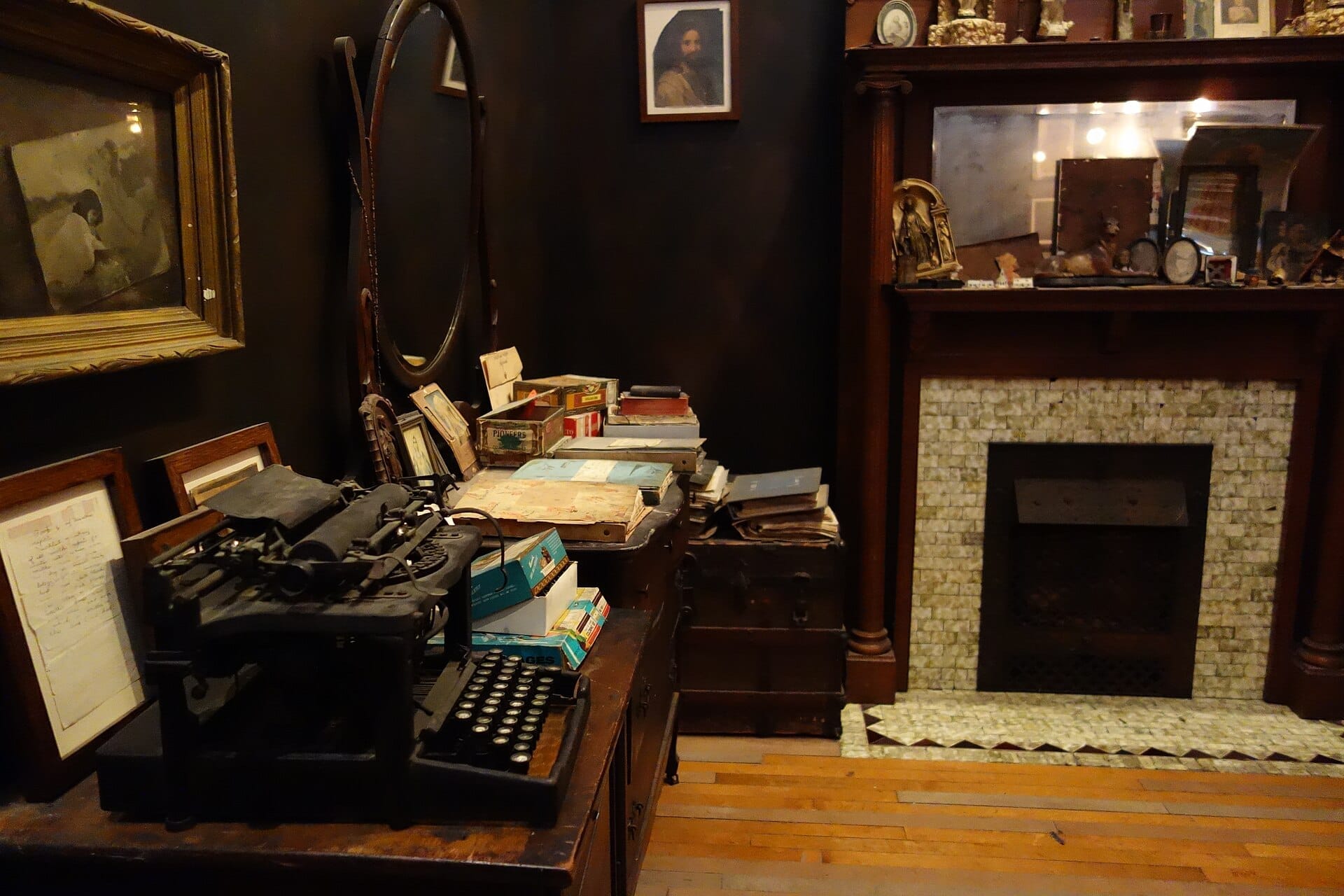
Outsider art resists easy categorization, and the museum leans into that tension rather than smoothing it over. Expect paintings, sculptures, and assemblages that can feel raw, obsessive, or transcendent, sometimes all at once. Works are often dense with imagery, personal symbolism, or repeated patterns that suggest a maker working through something private and urgent. The scale varies considerably: some pieces are intimate drawings barely larger than a postcard; others are floor-to-ceiling environments that command the whole room.
The museum maintains a dedicated gallery for Henry Darger, the reclusive Chicago janitor whose thousands of pages of illustrated manuscript and watercolor battle scenes were discovered only after his death in 1973. Darger has become one of the most discussed figures in outsider art internationally, and seeing his work in the city where he lived adds a specific weight to the experience. His imagery, which can be disturbing and beautiful in the same frame, is not for everyone, but it rewards careful attention.
Beyond Darger, the rotating and permanent collections draw from across the United States and internationally. Look for works in unusual materials: carved bone, found-object assemblages, painted bottle caps, embroidered cloth. The post-renovation galleries give breathing room to individual pieces that previously had to compete for wall space. The expanded layout also allows for more dedicated education and programming areas, which the museum has historically used to contextualize its artists' lives alongside their work.
💡 Local tip
Before visiting, check the museum's current exhibition schedule at art.org. Because the collection rotates and the space is compact, knowing what's on display helps you decide how long to stay and what questions to bring.
Tickets & tours
Hand-picked options from our booking partner. Prices are indicative; availability and final rates are confirmed when you complete your booking.
Go City | Chicago All-Inclusive Pass
From 127 €Instant confirmationFree cancellationArt Institute of Chicago tickets and self-guided audio tour
From 49 €Instant confirmationArt Institute of Chicago Guided Tour with Skip-the-Line Tickets
From 63 €Instant confirmationFree cancellationThe Art Institute of Chicago: private skip-the-line tour
From 124 €Instant confirmationFree cancellation
How the Experience Changes by Time of Day
The Intuit Art Museum is a small institution by Chicago standards. Weekday mornings tend to offer the most contemplative experience, with low foot traffic and the kind of quiet that lets you sit with a single work for five or ten minutes without feeling the pressure of other visitors circling. The galleries are not cavernous, and sound carries, so a crowded afternoon can feel more compressed than the space actually is.
Weekend afternoons bring a more social energy, particularly when the museum hosts programming or events tied to current exhibitions. If you're interested in lectures, artist talks, or opening receptions, the weekend calendar tends to be more active. Check the events section of the website before planning around a specific time.
Natural light plays a role in the galleries near the building's updated facade. The afternoon sun from the west filters into certain rooms in ways that shift the color temperature of works on paper. For photography within the museum, early afternoon often produces the most even light, though you should confirm the museum's current photography policy at the front desk.
Getting There and the Surrounding Area
The museum sits at 756 N. Milwaukee Ave., a short walk from the CTA Blue Line's Chicago station. The Blue Line is the most direct transit option from downtown, with the Chicago station placing you about a 10-minute walk from the museum. Milwaukee Avenue has dedicated bike lanes, making it a reasonable cycling route from the River North gallery district or from Wicker Park to the northwest.
The neighborhood around the museum is part of the broader West Town area, which has absorbed significant redevelopment over the past decade without losing the industrial-residential mix that defines it. You'll find coffee shops, a few independent restaurants, and studios within a few blocks. It is not a tourist corridor, which means parking is sometimes easier here than near the lakefront, though street parking on Milwaukee can be competitive during peak hours.
If you're combining the Intuit Art Museum with a broader art day, the River North gallery district is a short walk or ride to the east. Dozens of commercial galleries cluster there, most with free admission. The contrast between the polished commercial work in River North and the raw, self-taught work at Intuit is itself instructive.
ℹ️ Good to know
The museum is located at the junction of Milwaukee Ave., Chicago Ave., and Ogden Ave. If you're navigating by GPS, search for 756 N. Milwaukee Ave., Chicago, IL 60642 to avoid being directed to the wrong intersection.
Historical and Cultural Context
The term 'outsider art' was popularized in the early 1970s by art critic Roger Cardinal, adapting the French concept of 'art brut' coined by painter Jean Dubuffet to describe work made by individuals outside the cultural mainstream. In Chicago, the interest in self-taught and visionary art had deep local roots, partly because the city's working-class neighborhoods produced a number of significant self-taught artists, and partly because Chicago collectors were early champions of the genre.
The museum's founding in 1991 reflected a broader national moment when outsider art was moving from curiosity to serious critical discourse. The fact that it has sustained itself for more than three decades, completed a major capital campaign, and emerged with a stronger institutional identity in 2025 says something meaningful about the ongoing appetite for this kind of work in a city that has always had an independent streak in its arts culture.
Chicago has a deep tradition of art-making that runs parallel to mainstream institutions. The Chicago Cultural Center and the National Museum of Mexican Art in Pilsen are two other institutions that have long championed art outside the conventional museum hierarchy. Visiting Intuit alongside these helps you build a picture of the city's broader cultural geography.
Practical Considerations
Because the museum completed a major renovation and reopened in May 2025, some operational details are still settling. Admission pricing, specific gallery hours, and accessibility accommodations should be confirmed directly with the museum. Before visiting, check art.org directly for current hours, ticket prices, and any reservation requirements. The museum has historically been free or low-cost to enter, but that policy should be verified against the post-renovation structure.
The building is a converted space on Milwaukee Avenue. Post-renovation improvements have been described as expanding usable floor area and improving visitor flow, but the museum remains a smaller institution. Visitors with mobility considerations should contact the museum in advance to ask about elevator access and restroom facilities.
The museum's location on Milwaukee Avenue places it a few miles from the major lakefront attractions. Plan for it as a standalone destination or combine it with other West Town and River North stops rather than trying to stack it onto a full Museum Campus day. The quieter, interior nature of the experience pairs well with a walk along the Chicago River or a meal in the West Loop afterward.
⚠️ What to skip
The museum is small. If you're coming primarily to see the Henry Darger collection and plan to skip the rest, the visit may feel short relative to the travel time. Consider building the trip around a neighborhood walk or combining it with nearby gallery visits to make the most of the area.
Is This Worth Your Time?
If your Chicago itinerary is already packed with the Art Institute, the Field Museum, and the lakefront, the Intuit Art Museum asks you to make a specific choice. It is not trying to compete with those institutions on scale or comprehensiveness. What it offers instead is a focused, philosophically distinct experience: art made by people who had no choice but to make it, displayed in a context that takes that compulsion seriously.
Travelers who prefer large survey museums, or who are visiting Chicago for the first time and are working through a standard checklist, may find this stop feels niche. But for anyone who has grown tired of the white-cube aesthetic, who is interested in Chicago's specific cultural history, or who simply wants to spend an hour somewhere that doesn't feel like every other major American art institution, the Intuit Art Museum is genuinely worth the detour.
For context on how this fits into Chicago's wider art landscape, the guide to the best museums in Chicago covers the full range of the city's collections, from encyclopedic to hyper-specialized. If you're building a longer itinerary, Chicago's hidden gems includes other under-the-radar stops worth pairing with this one.
Insider Tips
- The Henry Darger gallery is the single most requested stop in the museum. Go there first if it's a primary reason for your visit, then work through the rest of the collection on the way back out. The gallery can feel crowded during weekend openings.
- Milwaukee Avenue is a good cycling corridor. If you're renting a Divvy bike, the stretch from the Blue Line's Chicago station to the museum is flat, well-marked, and takes about five minutes.
- The museum's programming calendar often includes artist talks and community events tied to current exhibitions. These are frequently free or included with admission and offer more interpretive depth than reading wall labels alone.
- The triangular intersection of Milwaukee, Chicago, and Ogden avenues has a few independently owned coffee shops within a block of the museum entrance. It's worth arriving early, getting a coffee, and walking the block before going in. You'll get a sense of the neighborhood's layered character before stepping into the galleries.
- Because this is a smaller institution, staff on the floor are often exceptionally knowledgeable and willing to talk. Asking a docent or front-desk staff member about a specific work you don't understand will usually produce a much more useful answer than the label alone.
Who Is Intuit Art Museum For?
- Art lovers who already know the mainstream Chicago collections and want something that challenges conventional categories
- Solo travelers with an interest in Chicago's cultural and social history
- Anyone drawn to folk art, vernacular art, or art brut and looking for institutional context
- Visitors combining a West Town neighborhood walk with a cultural stop
- Travelers on a shorter visit who want a high-quality, lower-crowds museum experience without the Museum Campus crowds
Nearby Attractions
Other things to see while in River North:
- House of Blues Chicago
Tucked inside the iconic Marina City complex on North Dearborn Street, House of Blues Chicago is one of the city's most recognizable live music venues, hosting up to 1,400 guests across multiple event spaces. From intimate club nights to full-scale concerts, it draws a wide range of acts and crowds in the heart of River North.
- Merchandise Mart
The Merchandise Mart is one of the largest buildings in the world by floor area, a 25-story Art Deco landmark straddling two full city blocks along the Chicago River. Free to enter on weekdays, it blends architectural history with working design showrooms, a riverfront plaza, and a front-row seat to Chicago's commercial story.
- River North Gallery District
The River North Gallery District is Chicago's densest concentration of commercial art galleries, occupying converted warehouses and loft buildings around Superior and Franklin Streets. Born from a 1970s real estate reinvention, it once rivaled Manhattan as the top gallery hub in the country and remains a serious destination for art collectors and curious visitors alike.