Hallett Cove Conservation Park: Adelaide's Ancient Glacial Coastline
Hallett Cove Conservation Park preserves one of Australia's most accessible records of ancient glaciation, with striated rock pavements, dramatic coastal cliffs, and walking trails just 22 kilometres south of Adelaide. Entry is free, and two train stations put the park within reach without a car.
Quick Facts
- Location
- Hallett Cove, ~22 km south of Adelaide CBD
- Getting There
- Hallett Cove Station (northern entrance) or Hallett Cove Beach Station (southern entrance), Noarlunga Centre line
- Time Needed
- 1.5 to 3 hours depending on trail length
- Cost
- Free entry; no passes required
- Best for
- Geology enthusiasts, coastal walkers, families, photographers
- Official website
- www.parks.sa.gov.au/parks/hallett-cove-conservation-park
What Makes Hallett Cove Worth the Trip
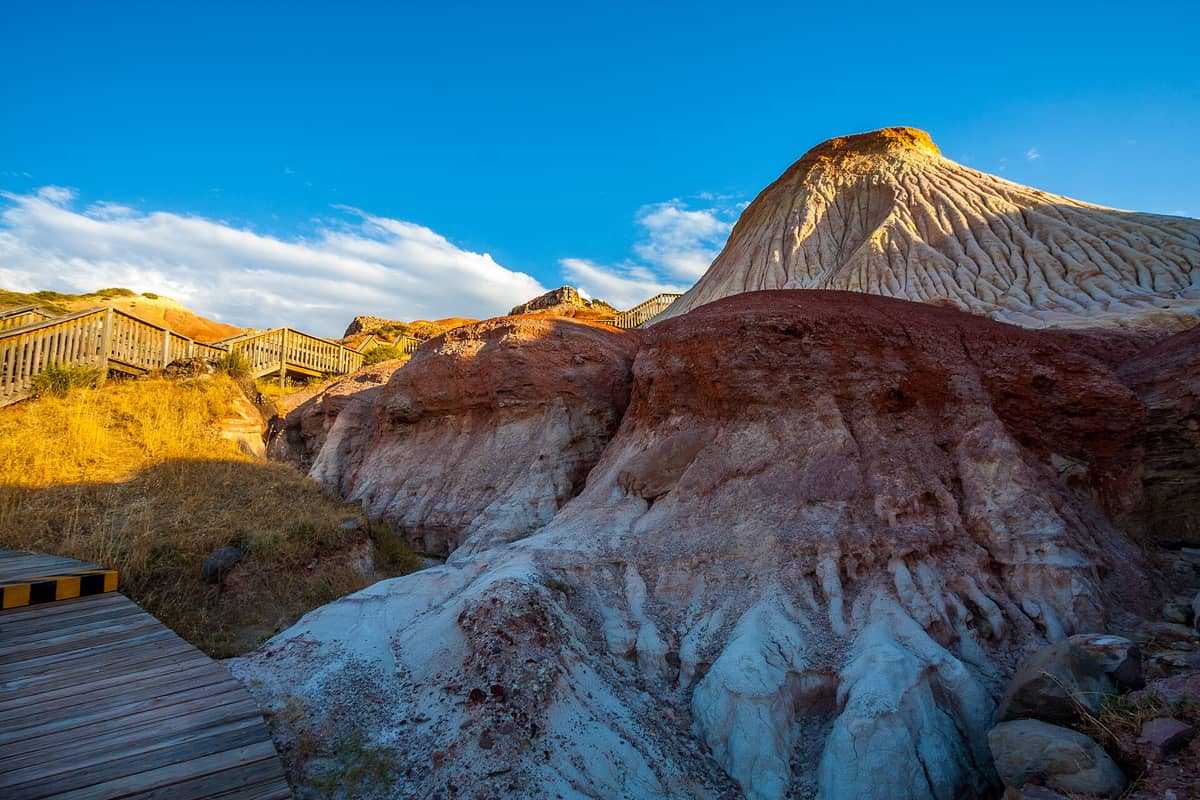
Hallett Cove Conservation Park is one of the few places in South Australia where you can stand on rock that records a glaciation event roughly 280 million years old. The Permian glacial pavement here, grooved and polished by ice sheets that covered this part of Gondwana, is not a reconstruction or a museum display. It is the original surface, exposed at the base of coastal cliffs and reachable on foot within minutes of the train station. Professor Ralph Tate, a colonial-era naturalist, first described this geological feature in 1875, and the park was formally proclaimed on 1 July 1976 to protect the 49.6-hectare site.
The setting layers geology onto coastal scenery in a way that rewards both casual visitors and anyone with a genuine interest in deep time. Dark basalt cliffs drop toward a pebbly beach. The Gulf St Vincent light is often sharp and angled, especially in the morning, making the rock textures and wave-cut platforms unusually photogenic. There is a functioning café near the southern entrance, accessible parking, and two railway stations bracketing the park, which makes the logistics straightforward compared with most nature reserves around Adelaide.
💡 Local tip
Arrive via Hallett Cove Beach Station for the shortest walk to the café, the accessible path, and Black Cliff Lookout. Arrive via Hallett Cove Station if you prefer to walk the full length of the park from north to south and finish near facilities.
The Geology: Reading 280 Million Years of History
The centrepiece of the park is the Permian glacial pavement, a broad, striated rock surface that was carved when glaciers advanced across what is now southern Australia during the Late Palaeozoic ice age. The parallel grooves and scratch marks visible in the exposed rock were made by debris dragged beneath moving ice, and the rounded mounds of rock, called roches moutonnées, show the direction of glacial flow. Standing on this surface and tracing the grooves with your eye makes the scale of geological time feel oddly tangible.
Above the glacial pavement, the cliff sequence tells a longer story. Layers of Permian glacial sediment sit beneath Jurassic and Cretaceous beds, capped by younger coastal deposits. The visual contrast between these layers is striking enough to be legible even without a geology background. Interpretive signs along the main trail translate the stratigraphy into plain language, though the signs vary in condition and are not a substitute for the park's printed resources.
Erosion is active and ongoing. The cliffs are unstable in places, and after heavy rain, rockfalls are a genuine hazard. Stay on the marked trails and observe any temporary closures, which the park management adjusts as needed.
⚠️ What to skip
Do not approach the base of the cliffs during or immediately after rain. Rockfall risk increases significantly after wet weather. Check the Parks SA website for any current trail closures before visiting.
Tickets & tours
Live prices and dates from our booking partner. If you book, we may earn a commission at no extra cost to you.
Ultimate Adelaide and Hahndorf full-day tour
From 94 €Instant confirmationFree cancellationHalf-day Lofty Descents tour by bike
From 89 €Instant confirmationFree cancellationAdelaide kayak tour with expert instructors
From 51 €Instant confirmationFree cancellationTrue Crime Tour in Adelaide
From 21 €Instant confirmationFree cancellation
The Walking Trails: What to Expect on the Ground
The park has no single circular loop. Instead, the main trail runs roughly north to south along the coastal edge, with short spurs to lookouts and the beach. The full walk between the two railway stations, taking in the glacial pavement and the main lookouts, covers around three to four kilometres and takes most people between 90 minutes and two and a half hours at a comfortable pace. The terrain is uneven in sections, with compacted gravel and natural rock underfoot. Sturdy closed-toe shoes are strongly recommended; the path conditions after rain can be slippery.
From the southern entrance, a bitumen path leads from the café area toward Black Cliff Lookout. This section is the most accessible part of the park, though the official accessibility notes state that the path grade steepens to as much as 12 percent near the lookout, which may challenge some wheelchair users and people with limited mobility. The view from Black Cliff Lookout across the cove and back toward the Adelaide Hills is one of the better coastal panoramas in the metropolitan area, and on a clear morning the light falls across the water in a way that justifies the walk on its own terms.
The trail descends from the lookout toward the beach and the glacial pavement. At low tide, the rock platform extends further, revealing tide pools and the full extent of the striated surface. If you are combining the park visit with a broader exploration of Adelaide's southern coast, the Glenelg Beach area and the River Torrens Linear Park offer a contrast of landscape types, though both are further north and require additional transit time.
How the Park Changes by Time of Day
Early morning is the most productive time to visit. The coastal light is directional and picks out the texture of the glacial grooves and cliff faces in a way that flat midday light simply does not. Birdlife is more active, with honeyeaters and wattlebirds audible in the scrub, and the beach and rock platform are usually empty. The smell of salt water and dry coastal scrub is distinct and pleasant in the cooler hours before 10am.
By late morning on weekends, particularly in spring and autumn when conditions are mild, the park fills with local families, dog walkers, and cyclists on the adjacent coastal paths. The café near the southern entrance gets busy from around 9am onward. Midday in summer is uncomfortable. Adelaide's Mediterranean climate means December through February can deliver temperatures above 35°C, and the exposed clifftop walk offers minimal shade. Carry at least one litre of water per person. In winter, the park is green and quiet, but the paths can be muddy and the ocean views are often overcast.
For photographers, the golden hour before sunset from Black Cliff Lookout produces warm light across the cove and the rock platform below. The park is accessible late in the day without a fee or timed entry. If you want to compare Adelaide's natural lookout options, Windy Point Lookout in the Hills offers a very different vantage at a similar time of day.
Getting There and Practical Logistics
The park sits about 22 kilometres south of Adelaide's CBD, and the absence of vehicle access inside the park means most visitors walk in from one of two train stations or from a small number of street-level entry points. The Noarlunga Centre rail line (now branded as the Seaford line under Adelaide Metro) serves both Hallett Cove Station, near the northern entrance, and Hallett Cove Beach Station, near the southern entrance and the café. Train frequency varies by time of day and day of week, so check the Adelaide Metro journey planner before you go.
By car, Main South Road, Majors Road, Lonsdale Road, and The Cove Road provide access to the park edges. A council car park at the southern end includes two accessible parking spaces. Street parking near Hallett Cove Station is limited on weekday mornings when commuters arrive early. The drive from central Adelaide takes roughly 30 to 40 minutes depending on traffic.
If you are planning a broader day out in Adelaide's south, the park pairs well with a visit to Onkaparinga River National Park, which is a short drive further south and offers a very different landscape of gorge and estuary. For a full itinerary of how to structure multiple days around Adelaide's natural attractions, the Adelaide hiking guide covers trail options across the metropolitan and Hills areas.
Who This Park Suits and Who Might Be Disappointed
Hallett Cove Conservation Park earns its reputation among geology enthusiasts and outdoor educators, but it is also accessible enough for casual visitors who simply want a coastal walk away from the central suburbs. The combination of free entry, train access, and a café on site removes most of the friction that makes other conservation parks harder to visit without a car.
Visitors expecting a sandy swimming beach will be disappointed. The beach here is pebbly and exposed, and the rock platform is not suitable for recreational swimming. Snorkelling in the tidal pools is possible but not the park's primary draw. The park is also quite compact at 49.6 hectares: if you want a full-day wilderness experience, this is not the right choice. Those seeking extended trails should consider the Heysen Trail or Morialta Conservation Park instead.
Families with children generally find the park manageable, particularly the section from the café to Black Cliff Lookout. The geological features are tangible enough to hold children's attention when explained in context, and the rock platform at low tide functions as a natural play space. The Adelaide with kids guide includes Hallett Cove alongside other accessible natural sites in the metropolitan area.
Photography and Seasonal Conditions
The park photographs well across seasons, but the quality of the experience shifts considerably. Spring (September to November) brings wildflowers in the coastal scrub, particularly goodenias and daisies, and the air temperature makes the full north-to-south walk comfortable. Autumn (March to May) offers stable weather and fewer crowds than the school holiday periods in January. Winter light can be dramatic for landscape photography, but expect wet paths and limited café hours on cold weekdays.
For the geological features specifically, the best photography conditions are low-angle morning light in spring or autumn, ideally on a day when recent rain has washed the rock surface clean without leaving the paths hazardous. A wide-angle lens is useful for capturing the scale of the glacial pavement. Drone photography requires a permit and is subject to Civil Aviation Safety Authority regulations and any park-specific restrictions.
Insider Tips
- Check the tide times before you visit. The full glacial pavement is only fully exposed at low tide, and the tidal rock platform is considerably more interesting with an extra 20 to 30 minutes of exposure. Bureau of Meteorology publishes free tide tables for the South Australian coast.
- The café near the southern entrance does not always maintain consistent opening hours on weekdays outside school terms. If you are relying on it for food or coffee, bring your own as a backup, particularly on weekday mornings in winter.
- The interpretive signs along the main trail cover the geology clearly, but the park's printed field guide, available from Parks SA, gives considerably more detail about the stratigraphy. Download it before you arrive if you want to understand what you are looking at.
- The coastal scrub along the trail is habitat for reptiles, particularly blue-tongue lizards and small skinks on warm days. They are harmless and often visible on the rocks beside the path in late morning sun. Watch where you step rather than where you look.
- If you are walking north to south and finishing at Hallett Cove Beach Station, the station platform is a short but steep climb up from the park entrance. Allow extra time if you are travelling with young children or anyone with limited mobility.
Who Is Hallett Cove Conservation Park For?
- Geology and natural history enthusiasts who want to see Permian glacial features in situ rather than in a museum
- Walkers looking for a coastal trail accessible by public transport without needing a car
- Photographers seeking textured coastal landscapes and elevated lookout views
- Families with children aged six and up who can handle uneven terrain for 90 minutes or so
- Travellers combining a day of south Adelaide exploration with the Onkaparinga River area or McLaren Vale
Nearby Attractions
Combine your visit with:
- Brighton Beach & Jetty
Brighton Jetty stretches over the calm Gulf St Vincent waters south of Adelaide, offering free access, easy train connections, and reliably good sunsets. Whether you're after a morning swim, a fish from the pier, or a slow walk above the water, Brighton delivers without the tourist crowds that gather at Glenelg.
- Henley Beach
Henley Beach sits about 11 kilometres west of the Adelaide CBD, offering a long sandy shoreline, a beloved timber jetty, and a strip of cafes and restaurants that fill up on weekend mornings. It draws a local crowd rather than a tourist one, which is precisely what makes it worth the trip.
- Living Kaurna Cultural Centre
Situated at Warriparinga in Bedford Park, the Living Kaurna Cultural Centre offers access to the history, stories, and living culture of the Kaurna people, the original custodians of the Adelaide Plains. It is a place that rewards slow, attentive visitors far more than those simply ticking boxes.
- Monarto Safari Park
Located about an hour east of Adelaide, Monarto Safari Park is one of Australia's largest open-range zoos. Visitors ride through wide-open enclosures beside rhinos, giraffes, cheetahs, and African wild dogs — an experience that feels less like a zoo visit and more like a genuine safari. If you have children, a passion for wildlife, or simply want a day unlike any other in the Adelaide region, this is worth the drive.
Planning a trip? Discover personalized activities with the Nomado app.