Onkaparinga River National Park: Gorge Walks and Wild Country Near McLaren Vale
Onkaparinga River National Park protects a striking river gorge just 35 kilometres south of Adelaide, on the edge of McLaren Vale wine country. Walking tracks wind past native scrub, sheer sandstone walls, and sweeping lookouts, making it one of South Australia's most accessible natural escapes.
Quick Facts
- Location
- Piggott Range Road, near McLaren Vale, South Australia — Piggott Range Road, near McLaren Vale, South Australia — approx. 28.5 km from Adelaide CBD
- Getting There
- Car recommended; no direct public transit to the park. Drive south via the Southern Expressway, exit at Bains Road or Piggott Range Road
- Time Needed
- 2 to 5 hours for day walks; full weekend for camping
- Cost
- Vehicle entry free; camping A$39.80 per night (Parks SA, verified 2026)
- Best for
- Walkers, birdwatchers, campers, families with older children, photography
- Official website
- www.parks.sa.gov.au/parks/onkaparinga-river-national-park
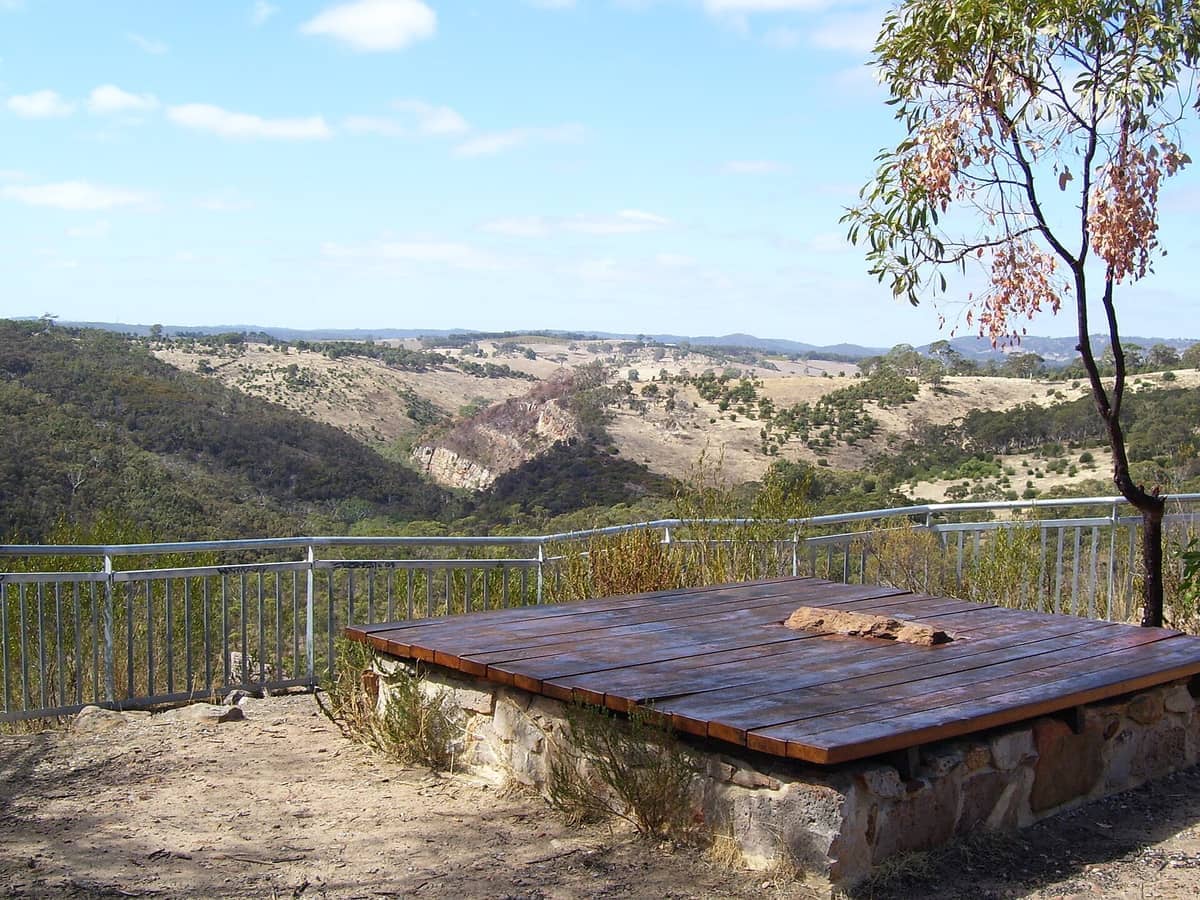
What Is Onkaparinga River National Park?
Onkaparinga River National Park protects a dramatic sandstone gorge carved by the Onkaparinga River as it descends from the Mount Lofty Ranges toward the sea. The park's Kaurna-derived name, Ngangkiparingka, is explained by Parks SA as meaning 'women only places along the river,' a reminder that this landscape carries deep cultural significance for the Kaurna people, the traditional custodians of this country, long before it was declared a recreation park in 1985 and reclassified as a national park in 1993.
The gorge itself is the centrepiece: walls of layered sandstone drop sharply to the river below, and the contrast between the exposed rock faces and the dense riparian vegetation at the water's edge gives the place an almost cinematic quality. From the rim, the McLaren Vale wine region rolls away to the south and west, and on clear days the view extends to the coast.
ℹ️ Good to know
The park closes on days of catastrophic fire danger and may also close on days of extreme fire danger. Check the Parks SA website or CFS Incident Alerts before visiting in summer.
The Landscape: What You'll Actually See
The gorge section of the park is the part most visitors come for. From the Sundews car park on Piggott Range Road, you're immediately in mallee scrub, with the sound of the wind through the eucalypts and, in spring, the sharp whistle of honeyeaters. The vegetation shifts noticeably as you move toward the gorge rim: the scrub opens, the ground becomes stonier, and then the view drops away in front of you.
The river runs through the gorge floor year-round in wetter periods, but flow varies dramatically with the season. After winter rain, the water is audible from the rim trails. By late summer, the river can slow to pools. Either way, the gorge walls and the patchwork of native vegetation are the constant. Look for sheoak, native pine, and stands of native grasses along the rim, and listen for the unmistakable rattling call of the laughing kookaburra.
The park borders the McLaren Vale wine region, and on the return drive it's easy to combine a morning walk with an afternoon at the cellar doors nearby. This combination makes the park more versatile than its relatively modest size suggests.
Tickets & tours
Live prices and dates from our booking partner. If you book, we may earn a commission at no extra cost to you.
Ultimate Adelaide and Hahndorf full-day tour
From 94 €Instant confirmationFree cancellationHalf-day Lofty Descents tour by bike
From 89 €Instant confirmationFree cancellationAdelaide kayak tour with expert instructors
From 51 €Instant confirmationFree cancellationTrue Crime Tour in Adelaide
From 21 €Instant confirmationFree cancellation
Walking Tracks: From Easy to Challenging
The Punchbowl Lookout Trail is the park's most accessible route. The Punchbowl Lookout Trail is a 2 km route that descends to the lookout, with a return climb of 50 m over 1 km. The compacted-rubble trail provides good access for prams and wheelchairs, and the lookout frames a horseshoe bend in the gorge. The lookout itself frames a horseshoe bend in the gorge, and this is where most day visitors end up taking photographs.
Longer walks descend into the gorge and follow the river. These tracks are steeper, rougher underfoot, and require solid footwear. The descent changes the experience completely: from the rim you see the landscape from above; on the gorge floor you're surrounded by it, with the rock walls rising on either side and the river sounds replacing the wind. Allow considerably more time for these routes, and carry more water than you think you need, especially between November and April.
💡 Local tip
Wear closed-toe shoes with ankle support on any track below the gorge rim. The descent paths involve loose rock and steep gradients that rule out sandals or flat-soled shoes.
The Punchbowl Lookout car park off Piggott Range Road provides access to the lookout trail. The Sundews car park at Gate 11 is the starting point for the Punchbowl Link Trail. If you are planning a longer circuit that crosses the river, check trail conditions with Parks SA in advance, particularly after heavy rainfall when the gorge floor can be impassable.
Best Time to Visit and How the Park Changes Through the Day
Early morning arrivals get the most from the park. The light on the sandstone walls is warmest in the hour after sunrise, the bird activity is at its peak, and the car park is quiet. By mid-morning on weekends, particularly in spring and autumn, the Punchbowl Lookout area draws a steady flow of visitors.
Spring (September to November) is arguably the best season. Wildflowers appear along the rim trails, the temperatures sit between roughly 11 and 22 degrees Celsius, and the river carries good flow from winter rain. Autumn (March to May) offers similarly mild conditions and clear air, often with the added benefit of softer afternoon light for photography. Summer visits are possible but require an early start: by late morning the exposed rim trails offer little shade, and the fire danger risk also increases significantly.
Winter brings rain, cooler temperatures (typically 8 to 16 degrees Celsius), and greener vegetation. The gorge floor can be spectacular after sustained rain, though some lower tracks may be waterlogged. A jacket is essential and the compacted rubble on the Punchbowl trail can become slippery.
⚠️ What to skip
Summer fire danger is a serious consideration at this park. Total Fire Ban days mean no camping stoves or open fires. Catastrophic fire danger days result in park closure. Always check conditions before you travel.
Camping at Onkaparinga River National Park
The park has a campground, and it's a reasonable option for those wanting to combine the gorge with a full McLaren Vale experience across two days. Camping fees are A$39.80 per night (as listed by Parks SA). The park has Pink Gum Campground, with 11 allocated campsites, an accessible toilet and washing-up facilities. Camping fees are A$39.80 per night, as listed by Parks SA. Bookings are required before arrival through the Parks SA camping portal. Bookings are required through the Parks SA camping portal.
Camping here puts you in the park at the quietest hours, which matters. Dawn at the gorge rim, before any other visitors arrive, is a different experience from a mid-morning day trip. The bird chorus in the early morning is genuinely impressive, and you may encounter kangaroos or echidnas near the campground as the light comes up.
If camping appeals but you'd prefer more creature comforts, McLaren Vale township has accommodation options a short drive away, and the park works well as a day trip from there.
Wildlife, Plants, and Ecological Significance
The park protects a range of native vegetation communities, including mallee scrub, native pine woodland, and riparian vegetation along the river corridor. The sundews that give the main car park its name are small carnivorous plants that grow in seasonally wet areas near the gorge; they're easy to miss if you're walking quickly, but worth stopping to examine.
Birdlife is consistently good. Wedge-tailed eagles have been observed riding thermals above the gorge. Smaller species including superb fairy-wrens, New Holland honeyeaters, and thornbills are common in the scrub. The river corridor attracts a different set of species including herons and cormorants. If wildlife observation is a priority, carry binoculars and plan to walk slowly.
For visitors interested in combining wildlife and natural areas, Adelaide's wildlife guide covers the wider region's parks and reserves in detail.
Getting There and Practical Logistics
The park is approximately 35 kilometres south of Adelaide's city centre. A car is effectively required. The main access point for north-side trails is via Piggott Range Road, where you'll find the Sundews car park. The Southern Expressway makes the drive straightforward, typically under 40 minutes from the city in normal traffic conditions.
There is no public transport serving the park directly. The nearest town with services is Hackham or McLaren Vale. Fuel up before arriving, as There is no public transport serving the park directly. The nearest town with services is Hackham or McLaren Vale. Fuel up before arriving, as facilities within the park are limited to the campground's accessible toilet and washing-up facilities. Carry all water you will need for your planned walk.
Those planning a longer day in the region can read the guide to getting around Adelaide for advice on car hire and regional driving routes.
💡 Local tip
Download the Parks SA app or the offline maps for this park before leaving phone coverage areas. Mobile reception can be patchy around the gorge.
Who Should Think Twice
Visitors expecting a manicured, fully-serviced park experience may find the facilities sparse. There is no cafe, no visitor centre, and signage is functional rather than interpretive. Those with limited mobility should stick to the Punchbowl Lookout Trail and the campground area; Those with limited mobility should stick to the Punchbowl Lookout Trail and the campground area; the gorge descent tracks are not suitable for wheelchairs. Anyone planning to visit in December through February should be aware that the combination of heat and exposed trails can make the experience genuinely uncomfortable by mid-morning.
If you are looking for an attraction that requires little planning and offers guaranteed rewards in under an hour, this park may underwhelm. It rewards patience, early starts, and a willingness to walk at least a little. Those who come prepared get significantly more from it than those who turn up expecting a quick lookout stop.
Insider Tips
- Arrive at sunrise on weekdays for the best combination of light on the gorge walls and near-total solitude. Weekend mornings at the Punchbowl Lookout area get busy by 9am in spring.
- The sundews (carnivorous plants) near the car park are a genuine oddity worth 10 minutes of your time. Look for them in low-lying, seasonally damp ground near the trail start in winter and spring.
- Combine the park with a McLaren Vale winery visit in the afternoon. Several cellar doors are within 15 minutes of the Piggott Range Road entrance and operate daily without bookings.
- If you're camping, bring warm layers even in summer. The gorge location means temperatures drop sharply after sundown, more than visitors typically expect.
- Check the CFS (Country Fire Service) website the evening before any summer visit. A park closure on the day of arrival is genuinely possible, and there is no alternative entrance.
Who Is Onkaparinga River National Park For?
- Walkers and hikers looking for genuine gorge terrain within day-trip distance of Adelaide
- Birdwatchers, particularly those targeting woodland and riparian species
- Photographers chasing dramatic landscape light in spring or autumn
- Campers who want to experience the park at dawn and dusk without a long drive
- Couples or small groups combining nature with a McLaren Vale wine region itinerary
Nearby Attractions
Other things to see while in McLaren Vale:
- Maslin Beach
Stretching nearly 3 kilometres along the Fleurieu Peninsula coast, Maslin Beach combines dramatic ochre cliffs, calm Gulf St Vincent waters, and a relaxed coastal character that sets it apart from Adelaide's busier suburban beaches. The southern section has carried Australia's first legal nude bathing designation since 1975, though the broader beach is used by all kinds of visitors.
- Port Willunga Beach & Jetty Ruins
Port Willunga Beach sits at the base of dramatic red-ochre cliffs about 45 minutes south of Adelaide, where the stumps of a heritage-listed nineteenth-century jetty rise from the shallows at low tide. The beach is free, publicly accessible, and consistently quieter than Adelaide's metro beaches, making it one of the Fleurieu Peninsula's most photogenic and unhurried coastal stops.
Planning a trip? Discover personalized activities with the Nomado app.