Glenelg Beach: Adelaide's Classic Coastal Escape
Glenelg Beach sits at the end of Adelaide's only tram line, about 11 kilometres southwest of the city centre. Wide, sandy, and open year-round, it combines easy access with genuine beach character — jetty walks, calm swimming water, and a foreshore strip that changes personality from morning to evening.
Quick Facts
- Location
- Southern Esplanade, Glenelg SA 5045
- Getting There
- Tram to Moseley Square (check Adelaide Metro for current service)
- Time Needed
- 1.5 to 3 hours for the beach and foreshore; half a day if you add lunch and the jetty
- Cost
- Free — no entry fee; food, rentals, and activities are extra
- Best for
- Families, swimmers, sunset seekers, and day-trippers from the city
- Official website
- www.holdfast.sa.gov.au
What Glenelg Beach Actually Is
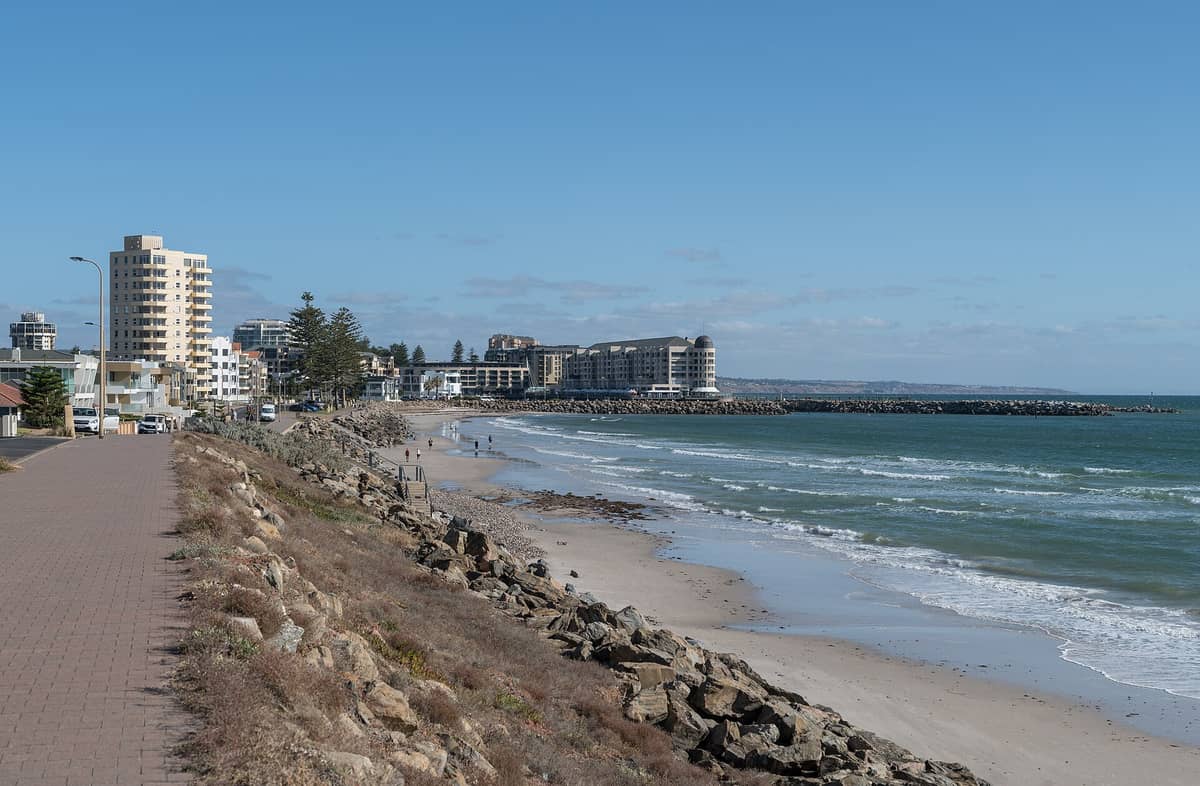
Glenelg Beach is a broad, west-facing strip of white sand on Gulf St Vincent, framed by a grassy foreshore on one side and calm, relatively shallow water on the other. It is the most visited beach near Adelaide, partly because the tram connection from the city makes it reachable without a car, and partly because the conditions genuinely suit swimming — the gulf's enclosed geometry keeps the surf modest by Australian standards, so the water is typically safe for children and confident non-surfers.
The beach itself runs for a considerable stretch in both directions from Moseley Square, the main arrival point. Heading north, the sand quietens down quickly and the crowd thins. Heading south toward Brighton, the beach remains wide and walkable. Most visitors, though, cluster near the square, the jetty, and the Esplanade foreshore.
ℹ️ Good to know
Transit note: Regular Glenelg tram services resumed on 26 January 2026 after earlier works. Check Adelaide Metro for current services and timetables before you travel.
A Place With Actual History
Glenelg carries more historical weight than most beach suburbs. On 28 December 1836, the formal proclamation of the Province of South Australia was read at the Old Gum Tree in Glenelg North, making this area one of the foundational sites of Australian colonial history. The Old Gum Tree marks the proclamation site. It is easy to walk past without noticing, but worth a look if you have any interest in how South Australia came to exist as a free-settler, non-convict colony.
The first jetty opened in 1859 at 381 metres in length, and it served as a working pier before becoming the recreational structure it is today. The current, shorter jetty was completed in 1969. Walking it on a calm morning, with the pale blue-green water beneath and the Adelaide Hills just visible inland, gives a good sense of why this location was so significant to early settlers arriving by sea.
Glenelg sits on the traditional lands of the Kaurna people, the Aboriginal custodians of the Adelaide Plains. For a deeper understanding of that history and its continuing significance, the Living Kaurna Cultural Centre provides grounded, community-led context that complements any visit to this area.
Tickets & tours
Live prices and dates from our booking partner. If you book, we may earn a commission at no extra cost to you.
Ultimate Adelaide and Hahndorf full-day tour
From 94 €Instant confirmationFree cancellationHalf-day Lofty Descents tour by bike
From 89 €Instant confirmationFree cancellationAdelaide kayak tour with expert instructors
From 51 €Instant confirmationFree cancellationTrue Crime Tour in Adelaide
From 21 €Instant confirmationFree cancellation
How the Beach Changes Through the Day
Early mornings at Glenelg Beach are genuinely different from the midday experience. Before 9am in summer, the sand is cool underfoot, the light is angled and golden, and the main activity is walking — locals with dogs, runners along the Esplanade, and the occasional swimmer doing laps parallel to shore. The smell of salt is stronger before the day warms up and the food vendors open. This is the window for photography: the jetty reads clearly against an uncluttered sky, and the water reflects the early light without glare.
From late morning through to mid-afternoon in summer, crowds build around Moseley Square and the main stretch of sand closest to the foreshore facilities. Families claim patches of beach with umbrellas and cooler bags; the water fills with children. The foreshore itself gets congested. Noise levels rise considerably — this is not a quiet contemplative beach between 11am and 3pm on a hot Saturday.
Late afternoon is when the beach recovers some grace. The sun moves west and softens, the midday swimmers leave, and the foreshore benches fill with people simply watching the water. Sunset from the jetty or the southern end of the beach can be spectacular, particularly when cloud cover catches the orange and pink light over the gulf. Arrive by 5pm in summer to secure a good vantage point.
💡 Local tip
Photography tip: Shoot the jetty from the waterline at low tide for reflections in the wet sand. Early morning or the hour before sunset produce the most useful light. At midday in summer, the combination of white sand and harsh sun makes exposure control difficult.
Swimming, Safety, and What the Water Is Like
Gulf St Vincent is an enclosed body of water, which means Glenelg typically has small to moderate waves rather than open-ocean surf. The sandy bottom shelves gently, making wading accessible for young children close to shore. The water temperature ranges from around 14-15°C in winter to roughly 22-24°C in peak summer — comfortable for extended swimming from November through March.
Surf Life Saving patrols operate on the beach during peak season, and the patrolled area is marked with the standard red and yellow flags. Always swim between the flags. During summer, jellyfish can appear in the water — small blueish ones are common and cause mild stings. Locals mostly ignore them, but first-time visitors should be aware.
⚠️ What to skip
Sun exposure at this latitude is intense even on overcast days. SPF 50+ sunscreen, a hat, and a shirt for children are not optional in summer — they are the baseline. Reapply sunscreen after swimming.
The Foreshore, the Jetty, and What Surrounds the Beach
The Glenelg foreshore is a functional, well-maintained strip rather than an architecturally remarkable one. You will find public barbecues, change rooms, showers, playgrounds, and the kind of broad lawned areas that fill with picnic groups on public holidays. It is practical and free, which counts for a lot.
Moseley Square, immediately behind the beach, is the commercial heart of Glenelg and the tram terminus. Cafes, fish and chips shops, ice cream vendors, and a handful of more substantial restaurants line the street. The square can feel a bit overworked in summer, with the density of food outlets all competing for attention. The quieter dining side streets reward a short walk. The broader Glenelg neighbourhood also has supermarkets and pharmacy options if you need supplies.
The Glenelg Jetty extends out into the gulf and is free to walk. On calm days it offers a different perspective of the Adelaide coastline looking back to shore. Anglers use it throughout the year. Beneath the jetty, the pylons attract small fish, which in turn attract larger ones, and on clear-water days you can watch this ecosystem from above. The jetty is also where dolphin-watching and diving tours depart — operators are based on the foreshore nearby, though you should verify current availability and pricing directly.
If you want to compare beaches along this coastline, Adelaide's best beaches offers a comparative overview that includes options both quieter and more surf-exposed than Glenelg.
Getting There and Getting Around
Under normal circumstances, Adelaide's tram runs from Adelaide city centre directly to Moseley Square at Glenelg, making this one of the most straightforward beach trips in any Australian capital. Check the Adelaide Metro website for current services and timetables before you travel.
By car, Glenelg is approximately 25-30 minutes from the city centre depending on traffic. Paid parking is available in multi-storey facilities and on nearby streets; spaces fill quickly on summer weekends and public holidays. For a full breakdown of how to navigate Adelaide's transport network, the getting around Adelaide guide covers all the practical options including tram, bus, and car.
Accessibility: The City of Holdfast Bay notes accessible transport options for visitors using wheelchairs or with mobility requirements. Beach ramps provide access to the sand, and an accessible beach mat is placed on the beach during summer; check the council’s current information for seasonal details.
When to Visit: Seasons and Honest Trade-offs
Adelaide's Mediterranean climate means Glenelg Beach in summer (December to February) delivers hot, dry days that suit swimming but bring the largest crowds. Water temperatures peak and the beach genuinely earns its reputation. The downside is the concentration of visitors, especially on weekends. Temperatures can also spike well above 35°C during heatwaves — on those days the beach is the right call, but go early.
Spring (September to November) and autumn (March to May) offer a more relaxed experience: fewer people, pleasant temperatures in the high teens to mid-twenties, and water that stays swimmable well into autumn. These are genuinely good months to visit if swimming is not the primary goal. Winter brings cooler water (around 14-15°C), reduced crowds, and occasional storms that make the gulf look dramatic rather than inviting. The jetty walk remains worthwhile year-round. For a fuller seasonal breakdown, see the guide on the best time to visit Adelaide.
Who Might Not Enjoy This
Glenelg Beach is not the right choice for visitors looking for wild or surf-exposed coastline. The calm gulf water and gently shelving bottom suit beginners and families, but those seeking surf breaks or dramatic ocean scenery should look further afield. The foreshore area around Moseley Square is genuinely crowded on summer weekends and can feel more like a theme park perimeter than a beach escape. Visitors who find commercial foreshore development off-putting should consider arriving early or heading north or south along the sand away from the square.
Travellers without young children who are mainly after a beach sunset or a quiet walk will likely find the northern stretch of the beach or Henley Beach more suited to a low-key outing.
Insider Tips
- Walk north along the sand for ten minutes from Moseley Square and you will leave most of the crowd behind. The beach is equally good quality up there and the noise drops significantly.
- Check Adelaide Metro timetables before travelling, as services and frequencies can change.
- If you are visiting in summer and the temperature exceeds 35°C, the beach fills by 10am. Arrive before 9am to find open sand, or come after 4pm when the intense heat has passed.
- The Glenelg jetty is best walked at dusk on a calm evening. The lights of the foreshore reflect in the still water and the city skyline appears faintly to the north — it is one of the more underrated views along this coast.
- Public barbecues on the foreshore are free to use and genuinely well-maintained. Bringing your own food rather than relying on the Moseley Square food strip is both cheaper and usually more enjoyable.
Who Is Glenelg Beach For?
- Families with young children seeking safe, calm swimming water
- Day-trippers from Adelaide wanting a beach without needing a car
- Sunset and evening walkers who appreciate a working jetty
- Budget travellers — the beach, foreshore, and jetty are all free
- Travellers interested in South Australian colonial history alongside beach time
Nearby Attractions
Other things to see while in Glenelg:
- Glenelg Jetty
Stretching into Gulf St Vincent, Glenelg Jetty is the most recognisable landmark on Adelaide's beachfront. Free to access, rich in local history, and framed by open water on all sides, it delivers some of the best unobstructed views on the coast at any time of day.
Planning a trip? Discover personalized activities with the Nomado app.