The Georgian House, Edinburgh: Inside Robert Adam's New Town Masterpiece
Designed by Robert Adam and completed in 1796, The Georgian House at 7 Charlotte Square is one of Edinburgh's most precisely restored historic interiors. Managed by the National Trust for Scotland, it offers a floor-by-floor portrait of upper-class life at the height of the New Town's golden age.
Quick Facts
- Location
- 7 Charlotte Square, Edinburgh EH2 4DR (New Town)
- Getting There
- 10–15 min walk from Edinburgh Waverley; buses 10, 19, 3, 41, 33 stop on Princes Street nearby
- Time Needed
- 1 to 1.5 hours
- Cost
- Adult £13.50 / Concession £10.50 / Child £8.00 / Family £37.00 (NTS members free)
- Best for
- Architecture enthusiasts, history lovers, rainy-day culture seekers
- Official website
- www.nts.org.uk/visit/places/georgian-house
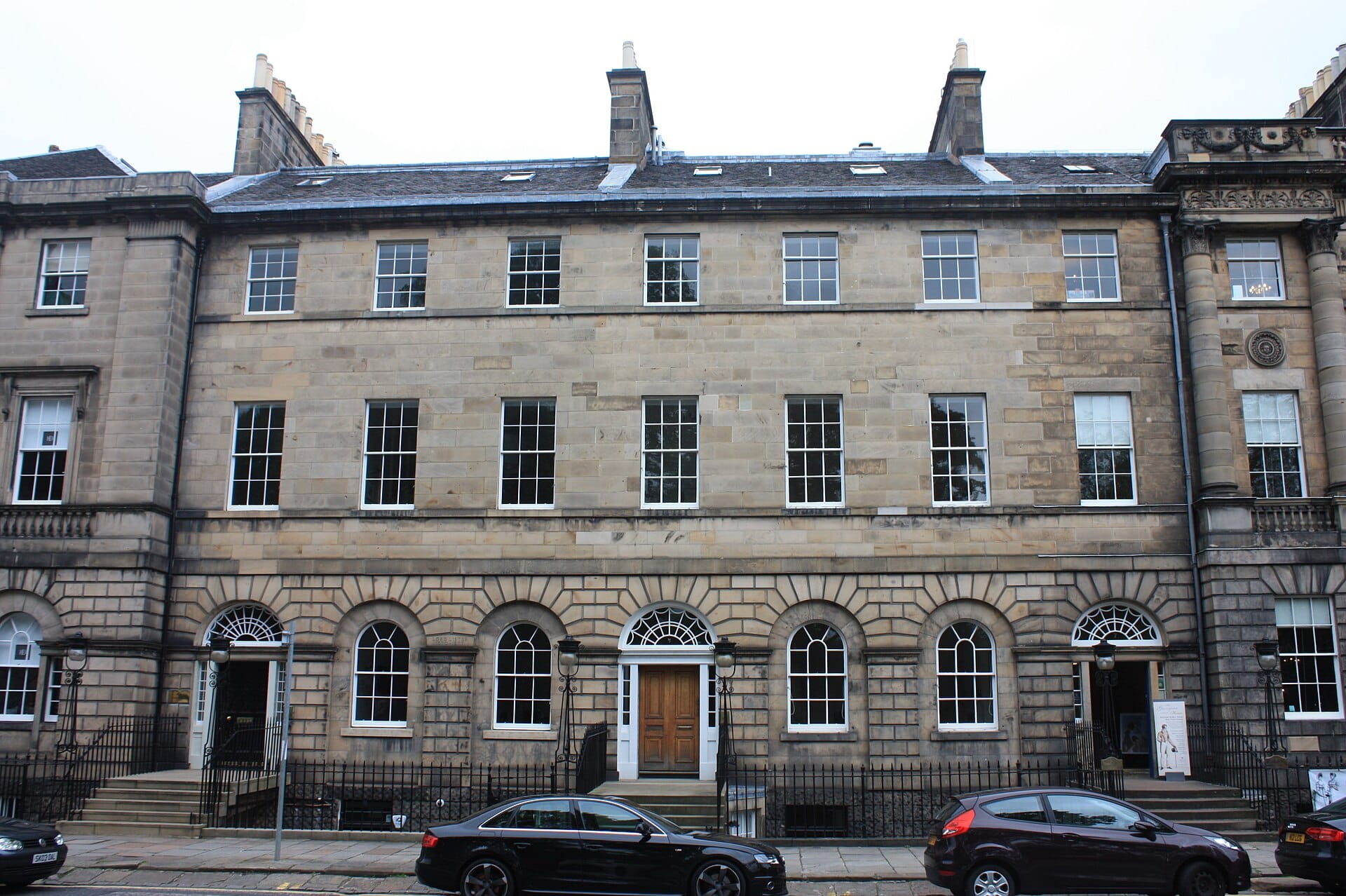
What Is The Georgian House?
The Georgian House is a National Trust for Scotland historic house museum occupying the ground and lower floors of 7 Charlotte Square, a Robert Adam-designed terrace in Edinburgh's New Town. Completed in 1796, the building was commissioned as part of Adam's grand north side of Charlotte Square, a project he designed in the final years of his life and which is now considered one of the finest examples of Georgian urban architecture in Britain.
The house was built for John Lamont, 18th Chief of Clan Lamont, who lived there with his household until 1815. Rather than presenting the building as a ruin or a shell, the NTS has painstakingly furnished and dressed each room to reflect daily life as it would have been lived by a prosperous Edinburgh family in the late 18th and early 19th centuries. The result is something closer to a time capsule than a traditional museum.
⚠️ What to skip
Important: The Georgian House is currently closed for exterior and interior conservation work and is due to re-open later this year. Confirm current opening status at nts.org.uk before making a special trip. Confirm current opening status at nts.org.uk before making a special trip.
The Architecture: Robert Adam and Charlotte Square
Robert Adam designed the north side of Charlotte Square, treating the entire terrace as a single unified palace facade rather than a row of individual townhouses. The result is a composition of refined symmetry: rusticated stone at street level, a central pedimented block, and restrained Neoclassical ornament that avoids fussiness. Adam died in 1792, before the square was completed, but his design was carried through faithfully. The result is a composition of refined symmetry: rusticated stone at street level, a central pedimented block, and a restrained Neoclassical ornament that avoids fussiness. Adam died in 1792, before the square was completed, but his design was carried through faithfully.
Standing on the south side of Charlotte Square and looking north at number 7, you can read the whole sweep of Adam's ambition. The building doesn't announce itself like a castle or a cathedral. Its authority is in proportion and in the quality of the stone, now weathered to a warm grey-gold that shifts noticeably in Edinburgh's frequently changing light.
The interior detailing continues Adam's Neoclassical vocabulary: delicate plasterwork ceilings, elegant doorcases, and a palette of colours that would have been considered both fashionable and expensive at the time. The NTS restoration team used historical evidence, including paint analysis, to guide the colour choices in each room, so what you see today is a considered reconstruction rather than a decorator's guess.
Tickets & tours
Live prices and dates from our booking partner. If you book, we may earn a commission at no extra cost to you.
Self-guided audio tour on the history of witchcraft in Scotland
From 5 €Instant confirmationWest Highland Lochs, mountains and castles tour from Edinburgh
From 61 €Instant confirmationFree cancellationLoch Ness, Glen Coe and the Highlands tour from Edinburgh
From 66 €Instant confirmationFree cancellationDay Trip to Holy Island, Alnwick Castle and Northumbria from Edinburgh
From 60 €Instant confirmationFree cancellation
A Floor-by-Floor Walkthrough
Visitors enter from Charlotte Square and move through several principal rooms spread across the lower and upper floors. The kitchen and wine cellar in the basement give an immediate sense of the domestic infrastructure required to run a household of this kind: the range of copper pots, the storage arrangements, and the proximity of the service areas to the formal rooms above are quietly revealing about the social architecture of the period.
The dining room is the room that tends to hold visitors longest. It is dressed for a formal meal, with period china, glassware, and silver laid out on a mahogany table. The proportions of the room are generous without being cavernous, and the furniture is positioned so you can genuinely imagine the rhythm of an 18th-century dinner party: the dishes brought from below, the conversation across candlelit silver, the withdrawal to the drawing room that followed.
The drawing room on the first floor is lighter and more overtly decorative, with harp, card tables, and a colour scheme that reflects the taste of the period for softer, more refined tones. The bedroom upstairs is perhaps the most intimate room in the house: the half-tester bed, the washing arrangements, and the personal objects on display bring the daily routines of the household into sharp focus in a way that larger heritage sites rarely achieve.
💡 Local tip
Take time in the basement kitchen. It is often quieter than the upper floors and contains some of the most specific and interesting objects in the house, including period food preparation tools that most visitors walk past quickly.
How the Experience Changes by Time of Day
The Georgian House is a small property and its rooms fill quickly when tour groups arrive, typically in late morning. If you can arrive when the house opens, the first hour tends to be calmer: the natural light comes into the front rooms in a way that does justice to the fabrics and paintwork, and the staff have more time to talk through specific details of the collection.
By early afternoon, particularly on summer weekdays and weekends, the principal rooms can become congested. Charlotte Square itself is at its most photogenic in morning light, when the shadow from the surrounding trees plays across the Adam facade. If you are combining a visit with photography, arriving early matters.
The square sits at the western edge of the New Town, which makes it a natural stopping point on a longer walk through New Town Edinburgh. Pairing a visit to The Georgian House with a walk along George Street or a look at the Scottish National Portrait Gallery makes for a coherent half-day in the area.
Practical Information for Visitors
The Georgian House is located at 7 Charlotte Square, Edinburgh EH2 4DR. It is within walking distance of Edinburgh Waverley railway station, and frequent bus services run along Princes Street with stops a short walk from the house.
Admission is priced at £13.50 for adults, £10.50 for concessions, £8.00 for children (under 5s are free), and £37.00 for a family ticket. A one-adult family ticket is available at £24.00. Young Scot cardholders pay £1.00. National Trust for Scotland members visit free, which makes membership worth considering if you plan to visit multiple NTS properties during your time in Scotland.
As a restored 18th-century townhouse on multiple floors, the property has inherent physical limitations around step-free access. Visitors with specific accessibility requirements are advised to contact the house directly before visiting: telephone 0131 225 2160 or email thegeorgianhouse@nts.org.uk. The NTS website also carries current access information.
ℹ️ Good to know
NTS members visit free. If you plan to visit Gladstone's Land, Craigmillar Castle, or other NTS properties in Scotland, an annual membership can pay for itself quickly.
Cultural Context: Why the New Town Still Matters
The New Town was planned from 1766 onwards as a deliberate expansion beyond Edinburgh's overcrowded medieval core, which is now the Old Town. It was conceived as a rational, hygienic, and architecturally coherent counterpart to the organic tangle of the Royal Mile, and Charlotte Square, designed in 1791, represents the westward terminus of that original plan.
The Georgian House sits within a UNESCO World Heritage Site that covers both the Old and New Towns of Edinburgh. This designation recognises not just individual buildings but the integrity of the urban landscape as a whole: the grid of streets, the relationship between public and private space, and the coherence of the architectural language across the New Town. Visiting The Georgian House is, in this sense, an encounter with a piece of deliberate city-making, not just a single preserved building.
If the interiors of The Georgian House raise your appetite for more of the period, Gladstone's Land on the Royal Mile offers a comparison point from an earlier era, showing how Edinburgh's merchant class lived nearly two centuries before the New Town was built. The contrast between the two is instructive.
Who Should Skip This Attraction
The Georgian House is a detailed, room-by-room interior experience. Visitors who prefer outdoor exploration, who have limited time in Edinburgh and are prioritising major landmarks, or who find slow-paced domestic history museums frustrating will likely find the admission price hard to justify. Children under ten may engage with the kitchen and the more tactile elements of the display, but the house is not designed as a family activity space and lacks the interactive layer that makes attractions like the National Museum of Scotland more broadly accessible.
If your primary interest is Edinburgh's story at scale rather than the domestic detail of one household, the National Museum of Scotland on Chambers Street covers more ground and is free to enter. That said, for anyone with a genuine interest in Georgian design, social history, or Robert Adam's architecture, The Georgian House delivers something specific that no other attraction in the city replicates.
Insider Tips
- Check the NTS website the week before your visit. The house has been undergoing conservation work, and opening dates can shift. Showing up to a closed door is an easy mistake to avoid with a quick search.
- The north side of Charlotte Square, where number 7 stands, reads best from the central garden opposite. Stand at the south gate of the garden and look north for the full sweep of Adam's palace-front composition.
- NTS staff at the house tend to be knowledgeable and willing to discuss specific objects and rooms in detail if the house is quiet. Arriving early and asking questions often unlocks considerably more than the room cards alone provide.
- The gift shop stocks a small but well-chosen selection of books on Georgian Edinburgh, Scottish architecture, and the New Town. If you are interested in the broader urban story of the area, it is worth browsing before you leave.
- Combine your visit with a walk along Queen Street, one block north, where the Scottish National Portrait Gallery sits in a Victorian Gothic building that offers a striking stylistic counterpoint to Adam's restrained Neoclassicism just minutes away.
Who Is Georgian House For?
- Architecture and design enthusiasts interested in Robert Adam and Georgian Neoclassicism
- Social history visitors who want to understand how Edinburgh's educated professional class actually lived in the late 1700s
- Rainy-day visitors looking for a calm, unhurried indoor experience away from the crowds of the Royal Mile
- Travellers with a National Trust for Scotland membership looking to maximise their card
- Writers, researchers, and filmmakers seeking period-accurate domestic detail from late 18th-century Scotland
Nearby Attractions
Other things to see while in New Town:
- Calton Hill
Rising 103 metres above central Edinburgh, Calton Hill is a free, 24-hour public park packed with monuments, volcanic geology, and some of the most complete city panoramas in Scotland. It takes under 20 minutes to reach from Princes Street on foot, and the views repay every step.
- Charlotte Square
Charlotte Square sits at the west end of George Street as the architectural crown of Edinburgh's first New Town. Designed by Robert Adam in 1791 and completed in 1820, the square is a free, publicly accessible streetscape and a key part of the city's UNESCO World Heritage Site.
- Edinburgh Christmas Market
Spread across East and West Princes Street Gardens and George Street, Edinburgh's Christmas runs from mid-November to early January each year. Entry is free, the backdrop is Edinburgh Castle, and the atmosphere shifts dramatically depending on when you arrive.
- Edinburgh Gin Distillery
Opened on 6 December 2024, the Edinburgh Gin Distillery at The Arches on East Market Street is the brand home of one of Scotland's most recognised craft gins. Set inside dramatic stone vaulted arches beneath historic railway arches near Waverley, it offers tastings, tours, and a retail experience rooted in the city's growing reputation for artisan spirits.
Planning a trip? Discover personalized activities with the Nomado app.